
Rating:
⭐⭐⭐⭐ (4.2 out of 5)
I’ll be honest. When a poetry collection comes to my desk, I pause for a second before opening it. Not because I don’t love poetry. I do. Deeply. But because poetry demands something from you. Time. Attention. A willingness to sit with feelings that don’t announce themselves loudly. And these days, that feels like asking a lot.
But Jharokha made me slow down almost without trying.
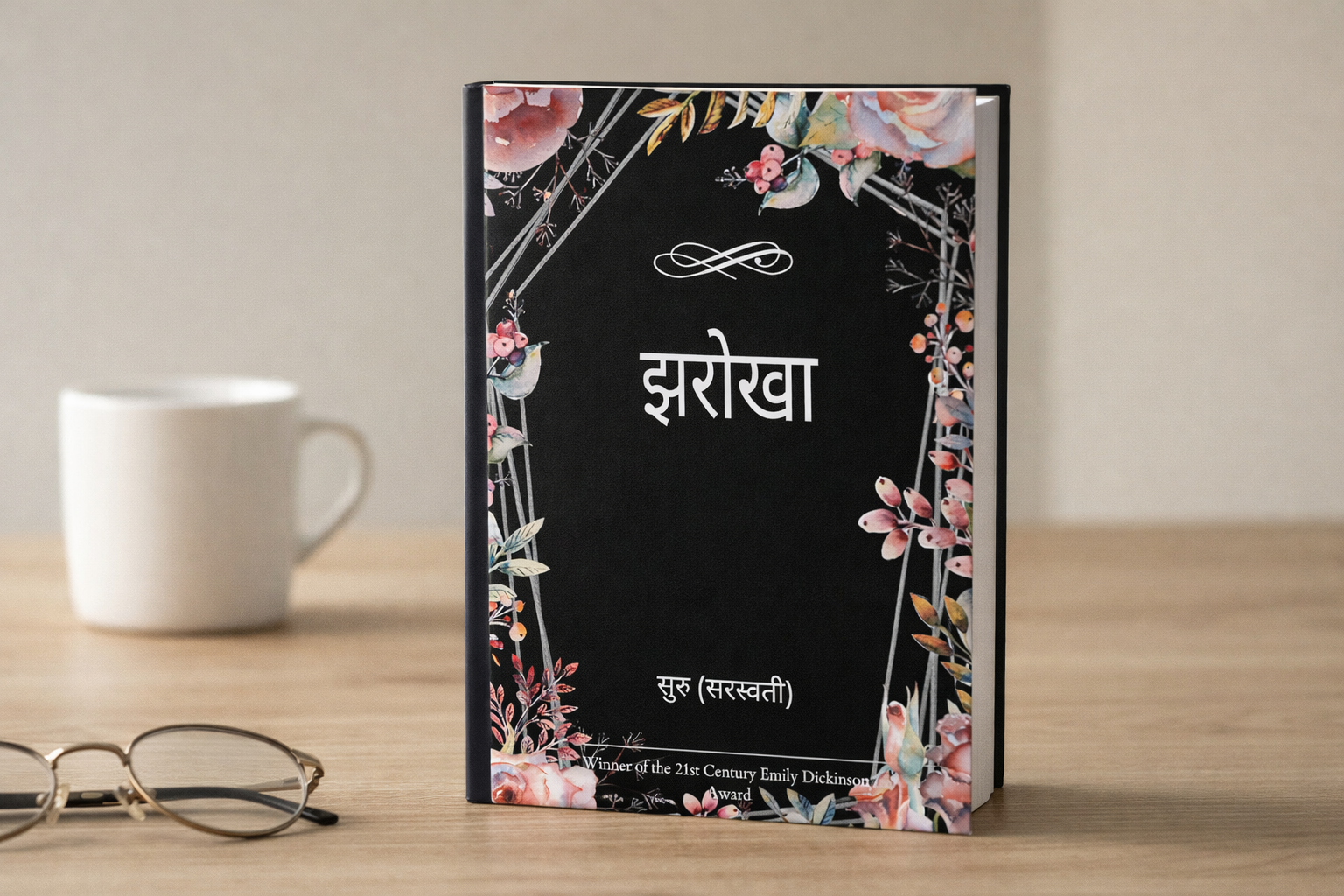
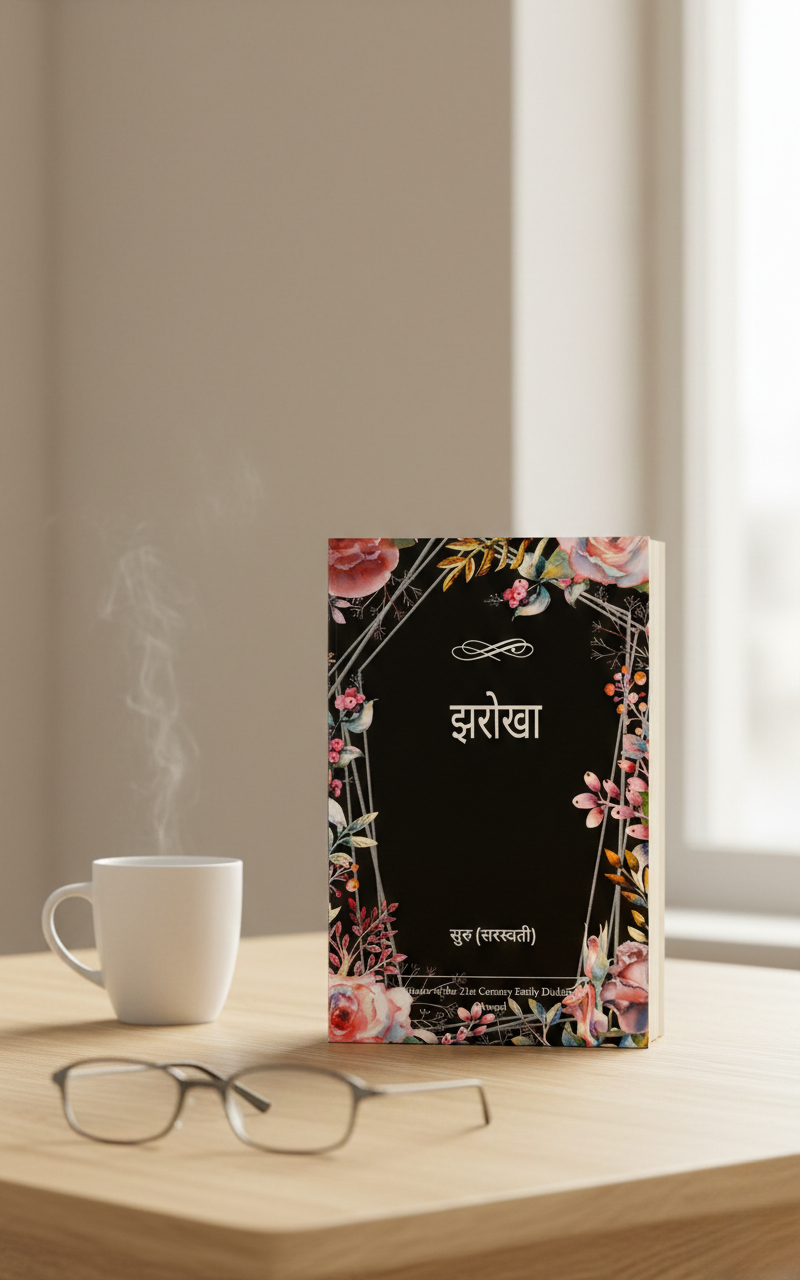
Maybe it was the cover first. That dark, almost meditative black, framed by soft florals. It didn’t feel decorative. It felt intentional, like a quiet doorway. Or maybe it was the word “Jharokha” itself. A window. Not a door. Not a mirror. Just a small opening through which you’re allowed to look, not control.
Hindi poetry especially has a way of catching me off guard. It reminds me of notebooks I used to keep, pages folded, lines underlined in pencil, words that felt like they were written just for me. This book gave me some of that feeling back. Not in a dramatic way. More like a gentle nudge.
What the Book Is About
At its core, Jharokha is a collection of 25 Hindi poems by Suru, who also writes under the name Saraswati. The book looks at Indian society, with a particular focus on middle class life. The kind of life most of us know too well. Falling, rising, adjusting, hoping, repeating.
The collection opens with a prayer. Not a preachy one, thankfully. More like a moment of gratitude. A pause before the poet begins to speak about people, nature, inner worlds. From there, the poems move between different moods. Some are rooted in nature, flowers, dew, paths, light. Others lean more toward philosophy and introspection. There is a clear interest in the inner life, what’s happening behind the face we show every day.
Poems like Phool Palash Ke, Jogan Ka Shringar, Antarman Ki Jyot Se, Rasta Teri Taraf Ka, and Os Ki Chand Boonden are mentioned as standouts, and even from the titles alone, you can sense the textures the poet is working with. Flowers that burn bright, adornment that is spiritual rather than ornamental, light that comes from within, a path shaped by longing, dew drops that catch the morning.
This is not a book trying to tell a single story. It’s more like a series of glimpses. Moments you look into, then move past, carrying something small with you.
What Stood Out to Me
What I noticed first was the restraint.
In my years reviewing books, especially poetry, I’ve seen how easy it is to over explain feelings. To push emotion so hard that it stops feeling real. Suru does not do that. The poems, at least from what the blurb and presentation suggest, trust the reader. They don’t seem desperate to impress. That already earns my respect.
The focus on middle class life felt familiar in a way that didn’t feel tired. There’s no dramatic poverty narrative, no exaggerated suffering. Just the everyday cycle of effort and hope. That’s something many poets miss. They either romanticize struggle or turn it into spectacle. Here, it feels more lived in.
Nature appears not as a backdrop, but as a mirror. Flowers, dew, paths, light. These aren’t just pretty images. They seem to echo internal states. I’ve read enough Hindi poetry to know when nature is being used as filler. This doesn’t feel like that. It feels more instinctive.
Another thing I appreciated was the spiritual tone. Not religious, exactly. More reflective. Beginning with a prayer sets a certain mood, but the book doesn’t stay on a pedestal. It comes down to the ground. To people. To thought. To self questioning. That balance is hard to achieve.
If I had to guess, I’d say Suru is a poet who listens more than she declares. And that shows.
The Emotional Core
This is the kind of book that doesn’t hit you all at once.
I imagine readers picking it up, reading two or three poems, then putting it down. Not because it’s heavy, but because it asks you to feel. And feeling, honestly, is tiring sometimes. But it’s also necessary.
There’s a quiet tenderness running through the idea of this collection. A sense of observing life as it is, not as it should be. Middle class existence is full of small victories and silent disappointments. You don’t always have language for that. Poetry can help, when done right.
Some poems might make you nostalgic. Others might make you uncomfortable, because they remind you of thoughts you’ve had but never said out loud. I suspect Antarman Ki Jyot Se does something like that. That idea of inner light is beautiful, but it also asks a question. Are we paying attention to it?
In 2025, when so much of our reading is driven by speed and spectacle, a book like this feels timely. It invites slowness. Reflection. Even a little silence between lines. I wasn’t expecting to feel this grounded just thinking about it.
Who This Book Is For
This book won’t be for everyone, and that’s okay.
If you’re looking for fast paced narratives, dramatic twists, or poetry that shouts its feelings, this might not land the way you want. But if you enjoy Hindi poetry that sits with everyday life, that notices nature without making it decorative, that thinks about spirituality without preaching, this could be a good fit.
I’d especially recommend it to readers who come from middle class backgrounds and want to see their emotional landscape reflected without exaggeration. Also to readers who enjoy dipping into poetry rather than reading it cover to cover in one sitting.
It could also work well for people who are returning to Hindi poetry after a long gap. The themes feel accessible. You don’t need a literature degree to engage with them.
Final Thoughts
As an editor, I’m always asking myself one question. Did this book feel honest.
Jharokha feels honest. Not loud. Not performative. Just sincere in its intention to observe and share. I like that Suru doesn’t try to impress with complexity. She seems more interested in clarity of feeling.
If I had to point out a possible limitation, it would be that readers who prefer strong narrative arcs in poetry might wish for more continuity between poems. This feels more like a collection of standalone reflections than a single emotional progression. That didn’t bother me, but it’s worth mentioning.
Overall, this is a book I can imagine returning to. Maybe opening at random. Reading one poem with chai in the evening. Letting it sit.
And sometimes, that’s enough.
FAQ
Is Jharokha worth reading?
If you enjoy reflective Hindi poetry rooted in everyday life and nature, yes. It offers quiet moments rather than dramatic highs.
Who should read Jharokha?
Readers interested in poetry about middle class experiences, inner reflection, and gentle spirituality will likely connect with it.
What genre is Jharokha?
It’s a Hindi poetry collection focused on nature, philosophy, and social observation.
Should you read Jharokha in one go?
Probably not. It works better when read slowly, a few poems at a time.

With over 11 years of experience in the publishing industry, Priya Srivastava has become a trusted guide for hundreds of authors navigating the challenging path from manuscript to marketplace. As Editor-in-Chief of Deified Publications, she combines the precision of a publishing professional with the empathy of a mentor who truly understands the fears, hopes, and dreams of both first-time and seasoned writers.