
Rating:
⭐⭐⭐⭐ (4.7 out of 5)
I have been sitting with It’s M : E (म : इं) for a few days now. Not reading it, exactly. Sitting with it. Letting it rest on my table. Picking it up again for no real reason except to reread a paragraph or smile at a moment I had already underlined in my head. That usually tells me something before my editor brain even kicks in.
In my years as Editor in Chief at Deified Publication, I have read all kinds of books. Loud books that announce themselves from the first page. Clever books that want you to notice how clever they are. And then there are books like this one. Books that arrive quietly, look simple, almost unassuming, and then slowly make space for themselves in your day.
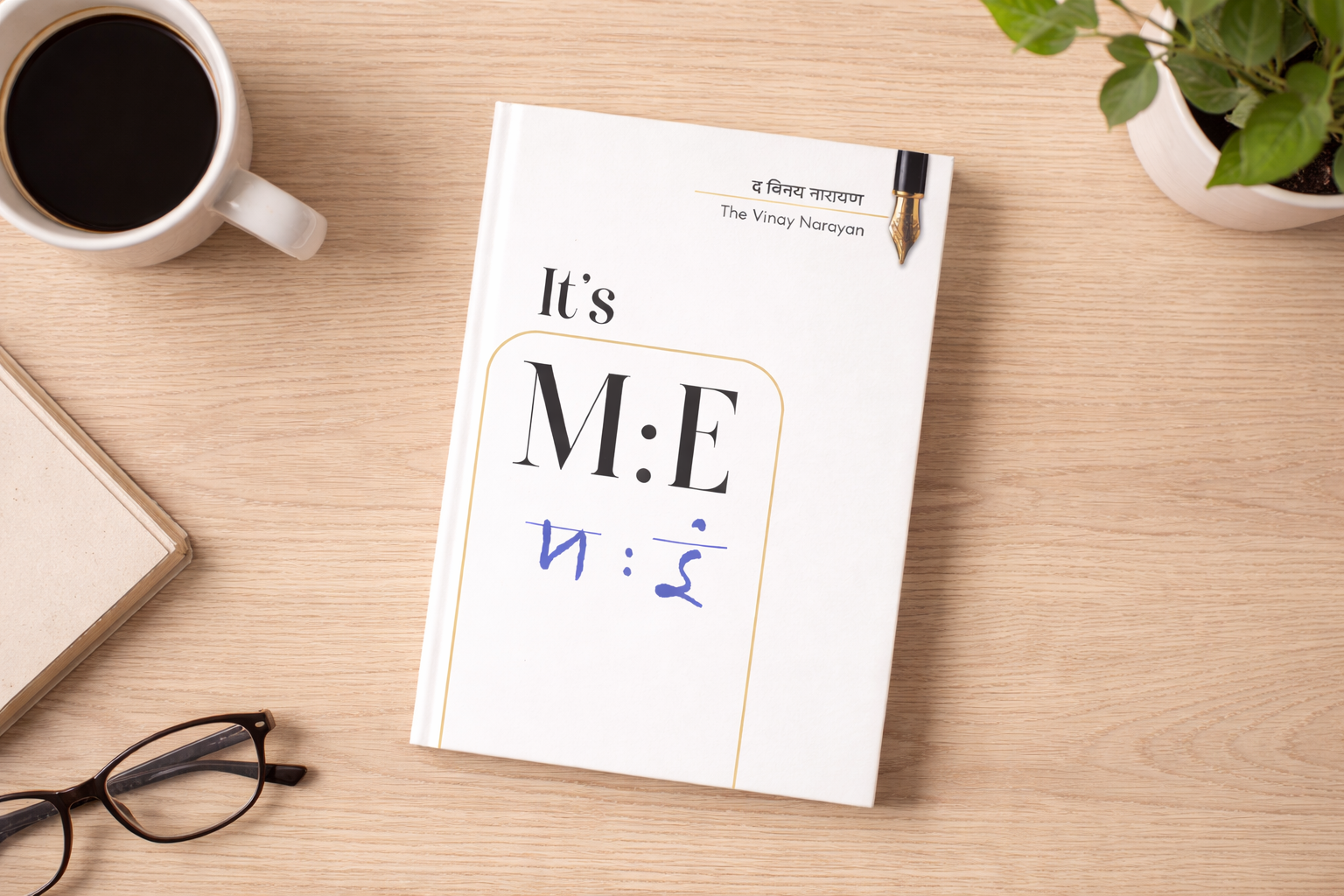
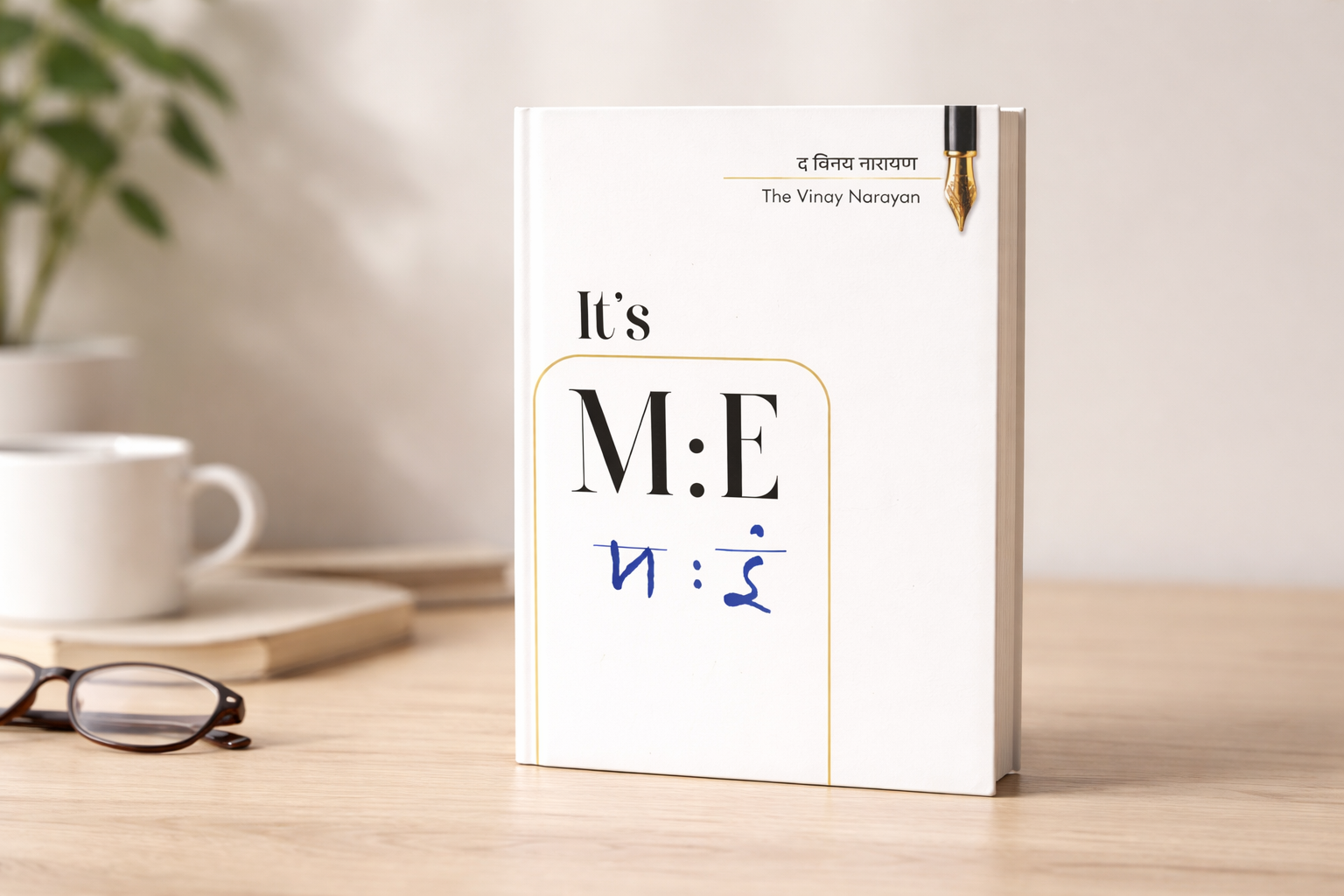
The first thing I noticed, even before opening it, was the cover. White. Minimal. No unnecessary drama. It has this calm confidence that says, I know what I am, I do not need to shout. Honestly, I found it beautiful. There is something very no nonsense about it, and it felt exactly right for the kind of book The Vinay Narayan seems to have written.
And yes, a small detail that made me smile. The book comes with a bookmark. I know that sounds trivial, but as a reader, it feels thoughtful. Like the author and publisher assumed you would want to pause, come back, maybe hold your place because you are not done thinking yet.
What the Book Is About
It’s M : E is not trying to tell you a grand story. It is not chasing big plot twists or dramatic arcs. Instead, it offers small moments. Everyday moments. The kind you usually forget by evening, but which somehow shape your life more than the big milestones ever do.
Each chapter is short, almost bite sized, and that works in its favour. One moment you are reading about an awkward, funny exchange with a watchman. Another moment you are smiling at family behaviour that feels so familiar it is almost uncomfortable. There are observations about growing older, about becoming a parent, about realising that the things you once laughed at now make you worry instead.
What makes this book truly different, and I say this as someone who rarely uses the word unique lightly, is its structure. Alternate pages exist in Marathi and English. Not summaries. Not adaptations that feel diluted. Actual parallel storytelling. It allows readers of both languages to experience the same moment, the same emotion, without feeling excluded.
As someone who grew up around Marathi but reads English more comfortably now, this really worked for me. It broke a quiet barrier I did not even realise I was carrying. I could feel the flavour of Marathi, and still stay grounded in English. That balance is not easy to achieve.
What Stood Out to Me
What stood out most was the honesty in the writing. There is no performance here. The voice feels deeply personal, sometimes amused, sometimes self aware, sometimes gently questioning itself.
There is a section where the author reflects on potholes. It sounds silly when I say it like that. But it is not. There is this moment where he remembers how potholes once felt like harmless fun, and how now they bring anxiety because there is a car, a daughter, responsibilities. I found myself nodding. I have seen this shift in real life. In my parents. In myself. In friends who suddenly start driving slower without announcing why.
The writing is heartfelt, but never syrupy. The humour is warm, not forced. And there is this ongoing question that keeps surfacing quietly. Did this really happen, or did he imagine it this way? And honestly, I do not think it matters. That uncertainty becomes part of the charm.
I also appreciated how the bilingual format is not treated like a gimmick. It feels essential to the book’s emotional core. Especially when the author speaks about wanting his daughter to understand what he writes, why he writes, and how he sees the world. That context made the Marathi English pairing feel deeply personal rather than technical.
The Emotional Core
This is a father’s book, but not in the stereotypical advice giving way. It is a book about noticing. About paying attention to small human behaviour. About realising that love often hides inside irritation, jokes, routines, and habits.
Some parts hit differently. There were moments where I paused because a line reminded me of my own father. Or of conversations that never get recorded anywhere but live on in memory. The kind where nothing important is said, and yet everything important is happening underneath.
I did not tear up, but I felt that lump in the throat that comes when something feels too familiar to ignore. It is the kind of book that sits with you because it mirrors life without trying to fix it.
Who This Book Is For
This book may not be for readers who want fast moving stories or dramatic tension. If you like clear beginnings, middles, and ends, you might feel a little restless here.
But if you enjoy reflective writing, personal essays, or books that feel like someone thinking out loud over chai, this will work for you.
It is especially meaningful for readers who grew up speaking Marathi but now feel more at ease in English. Or for parents who are trying to understand the quiet emotional distance and closeness that coexist in families. Or honestly, anyone who enjoys observing people and smiling to themselves because yes, this happens in my house too.
Final Thoughts
I genuinely loved this book. And I do not say that casually.
As an editor, I usually find at least one thing I want to change or question. Here, my only minor hesitation was that I occasionally wanted a few moments to linger a little longer. But maybe that restraint is part of its honesty. Life rarely explains itself fully.
It’s M : E feels written with care. With affection. With acceptance. It does not try to impress you. It invites you in, trusts you to understand, and lets you leave with your own thoughts.
In 2025, when so much writing feels rushed or performative, this book feels timely because it slows you down without demanding attention.
I would happily recommend it to readers who enjoy human stories over heroic ones.
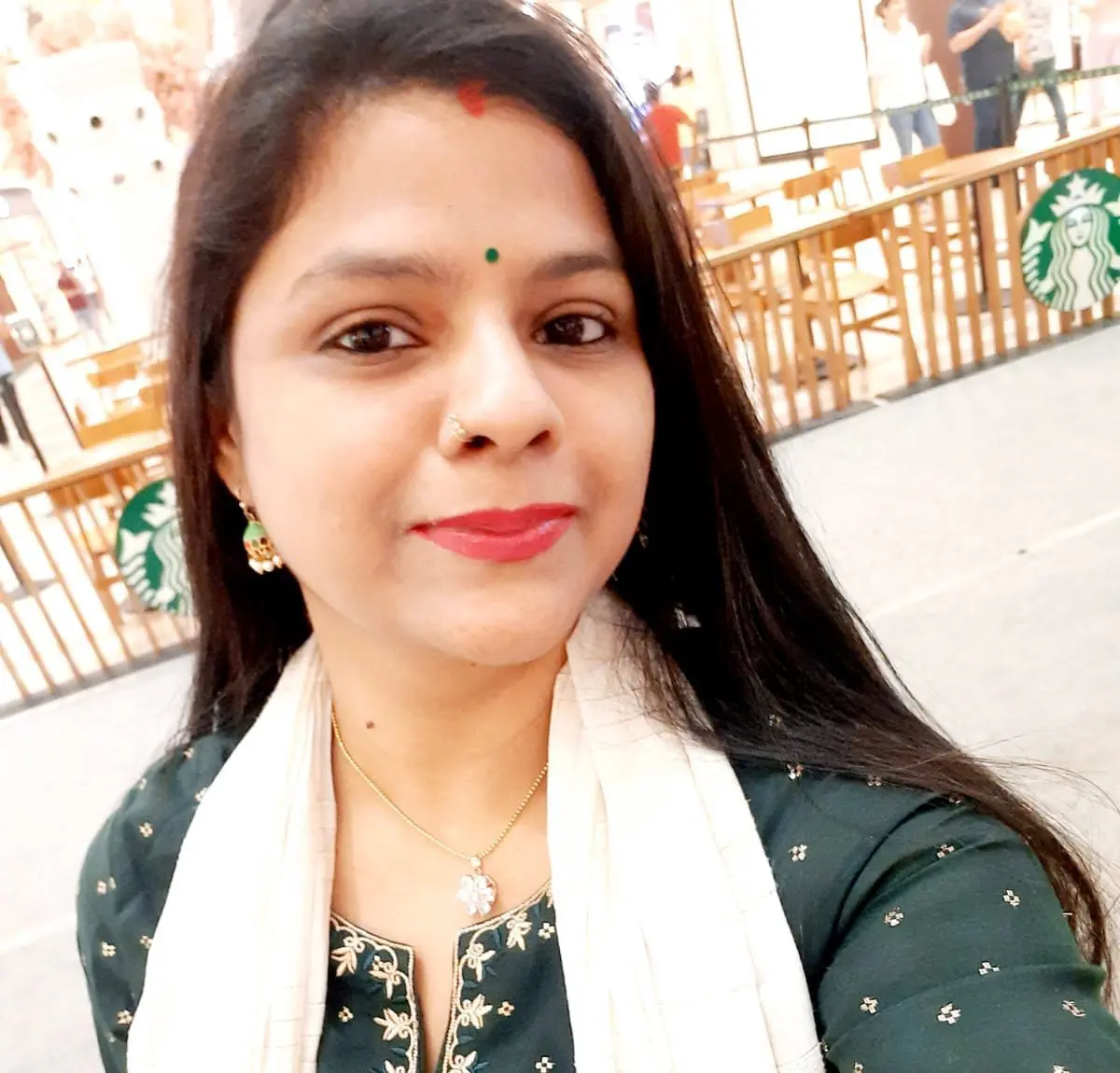
With over 11 years of experience in the publishing industry, Priya Srivastava has become a trusted guide for hundreds of authors navigating the challenging path from manuscript to marketplace. As Editor-in-Chief of Deified Publications, she combines the precision of a publishing professional with the empathy of a mentor who truly understands the fears, hopes, and dreams of both first-time and seasoned writers.