
Rating:
⭐⭐⭐⭐ (4.2 out of 5)
When I picked up Israel Is the Messiah, I’ll be honest, I paused before even opening it. The title alone asks a lot of the reader. It challenges something many people hold close, sometimes without even realizing how close. In my years reading theology adjacent books, I’ve learned that when an author chooses a title like this, they are either being careless or very intentional. I sensed quickly that Daniel Paul K falls into the second category.
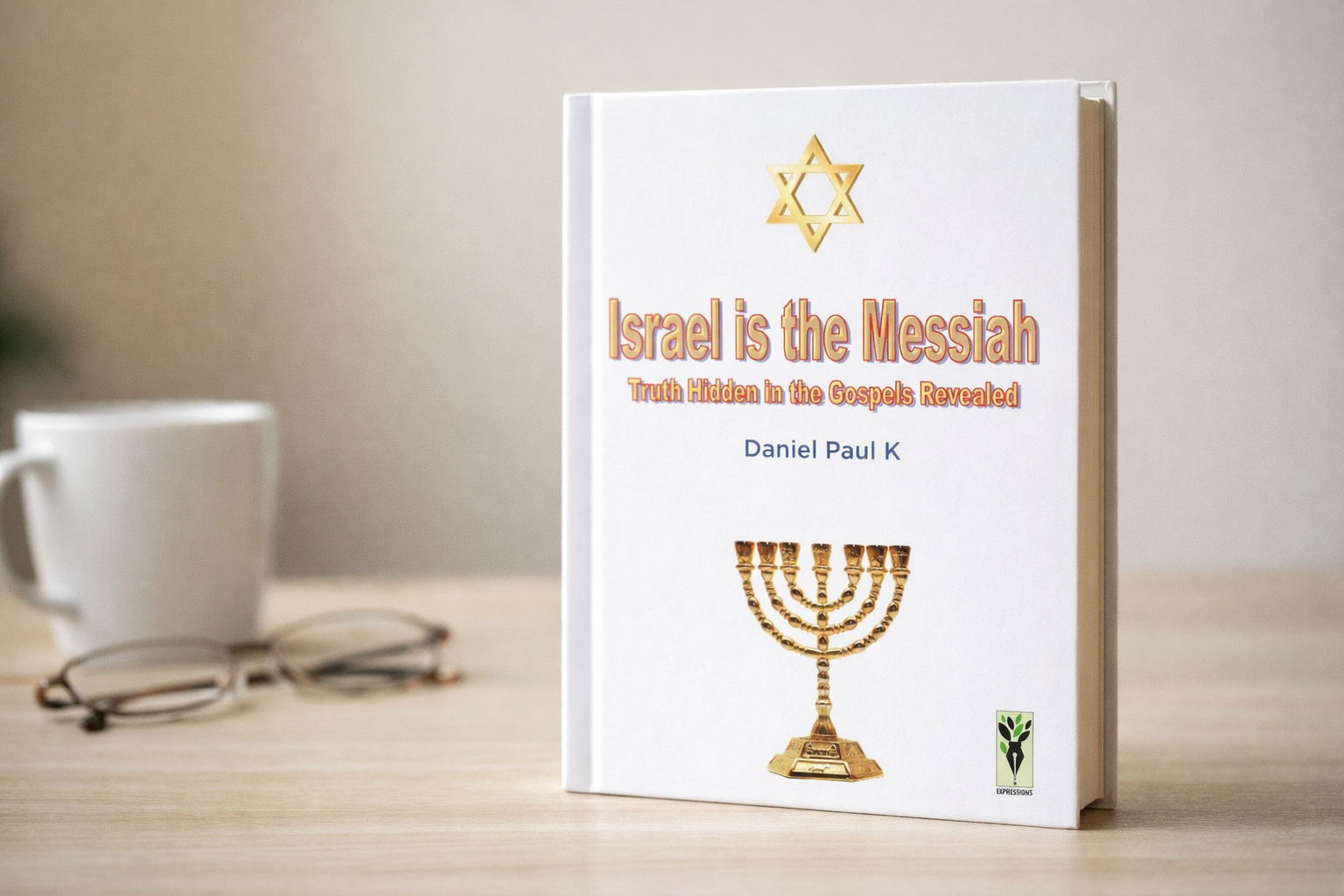
I read the cover slowly. The symbols matter here. The Star, the menorah, the plain white space. Nothing is shouting. Nothing feels decorative for the sake of it. The cover looks restrained, almost cautious, like it knows the argument inside needs room to breathe. That restraint stayed with me throughout my engagement with the book.
What the Book Is About
At its heart, Israel Is the Messiah puts forward a theological argument that moves away from the idea of a single, isolated messianic figure and instead asks readers to consider Israel itself as the collective vessel of God’s redemptive purpose.
Based on the blurb and structure, Daniel Paul K approaches this not as an attack on Christianity, but as a reframing. That distinction matters. He positions Jesus not as the final contradiction to Hebrew scripture, but as someone whose life mirrored the prophetic tradition itself. The comparison to Hosea and Ezekiel stood out to me. The idea that Jesus lived a microcosm of his own prophecy rather than standing outside it is not something you encounter often, at least not expressed this clearly.
The book appears to lean heavily on scripture. Not selectively, but patiently. The author seems comfortable letting the Hebrew prophets speak for themselves rather than forcing interpretation at every turn. That confidence is rare. Many books of this nature rush to prove a point. This one seems willing to build it slowly.
Another central thread is the idea of Am Israel as a continuing story rather than a completed chapter. The book draws connections between the Tanakh and the New Testament, suggesting continuity rather than replacement. That is a sensitive claim, and the author seems aware of the weight it carries.
What Stood Out to Me
What struck me first was the tone. This book does not feel angry. It does not feel defensive either. In my experience, theological reinterpretations often come loaded with frustration, like the author is settling old arguments. I did not feel that here.
Daniel Paul K writes like someone who has spent time wrestling with the text, not just debating it. The blurb mentions moments where scripture is allowed to speak without interruption, and I think that choice shows respect, both for the text and the reader.
The idea of pushing back against a singular messianic figure could easily become abstract, but grounding it in the lived prophetic tradition helps. When prophets are understood as embodying their message, not just declaring it, the argument feels less radical and more rooted.
I also noticed the pacing implied by the blurb. This does not sound like a book that rushes from claim to claim. There is space given to overview, to context, to repetition in the good sense. The kind that helps a reader sit with an idea long enough to decide how they feel about it.
If I had to point out something that might challenge readers, it would be this. The book seems to assume a certain familiarity with scripture. Not academic expertise, but comfort. If you are new to the Tanakh or the prophetic books, you might find yourself slowing down often. That is not necessarily a flaw, but it is worth knowing.

The Emotional Core
What surprised me most was how calm this book made me feel.
That might sound odd for a work dealing with messianic identity and gospel reinterpretation, but it’s true. I did not feel provoked. I felt invited. There’s a difference. I kept thinking about conversations I’ve had with friends who are deeply faithful yet quietly confused by contradictions they’re told not to question.
This book seems written for those moments of private wondering. The kind you don’t always voice in church or study groups. It does not rush to comfort, but it also does not accuse the reader of misunderstanding.
Some parts made me reflect on how often religious discussions are framed as either loyalty or betrayal. Here, curiosity feels allowed. That emotional permission might be one of the book’s strongest qualities.
I also appreciated that the author does not seem interested in tearing anything down. The goal appears to be clarity, not victory. That matters a lot in 2025, when religious conversations are often reduced to soundbites and outrage.
Who This Book Is For
This book will not be for everyone, and that’s okay.
If you are looking for affirmation of traditional doctrines without questioning their framework, this may feel unsettling. If you are uncomfortable revisiting long held interpretations, you might resist what Daniel Paul K is offering.
But if you are someone who enjoys careful theological discussion, grounded in scripture rather than rhetoric, this book might speak to you. It feels especially suited for readers who have read the Gospels closely and still find themselves returning to the Hebrew prophets for context.
It is also a good fit for readers interested in Jewish Christian dialogue, or anyone trying to understand how these traditions intersect rather than compete.
Final Thoughts
As Editor in Chief at Deified Publication, I read a wide range of religious and philosophical works. Many try to shock. Some try to persuade too hard. Israel Is the Messiah does something quieter, in the best sense. It lays out an argument, supports it carefully, and trusts the reader to engage honestly.
Daniel Paul K writes with conviction, but not arrogance. The book feels considered, not reactive. While some sections may require patience, especially for readers less familiar with prophetic literature, the overall experience feels grounded and respectful.
I found myself thinking about this book after I put it down. About how belief systems evolve. About how interpretation shapes faith more than we admit. That lingering effect matters to me as a reader.

With over 11 years of experience in the publishing industry, Priya Srivastava has become a trusted guide for hundreds of authors navigating the challenging path from manuscript to marketplace. As Editor-in-Chief of Deified Publications, she combines the precision of a publishing professional with the empathy of a mentor who truly understands the fears, hopes, and dreams of both first-time and seasoned writers.