
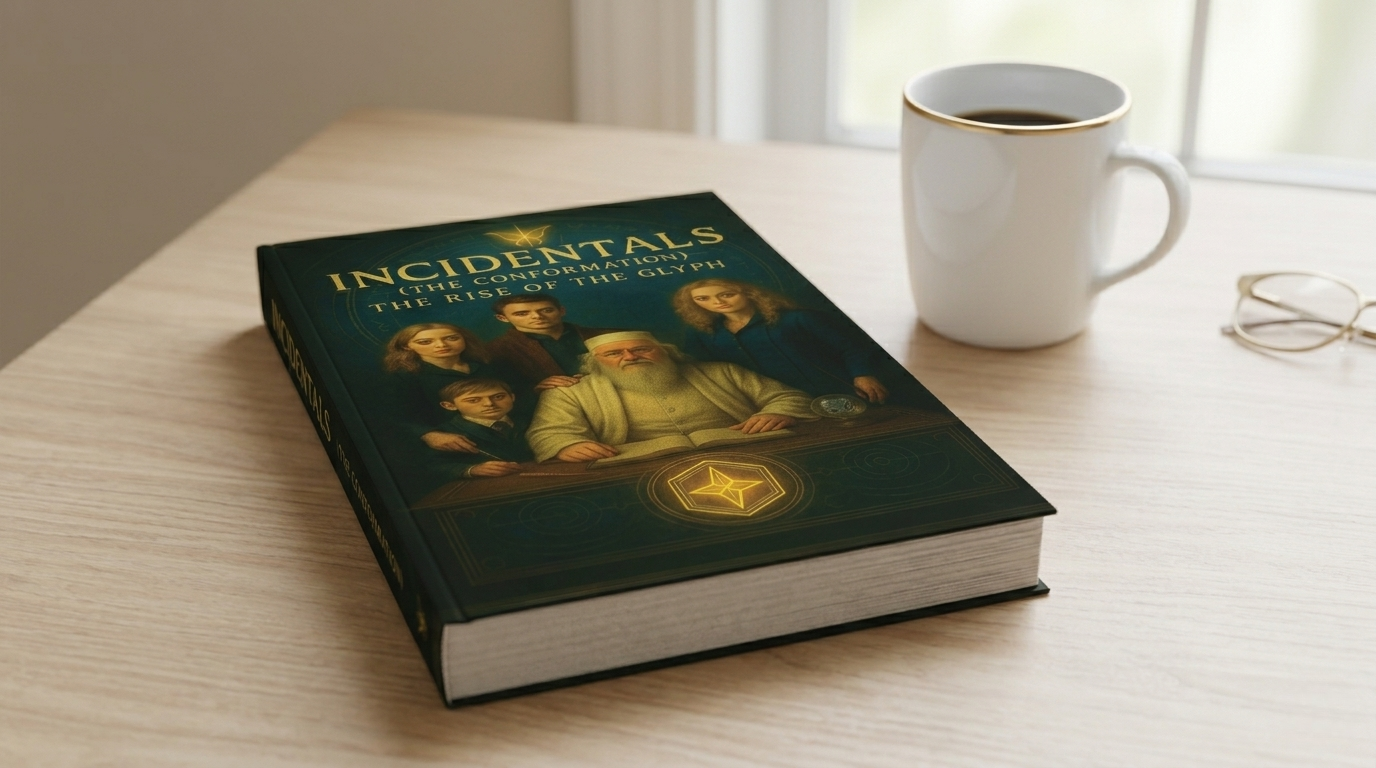
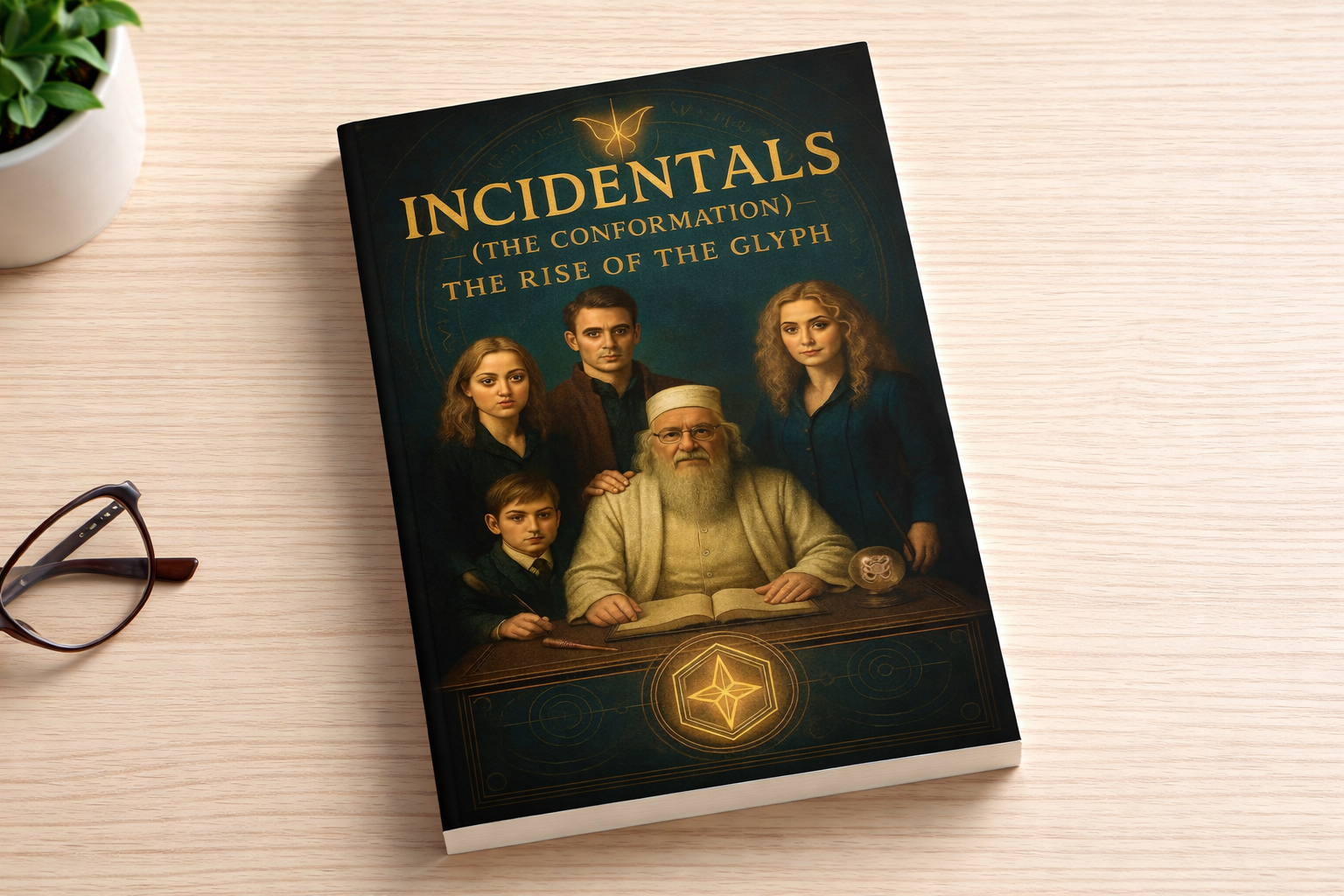
I sat with Incidentals (The Conformation): The Rise of the Glyph: Volume 1 longer than I expected. Not just while reading, but even after I closed it. There’s something about stories that build their own language, their own rhythm, that makes you slow down a little. This one did that to me.
In my years at Deified Publication, I’ve come across many fantasy manuscripts that try to create grand worlds. Some succeed in scale but forget the human pulse inside. Some are intimate but feel too small. This one… I think it’s trying to balance both. And for the most part, it does.
What stayed with me wasn’t just the magic system or the academy or even the prophecy. It was the feeling of something ancient waking up. That quiet unease. Like when you know something is about to shift but you can’t name it yet.
And honestly, I like books that trust the reader to sit with that discomfort.
What the Book Is About
At the center of this story is High Grid Academia, a place that feels both ceremonial and alive. It’s not just a school. It’s a convergence point. Earth and Tesaargo come together here, renewing something older than memory itself.
There’s this sense of tradition. Of cycles repeating. The 1,111,111th Global Specialization Cycle is not just a number, it carries weight. Almost like a ritual that has happened so many times that people stopped questioning it.
And then, of course, something breaks.
Arian Vishruth. A young student. Not extraordinary in the loud way. But something inside him is shifting. A glyph appears. Not just as a symbol, but as something alive, almost breathing through him.
There’s a line early on where the idea of “the echo of a choice once unmade” is introduced. I paused there. Because it tells you what kind of story this is. Not just about events, but about consequences that refuse to stay buried.
Parallel to Arian, we see Excelensia. Controlled, composed, almost distant on the surface. But underneath, there’s turmoil. Her connection to the same glyph begins to unfold, and suddenly this isn’t just one person’s story. It’s a network of memory, bloodlines, and something much older than both of them.
The elders sense it. The system senses it. Even the spaces like the Library of Mysteries feel like they are reacting.
And slowly, very slowly, the book builds toward the idea that this glyph is not just a threat. It’s a reminder. Of something the world tried to forget.
What Stood Out to Me
The first thing I noticed was the writing style.
Saptarshi Banerjee doesn’t rush. At all. The sentences are layered, sometimes almost heavy, but intentionally so. You feel the weight of history in the language itself. It’s not always easy reading, but it feels deliberate.
There’s a passage describing the memory orbs in the hall, each carrying fragments of past moments. Laughter. Battles. Loss. That image stayed with me. Because it quietly tells you what this world values. Memory is not abstract here. It’s tangible.
I also appreciated how the academy is not just a backdrop. It behaves like a character. The staircases, the halls, even the lighting changes. There’s a moment where the lanterns dim as Arian ascends, and it genuinely feels like the building is responding to him.
Character wise, I found Excelensia particularly interesting. She’s not written in an overly emotional way. In fact, she feels restrained. But that restraint makes the cracks more visible. There’s a scene where her hands tremble slightly despite her discipline, and I think that says more than any dramatic breakdown could.
Arian, on the other hand, feels more internal. His journey is quieter but intense. The way the glyph manifests through sensation, through unease, through something almost physical in his spine, that was well done.
If I had to point out something that didn’t fully land for me, it would be the density at times. There are sections where the descriptions become so layered that the pacing slows a bit too much. I found myself rereading a few paragraphs just to stay grounded in the scene.
But then again, maybe that’s part of the design. This is not a fast book. It asks for patience.
The Emotional Core
What I think this book is really about, beneath all the magic and structure, is memory.
Not just remembering things. But what happens when memory refuses to stay buried.
There’s grief here. Subtle, but present. Especially in the chapters around Excelensia and her mother. That sense of inherited pain, of something passed down through blood rather than choice.
It reminded me of how in real life, sometimes we carry things we don’t fully understand. Patterns. Fears. Even decisions that don’t feel entirely our own.
The glyph becomes a symbol of that. Not just chaos, but unfinished stories.
There’s also a quiet loneliness in the book. Even though the setting is full of people, ceremonies, institutions, the main characters often feel isolated in their experiences. Like they are the only ones hearing something that others can’t.
And I think that’s where the book connected with me most.
Who This Book Is For
I don’t think this book is for everyone, and I say that with respect.
If you enjoy fast paced fantasy with constant action, this might feel slow. The story unfolds gradually. It builds atmosphere before it delivers answers.
But if you like layered world building, if you enjoy sitting with complex ideas, if you don’t mind a bit of density in language, then this could really work for you.
Readers who enjoyed academic fantasy settings, philosophical undertones, and stories where magic is tied to memory and identity will probably find a lot to appreciate here.
Also, if you’re someone who likes to reread passages just to feel them again, this book gives you those moments.
Final Thoughts
I think Incidentals (The Conformation): The Rise of the Glyph: Volume 1 is setting up something much bigger than what we see here.
This feels like a beginning. Not in a shallow way, but in a carefully constructed way. Like the author knows exactly where this is going, even if we don’t yet.
There are questions left open. About the glyph. About the past. About the connection between Arian and Excelensia. And I actually like that. It makes you curious without feeling incomplete.
As an editor, I can see the ambition here. And as a reader, I felt moments that stayed with me longer than I expected.
I’ll be continuing this series. Not because I need answers immediately, but because I want to see how this world unfolds.
In the next article, I’ll be continuing with the second part, picking up from where this one leaves that lingering tension in the air.
FAQs
Is Incidentals The Conformation worth reading?
I think it depends on what you’re looking for. If you enjoy layered fantasy with depth and atmosphere, then yes, it’s worth your time.
What is Incidentals The Conformation about in simple terms?
It follows a magical academy where an ancient glyph begins to awaken within a student, triggering buried secrets and a larger unfolding conflict.
Who should read Incidentals The Conformation?
Readers who enjoy thoughtful fantasy, slower pacing, and detailed world building will likely connect with it.
Is this book beginner friendly in fantasy?
Maybe not the easiest starting point. The language and structure ask for a bit more attention than usual.

With over 11 years of experience in the publishing industry, Priya Srivastava has become a trusted guide for hundreds of authors navigating the challenging path from manuscript to marketplace. As Editor-in-Chief of Deified Publications, she combines the precision of a publishing professional with the empathy of a mentor who truly understands the fears, hopes, and dreams of both first-time and seasoned writers.