
Rating:
⭐⭐⭐⭐ (4.3 out of 5)
Some letters are meant to stay unsent
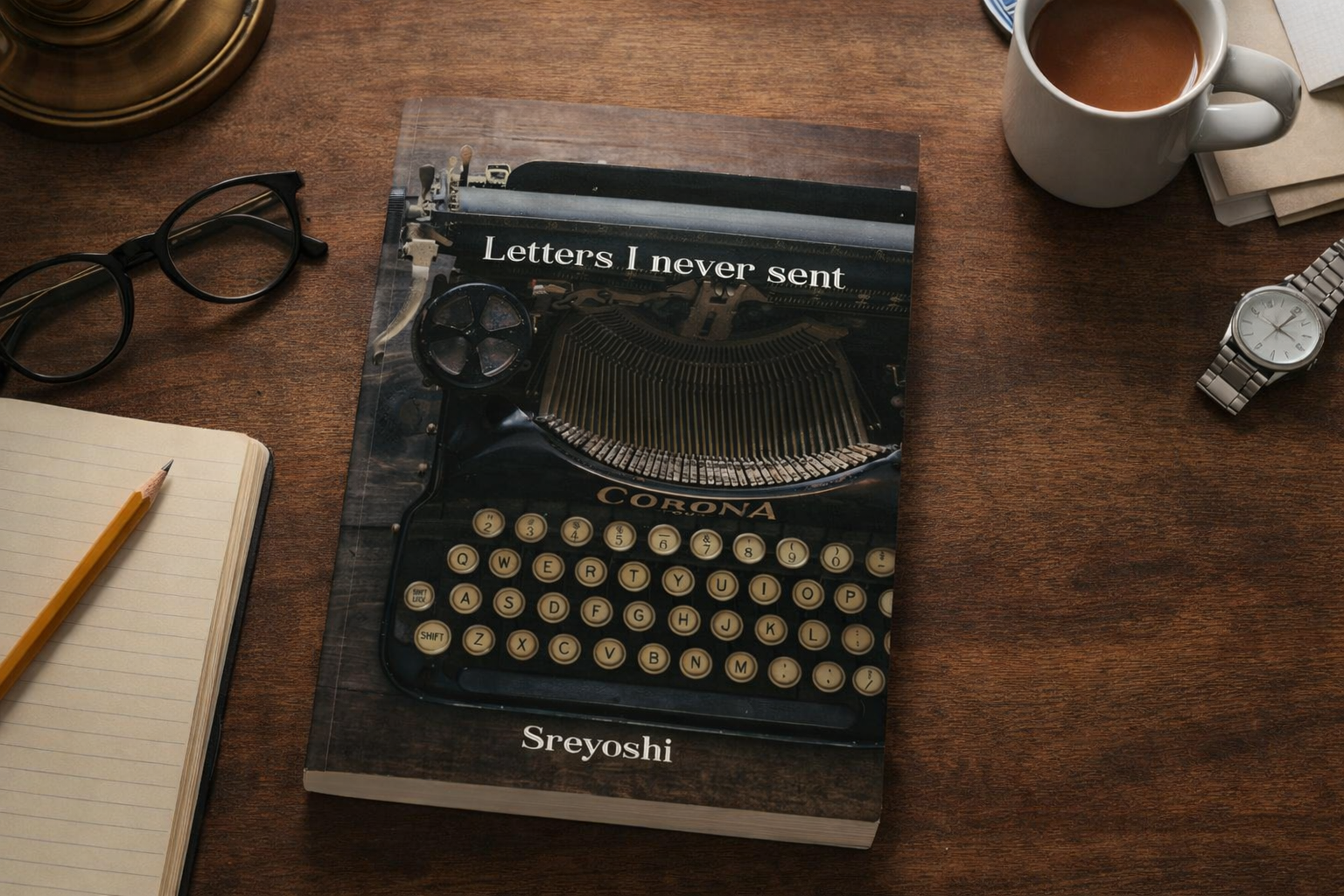
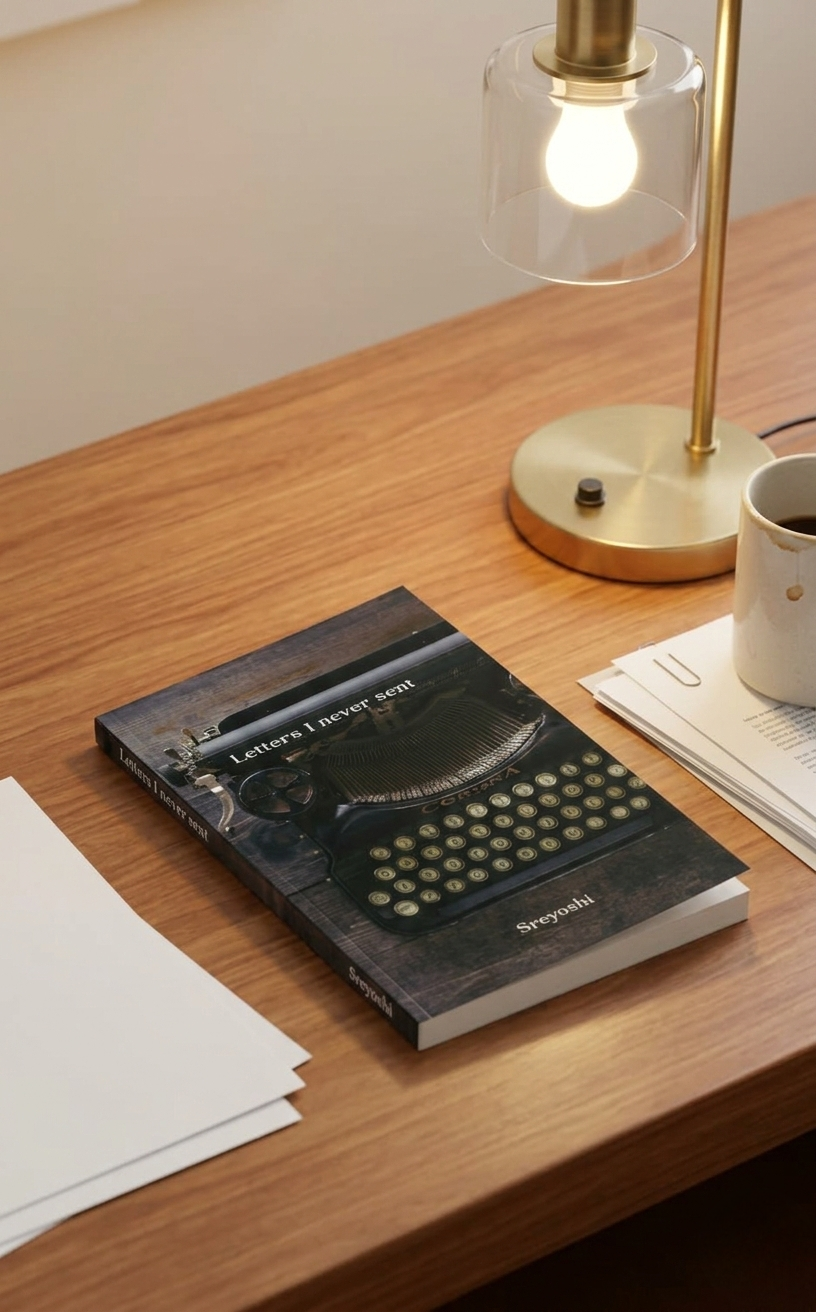
There is something about a typewriter on a book cover that makes me pause. The cover of Letters I never sent by Sreyoshi has this old Corona typewriter resting on wood, the title almost floating above it. It instantly took me back to the days when writing meant commitment. Once ink hit paper, you could not take it back. And yet this book is about the words we do take back. The drafts. The almost confessions. The backspaces.
In my years reviewing books at Deified Publication, I have come across so many poetry collections about love. Some try to sound grand. Some try to sound broken. But this one felt different from the very first poem. It felt like someone sitting across from me at a café, stirring her coffee absentmindedly, and saying, let me tell you something embarrassing.
And honestly, I like that tone.
What the Book Is About
If you are searching for a dramatic, sweeping romance, this is not that. Letters I Never Sent: Love. And other accidents is a collection of twenty poems that trace love through different stages of life. Childhood crushes. Schoolgirl confusion. Campus friendships that blur into something else. Office flirtations. Adult hesitation. And finally, something that feels like self acceptance.
The dedication itself sets the mood. “To the joyrides and the skid marks.” That line stayed with me. It suggests that love is not a straight highway. It is messy. It leaves marks. It makes you laugh years later.
The poems are structured like snapshots. Each one stands alone, yet together they feel like a scrapbook. In “Crushed,” a schoolgirl realises her first crush is actually her friend’s father. It is awkward and funny and painfully honest. In “Bass note,” a deep voice promises depth that the boy does not actually possess. I smiled at that one. I think many of us have been fooled by a voice or a vibe.
Then there are poems like “Bus stop” and “Two tables apart,” where nothing really happens. No grand confession. Just shared spaces. Shared air. And somehow that is enough to create a story inside the narrator’s mind.
And as the collection progresses, the tone matures. “What if” captures the hesitation of someone who has loved before and been hurt. There is a very real fear of pressing send. That line about typing and deleting again and again felt very 2026 to me. In a time when we have so many ways to reach out, we are still scared.
By the time we reach “Finally, home,” the story shifts inward. Love becomes less about the other person and more about the mirror. That closing arc gives the collection a sense of completion.
What Stood Out to Me
First, the consistency of voice. Sreyoshi writes in rhyming couplets often, which can be tricky. Rhyme can feel forced. It can sound like a school assignment. But here, more often than not, it flows naturally. The rhythm gives the poems a conversational lilt. Almost like someone narrating her own memories.
As an editor, I always notice pacing. In a poetry collection, pacing comes from emotional shifts rather than plot. The transition from innocent crushes to adult self reflection feels organic here. You can sense growth. The narrator who giggles on a school bus is not the same person who writes “I will love myself a little more.”
There are also recurring motifs that I appreciated. Roads. Roller coasters. Music. Mirrors. These images create cohesion. The idea of love as a ride, sometimes smooth, sometimes full of sudden brakes, appears again and again. It mirrors real life. No relationship handbook prepares you for the sharp turns.
I also liked the humour. It is easy to romanticise past crushes. But poems like “Cupid fired” are almost cheeky. Firing Cupid after repeated misfires felt playful and self aware. That balance between vulnerability and wit keeps the collection from becoming heavy.
If I had to point out one minor thing, I would say that a few poems rely heavily on predictable rhymes. There were moments where I could guess the next word before it arrived. As someone who has read a lot of contemporary poetry, I sometimes crave surprise in language. But this might also be a stylistic choice. The familiarity of rhyme matches the familiarity of these experiences.
The Emotional Core
At its heart, Letters I Never Sent is about unfinished conversations. About the things we rehearse in our heads but never actually say.
The poem “What if” hit me harder than I expected. The act of typing and deleting felt so real. I have done that. We all have. Drafting a message at midnight. Editing out the vulnerable part. Closing the window. And then lying awake wondering what would have happened if we had been braver.
There is also a thread of embarrassment that runs through the early poems. The kind of embarrassment that, years later, makes you laugh. That honesty builds trust. The author does not present herself as someone who always knew what she was doing. She shows us the awkward phases. The almosts. The misreads.
By the time we reach “Finally, home,” the tone softens into acceptance. The mirror stops being an enemy. That shift matters. In 2026, when self worth often gets measured by relationship status or social media validation, this message feels timely. Love for self is not presented as a cliché affirmation. It is presented as a hard earned realisation.
The last poem, which shares the book’s title, ties everything together. The idea that these unsent letters are not tragedies but stories. That you would live them again. That is maturity.
I did not tear up while reading, but I did pause more than once. Especially at lines that felt uncomfortably familiar.
Who This Book Is For
If you are someone who has ever replayed a conversation in your head, this book will resonate.
If you enjoy light, rhythmic poetry that reads smoothly and does not demand heavy analysis, this is a good fit. It would make a thoughtful gift for someone in their twenties or thirties who is navigating dating, work crushes, almost relationships.
I also think it works well for readers who are new to poetry. The language is accessible. You do not need to decode metaphors for pages. The emotions are clear.
However, if you prefer highly experimental poetry with fragmented structure and dense imagery, you might find this collection too straightforward. It leans toward narrative poems rather than abstract expression.
Final Thoughts
As Editor-in-Chief at Deified Publication, I always ask myself one simple question when finishing a book. Would I recommend this to a friend over chai?
For Letters I Never Sent, my answer is yes. Not because it is perfect. Not because it reinvents poetry. But because it feels honest.
Sreyoshi captures the awkward, funny, slightly chaotic nature of love across different life stages. She does not glorify heartbreak. She does not dramatise every emotion. She allows love to be what it often is. Fleeting. Confusing. Beautiful in hindsight.
And maybe that is enough.
FAQ
Is Letters I Never Sent worth reading?
If you enjoy poetry about real life crushes, near misses, and self growth, yes. It is an easy yet emotionally relatable read.
Who should read Letters I Never Sent by Sreyoshi?
Readers who like contemporary love poetry, especially those who enjoy reflective, lightly humorous takes on relationships.
What is Letters I Never Sent about?
It is a collection of twenty poems tracing love from childhood crushes to adult self acceptance.
Should you read this poetry collection in 2026?
I think so. In a time of instant messages and constant communication, reading about unsent letters feels strangely relevant.

With over 11 years of experience in the publishing industry, Priya Srivastava has become a trusted guide for hundreds of authors navigating the challenging path from manuscript to marketplace. As Editor-in-Chief of Deified Publications, she combines the precision of a publishing professional with the empathy of a mentor who truly understands the fears, hopes, and dreams of both first-time and seasoned writers.