
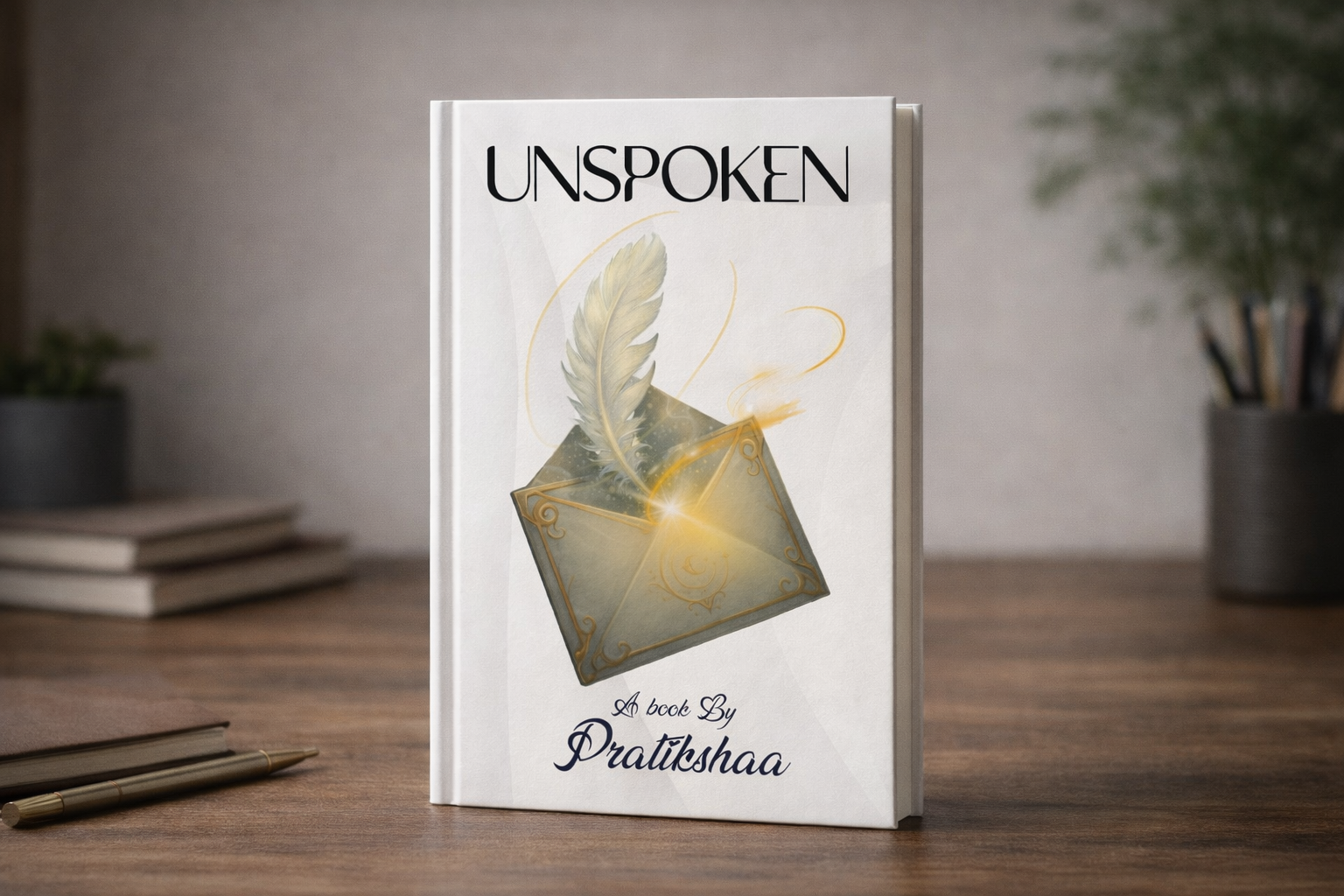
⭐ Rating: 4.4 out of 5
This book didn’t demand attention. It quietly earned it.
I started reading Unspoken at a time when I wasn’t particularly looking for a story. I was just tired. Tired of noise, tired of constant explanations, tired of having to be “okay” in conversations where nobody really wants the truth. This book didn’t arrive like an announcement. It felt more like a letter slipped under the door. Something private. Something meant to be opened slowly.
From the very first pages, it became clear that this isn’t a book you read for entertainment alone. It’s a book you read when you’re ready to sit with yourself. Not fix yourself. Just sit.
Pratikshaa Ghodke has written something deeply intimate here. Not intimate in a dramatic or performative way, but in the way real emotions live quietly inside people. The kind we rarely articulate because we don’t know how, or because we fear what might happen if we do.
The power of what remains unsaid
The title Unspoken is not a clever choice. It is the entire soul of the book.
This story revolves around letters, reflections, and exchanges between Trisha and Angel, two strangers connected not by circumstance, but by emotional honesty. What moved me most is how natural this connection felt. There is no rush. No forced bonding. Just two people slowly lowering their guards because someone is finally listening.
We all carry versions of letters we never sent. Conversations we replay in our heads. Thoughts that feel too heavy to say out loud. This book understands that reality deeply. It doesn’t try to convince you to speak everything immediately. It respects silence. It treats silence as something meaningful, not weak.
And that is rare.
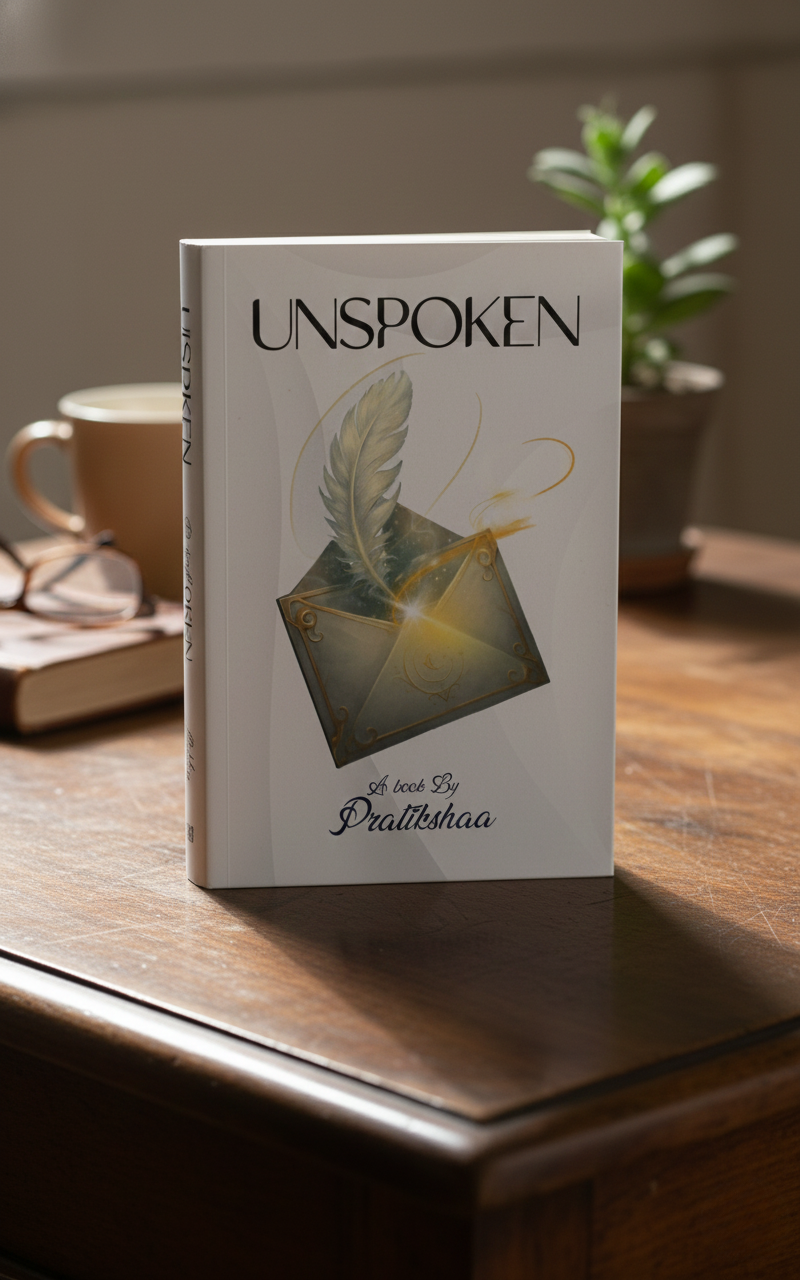
Reading it felt uncomfortably familiar
There were moments while reading where I had to pause. Not because something shocking happened, but because a feeling landed too close to home. The ache of wanting to be understood. The fear of being judged if you show too much. The exhaustion of carrying pain quietly because you don’t want to burden anyone.
This book mirrors those emotions without naming them aggressively. It allows the reader to recognize themselves at their own pace. I found myself thinking about people in my life. And then about myself. The parts I explain away. The parts I minimize. The parts I never bring into conversation.
Unspoken doesn’t ask you to change. It asks you to notice.
Trisha and Angel feel real, not written
One of the strongest aspects of this book is how real the characters feel. Trisha and Angel don’t sound like literary creations. They sound like people you might meet in a late night conversation, or through a message that arrives when you least expect it.
Their exchanges are gentle, sometimes hesitant, sometimes raw. There’s no attempt to make every line poetic. And that’s exactly why the emotions land. The vulnerability is not polished. It’s uneven, sometimes messy, like real honesty is.
What I appreciated most is that healing here is not portrayed as a straight line. There are steps forward and pauses. Moments of clarity and moments of doubt. The book allows that fluctuation without labeling it as failure.
Why this book matters in real life
This is not just a story. It’s a safe space.
For readers who feel unheard, this book offers recognition. For those who struggle to name their pain, it offers language. For people who feel strong on the outside but fragile inside, it offers permission to feel without shame.
In practical life, we’re constantly expected to perform emotional stability. This book quietly challenges that expectation. It reminds you that carrying wounds does not make you broken. It makes you human.
I can see this book being especially meaningful for readers navigating emotional burnout, relationship silence, unresolved grief, or identity confusion. It doesn’t give advice. It gives companionship.
And sometimes that is more useful than solutions.
The writing style feels lived in, not manufactured
Pratikshaa’s writing does not feel calculated. It feels lived. There’s a softness to the prose that suggests listening before speaking. The words don’t rush to impress. They arrive when they’re ready.
There are moments where sentences feel slightly imperfect. Thoughts linger. Emotions repeat in different forms. I liked that. It felt honest. Like the author wasn’t trying to tidy up feelings for presentation.
The pacing also reflects emotional reality. Some sections move slowly. Some feel lighter. Some feel heavy. Just like conversations that matter.
Silence as a form of courage
One of the most beautiful ideas in this book is that healing doesn’t always happen in noise. Sometimes it happens in quiet understanding. In letters. In being seen without judgment.
This book respects emotional boundaries. It doesn’t demand confession. It invites honesty. And that invitation feels safe.
By the time I reached the later sections, I realized something subtle had shifted. I wasn’t reading just about Trisha and Angel anymore. I was thinking about my own unspoken truths. The conversations I avoid. The emotions I delay.
That’s when I understood why this book stays with you.
Who should read Unspoken
This book is for readers who feel deeply but speak carefully. For those who have felt invisible in conversations. For people who carry stories they’ve never shared fully.
If you’re looking for fast paced drama or loud emotional arcs, this may not be your book. But if you value emotional depth, introspection, and quiet connection, this book will meet you exactly where you are.
It’s especially meaningful for readers who enjoy reflective fiction, emotional correspondence, and stories that prioritize inner worlds over external events.
A gentle critique
To be honest, some sections could have benefited from a bit more variation in tone. At times, the emotional weight stays consistently heavy. A few lighter moments, or sharper contrasts, might have added more rhythm.
That said, this consistency also feels intentional. The book knows what it wants to be. And it doesn’t compromise that vision.
Final thoughts
Unspoken is not a book you finish and move on from quickly. It lingers. It asks quiet questions. It sits with you.
I didn’t close this book feeling fixed. I closed it feeling understood. And that kind of reading experience is rare.
This is the kind of book you recommend softly. Not with excitement, but with care. Because you know it will find the right reader at the right time.

With over 11 years of experience in the publishing industry, Priya Srivastava has become a trusted guide for hundreds of authors navigating the challenging path from manuscript to marketplace. As Editor-in-Chief of Deified Publications, she combines the precision of a publishing professional with the empathy of a mentor who truly understands the fears, hopes, and dreams of both first-time and seasoned writers.