
Rating
⭐⭐⭐⭐½ (4.5 out of 5)
First impressions that stayed longer than expected
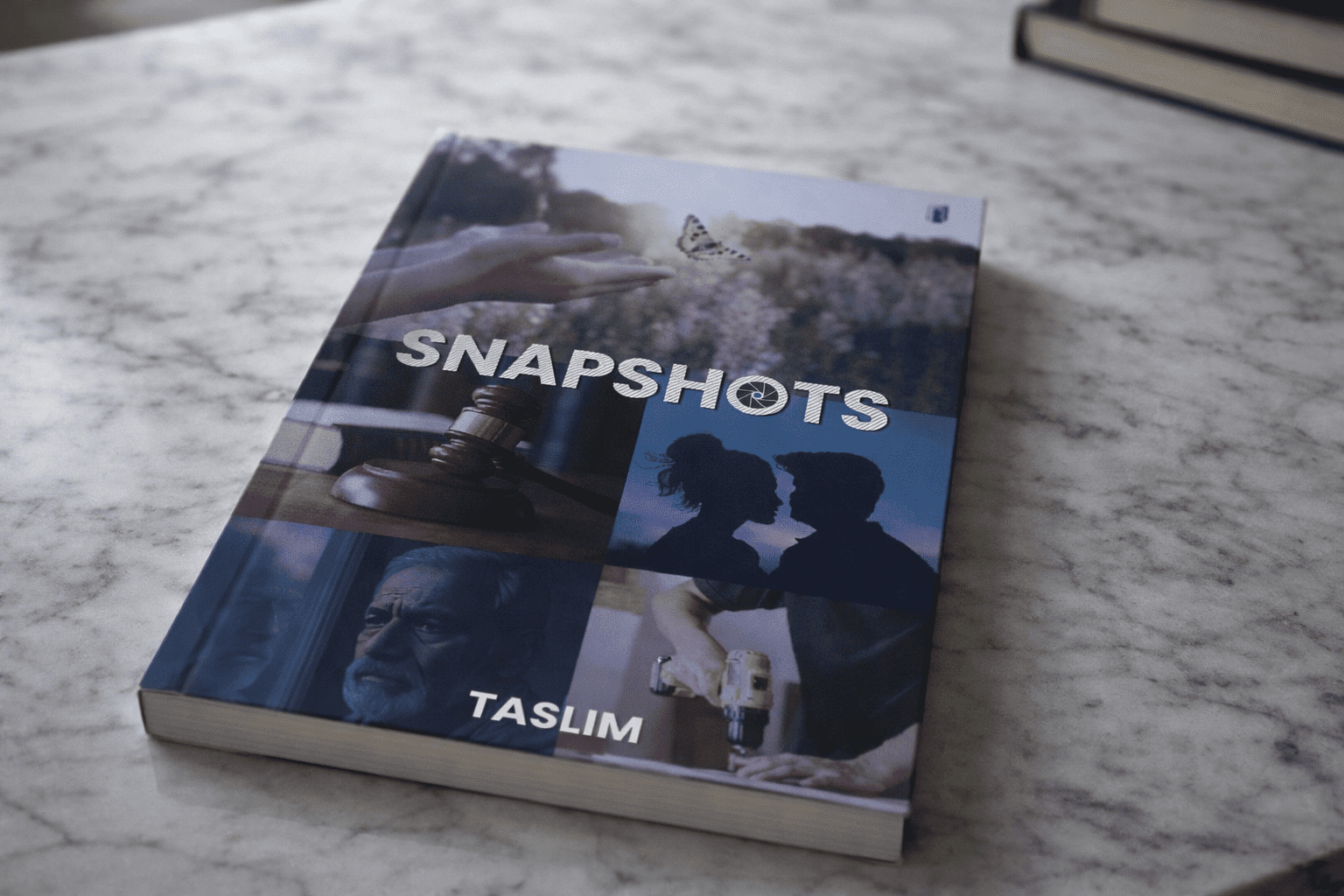
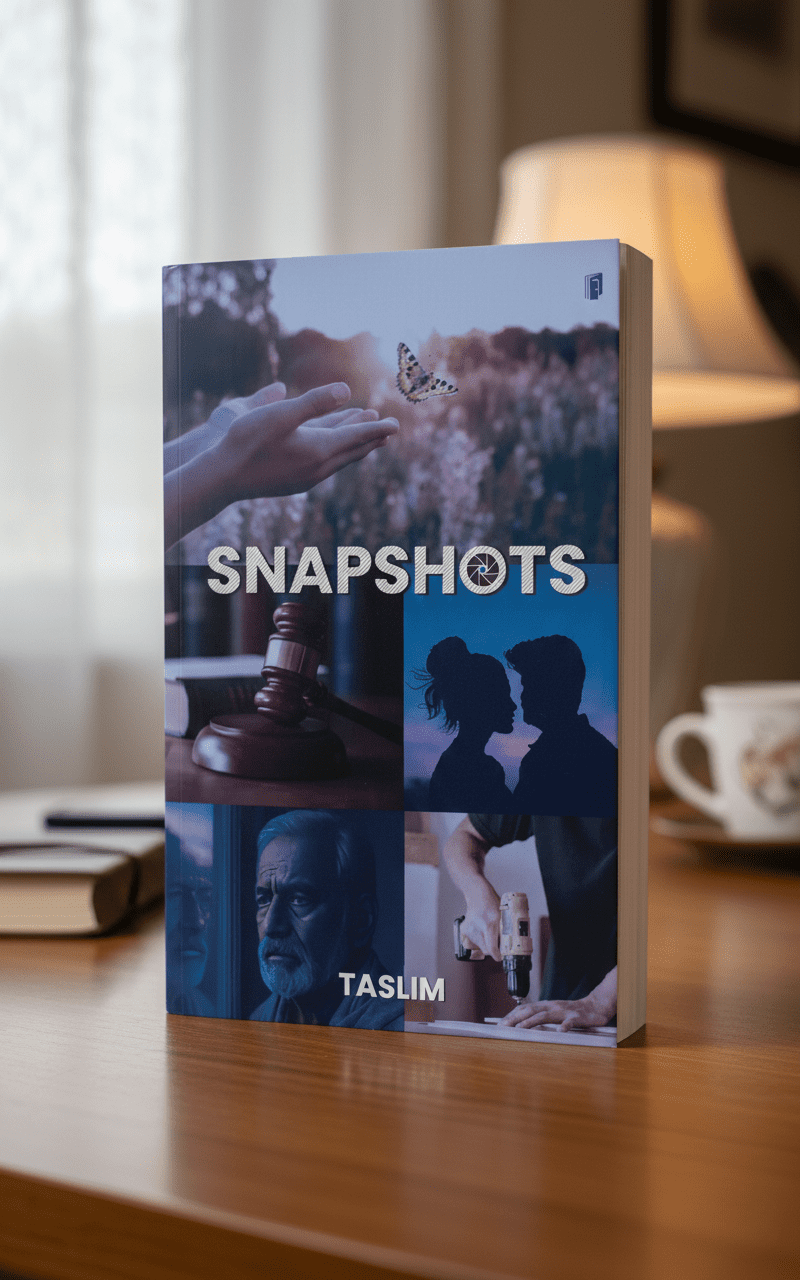
I picked up Snapshots by Taslim without much preparation. Just the cover, the title, and a short blurb. That was enough. The cover itself already feels like a collage of lived moments rather than a design exercise. Once I began reading, it became clear that this book does not chase drama or clever tricks. It observes. It notices. It waits for the reader to meet it halfway.
What struck me early on was the voice. It feels like listening to someone older than you, not in age alone, but in experience. Someone who has watched life long enough to stop pretending they have all the answers. The writing does not rush to impress. It feels patient, reflective, and deeply human.
What Snapshots is really about
At its core, Snapshots is about moments that usually slip past us. Not the grand events we photograph and frame, but the smaller ones that shape how we think, love, judge, forgive, and grow. Taslim structures the book around these fragments of life, each one standing on its own yet quietly connected to the rest.
There are reflections on justice symbolized through a gavel, on freedom through a butterfly, on love through silhouettes rather than declarations, and on aging through faces that carry years in their lines. These are not metaphors thrown around to sound poetic. They feel earned. They come from observation, not imagination alone.
What I appreciated most is that the book never forces meaning on the reader. It presents situations and lets you sit with them. Some passages made me pause and think of people I know. Some reminded me of choices I made years ago and still carry. That kind of reaction does not come from clever writing. It comes from honesty.
The emotional texture of the book
There is a calm emotional maturity running through Snapshots. Not calm as in distant, but calm as in assured. The book does not beg for empathy. It trusts that if you have lived even a little, you will find yourself reflected somewhere.
One section that stayed with me involved age and memory. There is a sense that time does not just pass, it settles into us. Taslim does not romanticize growing older, nor does he fear it. He presents it as a natural accumulation of lessons, regrets, acceptance, and grace. That balance felt real to me.
Another recurring feeling is compassion. Even when addressing themes like public conscience or justice, the tone remains humane. There is criticism, yes, but never cruelty. The author seems more interested in understanding why people act the way they do than in passing judgment.
Writing style that feels lived in
The language in Snapshots is accessible without being simplistic. There are moments where the sentences feel slightly uneven, and honestly, I liked that. It made the book feel less polished and more sincere. Like someone talking to you rather than performing for you.
Taslim writes in a way that respects the reader’s intelligence. He does not explain everything. He allows space for interpretation. This is important because the book deals with universal themes. If overexplained, they would lose their weight.
The bilingual proficiency of the author also subtly shows in the rhythm of the writing. There is a certain cadence that feels influenced by both English and Indian storytelling traditions. It adds depth without distracting from the content.
Who this book will resonate with
This is not a book for someone looking for fast entertainment or dramatic twists. It is for readers who enjoy reflection, who like to connect literature with their own lives. If you have ever sat alone with your thoughts after a long day and replayed conversations or choices, this book will feel familiar.
It will especially speak to readers who are navigating transitions. Career shifts, aging parents, changing relationships, or simply the realization that life is more layered than it once seemed. The book does not offer solutions, but it offers companionship in those thoughts.
Why Snapshots matters in real life
What makes Snapshots meaningful is its relevance outside the page. It subtly encourages mindfulness without preaching it. After reading a few sections, I found myself more attentive to everyday interactions. Not in a forced way, but naturally.
The book reminds you that meaning is not always found in achievement. Sometimes it lives in how you listen, how you respond, how you notice others. In a world obsessed with speed and visibility, this kind of reminder feels necessary.
There is also value in how the book bridges personal experience with public responsibility. The reflections on justice and conscience are grounded in humanity, not ideology. That makes them accessible to a wider audience.
About the author through the lens of the book
Knowing that Taslim is a retired Chief General Manager and has studied across diverse institutions adds context to the writing. You can sense the discipline of a professional life and the introspection that often comes after stepping away from it.
His background in literature, poetry, and philosophy comes through, but it never overshadows the storytelling. Awards and credentials aside, what stands out is his ability to observe without arrogance. The book feels like the work of someone who has learned to listen more than speak.
Any drawbacks worth mentioning
No book is perfect, and Snapshots is no exception. Some readers might wish for deeper exploration in certain sections. A few moments feel like they end just when you want them to continue. For me, that was more of a longing than a flaw, but it is worth mentioning.
Also, readers who prefer tightly structured narratives might find the fragmentary nature challenging. This book does not follow a traditional arc. It mirrors life more than plot, and that may not suit everyone.
Final thoughts as a reader
When I closed Snapshots, I did not feel overwhelmed or emotionally drained. I felt settled. Thoughtful. A little more attentive to my surroundings. That is not a dramatic reaction, but it is an honest one.
This is the kind of book you might return to after some time. Not to reread cover to cover, but to revisit certain passages when life feels noisy. It respects your time and your intelligence, and in return, it asks only that you slow down for a moment.
For readers seeking sincerity over spectacle, Snapshots quietly earns its place.

With over 11 years of experience in the publishing industry, Priya Srivastava has become a trusted guide for hundreds of authors navigating the challenging path from manuscript to marketplace. As Editor-in-Chief of Deified Publications, she combines the precision of a publishing professional with the empathy of a mentor who truly understands the fears, hopes, and dreams of both first-time and seasoned writers.