
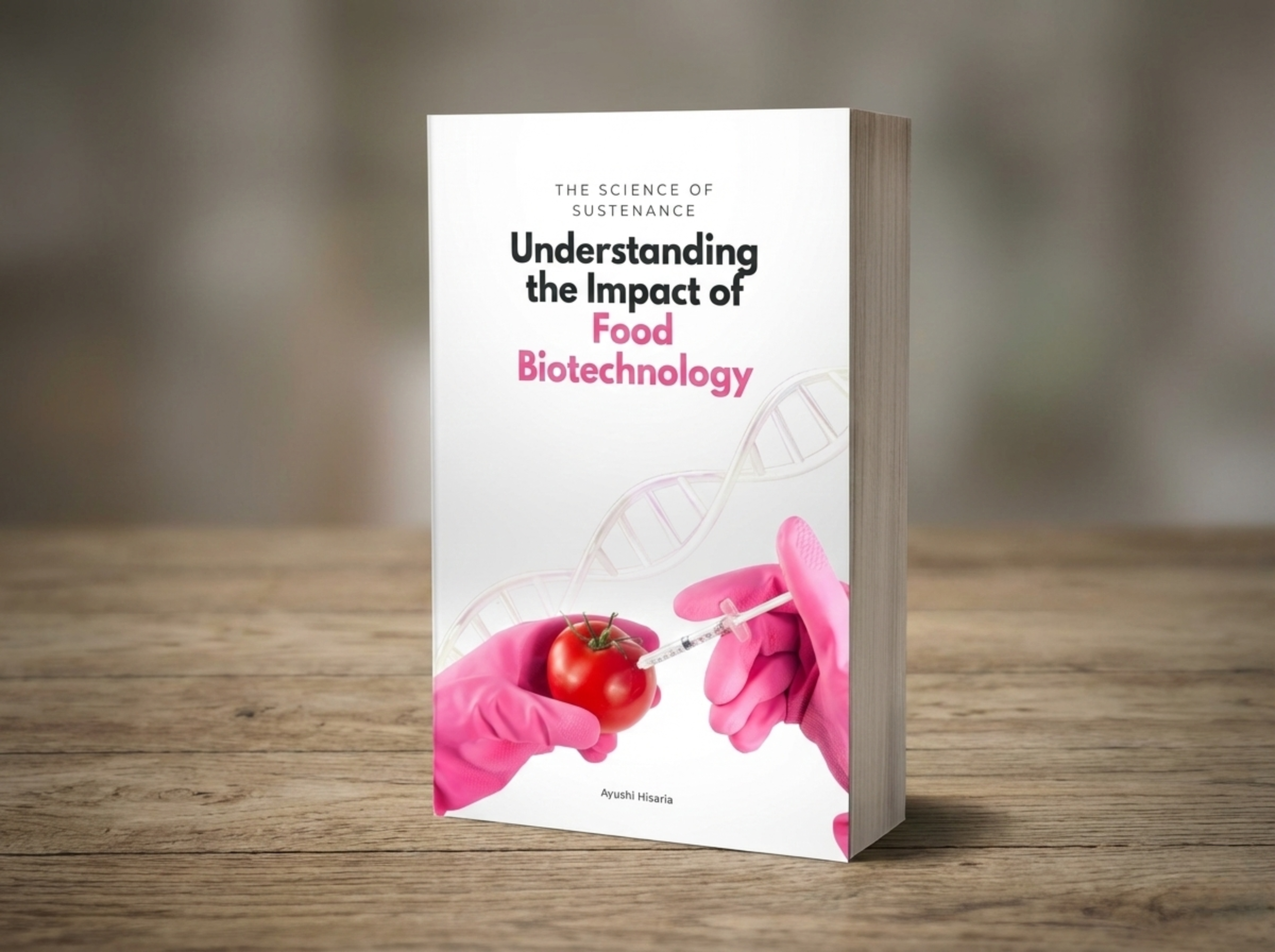
I picked up The Science of Sustenance: Understanding the Impact of Food Biotechnology by Ayushi Hisaria with a mix of curiosity and mild hesitation. Food biotechnology is one of those topics people argue about loudly but often understand very little. I am not a scientist. I am just someone who reads labels, worries about what goes into my body, and sometimes feels overwhelmed by how fast food systems are changing. So I came to this book hoping for clarity, not comfort.
What I found was something calmer and more grounded than I expected.
This book does not talk down to the reader. It also does not try to convince you aggressively. It feels written by someone who respects that readers have doubts, questions, and even fears about biotechnology. That respect shows up on almost every page.
A Gentle but Solid Foundation
The opening chapters focus on the basics and history of food biotechnology. This could have been dry. It is not. Ayushi Hisaria takes time to explain where food biotechnology actually comes from, long before it became a controversial word. Fermentation, selective breeding, and early agricultural innovations are explained in a way that feels familiar rather than technical.
I liked that she does not rush this part. She understands that if the foundation is shaky, everything else collapses. Reading these chapters felt a bit like being guided by a patient teacher who knows some students might be anxious but still wants them to understand, not just memorize.
There were moments where I paused and thought, wait, we have been using forms of biotechnology for centuries without calling it that. That realization alone reframes the entire debate.
Genetic Engineering Without the Fear Language
When the book moves into genetic engineering, it does not use fear as a hook. That matters. Too many discussions around GM foods start with extremes, either panic or blind optimism. This book stays in the middle, which is harder and more honest.
The principles behind genetic modification are explained clearly. Not oversimplified, but also not buried in jargon. I never felt lost, even when the science got slightly complex. There is an effort here to make sure the reader stays with the author rather than feeling left behind.
What stood out to me is how Ayushi Hisaria separates what is scientifically established from what is still debated. She does not pretend everything is perfect. She acknowledges uncertainty where it exists. That builds trust.
Real Foods, Real Examples
One of the strongest parts of this book is how it discusses existing biotech foods. Instead of speaking in abstractions, it talks about what is actually on the market, what problems these foods are meant to solve, and where they fall short.
This section made me reflect on my own shopping habits. I realized how often I make assumptions without understanding the science behind them. The book does not shame those assumptions. It gently questions them.
The case studies are especially effective. They are not presented as success stories only. Some show genuine progress, others reveal complications and unintended consequences. That balance makes the book feel credible.
Regulation, Public Perception, and Mistrust
The chapters on regulation and public perception felt deeply relevant. Food is personal. When people feel excluded from decision making, mistrust grows. The book explains how regulations differ across countries and why public acceptance varies so widely.
I appreciated that Ayushi Hisaria does not dismiss public fear as ignorance. She treats it as a social response shaped by history, media narratives, and real ethical concerns. That perspective feels compassionate.
Reading this, I thought about how little transparency most consumers actually experience. Labels rarely tell full stories. Policies are often discussed in rooms far away from everyday kitchens. The book quietly argues that informed dialogue is not optional. It is necessary.
Ethics and Environment Without Easy Answers
This is where the book really earns its depth. Environmental impact and ethical questions are not treated as boxes to check. They are explored with nuance.
The environmental discussion covers resource efficiency, crop resilience, and sustainability goals, but it also looks at risks. There is no pretending that technology alone can fix everything. Biotechnology is presented as a tool, not a savior.
Ethically, the book raises questions about control, access, and equity. Who benefits? Who decides? Who bears the risks? These questions are not answered neatly, and that is a good thing. Real life rarely offers neat answers.
I found myself thinking about farmers, not just consumers. About regions facing food scarcity. About how privilege shapes opinion. These reflections stayed with me after I closed the book.
Writing That Feels Thoughtful, Not Showy
Stylistically, the writing is calm and sincere. There are moments where the sentences are not perfectly polished, and honestly, I liked that. It made the book feel human. Like someone speaking from care, not performance.
Ayushi Hisaria does not try to impress with vocabulary. She focuses on clarity. The tone feels warm, almost reassuring, especially when dealing with sensitive topics. It feels like the author genuinely wants readers to think, not just agree.
Why This Book Matters in Everyday Life
This book matters because food decisions happen every day, whether we think about them or not. We eat. We shop. We judge. Often without enough information.
The Science of Sustenance: Understanding the Impact of Food Biotechnology does not tell you what to eat. It helps you understand what questions to ask. That difference is important.
If you are someone who feels confused by headlines about GM foods, climate change, and food security, this book gives you context. If you are someone who already has strong opinions, it challenges you gently to examine them.
I finished this book feeling more informed, not overwhelmed. More thoughtful, not defensive. That is rare.
Who Should Read This Book
This book is for curious readers who want substance without intimidation. Students, educators, policy thinkers, and everyday consumers will all find something valuable here.
If you are looking for dramatic claims or sensational arguments, this may not be for you. If you want a grounded, respectful exploration of food biotechnology, it absolutely is.
A Personal Closing Note
When I closed the last page, I felt a quiet respect for the effort behind this work. Writing about food biotechnology responsibly is not easy. Ayushi Hisaria manages to do it with care, balance, and clarity.
There is sincerity in this book. It feels written by someone who understands the weight of the subject and the responsibility of explaining it well.
We are waiting for your second launch. And your book is amazing. Truly.

With over 11 years of experience in the publishing industry, Priya Srivastava has become a trusted guide for hundreds of authors navigating the challenging path from manuscript to marketplace. As Editor-in-Chief of Deified Publications, she combines the precision of a publishing professional with the empathy of a mentor who truly understands the fears, hopes, and dreams of both first-time and seasoned writers.