

Rating:
⭐⭐⭐⭐ (4.3 out of 5)
The Kind of Story That Stays in Your Chest
Some books feel like history lessons. Others feel like lived experience.
And every once in a while you come across a novel that feels less like fiction and more like someone standing in front of you, telling you what life looked like when dignity itself was something people had to fight for.
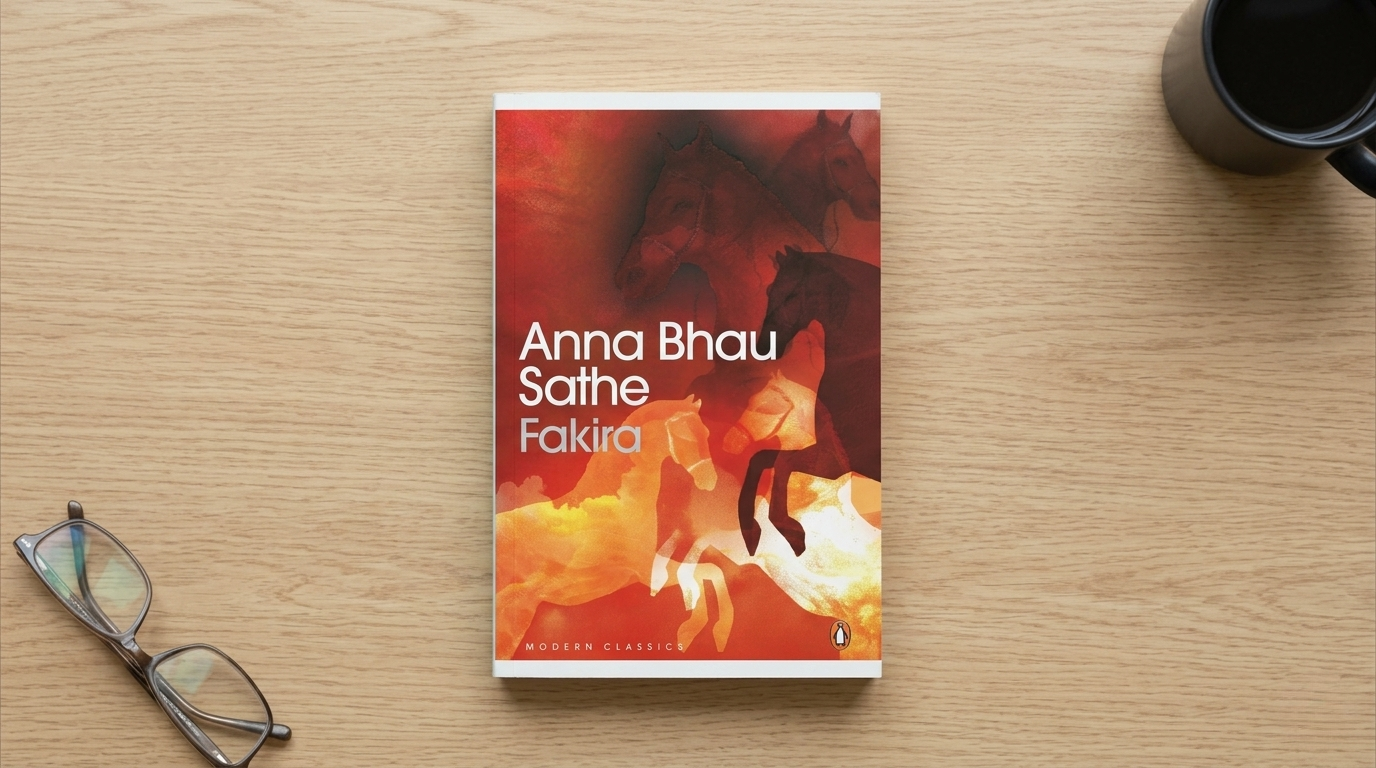
That was my feeling when I sat with Fakira by Anna Bhau Sathe.
I should say this honestly. As Editor in Chief at Deified Publication, I read a lot of books every year. Literary fiction, memoirs, translations, poetry. After a while you develop instincts. You start noticing what feels genuine and what feels constructed.
Marathi to English translation of this work by Prof. Baliram Gaikwad carries Anna Bhau Sathe’s fierce and unforgettable voice across languages, allowing Fakira’s struggle for dignity to reach readers far beyond Maharashtra.
Fakira feels genuine.
Even before reaching the first chapter, the introduction already sets a powerful tone. The critic writing the introduction compares Anna Bhau Sathe to figures like Jean Genet, noting how both came from difficult beginnings but turned their life experiences into literature. That comparison made me pause. It reminded me that many of the most powerful writers come from places where storytelling was survival.
And Sathe’s background really matters here. Born into a marginalized community, largely self educated, he wrote about the realities of caste, poverty, and resilience not from distance but from lived knowledge.
Maybe that is why the novel carries a certain emotional weight from the very beginning.
You can feel it.
What the Book Is About
If someone asked me casually over chai, “So what is Fakira about?” I would probably say something like this.
It is the story of a man who refuses to accept humiliation as the natural order of things.
The novel revolves around Fakira, a man from a Dalit community living under the crushing weight of caste hierarchy and colonial rule. His struggle is not just personal. Everything he does is tied to the survival and dignity of his village.
Right from the early chapters, we see the world Sathe builds. There is this opening scene where evening settles over the village of Vategaon. The sun fades, darkness spreads across the fields, and the village lanes slowly go silent. Shankarrao Patil sits alone on a wooden swing waiting for someone to talk to. No one comes.
It is such a small moment but it quietly establishes the loneliness and tension of village life.
Soon the narrative moves into the cultural life of the village, particularly the jogani jatra, a religious fair tied to local traditions. There is jealousy between villages over who hosts the fair. Bajiba Khot of Shigaon had once captured the jogani symbol and brought prestige to his village.
That detail might seem small at first, but it slowly turns into a major source of conflict.
What I found interesting is how Sathe mixes everyday village life with looming political and social tension. Kids playing games like viti dandu. Boys gathering around a storyteller named Ghamandi who brings news from outside villages. People talking about British soldiers camping nearby.
And gradually, the story widens.
Fakira begins organizing resistance.
The oppression is both social and economic. Dalit communities face hunger, humiliation, and violence. At one point, when the authorities cannot capture Fakira, they threaten the entire community. His people are essentially held hostage.
This becomes one of the most emotionally difficult moments in the book.
Fakira realizes something devastating. His fight is costing innocent people their safety.
So he makes a decision that still lingers with me.
He chooses to surrender.
Not because he has lost courage, but because protecting his community matters more than his own freedom.
And honestly, that choice says everything about the kind of character he is.
What Stood Out to Me
One thing that immediately struck me while reading the excerpts and chapters is the way Anna Bhau Sathe writes about community.
This is not a story about a lone hero saving the day. Fakira is brave, yes. But the novel constantly reminds us that movements are collective.
Take the scenes where villagers gather at Bapu Khot’s house discussing how to reclaim the jogani. There are young men, old men leaning against pillars, people arguing about courage and responsibility. The atmosphere feels almost theatrical.
You can almost hear the voices.
Another scene that stayed with me involves children in the Mang settlement during the scorching Chaitra season. The description is so vivid. The trees bursting with spring leaves, the heat shimmering in the sky, children running around cactus bushes while elders twist ropes in the shade.
It is the kind of writing that grounds political struggle in everyday life.
Then there is the character of Sattu, introduced later in the novel. His journey is heartbreaking in a different way. Raised in poverty, he eventually joins the army and earns respect. But when he returns to the village he faces humiliation again. There is a brutal scene where a pregnant woman is beaten over a broken fence spike. Sattu tries to intervene.
That moment captures the cruelty of caste prejudice in the most direct way.
Another thing I appreciated is that the novel spans multiple generations and social layers. We meet village leaders, rebels, children, British officials, and women struggling to survive inside rigid hierarchies.
The narrative never feels small.
And apparently the book has 15 chapters, which makes sense because the story unfolds in clear stages. Early chapters establish the village world. Middle sections show rising resistance and tension. Later chapters bring consequences, sacrifices, and difficult decisions.
As someone who has worked with manuscripts for years, I always notice structure. Sathe seems to understand pacing instinctively.
The Emotional Core
There is a scene near the end that really stayed with me.
Fakira gathers his companions and prepares to surrender. They polish their weapons and wear clean clothes, not because they expect victory but because dignity matters even in defeat.
They know they might never see each other again.
That moment felt deeply human.
And then there is Radha. When she hears Fakira’s name echo across the landscape, she runs toward him with open arms. It is not written like a dramatic cinematic reunion. It feels raw and desperate.
That cry of “Fakiraaa” is heartbreaking.
I kept thinking about how many freedom stories are actually built on sacrifices like this. People who knew the system would crush them but still chose to resist.
In 2026, reading this novel feels strangely timely. Conversations about caste, dignity, and social justice are still happening across India. Fakira does not feel like a relic of the past.
It feels like a reminder.
Who This Book Is For
I think Fakira will resonate strongly with several kinds of readers.
First, anyone interested in Dalit literature should absolutely know about this novel. It stands alongside works that shaped the literary voice of marginalized communities in India.
Second, readers who enjoy historical fiction grounded in real social struggles will find a lot here. The presence of the British Raj adds another layer to the story.
Third, people who appreciate village centered storytelling might connect deeply with Sathe’s world building.
However, I should mention something honestly.
The translation sometimes carries the rhythm of Marathi storytelling. For readers used to very contemporary English prose, the pacing might feel slightly old fashioned in places.
Personally I did not mind it. In fact it felt authentic.
But some readers might need a few pages to adjust.
Final Thoughts
In my years reading and reviewing books, I have noticed something simple.
Stories that come from lived experience carry a certain gravity.
Fakira has that gravity.
Anna Bhau Sathe was not writing from imagination alone. His work grew out of real struggles faced by Dalit communities across Maharashtra. You can feel that truth in the characters, in the anger, and in the moments of quiet resilience.
Is the novel perfect?
Probably not. Some passages move slowly and the translation occasionally feels formal.
But the emotional strength of the story easily outweighs those minor issues.
And honestly, I am glad this book exists in English translation because it deserves readers beyond regional boundaries.
If you are curious about Indian literary history, Dalit resistance, or simply want to encounter a character who refuses to accept injustice as destiny, Fakira is worth your time.
Some stories do not shout.
They stand their ground.
Fakira does exactly that.

With over 11 years of experience in the publishing industry, Priya Srivastava has become a trusted guide for hundreds of authors navigating the challenging path from manuscript to marketplace. As Editor-in-Chief of Deified Publications, she combines the precision of a publishing professional with the empathy of a mentor who truly understands the fears, hopes, and dreams of both first-time and seasoned writers.