
Rating:
⭐⭐⭐⭐ (4.5 out of 5)
A book that asks you not to look away
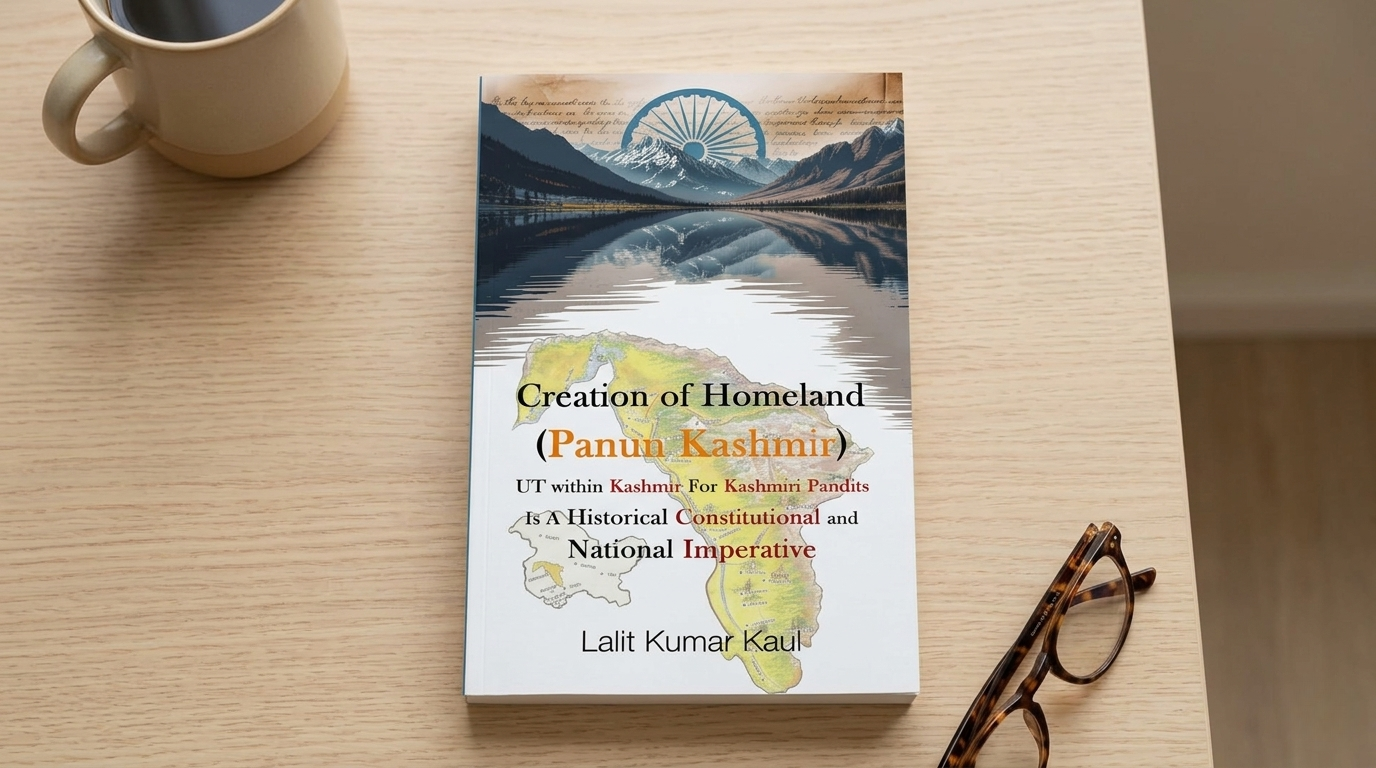
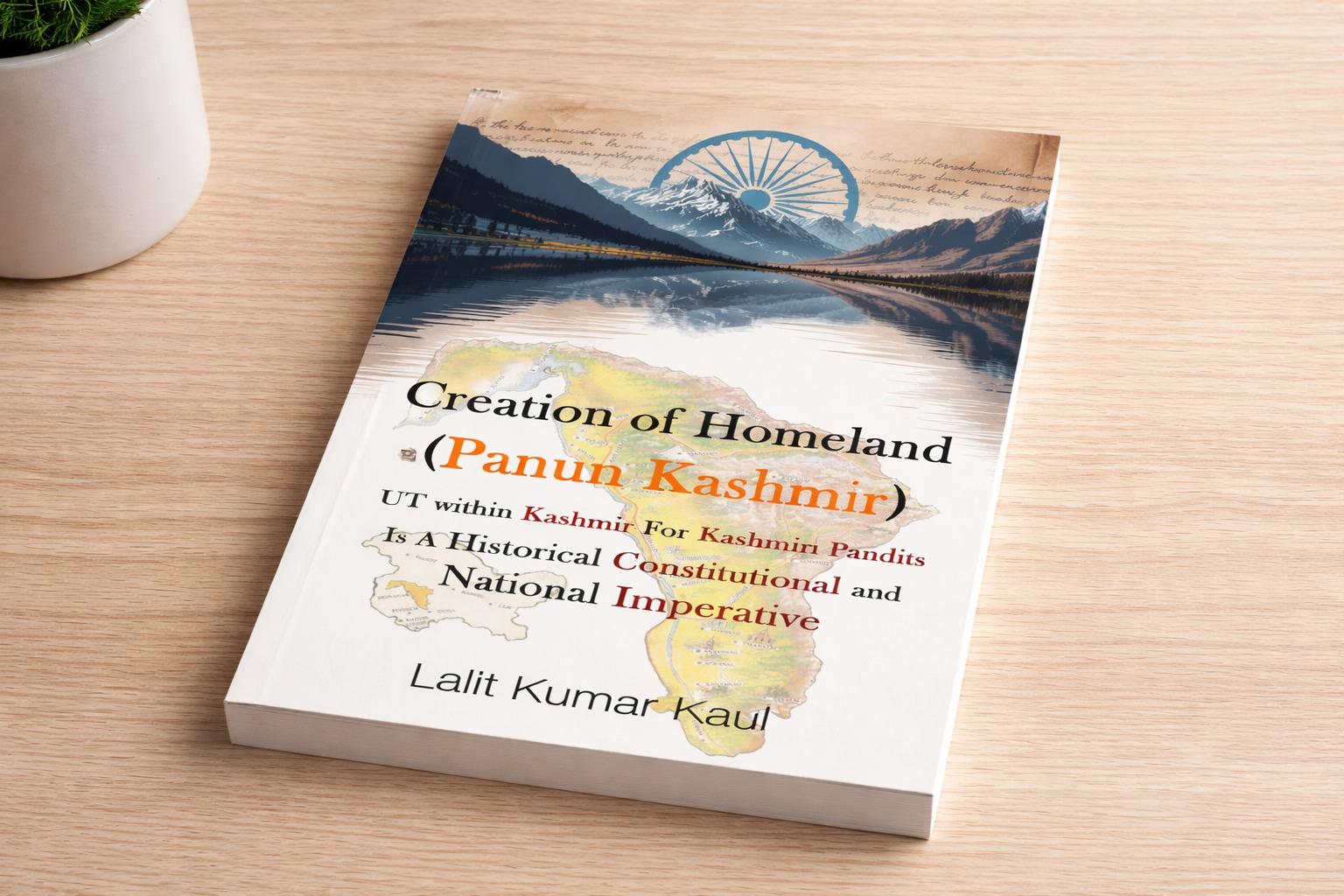
As Editor-in-Chief at Deified Publication, I read across genres every week, but books rooted in history, memory, displacement, and constitutional argument always make me pause longer. Creation of Homeland (Panun Kashmir) by Lalit Kumar Kaul is one of those books.
I finished it with a strange heaviness. Not because it reads like an academic legal document, though in many places it certainly does, but because beneath the constitutional reasoning and historical framing, there is a deep wound running through every page: the wound of exile, identity, and the longing for civilizational continuity.
This is not a light history read. It is a forcefully argued political and constitutional thesis, written with clear ideological conviction. I think that honesty of intent actually helps the book. Kaul is not pretending neutrality. He is writing from pain, memory, and a belief that the creation of a Kashmiri Pandit homeland within Kashmir is both historically justified and nationally necessary. Whether a reader agrees fully or not, that clarity gives the book its power.
And honestly, some parts stayed with me longer than I expected, especially the repeated framing of exile not merely as migration, but as a rupture of heritage and belonging.
What the Book Is About: History, constitutional reasoning, and a homeland claim
At its core, Creation of Homeland (Panun Kashmir) is an extended argument for the creation of a Union Territory within Kashmir for Kashmiri Pandits. The subtitle makes that purpose explicit, and the book spends over 150 pages building this case through history, politics, constitutional interpretation, and national security concerns.
The structure is methodical. The early chapters examine what the author describes as socio-political and ideological currents that shaped communal politics in the subcontinent. From there, the narrative moves through the span of Islamic rule in India and Kashmir, the multiple exoduses of Kashmiri Pandits, post-independence political developments, and eventually into the constitutional and national imperatives for territorial rehabilitation.
What I appreciated, from a craft standpoint, is that Kaul understands escalation in non-fiction argument. He begins with worldview, moves into historical episodes, then narrows into legal obligation. That progression gives the book a sense of cumulative force.
There is also a very deliberate use of chapter architecture. By the time the reader reaches sections like The Historical Imperative, The Constitutional Imperative, and The National Imperative, the author has already laid the emotional and ideological groundwork for why those claims matter to him.
What Stood Out to Me: The blend of memory and constitutional logic
What stood out most to me was how this book combines two very different energies.
The first is deeply emotional and civilizational. The dedication alone, which honors “martyred Kashmiri Hindus and Pandits,” sets the emotional register immediately. This is not history as detached chronology. This is history as inherited memory.
The second is procedural and legal. Kaul repeatedly returns to the Constitution, framing homeland creation not as a symbolic demand but as a constitutional duty of the Indian state. I found that move interesting because it shifts the discussion from grief into governance.
In my years reviewing serious political history books, I’ve noticed that many writers either become too emotional and lose rigor, or become too legalistic and lose the human stake. Kaul, for the most part, avoids that split.
That said, I do think the book’s strongest quality can also be its limitation. Its perspective is intensely singular. Readers looking for a multi-perspective historiographical treatment of Kashmir may find the lens narrow. But I’m not sure the author ever intended otherwise. This is an advocacy text as much as it is a historical one.
And maybe that is exactly why it works on its own terms.
The Emotional Core: Exile, return, and civilizational continuity
For me, the emotional center of Creation of Homeland (Panun Kashmir) is not the constitutional argument. It is the repeated idea of return after erasure.
There is something deeply human in the way the book frames homeland not just as land, but as restoration of memory, temples, language, ancestral continuity, and a sense that history cannot simply be dissolved by displacement.
I kept thinking about how exile changes families over generations. The first generation remembers streets, shrines, neighbors, seasons. The second remembers stories. By the third, memory itself starts becoming abstract. Books like this are trying to resist that fading.
Even when the prose becomes sharply polemical, that emotional undertone remains visible.
In 2026, this feels especially timely because questions of memory, territorial identity, minority rights, and constitutional redress are not abstract debates anymore. They are active conversations shaping how nations understand justice after trauma.
Some readers may disagree with the framing. Some may find parts of the rhetoric too absolute. That is fair. But I think the emotional honesty of loss and the desire for restoration are impossible to miss.
Who This Book Is For: Readers of political history, constitutional debates, and Kashmir studies
This book is for a specific kind of reader.
If you are interested in Kashmir history, Kashmiri Pandit displacement, constitutional rehabilitation debates, identity politics, or post-Partition historical memory, this book gives you a clear and highly argued perspective.
It may especially resonate with:
- readers studying Kashmiri Pandit history
- policy and law readers interested in territorial autonomy models
- those exploring civilizational memory and displacement literature
- readers who want to understand the ideological foundations behind the Panun Kashmir demand
This might not be for someone looking for a neutral beginner’s history of Kashmir. It assumes some familiarity with the issue and comes from a strongly argued standpoint.
But for readers who want to understand one of the most emotionally charged constitutional claims in contemporary India, it offers real value.
Final Thoughts: A book of conviction, grief, and political intent
I think Creation of Homeland (Panun Kashmir) succeeds because it knows exactly what it wants to be.
It is not trying to please everyone.
It is not trying to flatten its convictions.
It is not interested in vague middle ground.
Instead, Lalit Kumar Kaul has written a serious, deeply committed work that combines historical narration, constitutional interpretation, and a community’s long memory of exile into one sustained argument.
As Priya Srivastava from Deified Publication, what I value most here is the sincerity of purpose. Even where I felt the framing could have benefited from more engagement with alternative viewpoints, I respected the discipline with which the argument is built chapter by chapter.
It is the kind of book that will matter most to readers who come to it not for easy answers, but to understand the emotional and constitutional logic behind a homeland demand that continues to shape public discourse.
FAQ
Is Creation of Homeland (Panun Kashmir) worth reading?
Yes, if you want a serious perspective on the Panun Kashmir constitutional argument.
Who should read this book?
Readers of Kashmir studies, political history, constitutional policy, and displacement narratives.
Is it balanced?
It is strongly viewpoint-driven, which is both its strength and its limitation.
Should you read it in 2026?
Yes, especially because identity and rehabilitation debates remain highly relevant.

With over 11 years of experience in the publishing industry, Priya Srivastava has become a trusted guide for hundreds of authors navigating the challenging path from manuscript to marketplace. As Editor-in-Chief of Deified Publications, she combines the precision of a publishing professional with the empathy of a mentor who truly understands the fears, hopes, and dreams of both first-time and seasoned writers.