
Rating:
⭐⭐⭐⭐ (4.3 out of 5)
There are some books that announce themselves loudly. Big promises. Big emotions. Big words.
Cactus by Dr. Riturani Raka didn’t do that to me.
What it did instead was make me slow down.
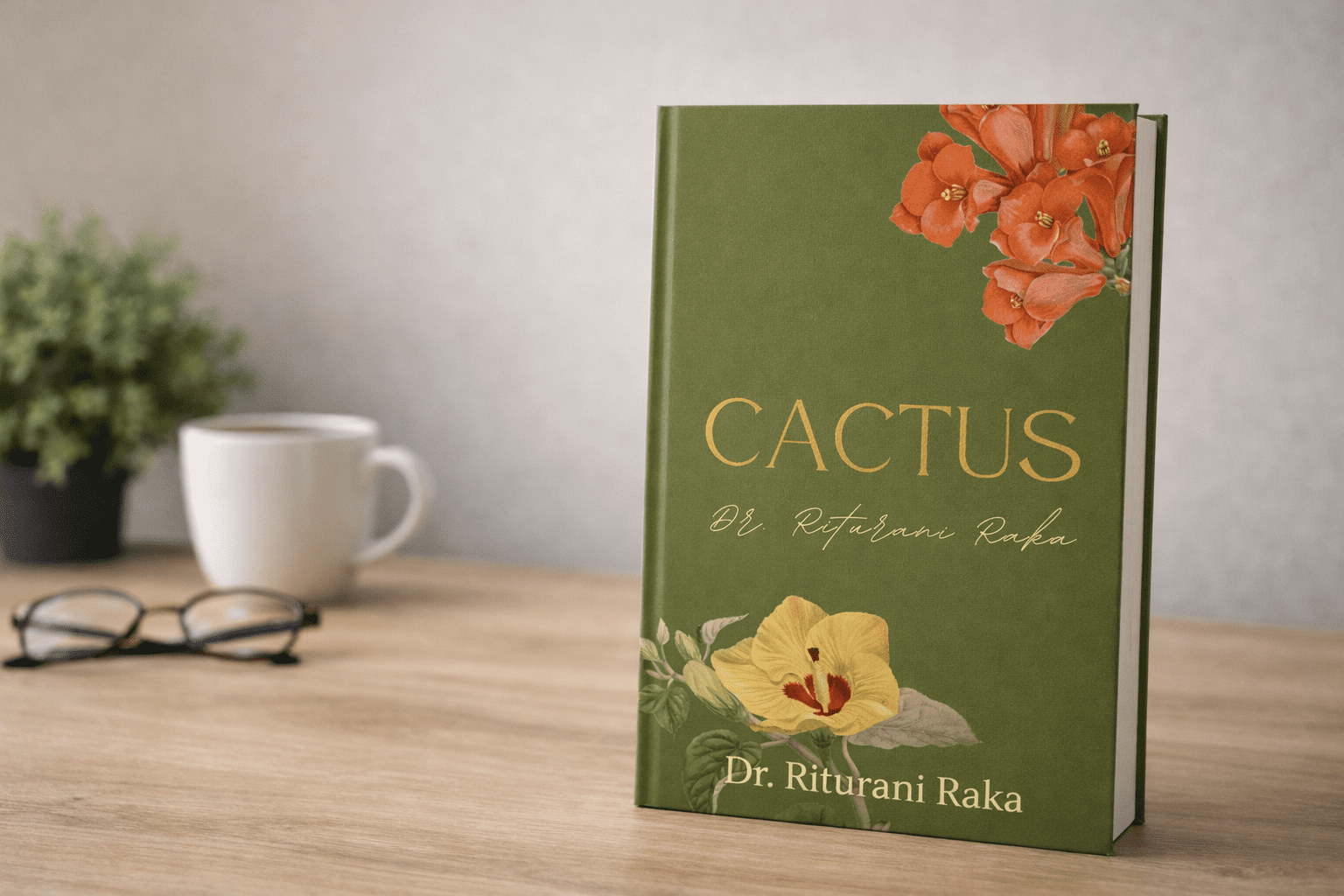
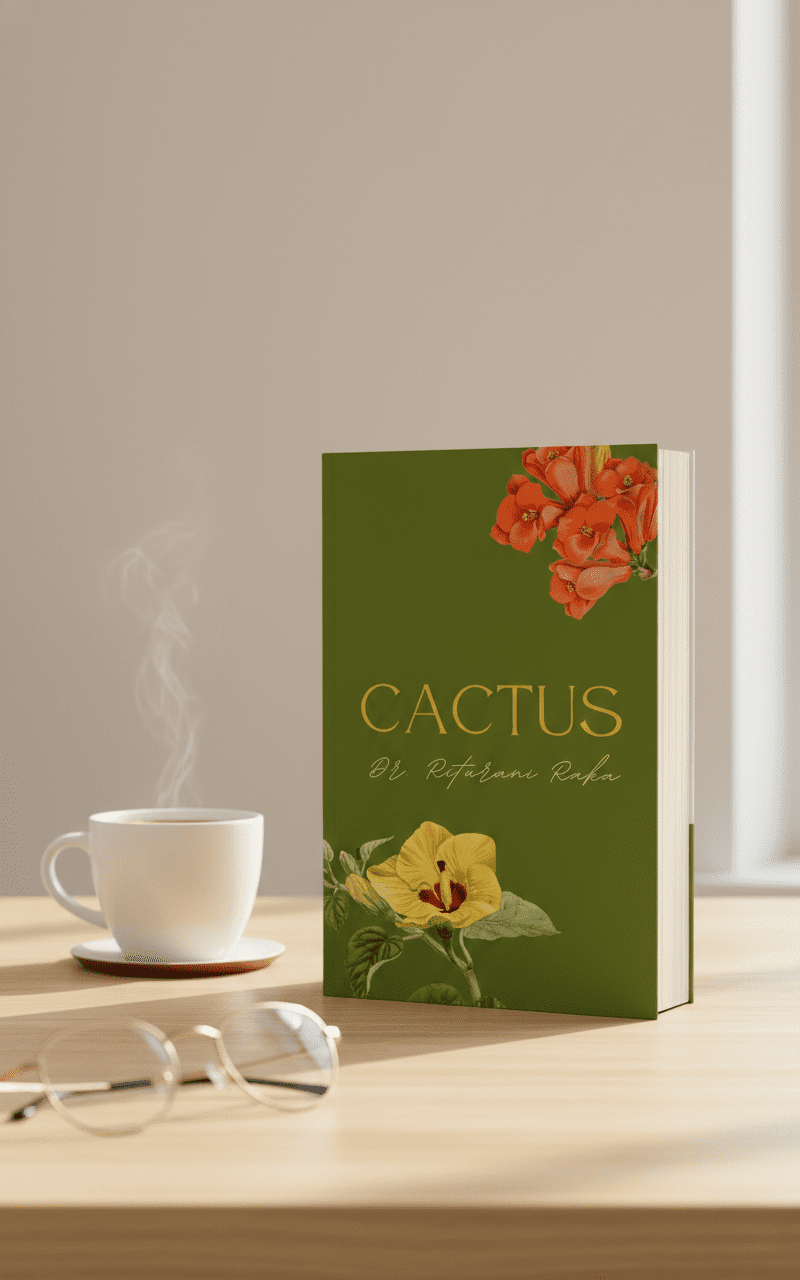
When I first saw the cover, that deep olive green with those bold yet tender flowers, I thought about contrast. Strength and softness sitting side by side. And then the title. Cactus. A plant people often associate with toughness, survival, maybe even loneliness. I paused there. In my years reviewing books, especially poetry, I’ve learned that when a poet chooses a symbol so deliberately, it usually means something personal is at stake.
I hadn’t read the poems yet. I only had the cover and the blurb in front of me. But even then, I felt like this was a book written by someone who has spent time watching life rather than rushing past it. Honestly, it reminded me of evenings when you sit with a friend and they start sharing things slowly, not to impress, but because they’ve carried those thoughts for a while.
What the Book Is About
Cactus is a collection of poems rooted in everyday human emotions and situations. The blurb is very clear about that. These poems are not abstract puzzles or linguistic experiments. They are grounded in desires, feelings, struggles, and ordinary moments that quietly shape a life.
The central metaphor of the cactus runs throughout the book. As we know, a cactus survives where many plants cannot. It adapts. It holds water quietly. It protects itself, yet blooms when the time is right. Dr. Riturani Raka uses this symbol to mirror human life. We survive difficult conditions. We grow around pain. We learn endurance without applause.
The blurb emphasizes accessibility. The language is intentionally simple. The author avoids complicated vocabulary so the poems can reach more readers. That choice matters. In poetry, simplicity is often misunderstood as lack of depth. In reality, writing simply while still carrying meaning is one of the hardest things to do.
Each poem carries its own message, yet there is a connection running through the collection. That tells me this book is not a random assortment of verses. It feels curated. Thought through. There is an emotional thread holding it together.
What Stood Out to Me
What stood out to me first was intention.
In my fifteen plus years of reading poetry, I’ve seen many collections where the poet seems more focused on sounding poetic than saying something true. That doesn’t appear to be the case here. From the blurb and back cover, it’s clear that Dr. Riturani Raka is more interested in connection than performance.
The decision to use everyday language stood out. That tells me the poems likely rely on emotional clarity rather than linguistic complexity. I’ve read enough poetry to know that this approach invites a wider range of readers. It also invites vulnerability. When you strip away ornate language, there’s nowhere to hide.
Another thing that stayed with me was the idea that every poem carries a different message, yet they remain connected. That reflects real life. We don’t experience emotions in isolation. Love, strength, vulnerability, criticism, resilience, all of these coexist. The blurb even mentions that human life is not based on a single emotion but a cluster of feelings and situations. I’ve seen this play out so often in real life, especially in people balancing personal dreams with responsibilities.
The author’s background also adds context. A PhD in English Language and Literature, experience as an assistant professor, and this being her first book. That combination often results in writing that is thoughtful but cautious. You can sense the care. The poems likely aren’t rushed. They feel considered.
The Emotional Core
Emotionally, Cactus feels like a book that sits with you.
Not in a dramatic way. More like a presence. I imagine reading these poems slowly, maybe returning to certain lines when life feels a little heavy. The focus on resilience and endurance suggests that the book doesn’t shy away from difficulty, but it doesn’t wallow in it either.
What I appreciated most while reading the blurb was the absence of grand claims. The book doesn’t promise transformation. It offers recognition. Sometimes that’s more powerful. There’s comfort in seeing your own quiet struggles reflected back at you without judgment.
I think some parts of this book might hit differently depending on where a reader is in life. Someone dealing with change or emotional fatigue may find reassurance here. Someone in a stable phase might read it as reflection rather than solace.
I wasn’t expecting to feel this sense of steadiness from just a description, but it was there. That tells me the emotional tone of the book is consistent and grounded.
Who This Book Is For
Cactus will resonate most with readers who enjoy reflective poetry rooted in real life.
If you like poems that speak plainly about emotions, relationships, inner strength, and vulnerability, this book is likely for you. It’s especially suitable for readers who may feel intimidated by highly experimental poetry. The language seems approachable, without talking down to the reader.
This might not be the best fit for someone looking for sharp satire or dense symbolism. It also may not appeal to readers who prefer very short, minimalist verse with lots of white space. The focus here seems to be meaning and connection rather than stylistic innovation.
I would also recommend this book to first time poetry readers. The accessibility of language and relatable themes make it a gentle entry point into the genre.
Final Thoughts
As Editor in Chief at Deified Publication, I try to be careful with books like Cactus. It would be easy to oversell sincerity. But sincerity alone doesn’t sustain a collection.
What makes this book stand out, based on the cover and blurb, is balance. Strength and softness. Simplicity and depth. Individual poems and a shared emotional thread. Dr. Riturani Raka appears to understand that poetry doesn’t need to shout to be heard.
There may be moments where readers wish for sharper imagery or more risk. That’s possible. But there is also value in restraint. In choosing clarity over cleverness.
Cactus feels like a book written with patience. And for the right reader, patience can be exactly what they’re looking for.
FAQ Section
Is Cactus worth reading?
If you enjoy poetry grounded in everyday emotions and resilience, it’s worth your time.
Who should read Cactus by Dr. Riturani Raka?
Readers who appreciate simple language, emotional honesty, and reflective themes will likely connect with it.
What is Cactus about?
It’s a poetry collection exploring human emotions, desires, strength, and endurance through relatable situations.
Is this book suitable for beginners in poetry?
Yes. The accessible language makes it welcoming for new poetry readers.

With over 11 years of experience in the publishing industry, Priya Srivastava has become a trusted guide for hundreds of authors navigating the challenging path from manuscript to marketplace. As Editor-in-Chief of Deified Publications, she combines the precision of a publishing professional with the empathy of a mentor who truly understands the fears, hopes, and dreams of both first-time and seasoned writers.