
Rating:
⭐⭐⭐⭐ (4.4 out of 5)
Where Learning Ends… and Earning Begins
As Priya Srivastava, Editor-in-Chief at Deified Publication, I read a lot of books that want to “solve” problems. Most of them give advice. Some give frameworks. A few give motivation.
But every once in a while, a book comes along that feels less like advice and more like someone sitting across from you over chai saying, beta, I understand what this feels like because I have lived it too.
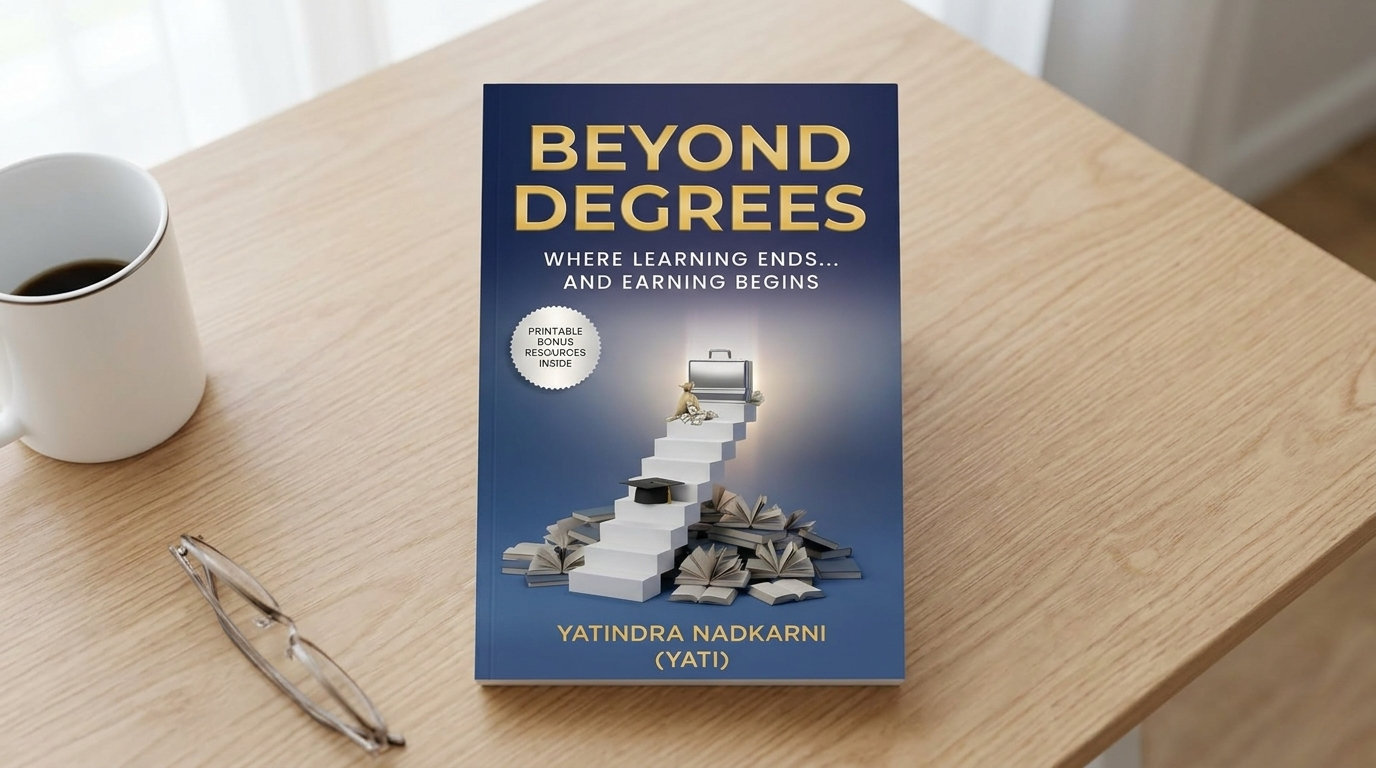
That was my first honest feeling with Beyond Degrees: Where Learning Ends… and Earning Begins by Yatindra Nadkarni (Yati).
I wasn’t expecting the emotional honesty of it.
Yes, this is a self-help and career guidance book. Yes, it talks about employability, soft skills, AI, interviews, and the painful gap between education and work. But what stayed with me most is the lived experience behind it. Yati is not writing from theory alone. His own story of being a Physics postgraduate who spent years struggling before finally entering banking in 1995 gives the book credibility that many “career books” simply don’t have.
And honestly, in 2026, when India is still producing lakhs of graduates who are educated yet unsure where they fit, this message feels painfully timely.
What the Book Is About
At its heart, Beyond Degrees is about a truth many young Indians already feel but often struggle to articulate:
A degree is no longer enough.
The book opens with the crisis itself, what the author calls The Employability Paradox, where education once almost guaranteed livelihood but now often leads to confusion, repeated rejection, and silent self-doubt.
I appreciated how naturally the book moves from personal memoir into practical guidance.
Yati begins with his own journey, growing up in rural Madhya Pradesh, studying hard, earning a postgraduate degree in Physics, and then facing the shock that the world had changed. The old equation, degree = job, had quietly collapsed.
From there, the book introduces Shivansh, a younger modern graduate with B.Tech and MBA degrees who still cannot land the right role. This narrative thread works beautifully because it turns an abstract social issue into a human one. Suddenly, this is not just “India’s unemployment problem.” It becomes the dinner-table silence in a middle-class home, the guilt of a son who sees his father’s investment, and the ache of comparing yourself with batchmates on LinkedIn.
I’ve seen this happen in real life too. So many bright young people don’t lack intelligence. They lack clarity, confidence, and a bridge between academic learning and industry expectations.
That is exactly the bridge this book tries to build.
The structure is also thoughtfully designed. The four-part progression from crisis, to missing links in education, to employability skills, and finally to becoming an exceptional candidate makes the reading experience feel guided rather than scattered.
What Stood Out to Me
What stood out most was the emotional accessibility of the writing.
Career books often become too corporate. Too polished. Too obsessed with buzzwords.
This one feels human.
Take the opening chapter, where Yati compares his grandfather’s era, when an 8th or 12th qualification could secure a respected job, with today’s reality of endless exams, interviews, aptitude tests, and skill gaps.
That historical contrast is powerful because it explains why so many parents still carry outdated assumptions about education.
I also genuinely liked the recurring use of Shivansh as a representative figure. In editorial terms, this gives the book a narrative spine. Instead of random advice chapters, we follow a transformation arc.
The chapter The Illusion of Qualification hit especially hard for me. The line that degrees are “a key that fits no door” is the kind of metaphor that stays with readers.
Then there’s the chapter on automation, AI, and the new skill economy. Here, the book becomes especially relevant for 2026 readers because it doesn’t create fear around technology. Instead, it gently reminds readers that while machines can automate tasks, they cannot replace human warmth, empathy, trust, and relationship-building.
I found this part deeply reassuring.
The book’s biggest strength, I think, is that it keeps returning to the human side of employability:
communication, body language, confidence, learning agility, ethics, collaboration, and emotional intelligence.
These are not glamorous words, but they are the difference between qualified and chosen.
If I had one small critique, it would be that some sections repeat the same central idea in slightly different forms, especially in the early chapters. The emotional repetition works motivationally, but sharper editing in a few places could have tightened the pacing.
Still, the sincerity of voice carries it.
The Emotional Core
The emotional core of Beyond Degrees is not fear.
It is dignity.
This book understands the invisible shame of being “educated but unemployed.” It understands the social pressure behind casual questions like job mil gayi? It understands the heaviness of eating at your parents’ table while feeling you haven’t “earned” your place yet.
Some parts hit differently because the author refuses to reduce young people to statistics.
He keeps reminding them that they are not broken. They are simply underprepared for a system that changed faster than their classrooms did.
That distinction matters emotionally.
I especially felt moved by the Reader’s Promise to Self section, where the book asks readers to commit 90 days to rebuilding themselves through mindset, skills, and disciplined action.
That’s such a psychologically smart move.
It shifts the reader from passive consumption to active ownership.
Honestly, I can imagine many young readers pausing there, pen in hand, feeling for the first time that they are doing something concrete about their future.
And maybe that’s the real power of this book.
It gives hope structure.
Who This Book Is For
I think this book is especially valuable for:
- College students entering final year
- Fresh graduates struggling with placements
- MBA and engineering students confused after campus season
- Parents trying to understand why degrees no longer guarantee jobs
- Teachers and mentors working with Gen Z learners
- Early professionals who feel “qualified but stuck”
It may also help HR trainers and educators rethink what employability actually means.
This might not be for readers looking for ultra-specialized job-market strategies for one niche industry. The book is broader and more foundational than that.
But for the millions standing at the degree-to-job gap, this is exactly the kind of grounding they need.
Final Thoughts
I finished Beyond Degrees feeling less like I had read a career book and more like I had listened to a mentor who has walked both sides of the bridge, first as a confused graduate, later as a banking leader, and now as a guide for the next generation.
Yatindra Nadkarni (Yati) brings lived authority to the subject, and that lived truth gives the book emotional weight.
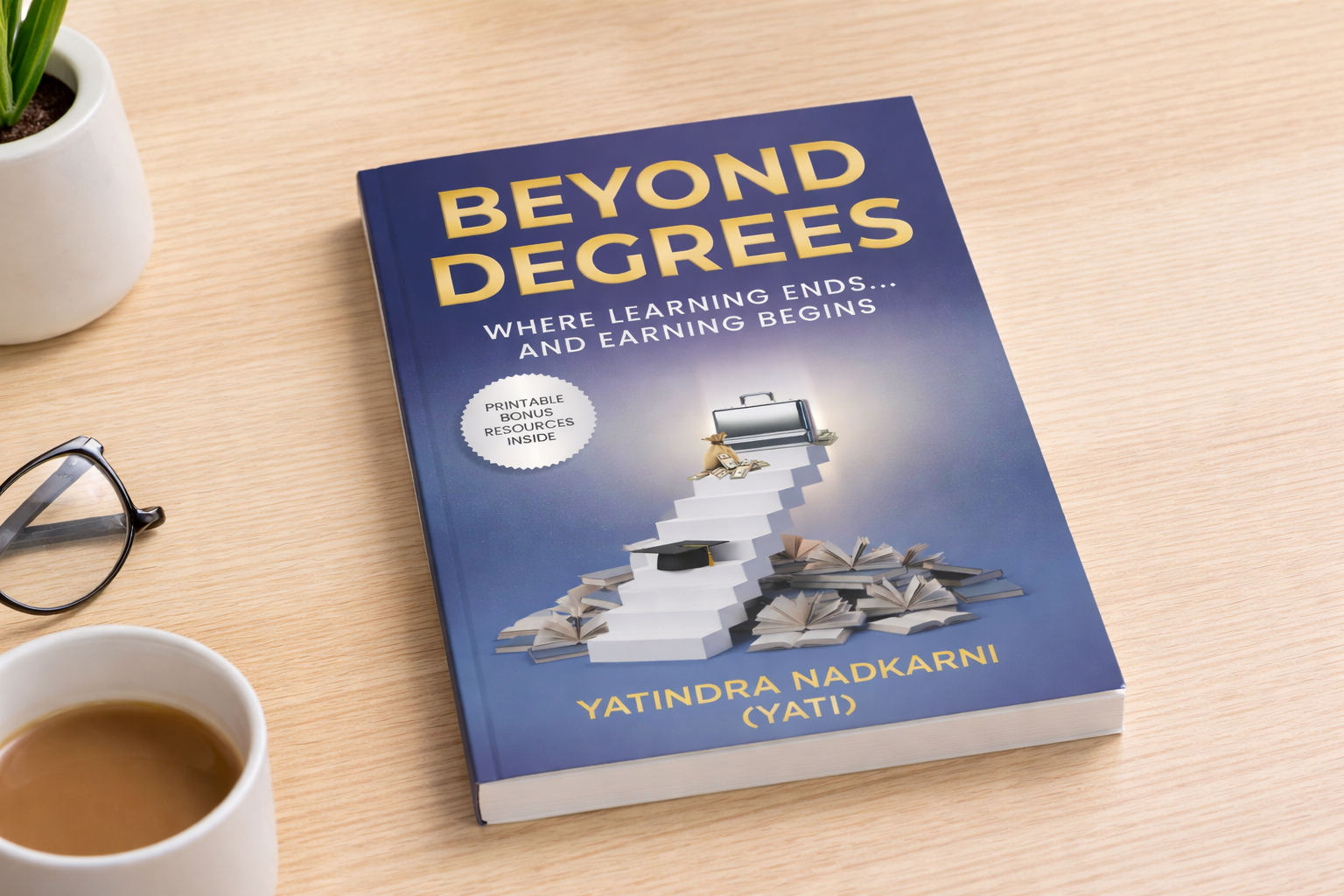
The cover itself, with the staircase rising from books and a graduation cap toward a briefcase and money, visually captures the promise of the text: learning must rise into livelihood.
And I think that’s what makes Beyond Degrees stay with you.
Not because it magically solves unemployment.
But because it helps readers rebuild the missing bridge between knowledge and relevance.
FAQ
Is Beyond Degrees worth reading for freshers?
Yes, especially if you are entering placements, interviews, or feeling uncertain after graduation.
Who should read Beyond Degrees?
Students, graduates, parents, educators, and mentors navigating the employability gap.
Is this book practical or motivational?
It is both. It combines real stories, structured exercises, and actionable employability frameworks.
Does it discuss AI and future jobs?
Yes, one of the strongest chapters covers AI, automation, and why human skills still matter.

With over 11 years of experience in the publishing industry, Priya Srivastava has become a trusted guide for hundreds of authors navigating the challenging path from manuscript to marketplace. As Editor-in-Chief of Deified Publications, she combines the precision of a publishing professional with the empathy of a mentor who truly understands the fears, hopes, and dreams of both first-time and seasoned writers.