
Rating:
⭐⭐⭐⭐ (4.3 out of 5)
I want to start by admitting something. Whenever I see a book that revisits a mythological figure we think we already know, I feel both curious and wary at the same time. Curious, because our epics are layered and endlessly interpretable. Wary, because I have seen too many retellings that simplify complex characters just to sound bold or provocative. So when I first looked at Aswatthama: The Future Vyaas, I paused longer than usual.
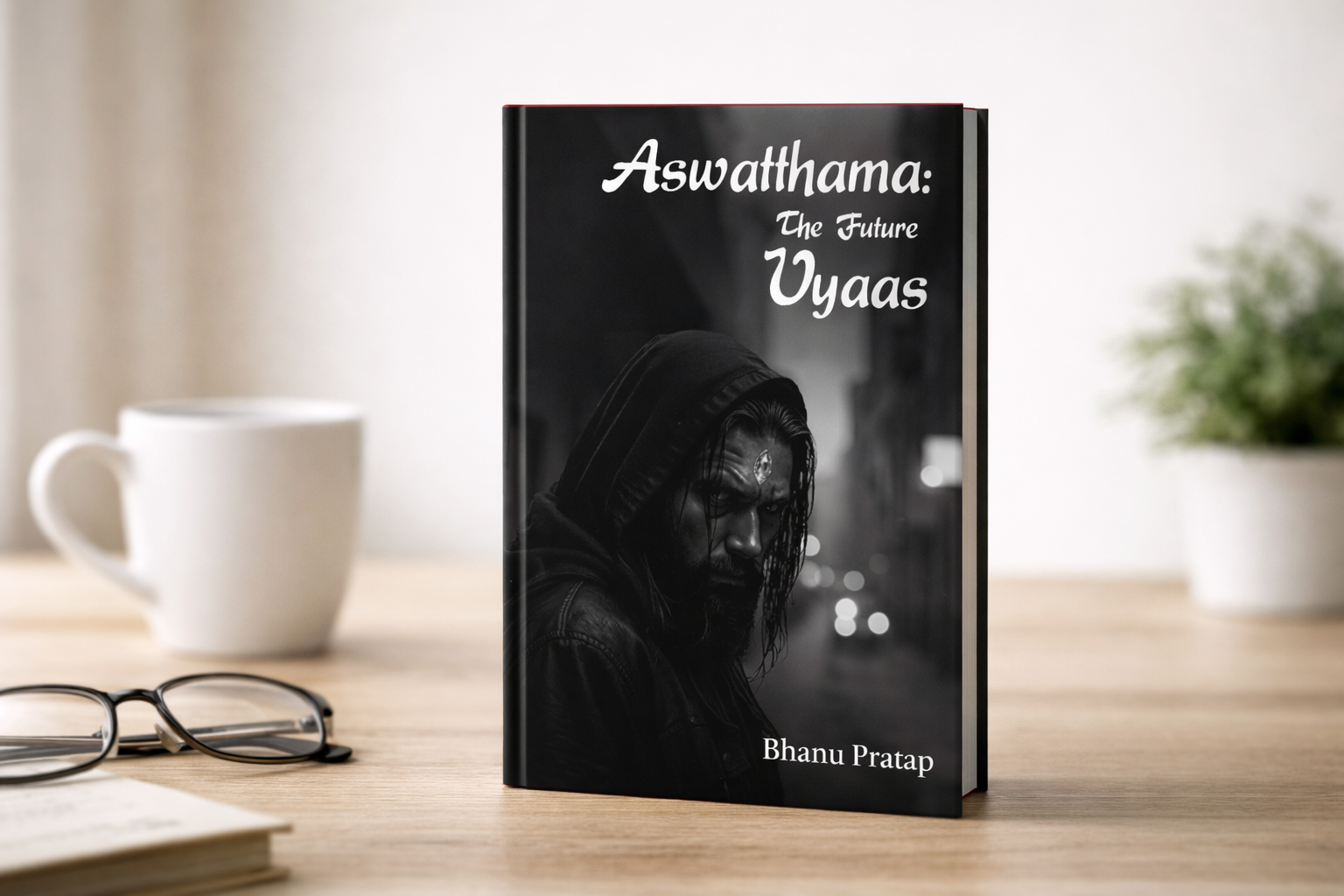
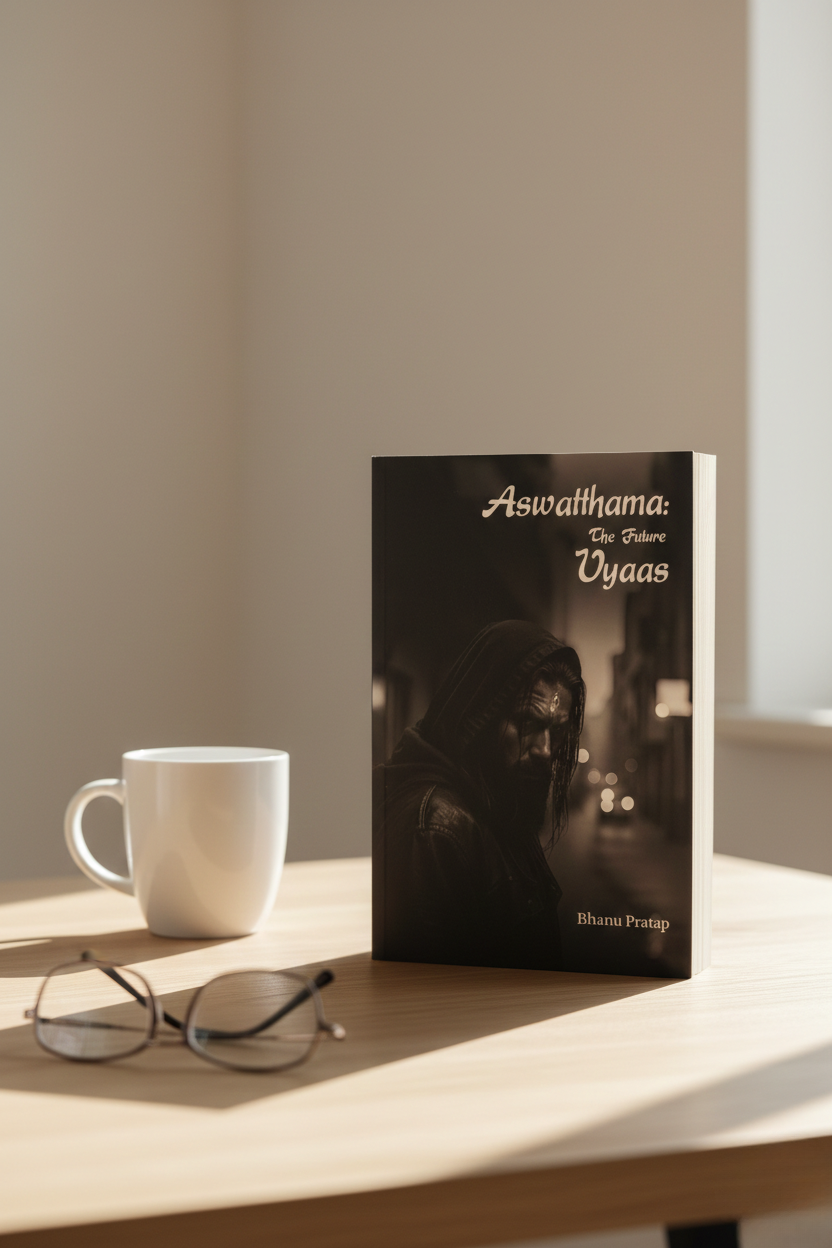
The cover itself sets a mood. Dark. Introspective. Almost confrontational. The figure looks burdened, not heroic in the traditional sense. It made me wonder what kind of Ashwatthama the author wanted us to meet. Not the villain carved by popular retellings, perhaps. Not the one dimensional cursed immortal either. Something heavier. Something unresolved.
As someone who has spent over fifteen years reading fiction, non fiction, poetry, and especially Indian mythological interpretations, I have learned that the most interesting books are often the ones that challenge certainty. And this book clearly wants to do that.
What the Book Is About
Based on the blurb, Aswatthama: The Future Vyaas by Bhanu Pratap focuses on the life and legacy of Ashwatthama, one of the most misunderstood figures from the Mahabharata. The book positions itself not as a fantasy retelling, but as a corrective lens. A response to misinformation, half knowledge, and oversimplified narratives that circulate widely today.
The author lays out very clearly what he wants to address. Ashwatthama’s role in the coming conflict between Shri Kalki and Kali. His connection to Kali, which many readers may not even be aware of. His importance to Vishnu’s tenth incarnation. And perhaps most provocatively, the idea that Ashwatthama was a truer friend to Duryodhana than Karna ever was.
That last point alone will make many readers uncomfortable. Karna has been elevated in modern discourse as the tragic hero, while Ashwatthama is often dismissed as cruel or irredeemable. This book seems to push back against that moral shorthand.
The author also emphasizes research and original sources. There is a clear frustration in the blurb with social media commentators who speak confidently without reading scriptures deeply. This book presents itself as an attempt to slow that noise down and ask readers to look again. Carefully. Seriously.
What Stood Out to Me
What stood out to me immediately is the author’s tone of urgency. Not drama, but insistence. There is a sense that this book had to be written. That the author felt a responsibility to intervene in a conversation that had gone too far in the wrong direction.
In my years reviewing mythological and philosophical texts, I have noticed that many authors either romanticize characters or demonize them. This book appears to do neither. It seems to insist on context. On duty. On moral complexity.
I was particularly intrigued by the framing of Ashwatthama as someone carrying multiple responsibilities while still trying to remain a warrior of worth. That phrase stayed with me. We often forget that characters in epics are not symbols first. They are people navigating conflicting loyalties, expectations, and consequences.
The mention of Shakti Upasakas also adds an unexpected spiritual layer. This suggests the book is not only historical or narrative in nature, but also touches on esoteric traditions and inner discipline. That makes it broader than a simple character study.
If I had to offer a gentle critique based only on the blurb, it would be this. Readers who are deeply attached to popular interpretations of the Mahabharata might feel challenged, even unsettled. This book does not seem interested in comfort. And that is not a flaw, but it is something readers should be aware of.
The Emotional Core
Emotionally, this book feels confrontational in a thoughtful way. Not aggressive, but firm. It asks the reader to reconsider opinions they may have held for years. That can be uncomfortable. I have seen this happen in real life, especially when mythology intersects with identity and belief.
There is also a sense of loneliness around Ashwatthama that comes through even in the limited description. Immortality here does not feel like a gift. It feels like consequence. Burden. Watching eras change while carrying unresolved actions and misunderstood intentions.
Reading this in 2025, when misinformation spreads faster than reflection, the book’s insistence on original sources feels timely. It reminded me of conversations I have had with younger readers who know epic characters only through reels and short videos. This book seems to speak directly to that gap.
I think some parts of this book may feel dense or intense for casual readers. But emotionally, it offers something rare. Respect for ambiguity. For characters who do not fit neatly into good and evil.
Who This Book Is For
This book is clearly for readers who are willing to question what they think they know.
If you enjoy mythological reinterpretations that are rooted in research rather than imagination alone, this book will likely appeal to you. If you are tired of simplified narratives and want deeper engagement with epic characters, there is a lot here to consider.
However, if you prefer light retellings or purely narrative driven mythology, this might not be the right fit. The book seems to demand attention. It asks you to slow down and think. Not everyone wants that from their reading experience, and that is perfectly fine.
I would especially recommend this book to readers interested in dharma, duty, spiritual responsibility, and the psychological cost of war and loyalty.
Final Thoughts
As an editor and reader, I value books that take a stand while still respecting complexity. Aswatthama: The Future Vyaas feels like one such book. It does not try to be universally pleasing. It tries to be honest.
Bhanu Pratap approaches Ashwatthama not as a symbol to be judged, but as a figure to be understood. That distinction matters. In my role at Deified Publication, I often see manuscripts that repeat familiar positions without questioning them. This book appears to do the opposite.
Will every argument land perfectly for every reader. Probably not. And that is actually a strength. It opens space for dialogue rather than closure.
This is the kind of book that may change how you see a character. Or at the very least, make you pause before repeating what you have always heard. And in a time where opinions are formed quickly and shared loudly, that pause feels valuable.
Frequently Asked Questions
Is Aswatthama worth reading?
If you enjoy serious mythological analysis and are open to questioning popular narratives, it is worth your time.
Who should read Aswatthama: The Future Vyaas?
Readers interested in Indian epics, spiritual responsibility, and character driven reinterpretations will connect with it.
What is Aswatthama about?
The book focuses on Ashwatthama’s life, his misunderstood role in the Mahabharata, and his importance in future cosmic events.
Is this book beginner friendly?
It is accessible, but readers unfamiliar with epic contexts may need to read slowly and thoughtfully.

With over 11 years of experience in the publishing industry, Priya Srivastava has become a trusted guide for hundreds of authors navigating the challenging path from manuscript to marketplace. As Editor-in-Chief of Deified Publications, she combines the precision of a publishing professional with the empathy of a mentor who truly understands the fears, hopes, and dreams of both first-time and seasoned writers.