
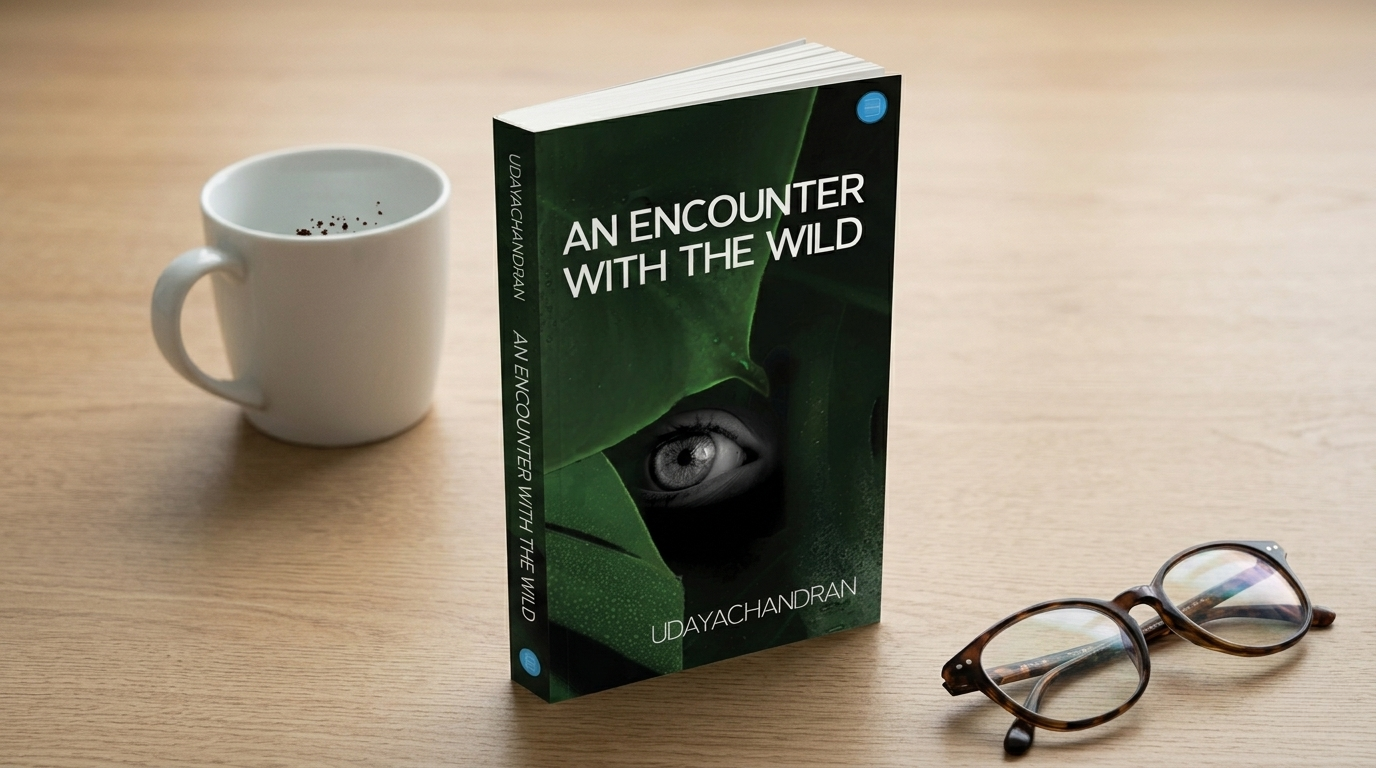
Rating:
⭐⭐⭐⭐ (4.3 out of 5)
I’ll be honest, I thought I knew what kind of book An Encounter with the Wild would be.
Survival story. Jungle. Struggle. Escape.
And yes, all of that is there. But somewhere in between those expected beats, this book started doing something else. It slowed down. It lingered on people. On fear. On small human moments that don’t always make it into survival narratives.
In my years of reading and reviewing fiction, especially stories built around survival or extreme situations, I’ve noticed a pattern. Many focus on the external danger. Few really sit with the internal one. This book tries to do both. And that’s where it started working for me.
What the Book Is About? more than just survival
At the surface, the premise is gripping. A teenage boy survives a plane crash and ends up in a dense rainforest, only to be captured by a remote tribal community. Already, there’s tension. You can feel the uncertainty from the first chapter.
The opening itself paints the setting in detail. That island in the Bay of Bengal. From above it looks peaceful, almost inviting. But as the perspective moves closer, things shift. The forest becomes suffocating. The air feels heavy. There’s a sense that something is always watching.
And then we are introduced to the tribe. Their settlement, their rituals, their hierarchy. The chief Mahaba, the high priest Sebua, the sacred stone, the ceremonial drumbeats. These aren’t just background details. They shape the entire emotional tone of the story.
There’s this early moment where the tribe gathers because of a strange vision experienced by the priest. A prophecy about a boy arriving. About lineage. About survival tied to something bigger than just one life. That scene stayed with me longer than I expected.
At the same time, the story doesn’t stay confined to the jungle. It moves into a completely different world in Chapter 2. A modern urban setting. A boy named Santhosh celebrating a quiz victory. A family dynamic that feels warm and familiar. Aparna, Shiv Ram, their conversations, their small emotional exchanges.
At first, I wondered why this shift was happening. But slowly, the connection begins to form. Two worlds. One wild and one structured. Both dealing with uncertainty, expectations, and survival in their own ways.
What Stood Out to Me? the contrast and the detail
What really stood out to me in An Encounter with the Wild is how carefully the author builds two very different environments.
The tribal world is vivid. You can almost hear the drumbeats, the chants, the rustling leaves. The rituals are described in a way that feels immersive but not overwhelming. There’s a rawness to it. Especially during the sacrificial ceremony scene. The intensity, the collective energy, the belief system. It’s uncomfortable at times, and I think it’s meant to be.
At the same time, the urban storyline feels grounded in reality. The family conversations, the career pressures, the emotional conflicts between personal ambition and relationships. Shiv Ram leaving a secure job to start something new. Aparna standing by him. That whole thread felt very real to me.
In fact, I’ve seen similar situations in real life. People leaving stability for something uncertain, and the silent tension it creates at home. That part didn’t feel like fiction at all.
Another thing I appreciated was the pacing. The book doesn’t rush. It allows scenes to breathe. The jungle sequences especially take their time, letting you absorb the environment before moving forward.
Though, I’ll say this, there were moments where the detailing felt slightly extended. Not necessarily bad, but I did feel the urge to move a bit faster in a few places.
The Emotional Core – fear, belonging, and something deeper
If I had to describe what this book is really about, I’d say it’s about belonging.
The boy in the jungle is trying to survive physically, yes. But he’s also trying to understand where he fits in a world that doesn’t make sense to him.
At the same time, in the other storyline, there’s another kind of struggle. Fitting into expectations. Into roles. Into decisions that define your life.
There’s a line of thought running through the book about lineage and continuation. About what it means to carry something forward. Whether it’s a tribe’s tradition or a family’s hopes.
And then there’s fear. Not just the obvious fear of danger, but the quieter kind. The fear of losing someone. The fear of making the wrong choice. The fear of not belonging anywhere.
Some scenes genuinely made me pause. Especially the ones involving the tribal prophecy and the boy’s connection to it. There’s something unsettling about how calmly the tribe accepts things that feel extreme to an outsider.
I wasn’t expecting to feel that level of discomfort. But I think that’s what made those parts effective.
Who This Book Is For? and who might struggle with it
I think An Encounter with the Wild will appeal to readers who enjoy layered storytelling. If you like stories that move between different worlds and slowly reveal connections, this will work for you.
It’s also a good pick if you’re interested in survival narratives but want something that goes beyond just action. There’s a strong emotional and psychological layer here.
However, if you’re someone who prefers fast-paced, plot-driven stories with constant twists, this might feel a bit slow at times. The book takes its time, especially in building the setting and characters.
Also, the tribal rituals and cultural elements might feel intense or unfamiliar to some readers. But I think that discomfort is part of the experience.
Final Thoughts – not what I expected, but I’m glad I read it
In 2026, when so many stories feel repetitive, An Encounter with the Wild manages to stand a little apart. Not because it’s trying too hard, but because it focuses on details that many books skip.
Udayachandran writes with a certain patience. He lets the story unfold without forcing it. And that gives the narrative a kind of authenticity.
I won’t say every part worked perfectly. A tighter edit in some sections could have made the reading experience smoother. But overall, the book left me thinking.
Especially about that early scene in the jungle. The gathering. The prophecy. The sense that something inevitable is about to happen.
It’s the kind of book that stays with you, not because of one big moment, but because of many small ones.
And honestly, I value that more.

With over 11 years of experience in the publishing industry, Priya Srivastava has become a trusted guide for hundreds of authors navigating the challenging path from manuscript to marketplace. As Editor-in-Chief of Deified Publications, she combines the precision of a publishing professional with the empathy of a mentor who truly understands the fears, hopes, and dreams of both first-time and seasoned writers.