
Rating
⭐⭐⭐⭐ (4.2 out of 5)
I’ve been reviewing books for more than fifteen years now, and I’ll tell you something honestly. Children’s books are harder to judge than people think. Adults often assume they’re simple. But when a book is meant for children, every detail matters. The pictures, the tone, the pacing, even the way a page feels when a child turns it.
And sometimes a book arrives that reminds me why picture books still matter.
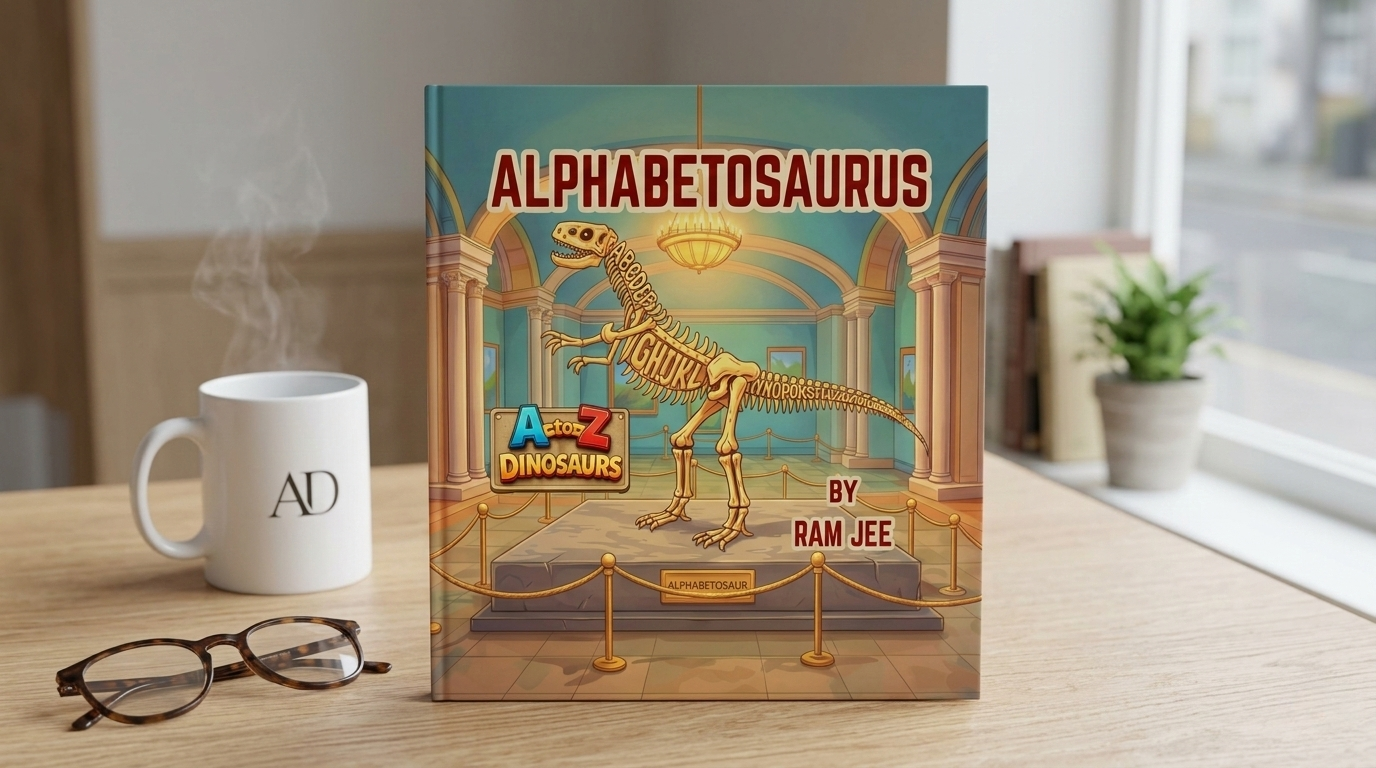
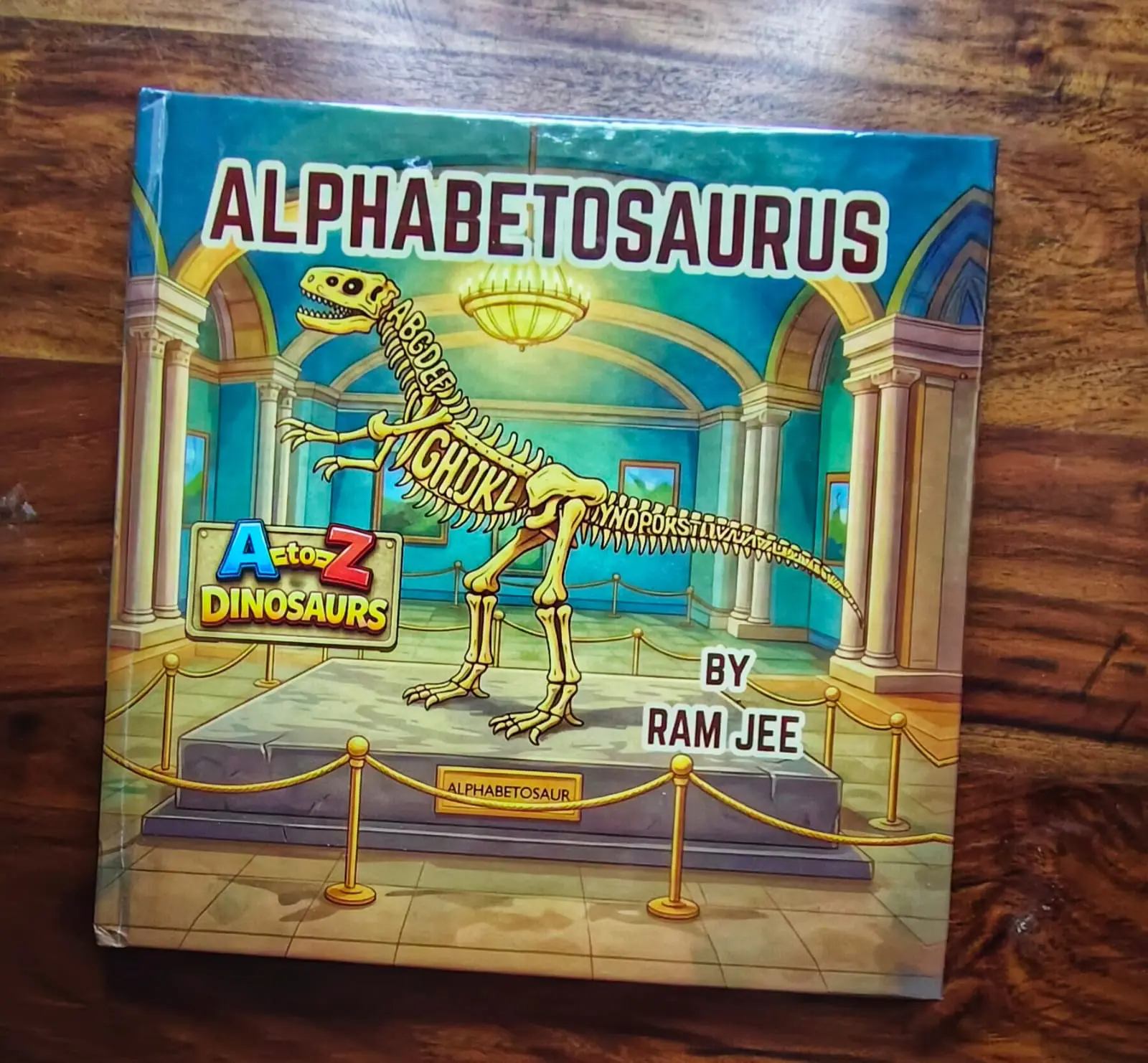
When I first saw Alphabetosaurus: A to Z Dinosaurs by Ram Jee, the cover made me smile. It shows a dinosaur skeleton arranged with letters across its body inside what looks like a museum hall. It’s playful but also clever. Almost like the dinosaur itself is made of the alphabet.
That small idea already tells you something about the book.
It’s trying to make learning feel like play.
And honestly, that’s the best approach for children.
What the Book Is About
At its core, Alphabetosaurus: A to Z Dinosaurs is exactly what the title promises. It’s an alphabet book built around dinosaurs. But instead of just showing a letter and a word, the book introduces thirty different dinosaurs, each tied to a letter of the alphabet.
So children don’t just learn “A for Apple.”
They learn A for Ankylosaurus.
And if you’ve ever seen a child obsessed with dinosaurs, you already know why this works.
Dinosaurs naturally spark curiosity.
According to the book description, every letter introduces a dinosaur along with short, simple facts that are easy for young readers to understand. The goal isn’t to overwhelm children with scientific details. Instead, it gives them small pieces of information they can remember and repeat.
That’s actually important.
Children love repeating facts.
“I know this dinosaur.”
“This one eats meat.”
“This one lived in America.”
Those small discoveries build confidence.
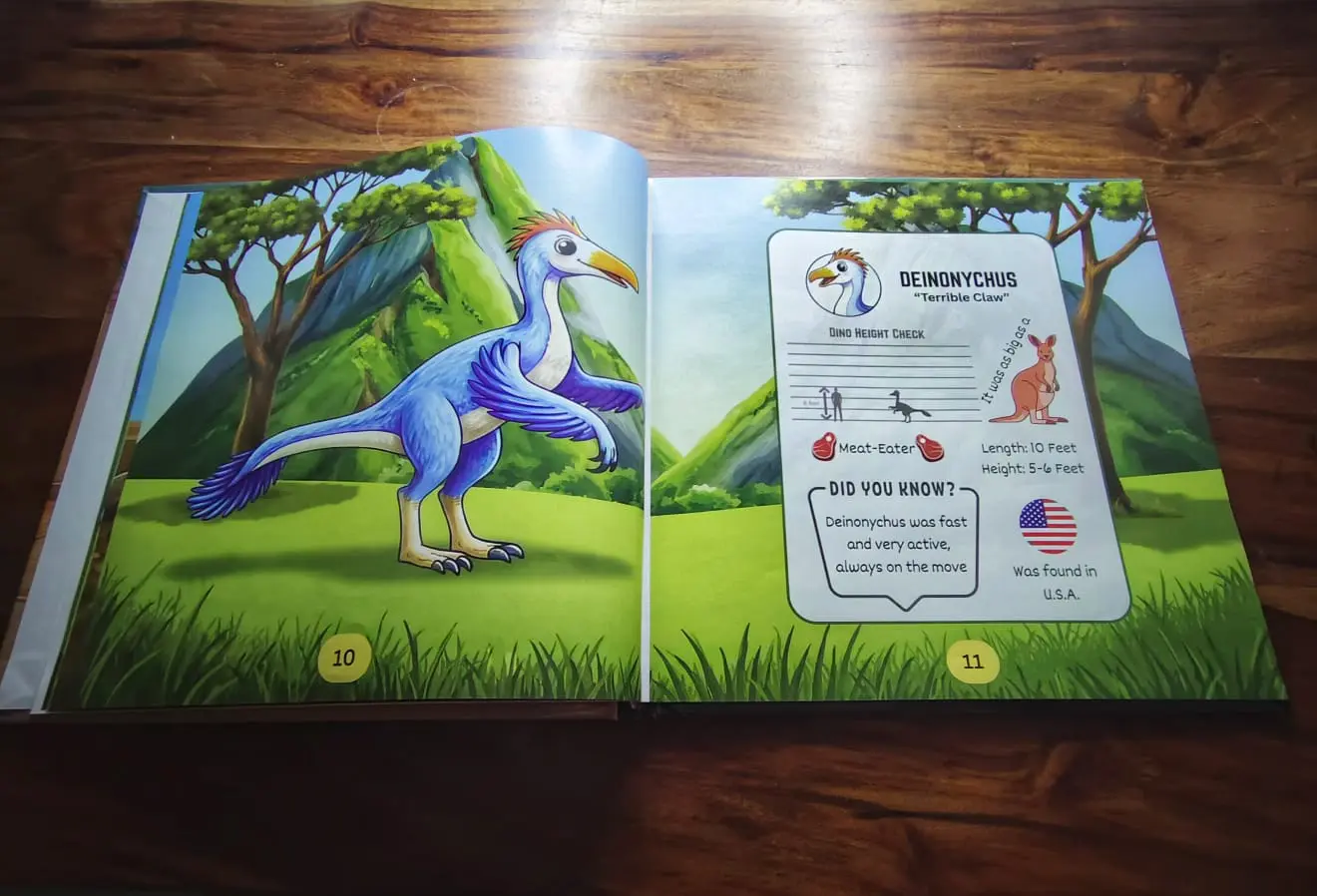
One of the interior pages shows Deinonychus, described as a fast and active meat-eating dinosaur. The page includes a colorful illustration of the creature walking through a green landscape, while a small fact box tells children things like its approximate height and where fossils were found.
It’s the kind of layout that keeps young readers engaged because there’s always something to notice.
A dinosaur.
A fact.
A visual comparison.
For a children’s learning book, that balance is important.
What Stood Out to Me
The first thing that caught my attention in Alphabetosaurus is the artwork.
Picture books live and die by their illustrations. Kids respond to color before anything else. If the pictures feel dull, they lose interest quickly.
Here, the illustrations are vibrant and friendly. The dinosaurs don’t look frightening or overly realistic. Instead, they have a slightly playful style that feels welcoming for younger readers.
Looking at the sample page of Deinonychus, the dinosaur stands in a bright green environment with trees and mountains in the background. The colors are soft but lively. It’s easy to imagine a child staring at the page for a while just taking everything in.
I’ve seen many children do this actually. They linger on one page and invent stories about what the dinosaur might be doing.
The second thing that works well is the bite-sized facts.
Children’s nonfiction works best when the information is short and memorable. The facts in this book appear to be designed exactly that way. Small pieces of knowledge that spark curiosity without overwhelming the reader.
I also liked the idea of including four bonus dinosaurs beyond the alphabet entries. It gives the book a small surprise element. Kids often enjoy discovering that there’s “something extra” beyond the expected A to Z structure.
And then there’s the title itself.
Alphabetosaurus.
I have to admit, it’s a fun word.
It sounds like something a child would enjoy saying out loud.
The Emotional Core
Now, children’s books don’t always aim for deep emotional storytelling, but they still have an emotional core.
For Alphabetosaurus, that core is curiosity.
The book seems designed to encourage children to ask questions.
“What kind of dinosaur is this?”
“Where did it live?”
“Was it bigger than a human?”
I remember visiting a natural history museum years ago and watching a group of children standing under a dinosaur skeleton. They were completely fascinated. One child kept asking the guide, “But how do you know it looked like that?”
That moment stayed with me.
Books like this recreate a small version of that museum experience at home.
The cover actually reflects that idea too. The dinosaur skeleton displayed in a museum setting feels like an invitation to explore prehistoric history.
And that’s what good children’s books do.
They create the first spark of curiosity.
Who This Book Is For
I think Alphabetosaurus: A to Z Dinosaurs by Ram Jee will appeal most strongly to a few specific readers.
First, young children who are just learning the alphabet. Traditional alphabet books often feel repetitive after a while. Introducing dinosaurs instead of everyday objects makes the experience much more exciting.
Second, children who are already fascinated by dinosaurs. If you’ve ever met a child in that phase, you know how intense that interest can be. They want to know the names of every dinosaur they see.
This book seems perfect for that stage.
Third, parents and teachers looking for educational picture books that combine learning with fun visuals.
That said, this book is clearly meant for early readers and preschool age children. Older children who already know a lot about dinosaurs might find the facts too simple.
But that simplicity is also its strength.
It keeps the book accessible.
Final Thoughts
As someone who reads across every genre, I always appreciate children’s books that respect young readers’ intelligence while still keeping things fun.
Alphabetosaurus: A to Z Dinosaurs by Ram Jee seems to strike that balance nicely.
The concept is straightforward. The illustrations are colorful and engaging. The facts are short enough for children to remember and repeat.
And honestly, anything that gets children excited about both reading and science is a win in my book.
There are moments where I wished the book included one or two interactive elements like small questions or prompts for kids. That could make the experience even more engaging.
But even without that, the book succeeds in doing something important.
It makes learning the alphabet feel like an adventure.
And if a child finishes this book wanting to learn more about dinosaurs, that curiosity might lead them to many more books in the future.
For a children’s picture book, that’s a wonderful place to begin.
FAQ
Is Alphabetosaurus worth reading for kids?
Yes, especially for young children who enjoy dinosaurs. The book combines alphabet learning with fun prehistoric creatures.
Who should read Alphabetosaurus by Ram Jee?
Preschoolers, early readers, and children who are curious about dinosaurs and nature.
What is Alphabetosaurus about?
It’s an alphabet picture book that introduces thirty different dinosaurs from A to Z with short facts (four bonus dinosaurs) and colorful illustrations.
Is Alphabetosaurus educational?
Yes. It helps children learn the alphabet while also introducing basic dinosaur facts in a simple way.

With over 11 years of experience in the publishing industry, Priya Srivastava has become a trusted guide for hundreds of authors navigating the challenging path from manuscript to marketplace. As Editor-in-Chief of Deified Publications, she combines the precision of a publishing professional with the empathy of a mentor who truly understands the fears, hopes, and dreams of both first-time and seasoned writers.