
Rating:
⭐⭐⭐⭐ (4.3 out of 5)
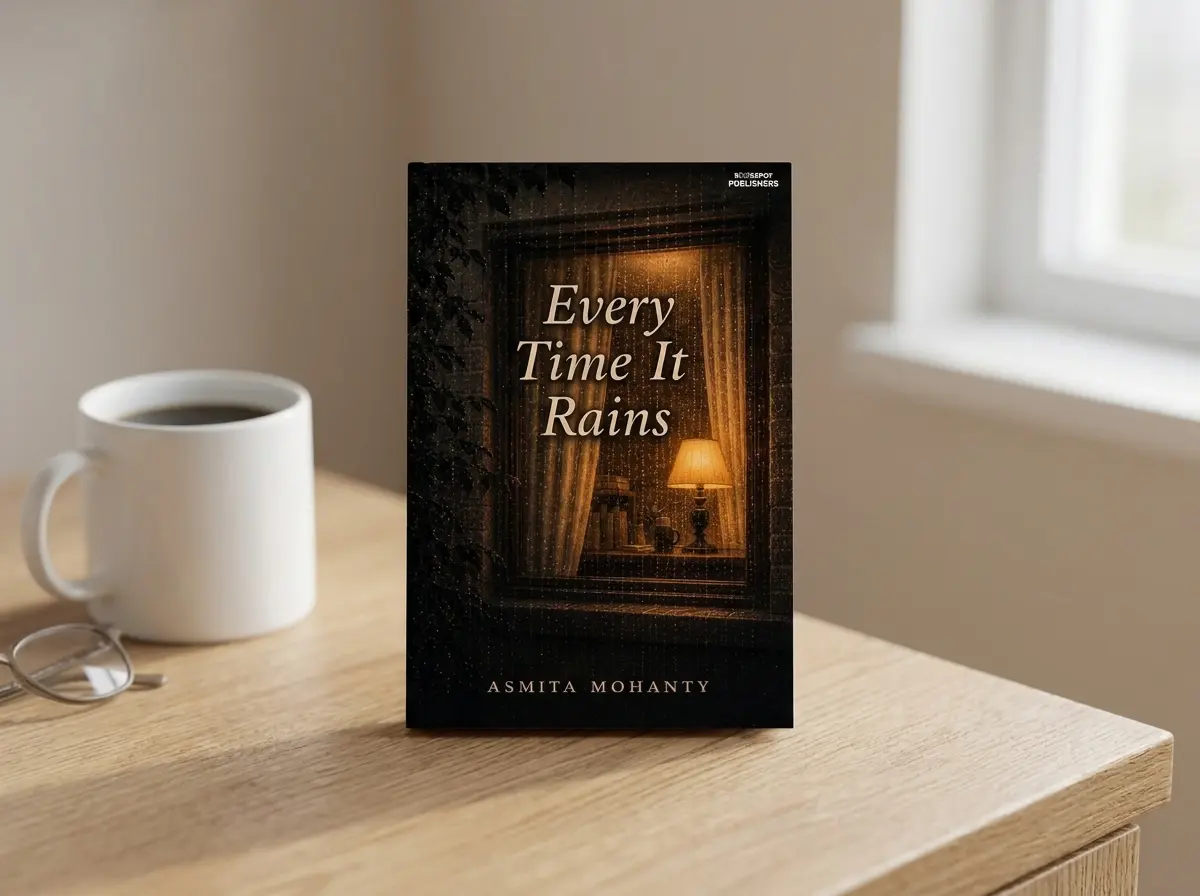
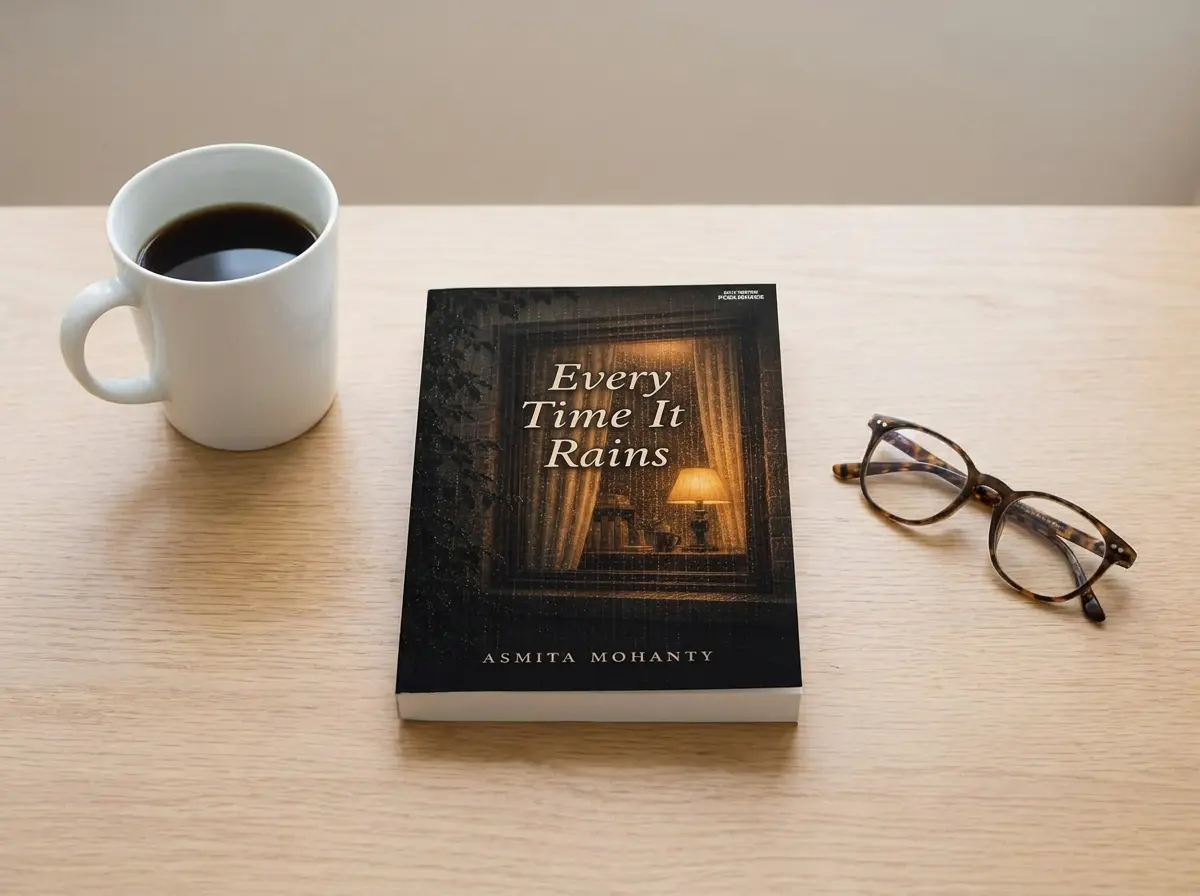
I finished Every Time It Rains on a Tuesday evening, which felt almost too fitting, because Tuesdays turn out to matter a great deal in this book. I’m Priya Srivastava, Editor-in-Chief at Deified Publication, and in my years reviewing debut fiction I’ve learned to be a little wary of novels that promise restraint and hushed emotion, because that promise is often just a nicer way of saying not much happens. I want to say upfront that Asmita Mohanty’s debut proved me wrong more than once, and also that it asked a fair amount of patience from me before it did.
What the Book Is About
Every Time It Rains follows Prarthana, a freelance writer living alone in Bandra after a long relationship ended, and Mohit, an architect who has spent three years quietly working around a grief he hasn’t fully let himself name. The book opens with a small, almost comic mistake. Prarthana drinks a stranger’s coffee at a cafe because the barista mixed up the cups, and the cup happens to say Mohit in blue marker. It’s such a small thing, a wrong order at a cafe corner in Bandra, but Mohanty uses it to slide us straight into who Prarthana is, someone who notices everything and still manages to miss the obvious, someone who has spent seven months alone in an apartment and gotten used to the particular silence of it. From there, the two keep running into each other, first at a bookstore that Google Maps barely acknowledges, run by an old man named Mr. Iyer who communicates mostly in sighs, and then again and again, in the way people do when a city keeps arranging small accidents on their behalf.
What I appreciated is that this isn’t a story that rushes its two leads together. Prarthana is working on an essay for a literary fellowship in Edinburgh, something she’s been circling for twelve years without ever submitting, tied up with her father’s old notebook and his handwriting in the margins. Mohit is an architect who, as the book puts it, thinks in rooms rather than plans, and he’s sitting on a professional opportunity, a cultural centre in a converted mill in Byculla, that he’s too frightened to open. Underneath his hesitation is something much heavier that the book takes its time revealing.
What Stood Out to Me
The thing that stood out most, and that I wasn’t quite prepared for, is Mohit’s grief for Ira, someone he was going to marry, and the chapter where this surfaces, called The Instrument, is genuinely the strongest writing in the book. He ends up at a storage unit holding three years of her boxes and a suitcase he never opened, and the scene where his knees just give out on the concrete floor, where his sister Sana finds him there and doesn’t ask him anything, just sits down beside him fully, is the kind of scene that makes you put the book down for a minute. I’ve read enough contemporary literary fiction to recognise when an author is reaching for an emotional effect and when they’ve actually earned it, and this one is earned. Mohanty doesn’t explain the grief to you. She just shows you a man on a floor and lets the reader do the arithmetic.
I also liked how much attention the book pays to work, actual craft, not as a backdrop but as characterisation. Mohit’s architectural thinking, the business about a north facing clerestory window and load bearing masonry on an old mill wall, could have read as filler, but it tells you exactly how his mind works, careful, precise, unwilling to force a solution before it’s ready. There’s a lovely small moment where he solves a structural problem in his head before he’s even finished turning to look at it, and doesn’t mark it down, and you understand this is a man who holds things close until he trusts them. Prarthana gets a similar treatment through her writing. The scene where she keeps rewriting one sentence about backwaters in Kerala, deleting a comma and adding it back, until she finally understands her real opening was the silence before the boat’s engine stopped rather than the water itself, told me more about her as a person than three chapters of description could have.
The Emotional Core
If I’m honest, the emotional weight of this book isn’t really about romance in the conventional sense, even though it ends with a proposal. It’s about two people who have each spent years managing themselves carefully around other people, protecting an essay, protecting a grief, protecting the version of themselves that doesn’t ask for too much, and slowly, without much ceremony, letting each other see the unmanaged version. The scene in Dadar toward the end, where Mohit’s father tells Prarthana to think of him as a father too, and she can’t get a single word out, hit me harder than I expected from a supporting character I’d barely spent time with. And when Prarthana finally says marry me, not from grief and not to fill a silence but because, as the book says, there was simply no longer any reason not to say it, I found myself genuinely moved. It isn’t a dramatic proposal. It’s the opposite. It’s two exhausted, careful people finally allowing something ordinary and enormous to happen in the same breath.
Who This Book Is For
I’ll be honest about who this book is for and who it probably isn’t. If you like your romance plot driven, with obstacles and misunderstandings that escalate, this might frustrate you, because very little external drama actually happens here. The tension is almost entirely internal, built out of what characters notice and don’t say, out of a wall three centimetres short of what it needs to be, out of a cup of coffee that was never really the point. If you enjoyed novels like The Break by Marian Keyes for its emotional interiority, or if you like Sally Rooney’s attention to the small mechanics of a relationship, minus the politics, you’ll probably find a lot to sit with here. Readers who want their fiction to move fast might find some middle chapters slower than they’d like, and I did feel the pacing sag slightly in a couple of stretches where the introspection repeats itself more than it needs to.
Final Thoughts
For a debut, Every Time It Rains shows a writer who trusts her reader more than most first time novelists do. Mohanty doesn’t explain feelings, she stages them, in a wrong coffee cup, in a pencil set down mid drawing, in a comma added and deleted and added back. That’s a hard thing to pull off and an even harder thing to sustain across an entire novel, and there were a handful of places where I felt the restraint tip slightly into repetition rather than tension. But the ending earned every bit of patience it asked of me along the way. This is a book about two people learning, very slowly, that being noticed by the right person is its own kind of home. In 2026, when so much romance fiction is built for speed, there’s something almost radical about a novel willing to take its time. I’d recommend it, with the honest caveat that it rewards readers who don’t mind sitting still with a book the way its characters sit still with each other.
FAQ
Is Every Time It Rains worth reading?
Yes, particularly if you enjoy literary fiction that favours emotional interiority over plot mechanics. It’s a slower burn than most contemporary romance, but the payoff in the final chapters is genuinely affecting.
Who should read Every Time It Rains?
Readers who liked quieter, character driven novels about grief and connection, and anyone who enjoys watching two careful people slowly let their guard down, will find this rewarding.
What is Every Time It Rains about?
It follows Prarthana, a writer working through a fellowship essay tied to her late father, and Mohit, an architect carrying grief for a fiancee he lost, as a series of small city encounters bring them together over the course of about a year.
Does Every Time It Rains have a happy ending?
Without spoiling the details, the novel moves toward a hopeful, hard earned resolution for both leads rather than an ambiguous one.

With over 11 years of experience in the publishing industry, Priya Srivastava has become a trusted guide for hundreds of authors navigating the challenging path from manuscript to marketplace. As Editor-in-Chief of Deified Publications, she combines the precision of a publishing professional with the empathy of a mentor who truly understands the fears, hopes, and dreams of both first-time and seasoned writers.