
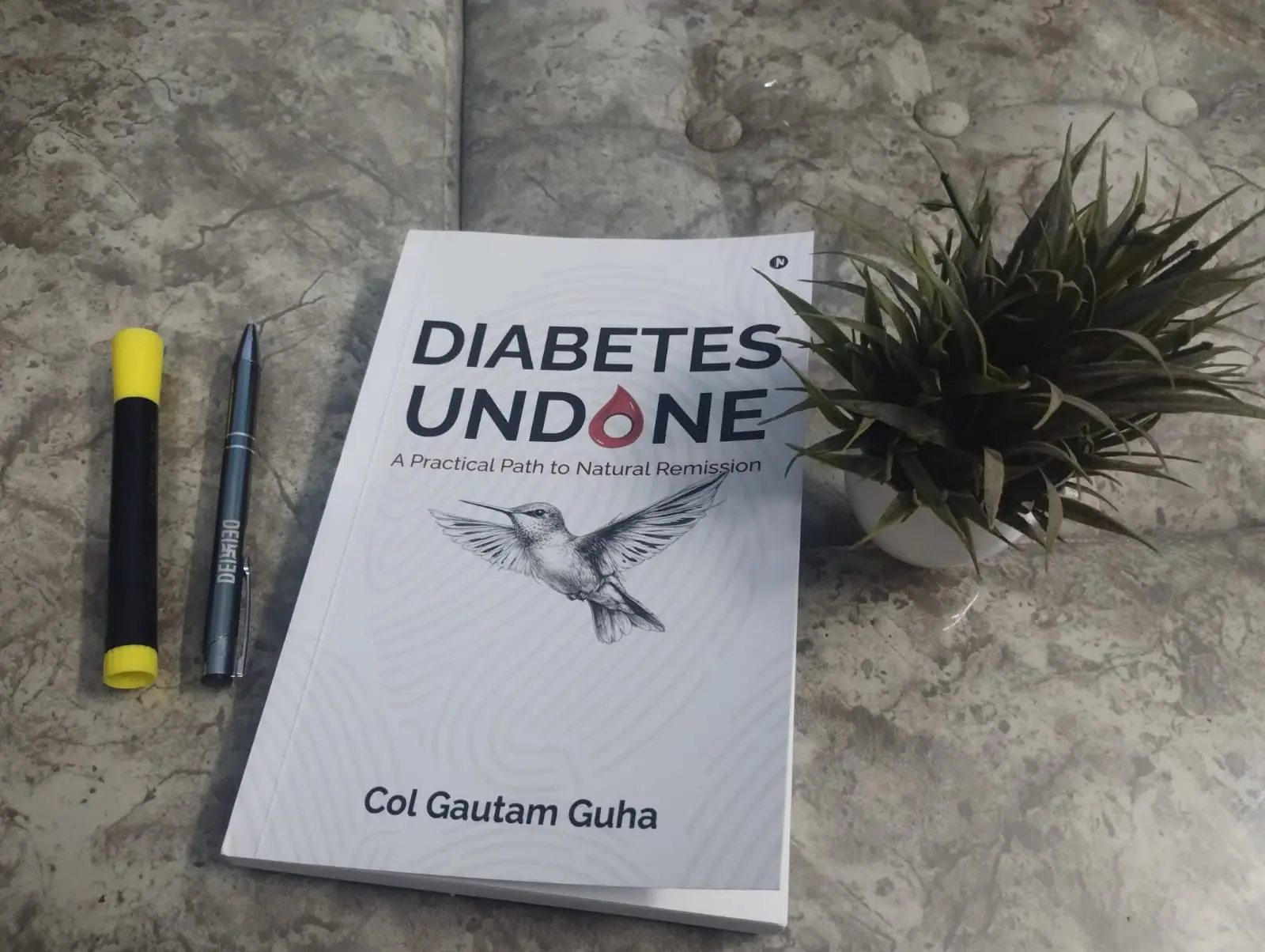
Rating: ⭐⭐⭐⭐ (4.3 out of 5)
When a Soldier Decides to Fight His Own Body Back to Health
I’ll be honest with you. I picked up Diabetes Undone: A Practical Path to Natural Remission by Col Gautam Guha with a fair amount of skepticism. I’ve read enough wellness books over my fifteen-plus years as a reader and editor to know that the genre is full of people claiming miraculous transformations with suspiciously easy solutions. But something about this one felt different from the first few pages, and by the time I was deep into it, I kept thinking about my own uncle, who has been managing Type 2 diabetes for nearly a decade and who has never once been told by anyone, doctor or otherwise, that reversal might actually be possible. That thought sat with me for a long time after I finished reading.
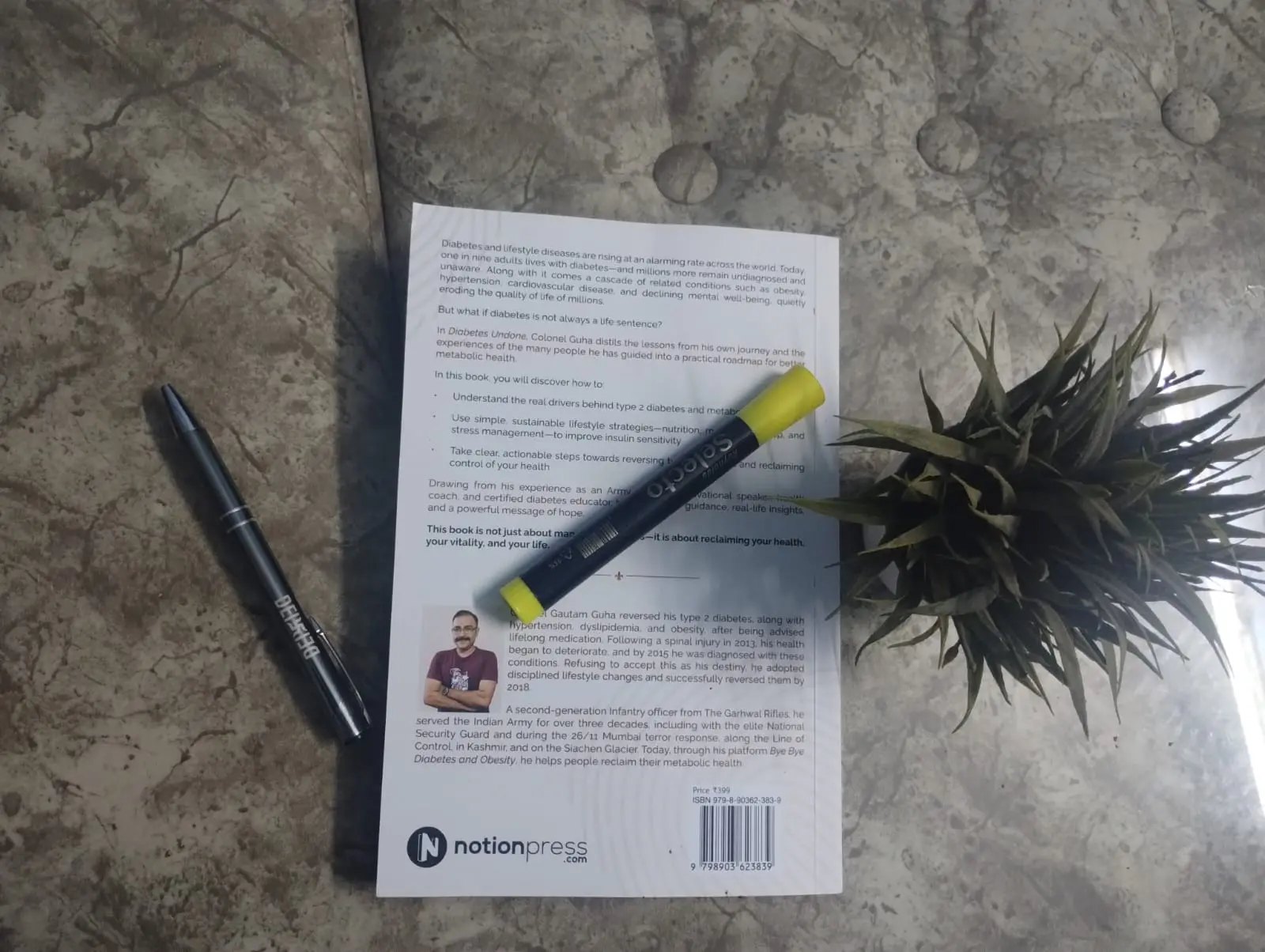
At Deified Publication, we receive a lot of health and wellness books for review, and most of them follow a predictable pattern: inspiring opener, some science-lite explanations, a meal plan, and an upbeat conclusion. Diabetes Undone is structured differently, and the difference matters. Col Guha is not a doctor presenting a clinical protocol. He is a retired Army officer, a certified diabetes educator, and a man who was told in December 2015 that he had Type 2 diabetes, hypertension, dyslipidemia, and would need lifelong medication. He refused that sentence. By 2018, he had reversed all of it. This book is how he did it, and more importantly, why it worked.
What This Book Is Actually About
Diabetes Undone is part personal memoir, part metabolic science primer, and part practical action guide. Col Guha opens with his own story in Chapter 1, and it is genuinely hard to put down. He describes his life in December 2017, when he weighed 107 kg, was living with Type 2 diabetes, high TSH, hypertension, fatty liver, and borderline dyslipidemia. The moment that stopped me cold was when he describes watching a close colleague undergo a foot amputation at age 54 due to diabetic complications, and then visiting his own aging father who, during a routine meal, was being administered an insulin injection. He writes that seeing his lifelong hero, his father, now dependent on injections made the choice feel urgent in a way no doctor’s advice had managed to. That was his turning point. I wasn’t expecting to feel this way reading a health book, but that section genuinely moved me.
From there, the book builds carefully. Col Guha explains the concept of insulin resistance with an analogy that I think is one of the clearest I have ever read on the subject. He compares insulin and the body’s cells to two people in a relationship who have been so constantly close together that they stop truly listening to each other. When insulin levels are always elevated, the cells become desensitized, much like someone overwhelmed by constant proximity stops registering signals. The solution, he explains, is to create space, to reduce the constant insulin flooding caused by frequent carbohydrate consumption, so that sensitivity can restore itself. It is a simple idea, but the way he explains it made me understand something I had vaguely read about before in a completely new way.
The book covers nutrition, fasting, exercise, stress, gut health, hormones, Vitamin D, and even the role of acidity in metabolic health, across 18 chapters. It is comprehensive without being overwhelming, which is genuinely difficult to pull off.
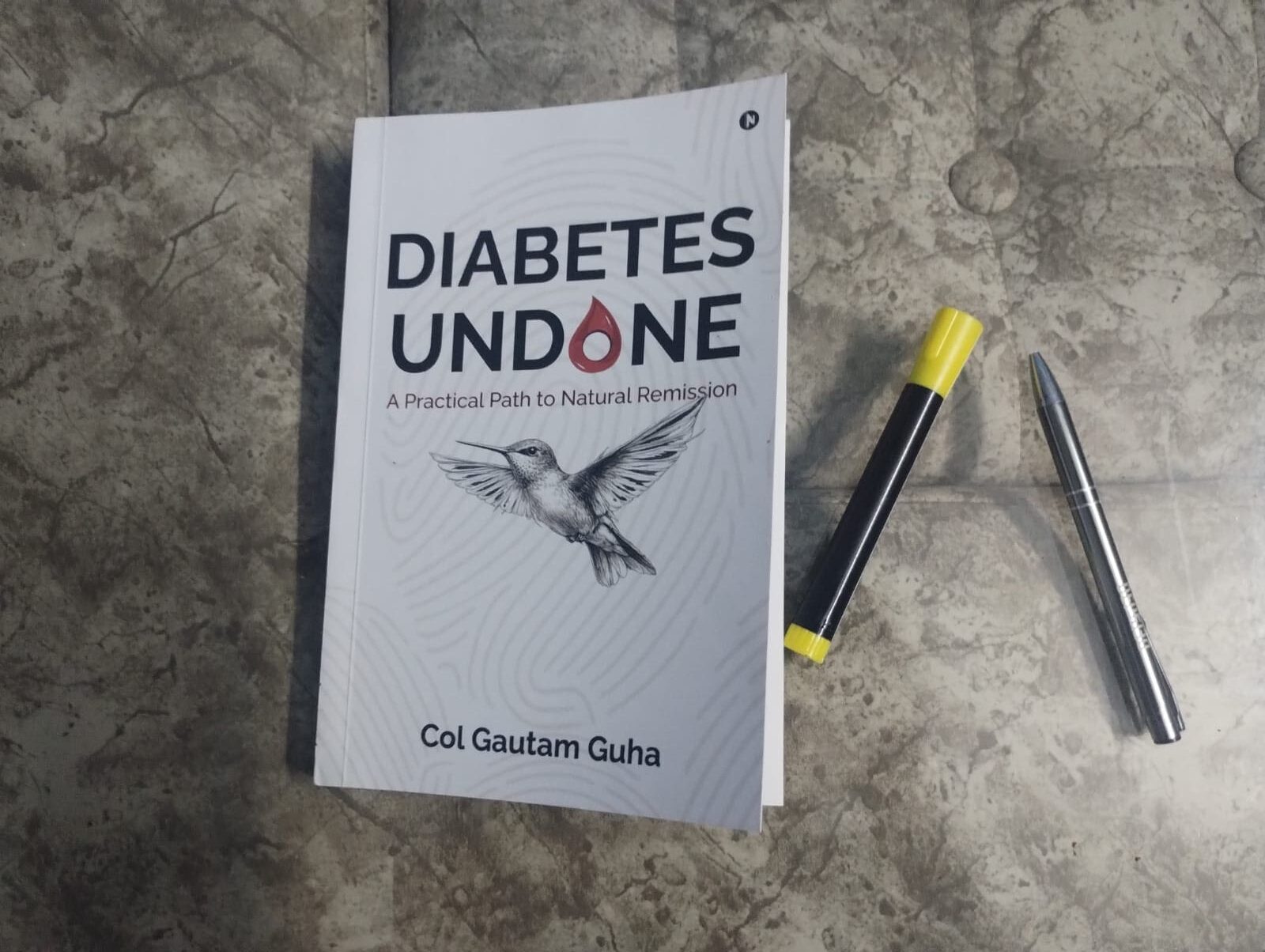
What Stood Out to Me
Let me start with something I did not expect to love as much as I did: the illustrations. The book has some really thoughtful visual aids scattered throughout, and they make a noticeable difference when you are trying to understand something like insulin resistance or hormonal signaling. There is a diagram of the endocrine system, showing the pituitary, thyroid, adrenal glands, pancreas, and other organs, all labeled simply and clearly, that appears in the chapter on hormones and biochemistry. And then there is the insulin resistance illustration, a hand-drawn style image showing a person tugging a rope connected to cells, representing how insulin tries to pull glucose into cells, and another image showing what it looks like when cells become sensitive again. I have read explanations of this mechanism in more technical books and walked away confused. Here, the picture genuinely clarified it in about thirty seconds. This is one of those books where the design choices actively serve the reader rather than just filling space.
The chapter on hidden sugars, titled around foods to avoid in the reversal journey, contains an illustrated box called Hidden Moles that lists 56 different names for sugar. I counted. Barley malt, dextrose, maltodextrin, HFCS, turbinado sugar, and on and on. I’ve been fairly food-conscious for years and I still found at least a dozen names I would not have recognised on a label. That kind of practical, specific information is what separates this book from vague lifestyle advice.
Col Guha also introduces what he calls the Five Finger Punch, a framework for the five pillars of reversal: diet as the foundation, fasting as the accelerator, exercise as the activator, stress management as the silent factor, and a fifth element. Each is explained through the metaphor of fingers on a hand, with the point being that you need all five working together to land a real punch against metabolic disease. The framework is memorable and honestly quite clever. It does not feel gimmicky because he backs each finger with clear reasoning.
The closing chapters of the book carry a different energy. There is a section called Before You Close This Book that reads almost like a personal letter. He writes that reversal begins not with action alone but with honesty, recognising patterns, owning them, changing them. He also makes a distinction I found genuinely important: that fitness and health are not the same thing. He argues that India has become efficient at managing disease but not at preventing it, and that metabolic health must come before fitness. The phrase he uses, a healthy India must come before a fit India, is the kind of line that makes you set the book down and think for a moment. In 2026, when lifestyle diseases are spreading even among younger Indians at alarming rates, this message feels both urgent and overdue.
The Emotional Core of This Book
This is where I want to be careful, because Col Guha is not a sentimentalist and the book is not trying to be emotionally manipulative. But there is a real warmth in how he writes, and a clear sense that he is not writing to impress anyone. He mentions his daughter and son briefly, how their quiet support gave him confidence when he was in unfamiliar health territory. He mentions that doubts crept in often but that the logic kept him going. There is a chapter that reflects on what he calls the company you keep, which argues that real friendship means people who support your choices toward health rather than pulling you toward convenience and indulgence. That part reminded me of conversations I’ve had with friends who make sustainable changes and find their social circle either rallying around them or quietly resisting.
The book also raises something that I think about fairly often: the way we have collectively handed responsibility for our health over to systems, whether medical, pharmaceutical, or algorithmic. There is a section on what he calls the interference of algorithms, where he notes that we now rely on smartwatches to tell us when to drink water and when we are tired, and asks whether we really need a device to tell us when we are thirsty. It is a small observation but it made me think about how disconnected from our own bodies many of us have become. The book argues, gently but firmly, that reconnecting with those internal signals is foundational to metabolic recovery.
Who Should Read Diabetes Undone
If you or someone you love has been diagnosed with Type 2 diabetes, prediabetes, or metabolic syndrome, this book is worth reading before you accept a lifetime of medication as the only option. That is not to say it is anti-medicine. Col Guha is very clear that he worked through his journey with medical oversight and that medications have their place, especially during reversal. But he is equally clear that management and reversal are different goals, and that the system often prioritises the former. This book is for people who want to understand the difference and pursue the latter with intention.
It is also genuinely useful for people who are not yet diabetic but who are metabolically stressed, carrying excess weight around the middle, experiencing fatigue, brain fog, or disrupted sleep, and not quite understanding why healthy-seeming habits are not producing healthy-seeming results. The book does a good job of explaining why someone can appear fit externally and still be metabolically unwell.
I would also recommend this to people who have tried generic lifestyle advice and found it frustrating. Col Guha is honest that discipline alone is not enough. He frames the 5D Mantra, Drive, Desire, Determination, Discipline, and Direction, as the internal architecture that has to hold the external changes in place. That framing actually addresses why most lifestyle interventions fail, which is not lack of information but lack of internalized direction.
A Few Honest Thoughts
If I have any reservation, it is simply that the book covers a very wide terrain, from hormones to gut health to Vitamin D to stress to sleep to fasting to exercise, and some readers might wish certain sections were longer or more deeply explained. Someone coming to this with zero background in metabolic health might occasionally want more detail on a specific point. That said, the illustrations and analogies do a good job of compensating, and the book always directs you toward understanding the principle rather than just following a rule, which I think is the smarter approach for long-term behaviour change.
The writing style is accessible and personal throughout, occasionally borrowing the directness you might expect from someone who spent three decades in the Indian Army, including in Kashmir, on the Siachen Glacier, and with the National Security Guard. He knows how to get to the point. And in a genre full of books that pad chapters with unnecessary filler, that clarity is genuinely refreshing.
Final Thoughts
Diabetes Undone by Col Gautam Guha is the kind of book that could change the way someone approaches their health, not with dramatics, but with the slow accumulation of understanding that makes real change possible. The fact that it comes from a man who lived every page of it, who went from a 107 kg diabetic being handed a prescription for lifelong medication to someone who had reversed those conditions by his fifties, gives it a credibility that no amount of research citations alone could provide. Age is just a number, he writes near the end. The choice to act is everything. I kept thinking about that line for days. I think you might too.
FAQs
Is Diabetes Undone worth reading if I’m not diabetic?
Yes, genuinely. A large part of the book is about metabolic health, insulin sensitivity, hormones, and the lifestyle patterns that lead to metabolic disease long before a diagnosis arrives. If you are prediabetic, struggling with weight, or simply curious about how your body processes food and manages energy, there is a lot here that applies directly to you.
Who should read Diabetes Undone by Col Gautam Guha?
Anyone dealing with Type 2 diabetes, metabolic syndrome, obesity, or related conditions who wants to understand the root causes rather than just managing symptoms. It is also well-suited to family members and caregivers who want to support someone on a reversal path, and to anyone who has felt frustrated that conventional advice is not producing real results.
Is this book just about diet, or does it cover other lifestyle factors?
It covers a lot more than diet. Col Guha addresses fasting, exercise and insulin sensitivity, stress management, sleep, Vitamin D, gut health, hormones, and even the psychological dimension of behaviour change. The Five Finger Punch framework makes clear that diet alone is not enough, and the book devotes substantial space to each of the other pillars.
Does Diabetes Undone claim that diabetes can always be reversed?
No, and this is one of the things I appreciated about it. Col Guha is careful to distinguish between Type 1 and Type 2 diabetes, and he is honest that the duration of the reversal phase varies from person to person depending on multiple factors including the severity of insulin resistance, current medications, and how consistently the lifestyle changes are applied. He frames the goal as achievable for most people with Type 2 diabetes, but not as a guaranteed quick fix.

With over 11 years of experience in the publishing industry, Priya Srivastava has become a trusted guide for hundreds of authors navigating the challenging path from manuscript to marketplace. As Editor-in-Chief of Deified Publications, she combines the precision of a publishing professional with the empathy of a mentor who truly understands the fears, hopes, and dreams of both first-time and seasoned writers.