

Rating
⭐⭐⭐⭐ (4.3 out of 5)
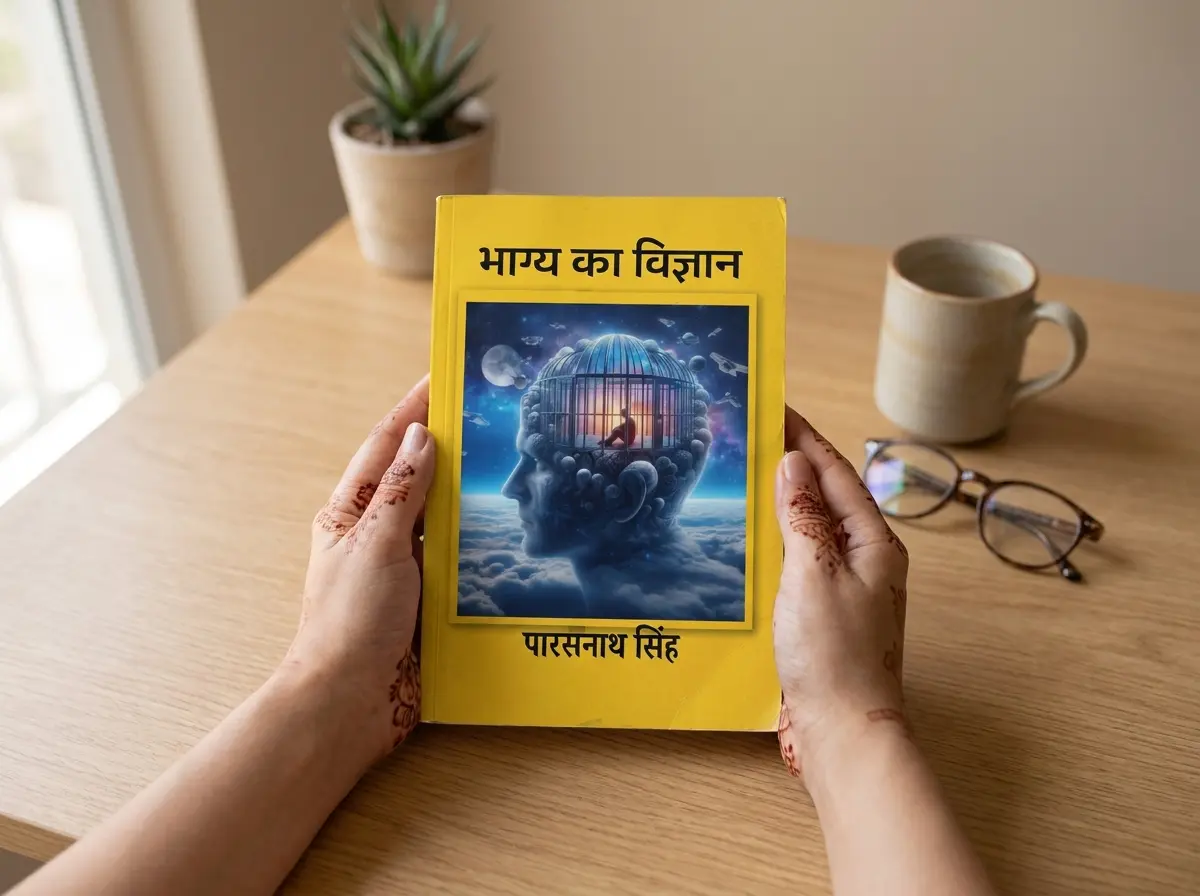
As the Editor in Chief of Deified Publication, I have spent well over fifteen years reading books across almost every genre imaginable. Some books entertain, some inform, and some leave you with more questions than answers. Then there are books that ask you to look inward before asking you to look outward. भाग्य का विज्ञान by पारस नाथ सिंह belongs to that category.
I have read many books on spirituality, karma, positive thinking, and Indian philosophy over the years. Quite honestly, most of them either become too mystical after a few chapters or simplify complex ideas until they lose their depth. I began this book with a little hesitation because the title itself makes a bold promise. Calling something “The Science of Destiny” naturally raises expectations.
Thankfully, the author chooses a different path. Rather than asking readers to accept beliefs blindly, he spends considerable time explaining how destiny, thoughts, intentions, habits, actions, and human behaviour connect with one another. I found myself slowing down while reading several chapters because the ideas were presented in a way that encouraged reflection instead of blind agreement.
What impressed me most was that this book does not repeatedly tell readers to “think positive and everything will become perfect.” Instead, it attempts to build a structured framework. Whether one agrees with every conclusion or not, there is genuine effort behind the author’s reasoning. That sincerity comes across clearly throughout the book.
In 2026, when discussions around manifestation, law of attraction, mindfulness, and self improvement dominate social media, भाग्य का विज्ञान feels relevant for a different reason. It asks readers to take responsibility for their own life instead of waiting for luck to change.
What the Book Is About
भाग्य का विज्ञान is essentially a philosophical exploration of how destiny is formed. According to पारस नाथ सिंह, destiny is neither random nor entirely fixed. Instead, it is shaped through an interconnected process involving thoughts, intentions, actions, habits, mental conditioning, and accumulated sanskars.
The book is divided into chapters that build upon one another. It begins by discussing the very idea of destiny and gradually moves toward concepts like धारणा (belief systems), भाग्य की अवधारणा (understanding destiny), संकल्प (resolve), कर्म का पुनर्जन्म (rebirth through karma), विचार (thought), मन (mind), संस्कार (conditioning), before arriving at its conclusion.
Rather than treating these chapters as isolated topics, the author connects each idea logically. For example, the discussion on thoughts naturally leads to intentions. Intentions influence actions. Repeated actions become habits, and habits eventually become sanskars that shape future decisions and experiences. Whether one accepts this framework spiritually or psychologically, the progression feels internally consistent.
The author also spends considerable time distinguishing between fate and personal responsibility. Throughout the book, he argues that while external circumstances exist, human beings still possess the ability to influence their future through conscious thinking and disciplined action. That balance prevents the book from becoming fatalistic.
What Stood Out to Me
One of the strongest aspects of भाग्य का विज्ञान is how patiently it explains ideas that many writers usually rush through.
The chapter on संकल्प particularly caught my attention. Instead of presenting determination as simple motivation, the author describes it as the seed from which future actions grow. There is a memorable discussion where he explains that every human action first takes birth as a thought before becoming a decision. Reading this reminded me that people often try changing their results without changing the thinking that produces those results. I have seen this pattern repeatedly, not only in books but in real life as well.
Another section that stayed in my mind was the chapter on विचार. The author repeatedly returns to the idea that thoughts possess energy and gradually influence behaviour. He describes how negative thinking keeps attracting similar patterns while disciplined thinking gradually changes one’s direction in life. Whether someone interprets this spiritually or through modern psychology, the underlying message remains understandable. Our repeated thinking certainly shapes many of our choices.
I also appreciated the discussion surrounding धारणा. The author explains how identity slowly develops from childhood through family, society, names, relationships, and experiences. There is an interesting passage where he traces how a child gradually begins identifying with labels, possessions, and social roles instead of recognising a deeper self. That progression felt surprisingly relatable because it mirrors how most of us grow up without ever questioning our assumptions.
Another moment I genuinely liked appears in the chapters discussing संस्कार and कर्म. Instead of presenting karma merely as reward and punishment, the author links it with mental conditioning. Repeated actions create impressions, those impressions shape future behaviour, and future behaviour influences destiny. I found this explanation more practical than many simplistic interpretations of karma that merely promise instant justice.
The conclusion also offers something readers rarely hear today. Rather than constantly chasing external happiness, the author encourages developing satisfaction through changing one’s inner orientation first. It is a simple idea, but the way it is gradually built across multiple chapters gives it more weight.
The Emotional Core
Every book has a central emotional current. For me, the emotional centre of भाग्य का विज्ञान lies in responsibility.
Many people spend years blaming circumstances, luck, society, politics, family, or even destiny itself. The author certainly acknowledges that life presents unequal circumstances, but he consistently returns to one question. What can you still control?
That question appears repeatedly in different forms throughout the book.
I also found the discussions around forgiveness unexpectedly meaningful. At one point, the author even suggests mentally asking forgiveness from those we may have wronged and consciously deciding not to repeat those mistakes. It is a simple exercise, yet it reflects the broader philosophy of the book. Inner transformation begins before outer transformation.
There is another section discussing how human desires constantly shift from one object to another, creating endless dissatisfaction. Reading those pages reminded me of conversations I have had with readers who buy one self help book after another hoping the next one will finally solve everything. Perhaps the author is suggesting something deeper. Happiness cannot simply be purchased through another achievement if the underlying mindset remains unchanged.
I also appreciated that the writing repeatedly encourages readers to become observers of their own thinking. That process is uncomfortable because it forces us to confront our habits. Still, I think many readers will recognise themselves somewhere within these pages.
The Writing Style
Paaras Nath Singh writes in accessible Hindi without trying to impress readers through unnecessarily difficult philosophical vocabulary. The language remains conversational enough for general readers while still discussing subjects drawn from Indian philosophical traditions.
The structure of the book is another strength. Every chapter builds naturally upon the previous one, making it easier to understand ideas that could otherwise become overwhelming.
That said, I do think certain sections become repetitive. Some concepts, particularly around thought patterns and destiny, return multiple times from slightly different angles. Readers already familiar with Indian philosophy may occasionally feel that a few explanations could have been shorter. Personally, I did not find this distracting enough to reduce my enjoyment, but it is worth mentioning because honesty matters in any review.
Another small observation concerns the pace. This is not a book meant to be rushed through in one sitting. Readers looking for quick motivational slogans may find it slower than expected. The author clearly wants readers to think between chapters rather than simply finish them.
Who This Book Is For
I think भाग्य का विज्ञान will resonate most with readers who enjoy reflecting on life rather than simply collecting motivational quotes.
If you often wonder why similar patterns repeat in your life, if concepts like karma, destiny, mindset, consciousness, or Indian philosophy interest you, there is a good chance you will connect with this book.
Readers who appreciate authors like Swami Vivekananda, Osho, Sri Aurobindo, or modern spiritual psychology may also find familiar themes here, although पारस नाथ सिंह presents his own framework rather than copying established voices.
On the other hand, if you are looking for scientific experiments, academic research, or neuroscience supporting every claim, this may not fully satisfy those expectations. The book primarily builds its arguments through philosophical reasoning and spiritual interpretation rather than laboratory evidence. Knowing that beforehand helps readers approach it with the right mindset.
Final Thoughts
When I finished भाग्य का विज्ञान, I did not feel that I had discovered a magical formula for changing life overnight. Instead, I felt I had spent time with an author sincerely attempting to connect ancient philosophical ideas with everyday human behaviour.
That distinction matters.
Books often promise transformation within a few chapters. This one asks for something more demanding. It asks readers to observe their thinking, question their habits, understand the relationship between intention and action, and accept responsibility for shaping the future.
As someone who has reviewed hundreds of books during my years at Deified Publication, I appreciate authors who write from conviction rather than fashion. पारस नाथ सिंह clearly believes in what he is explaining, and that authenticity gives the book credibility even when readers may disagree with individual arguments.
No book can answer every philosophical question, and भाग्य का विज्ञान is no exception. Yet it succeeds in encouraging genuine reflection, which, in my opinion, is far more valuable than offering easy answers.
If you enjoy books that invite you to think about destiny, karma, consciousness, and personal responsibility through the lens of Indian philosophy, this is certainly worth your reading time.
FAQs
Is भाग्य का विज्ञान worth reading?
Yes, especially if you enjoy philosophical and spiritual books that encourage self reflection instead of offering instant solutions. The book rewards patient readers who like thinking deeply about life.
Who should read भाग्य का विज्ञान by पारस नाथ सिंह?
Readers interested in Indian philosophy, karma, destiny, personal growth, consciousness, and spiritual psychology are likely to enjoy this book the most.
Is भाग्य का विज्ञान a religious book?
Not exactly. While it draws from Indian philosophical traditions and discusses concepts such as karma, sanskar, and rebirth, its focus is understanding human behaviour and destiny rather than promoting ritual practice.
Does the book provide practical lessons?
Yes. Alongside philosophical discussions, the author repeatedly encourages readers to examine their thoughts, habits, intentions, and daily actions as practical ways of influencing the direction of their lives.

With over 11 years of experience in the publishing industry, Priya Srivastava has become a trusted guide for hundreds of authors navigating the challenging path from manuscript to marketplace. As Editor-in-Chief of Deified Publications, she combines the precision of a publishing professional with the empathy of a mentor who truly understands the fears, hopes, and dreams of both first-time and seasoned writers.