
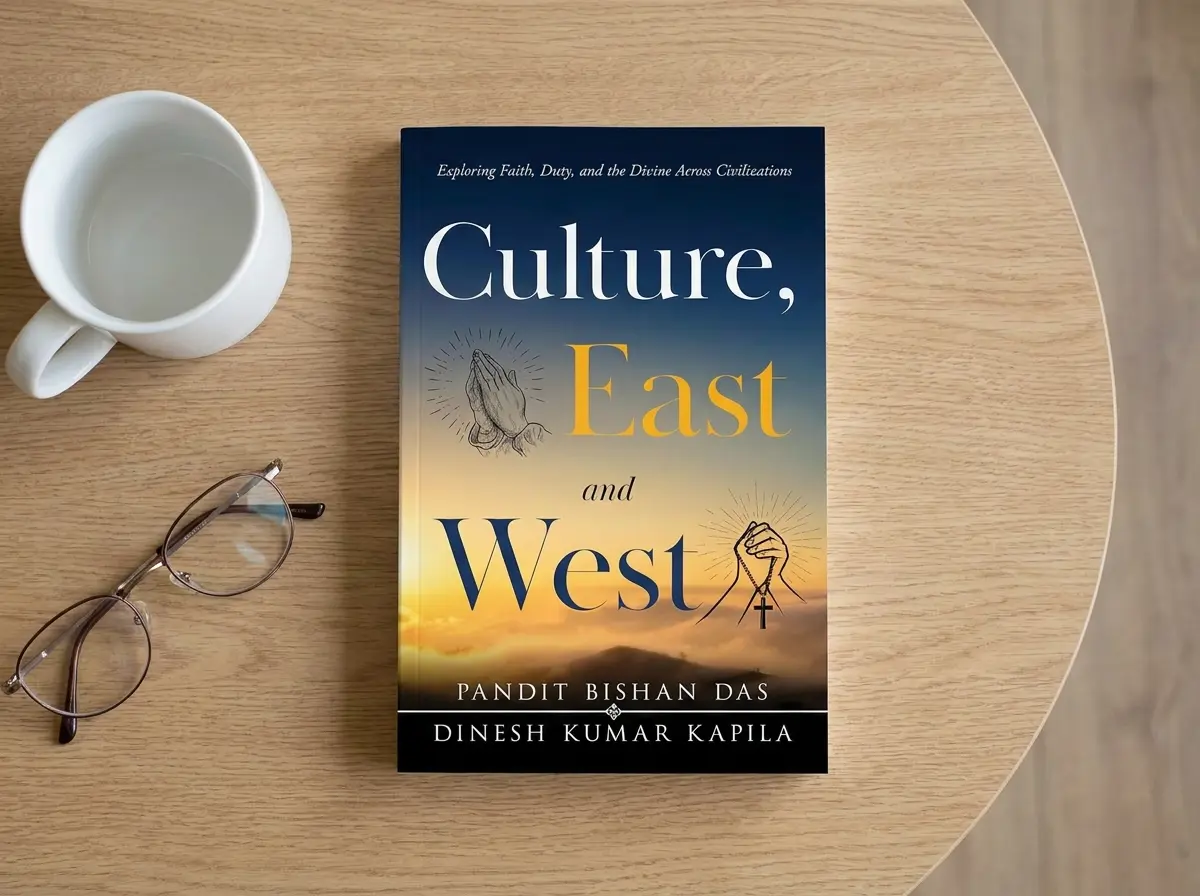
Rating:
⭐⭐⭐⭐1/5 (4.5 out of 5)
I’ll be honest, when this one landed on my desk at Deified Publication, I wasn’t sure what to make of a book whose original text was written around 1917. In my years reviewing books, I’ve read plenty that try to sound old and wise without actually having much to say underneath the dressing. Culture, East and West is not that kind of book. It’s the real thing, written by someone who was genuinely working through a hard question, and that changes how you have to approach it as a reader. You can’t skim this one the way you’d skim a modern self-help title. You have to sit with it a little.
What the Book Is Actually About
The structure here is unusual, and once you understand it, the whole reading experience falls into place. The first part is the original work by Pandit Bishan Das, written between 1917 and 1918. He was Principal in the Punjab Education Service at the time, and a university in the United Kingdom had reached out asking how a person could come into communion with the Divine Will through prayer and through the exercise of his own will. That single question became the seed for eleven chapters covering everything from Moral Law in Man to Free Will and Human Environments, Divine Communion, the Origin and Utility of Religion, the Basis of Polity, the Gospel of Duty, and the Conquest of Adversity.
The second part, added more than a hundred years later, comes from his great-grandson Dinesh Kumar Kapila, who picks up the conversation with chapters on the obsession with death, how faith sustains a person through difficulty, philosophy and action, looking within, and a direct comparison of how the East and the West approach war, culture, and the underlying philosophy behind both. So what you’re holding isn’t one author’s argument. It’s two men, separated by more than a century and connected by blood, working through the same set of questions from two very different vantage points.
What Stood Out to Me
What struck me first was how the book opens. Chapter One is called Moral Law in Man, and Bishan Das doesn’t ease into his argument, he states it outright, faith is implanted in the human soul the way birth is, and it’s intuitional rather than something a person reasons their way into. He compares faith to a sculptor’s chisel, the tool that shapes a person’s best and worst moments, and he brings in outside voices almost immediately, Carlyle on hero-worship, Kant on the starry heavens above us, a writer named Anna Kingsford on religious sentiment, all within the first few pages. It reads like a man who has spent a lifetime in serious study and wants to show his working rather than just assert his conclusions.
Where the book really comes alive for me, though, is the chapter on Divine Communion. There’s a section where Bishan Das gathers quotes from Mozart, from a writer named Genson, from Doctor Schofeld, and from Professor Elmer Gates, each describing how ideas or insight seem to arrive from somewhere the conscious mind didn’t summon. Mozart’s reflection on not knowing where his musical ideas come from, that he simply hears them, sat with me longer than I expected from what is essentially a religious treatise. Bishan Das uses these scientific and creative voices to build a case that communion with the Divine isn’t unique to mystics or saints, it’s something close to a universal human experience that shows up in unconscious ways, even for people who aren’t actively trying to access it. That’s a clever and honestly fairly modern way of making a religious argument, leaning on psychology and the testimony of geniuses rather than scripture alone.
The Conquest of Adversity chapter is where I think the original work is at its strongest. Bishan Das opens with a short verse about a lump of woe being a blessing in disguise, and then builds an argument that suffering is the furnace through which character gets tempered. He doesn’t just assert this, he backs it with example after example, and this is where you can tell the man read widely. He brings up Milton writing Paradise Lost while blind and persecuted, John Bunyon writing Pilgrim’s Progress from a jail cell, Dante composing while exiled and in penury, and Handel writing some of his greatest work while suffering an attack of palsy. It’s not a list for the sake of name-dropping, it’s an argument that the deepest human distress and the highest human creation tend to live in the same place, and I found myself going back to that page more than once.
Where the Two Voices Meet and Diverge
The National Ideals and Nationalism chapter takes a slight turn into territory that surprised me a little, given the religious framing of the rest of the book. Bishan Das writes about how individual distress can awaken a nation’s hidden strength, using the image of national crisis as something that kindles a collective fire, almost the way personal suffering kindles personal character. Given that this was written in colonial-era Punjab by a man working within the British education system, there’s an interesting tension running underneath this chapter that he doesn’t fully resolve, and to his credit, he doesn’t pretend to.
Then the book shifts completely into Part Two, and Kapila’s voice takes over, reading differently from his great-grandfather’s, more personal, more contemporary. The chapter called This Obsession with Death and Staying as a Memory opens with him describing his own morning walk routine, watching religious channels on television, and being gently told by his wife not to grumble in retirement. It’s a small, very human moment, and a deliberate contrast to the more formal nineteenth-century prose that came before it. From there he moves into a serious discussion of how Hinduism, or what he repeatedly calls Sanatan Dharma, treats death not as an ending but as a short passage between birth and rebirth. He even quotes H. G. Wells calling Hinduism synonymous with humanism, which is not a comparison I expected to find in a book like this, and it works because Kapila uses it to build an actual argument rather than just dropping a famous name for effect.
The Emotional and Philosophical Core
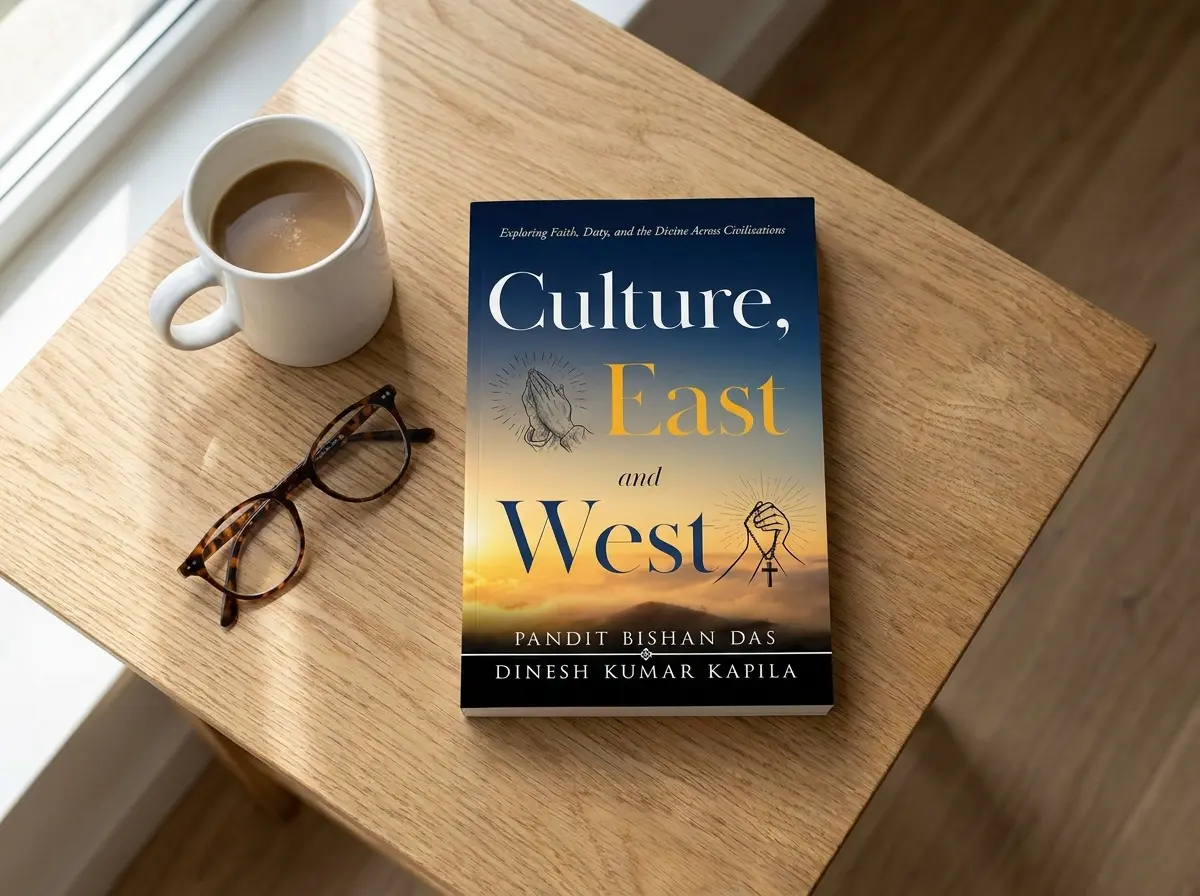
The closing chapters, particularly the one titled About Culture East and West, are where the book earns its title properly. Kapila lays out point-by-point comparisons, the Trinity against the more polytheistic framework of Hinduism, the Christian path to salvation through Christ’s death and resurrection against the Hindu paths of knowledge, devotion, and good deeds, individualism in the West against the more collectivist, family-centered orientation he attributes to Hindu culture. He even works in a Sanskrit verse from the Mahabharata, where Vidur warns that wealth gained through theft or unjust means never truly prospers, and sets it directly against two verses from Romans and Titus about being subject to governing authorities. Putting those two traditions side by side on the page, in their own words, is a stronger move than just summarizing them separately, and it’s the most effective passage in the entire second half of the book.
What stood out to me across both halves is the writing itself. Bishan Das writes in long, layered sentences typical of his era, dense with classical and biblical references, and you have to slow down for him. Kapila writes more conversationally, sometimes almost like a man thinking out loud at his desk, and the book is better for having both registers rather than smoothing them into one voice. It would have been easy, and probably tempting, to rewrite the great-grandfather’s prose into something more modern. Kapila resisted that, and the book is more interesting because of it.
Who This Book Is For
If I’m being balanced, and I think I owe you that, this book does ask something of its reader. The original chapters were written for a specific academic inquiry from over a century ago, and the prose reflects that, it’s not a quick read and it doesn’t try to be. Readers looking for a breezy spiritual guide might find the early chapters dense going before Kapila’s additions lighten the tone. Anyone with a genuine interest in comparative religion, or anyone curious about how Hindu and Christian thought actually differ at the level of first principles rather than at the level of stereotype, will get a lot out of this. People interested in family history and legacy writing will also find something rare here, a great-grandson literally continuing a conversation his ancestor started with a university more than a hundred years ago.
Final Thoughts
This is a book that earns its place on a shelf next to other serious comparative religion writing, and in 2026, with so much noise around East versus West framing in public conversation, having a calm, deeply read, two-generation take on the actual philosophical differences feels more useful than I expected going in.

With over 11 years of experience in the publishing industry, Priya Srivastava has become a trusted guide for hundreds of authors navigating the challenging path from manuscript to marketplace. As Editor-in-Chief of Deified Publications, she combines the precision of a publishing professional with the empathy of a mentor who truly understands the fears, hopes, and dreams of both first-time and seasoned writers.