
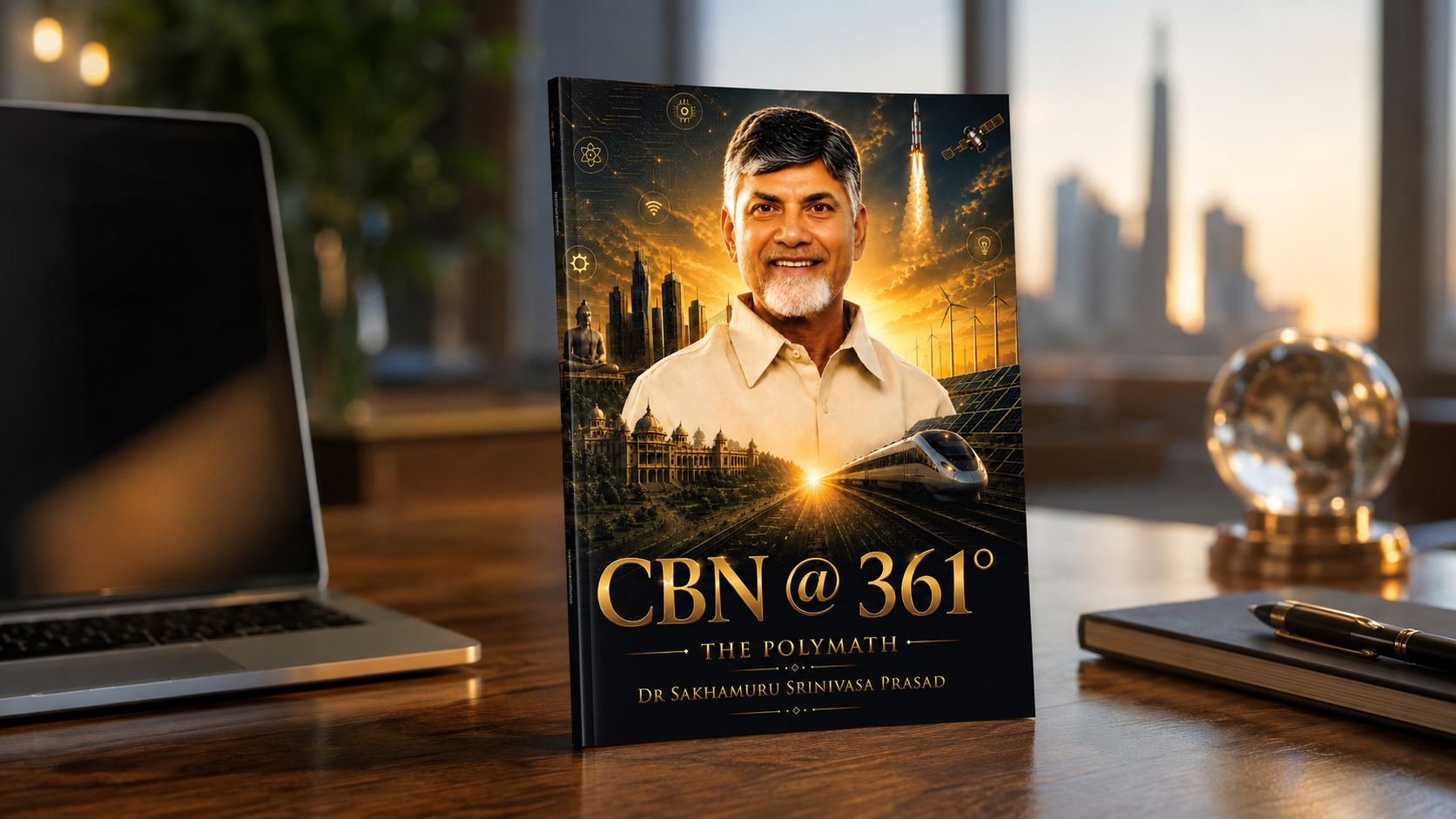
Every now and then, I come across a book that is less interested in telling a story and more interested in documenting an idea. CBN@361 Degrees by Dr. Sakhamuru Srinivasa Prasad, translated into English by Dr. K. V. Satyanarayana, IAS (Retd.), belongs firmly in that category.
Before I began reading, I assumed this would be another political tribute book. To be honest, I approached it with some caution because books centered on political figures often become repetitive. They praise endlessly but rarely offer a framework that readers can engage with.
What surprised me here was that the central focus is not merely Chandrababu Naidu the politician. The real subject of the book is the concept of “361 Degree Governance.” The author repeatedly returns to this idea and builds an entire intellectual argument around it.
Whether readers agree with every conclusion or not, the book succeeds in presenting a coherent vision of leadership, development, technology, governance, entrepreneurship, and long term public policy. That alone makes it more substantial than many contemporary political biographies.
Interestingly, this English edition carries additional significance because the original work was written in Telugu and translated by Dr. K. V. Satyanarayana. The translation reads naturally and professionally, preserving the seriousness of the original without feeling mechanical.
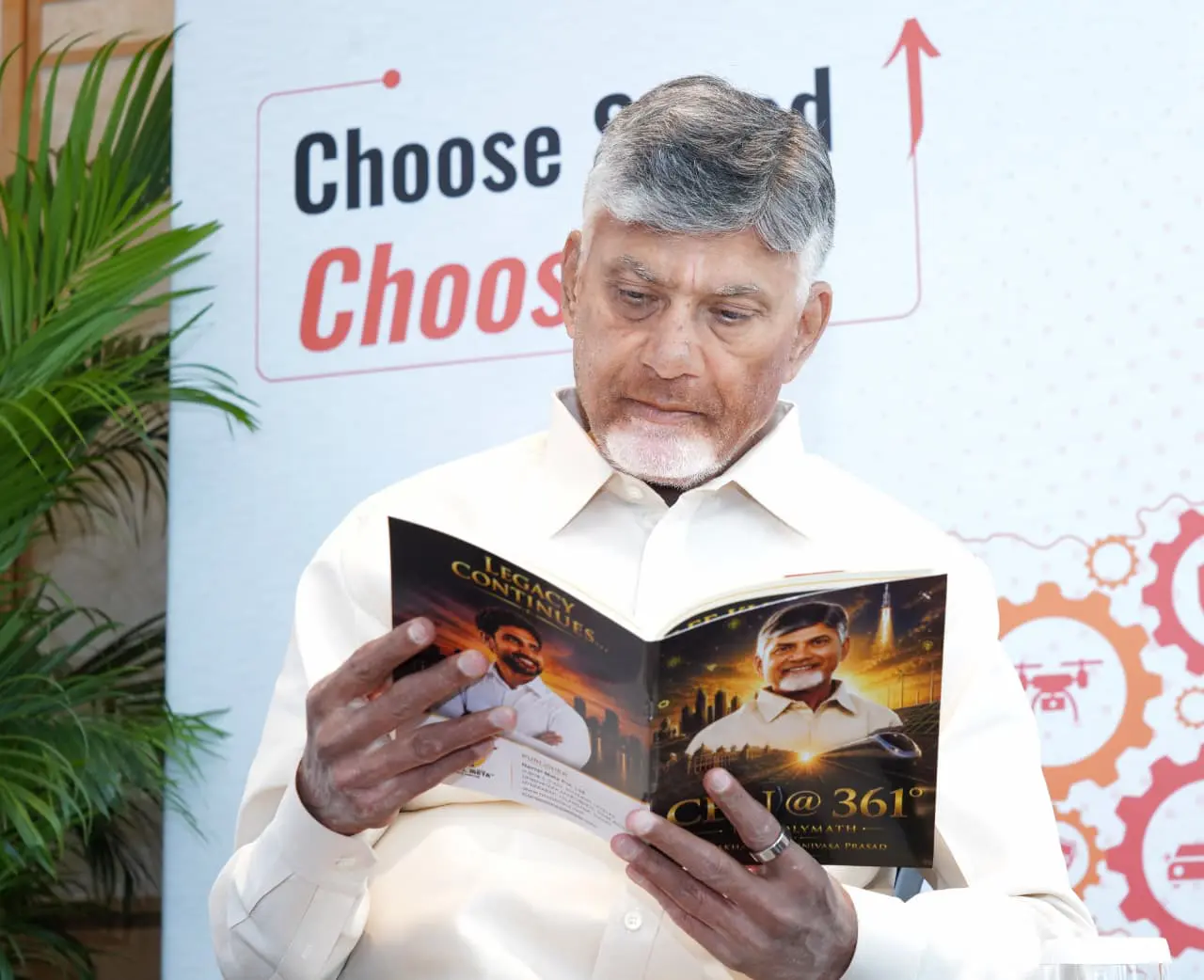
What the Book Is About
At its core, CBN@361 Degrees is a study of Andhra Pradesh Chief Minister Nara Chandrababu Naidu and the ideas the author believes define his leadership.
The book introduces the concept of a “361 Degree Leader.” Traditionally, 360 degrees symbolizes completeness. The author argues that Naidu goes one degree beyond completeness. That additional degree represents vision, foresight, anticipation, innovation, empathy, and the willingness to think beyond immediate political gains.
Throughout the book, Chandrababu Naidu is presented as a leader whose governance philosophy extends across multiple domains. Infrastructure, technology, education, entrepreneurship, agriculture, public administration, welfare, global partnerships, urban development, artificial intelligence, quantum technologies, aerospace ambitions, and economic reform all become pieces of a larger developmental puzzle.
Several chapters compare Naidu with international figures such as Lee Kuan Yew, Jacinda Ardern, and Dwight D. Eisenhower. These comparisons are used not to claim identical achievements but to highlight shared qualities such as long term planning, institution building, and future oriented governance.
The book also discusses projects and concepts associated with Naidu’s vision, including HITECH City, Amaravati, entrepreneurship initiatives, digital governance, infrastructure development, and future focused sectors such as AI and space technology.
What emerges is less a conventional biography and more a political and developmental manifesto built around one individual’s leadership philosophy.
What Stood Out to Me
The first thing that stood out was the book’s ambition.
Many political books remain trapped in chronology. They move from childhood to adulthood, election to election, success to success. This book takes a different route. Rather than focusing heavily on personal anecdotes, it focuses on ideas.
The recurring concept of “361 Degrees” could have become a gimmick. Surprisingly, the author spends considerable effort explaining what that extra degree means.
According to the book, leadership is not simply about responding to problems after they emerge. It is about anticipating future needs before people even articulate them. That argument appears repeatedly and becomes the intellectual backbone of the entire work.
I also appreciated the emphasis on education and entrepreneurship. The author repeatedly suggests that development is not merely about roads and buildings. It is also about creating capable citizens who can shape their own futures. As someone who reviews both fiction and non fiction, I always notice when a book attempts to connect infrastructure with human potential rather than treating them as separate subjects.
Another strength is the international perspective. The comparisons with Singapore, New Zealand, Bhutan, South Korea, and the United States broaden the discussion beyond regional politics. Even readers unfamiliar with Andhra Pradesh politics can understand the larger governance ideas being discussed.
The translation deserves special mention. Translating political and philosophical writing is difficult because literal translations often sound stiff. Here, the English reads smoothly. I rarely felt that I was reading a translated work, which is perhaps the highest compliment a translator can receive.
That said, I do think the book occasionally becomes overly celebratory. Readers looking for a deeply critical political analysis may find the tone one sided. The author clearly admires his subject, and that admiration is visible throughout the text.
For some readers, that may be a limitation.
For others, especially those interested in understanding the author’s perspective, it may not be an issue at all.
The Emotional Core
Political books are not usually discussed in emotional terms, but this one actually has an emotional center.
That emotional center is aspiration.
Again and again, the book returns to the belief that governments should help people dream bigger lives. The recurring message is that leadership should create opportunities, remove barriers, and build systems that allow future generations to prosper.
As I read, I found myself thinking about how rare long term thinking has become in public discourse. Most conversations today revolve around immediate outcomes. Five year plans feel ambitious. Twenty year visions feel unrealistic.
This book argues for something different.
It argues that leaders should think decades ahead.
Whether one agrees with every example presented or not, there is something refreshing about a book that insists on discussing the future rather than remaining trapped in the present.
I also found the chapter comparing Chandrababu Naidu and Dwight Eisenhower particularly interesting. The comparison revolves around infrastructure, institution building, and intergenerational responsibility. The idea that today’s decisions should benefit people who have not yet been born is a powerful one.
In 2026, when technology is advancing rapidly and political cycles are becoming increasingly short term, that message feels timely.
The book repeatedly asks readers to think about legacy rather than popularity.
That is perhaps the strongest emotional thread running through the entire work.
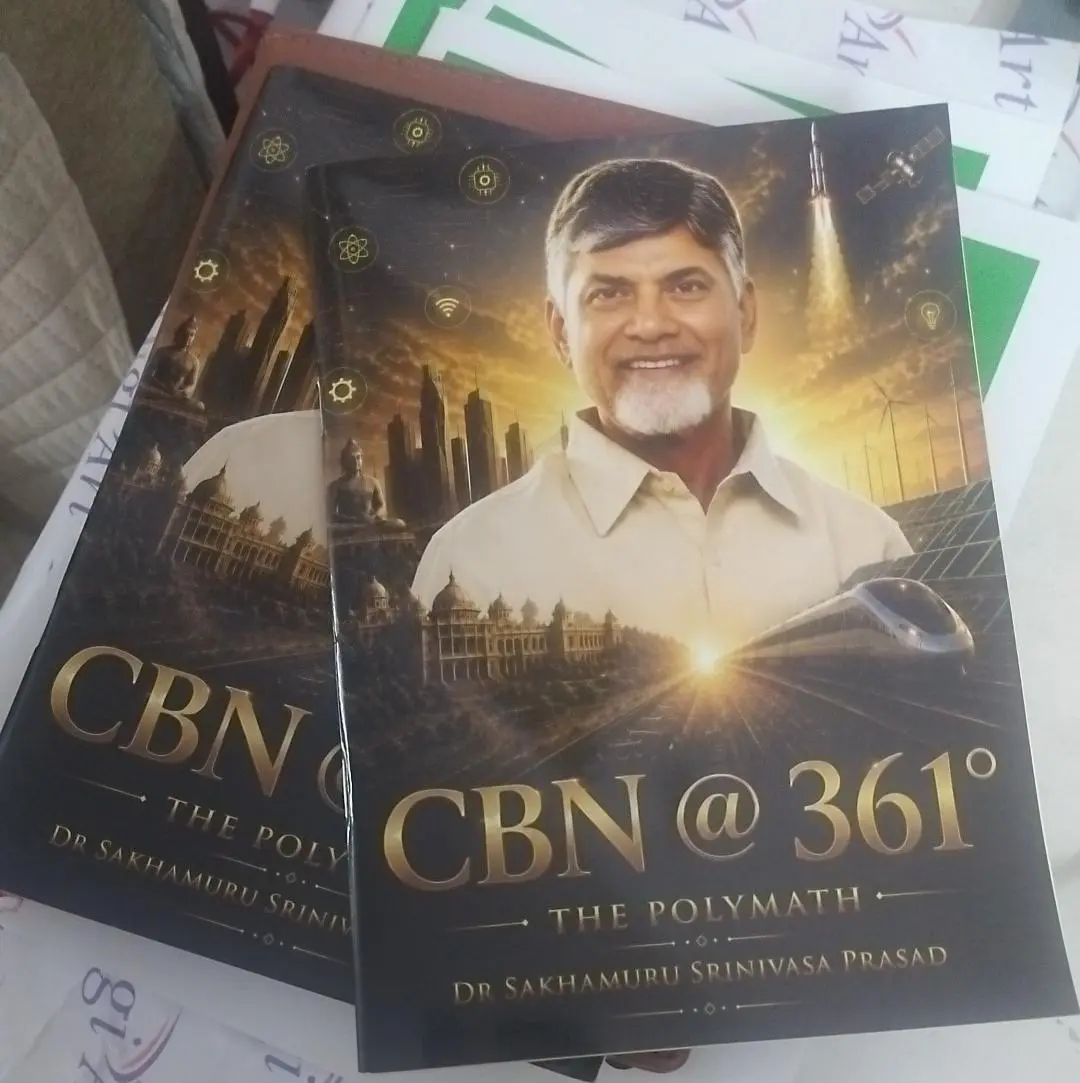
Who This Book Is For
This is not a book for everyone.
If you are looking for political scandals, insider gossip, dramatic confrontations, or investigative journalism, you may not find what you are looking for here.
However, I think the book will appeal strongly to:
- Students of public policy
- Readers interested in governance models
- Entrepreneurs interested in development thinking
- Civil service aspirants
- Political science students
- Readers interested in Andhra Pradesh’s developmental journey
- People who enjoy leadership literature
It may also interest readers who admire books about institution builders rather than purely charismatic leaders.
If you enjoy books that ask, “How should a state prepare for the future?” this book gives plenty to think about.
Final Thoughts
After finishing CBN@361 Degrees, I came away feeling that its greatest strength lies in clarity of purpose.
The author knows exactly what he wants to argue.
He wants readers to view Chandrababu Naidu not merely as a politician but as a thinker, planner, and architect of long term development. Every chapter reinforces that central argument from different angles.
I do wish the book included a little more engagement with opposing viewpoints. A broader range of perspectives would have strengthened its analytical depth.
Still, the book succeeds remarkably well at what it sets out to do.
As an editor who has spent years reading biographies, political books, memoirs, and leadership literature, I can say this felt less like a campaign document and more like an attempt to preserve a particular philosophy of governance for future readers.
The translation is strong. The structure is clear. The ideas are ambitious.
Most importantly, the book consistently encourages readers to think beyond immediate circumstances and imagine what sustained, future oriented leadership might look like.
And honestly, that conversation is worth having.
FAQs
Is CBN@361 Degrees worth reading?
Yes, especially if you’re interested in leadership, governance, public policy, and development models. It offers a detailed explanation of the author’s “361 Degree Governance” framework.
Who wrote CBN@361 Degrees?
The book was written by Dr. Sakhamuru Srinivasa Prasad and translated into English by Dr. K. V. Satyanarayana, IAS (Retd.).
Is CBN@361 Degrees a biography?
Partly, but not entirely. It is better described as a leadership and governance study centered on Nara Chandrababu Naidu.
Who should read CBN@361 Degrees?
Students, policymakers, entrepreneurs, researchers, civil service aspirants, and readers interested in development and governance.

With over 11 years of experience in the publishing industry, Priya Srivastava has become a trusted guide for hundreds of authors navigating the challenging path from manuscript to marketplace. As Editor-in-Chief of Deified Publications, she combines the precision of a publishing professional with the empathy of a mentor who truly understands the fears, hopes, and dreams of both first-time and seasoned writers.