
Rating:
⭐⭐⭐⭐ (4.3 out of 5)
I’ve been reviewing books for many years, and every now and then I come across a novel that feels less like a story and more like a confrontation. Not because it shouts at the reader, but because it keeps asking difficult questions long after you’ve finished reading.
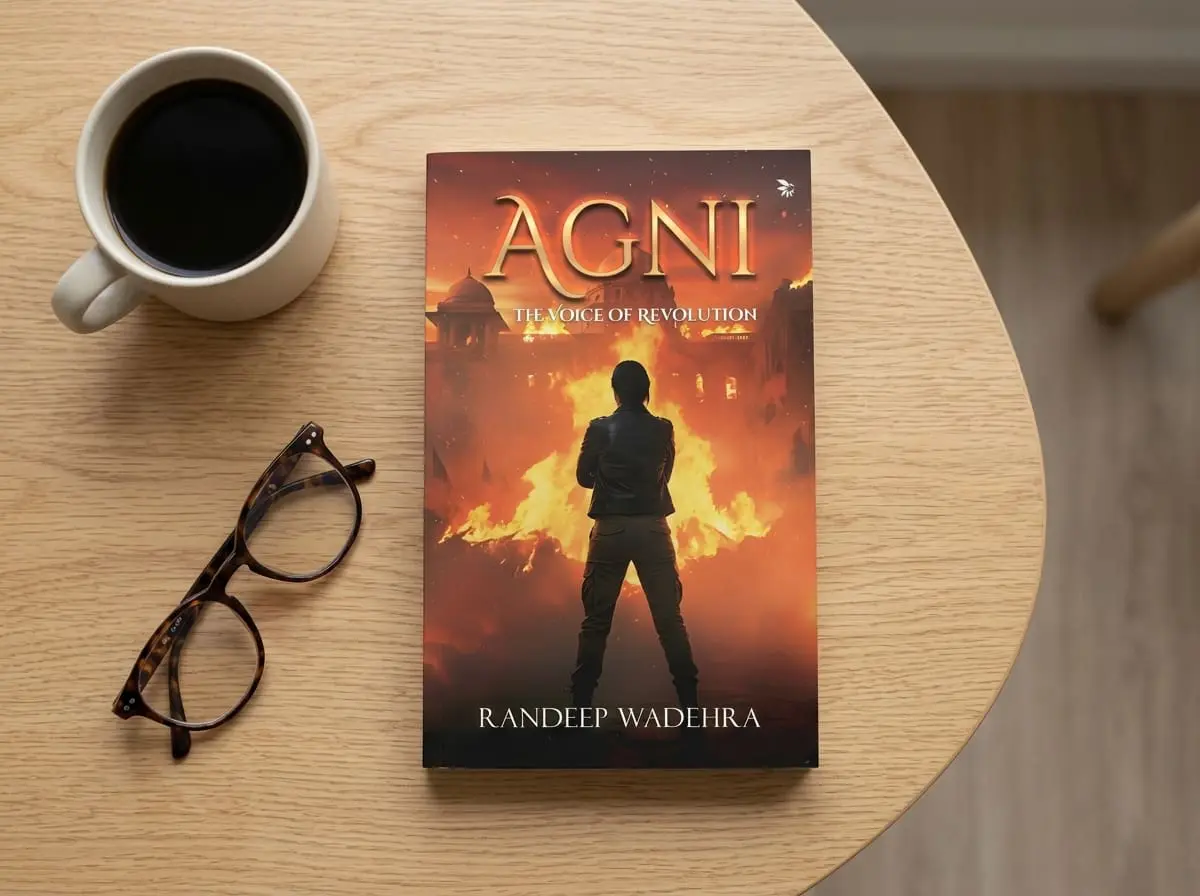
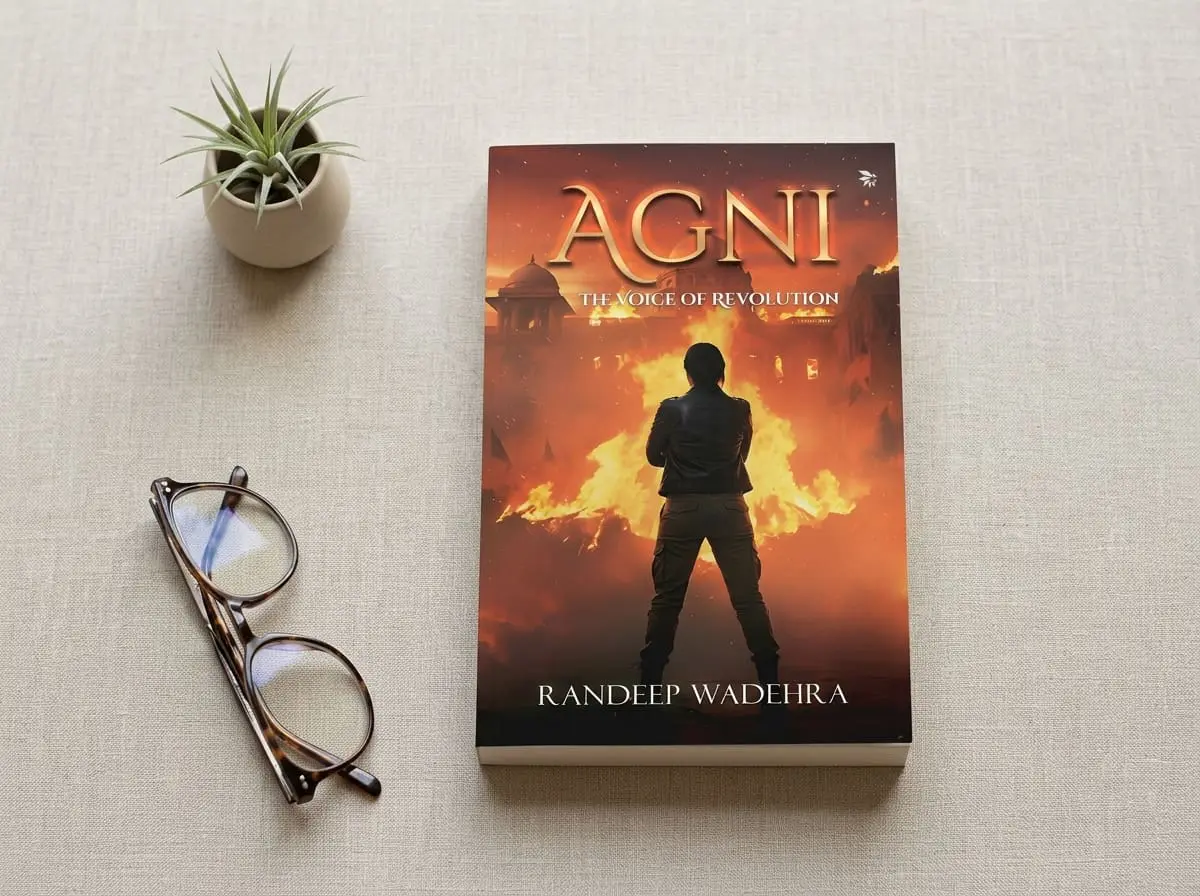
Agni: The Voice of Revolution by Randeep Wadehra gave me that feeling.
At first glance, it appears to be a dystopian political thriller. There’s a corrupt republic, an authoritarian government, revolutionaries, political intrigue, assassinations, propaganda, and a nation standing on the edge of collapse. But the more I read, the more I realized this book is not really about politics alone. It is about what happens when grief turns into purpose, when injustice becomes normal, and when ordinary people decide they have had enough.
What surprised me most was that beneath all the political conflict lies a very personal story. The characters are not simply representatives of ideas. They carry wounds, memories, loyalties, and contradictions. That human element is what kept me invested.
What the Book Is About
The story unfolds in the Republic of Dhundhara, a nation that has lost its moral center. Corruption has become institutionalized, power is protected through fear, and justice appears to exist only for those who already hold influence.
At the heart of the novel is Agni, a senator whose name itself symbolizes fire. She is driven by the murder of her parents and by a determination to challenge the forces responsible for destroying her country. Opposing the ruling establishment is Sankat, a revolutionary whose methods are far more aggressive. While Agni believes in justice, accountability, and reform, Sankat increasingly represents the temptation of vengeance.
What makes the story interesting is that it never presents these conflicts in simple black and white terms. The leaders, advisors, revolutionaries, and political operators all have their own motivations.
Characters such as Gustakh, Rambha, Panauti, Acharya, and Sarthak add layers to the narrative. Some embody corruption. Some embody resistance. Others operate somewhere in between, navigating a world where every alliance carries a cost.
The story gradually expands from personal revenge into a national struggle. Prophecies, political maneuvering, public unrest, elections, and ideological battles intertwine as Agni moves closer to becoming the symbol of a movement much larger than herself.
What Stood Out to Me
The first thing that stood out was the author’s commitment to symbolism.
Names like Agni, Sankat, Panauti, Gustakh, and Acharya are not accidental. They immediately communicate something about the roles these characters play within the larger narrative. In less skilled hands, that approach can feel heavy handed. Here, it largely works because the characters are given enough personality to rise above symbolism.
I was particularly interested in the relationship between politics and mythology throughout the novel. The prophecy introduced early in the story creates a sense of inevitability, yet the characters constantly struggle against destiny. There is an ongoing tension between fate and choice. Are these people shaping history, or are they simply fulfilling a path that was already written?
Another strength is the book’s world building.
Dhundhara feels less like a fantasy kingdom and more like a distorted reflection of real societies. The ruling elite use narratives, fear, wealth, media influence, and public spectacle to maintain control. Reading these sections in 2026 feels especially relevant because discussions around misinformation, political polarization, and institutional trust continue to dominate public life across the world.
I also appreciated the way the author constructs his antagonists. Panauti and Gustakh are not cartoon villains twirling imaginary mustaches. They are manipulative, calculating, and often disturbingly believable. Some of their conversations reveal how power protects itself. They discuss public perception, political strategy, manufactured narratives, and the management of public outrage with chilling confidence.
There is one scene involving discussions around elections, public image, and controlling narratives that particularly caught my attention. It felt less like fiction and more like a glimpse into how political machinery operates behind closed doors.
The prose itself is ambitious. Randeep Wadehra clearly enjoys vivid imagery and dramatic language. Fire, blood, storms, rivers, wolves, predators, and shadows appear repeatedly throughout the novel. Sometimes this creates genuinely memorable moments. At other times, I felt the descriptions became a little too elaborate. There were sections where I wanted the story to move faster instead of lingering on metaphor after metaphor.
Still, there is no denying the author’s passion. Every page feels written by someone who deeply believes in the story he is telling.
The Emotional Core
For me, the emotional center of the novel is not revolution. It is loss. Again and again, characters are shaped by what has been taken from them. Parents. Friends. Mentors. Faith in institutions. Faith in leaders. Faith in the future.
Agni’s journey carries emotional weight because her fight is deeply personal. The deaths of her parents are not simply backstory. They become the fuel behind her convictions.
I found myself thinking about another theme that runs throughout the novel: the danger of becoming what you hate.
Several characters believe they are fighting for justice, but the methods they choose force difficult moral questions. When does resistance become cruelty? When does revenge stop looking different from oppression?
The book does not always provide easy answers.
One aspect I genuinely appreciated was the role of mentors and companions. Acharya and Sarthak, in particular, contribute emotional depth to the narrative. Their influence on Agni helps prevent the story from becoming solely about anger. They represent ideals, sacrifice, and moral responsibility.
The later sections of the novel also carry a sense of earned payoff. The political transformation of Dhundhara is important, but what resonated with me more was Agni’s internal evolution. By the end, she is not merely fighting enemies. She is wrestling with the kind of leader she wants to become.
That distinction matters.
Many political thrillers focus on winning power. This novel spends considerable time asking what happens after power is won.
Who This Book Is For
I think Agni: The Voice of Revolution will appeal most to readers who enjoy political fiction mixed with dystopian elements.
If you enjoy stories about corrupt governments, resistance movements, elections, ideological conflicts, and leaders shaped by tragedy, there is a good chance you’ll find plenty to appreciate here.
Readers who like symbolic storytelling and larger than life characters will probably connect strongly with the book.
On the other hand, if you prefer extremely subtle writing or fast moving minimalist prose, this may not be your ideal read. Randeep Wadehra writes with intensity. His descriptions are rich, his emotions are heightened, and his characters often operate on a grand stage.
Personally, I think the book works best when approached as both a political thriller and a modern political fable.
Final Thoughts
As an editor and lifelong reader, I’ve encountered many novels that discuss corruption and revolution. What separates Agni: The Voice of Revolution from many others is its willingness to examine what comes after the slogans.
The novel asks difficult questions about power, justice, revenge, leadership, and national identity. It presents heroes who are flawed, villains who are intelligent, and a society struggling to rediscover its conscience.
Is it perfect? No.
There are moments when the language becomes overly ornate, and some readers may wish for tighter pacing in certain sections. But those imperfections come from ambition rather than lack of effort.
By the time I reached the final chapters, I felt that Agni’s story had evolved into something larger than a political battle. It became a meditation on responsibility. What do we do when institutions fail? How do we seek justice without becoming consumed by hatred? And perhaps most importantly, how do we rebuild after the fire?
Those questions gave the novel its strongest moments.
FAQs
Is Agni: The Voice of Revolution worth reading?
If you enjoy political thrillers with strong ideological conflicts, memorable characters, and a dystopian setting, I think it is worth your time.
Who should read Agni: The Voice of Revolution?
Readers who enjoy political fiction, revolution narratives, dystopian worlds, and stories about leadership and justice.
What genre is Agni: The Voice of Revolution?
The novel combines dystopian fiction, political thriller, speculative fiction, and social commentary.
Is Agni: The Voice of Revolution action focused or character focused?
It contains political conflict and action, but the strongest parts come from character motivations, emotional wounds, and moral dilemmas.

With over 11 years of experience in the publishing industry, Priya Srivastava has become a trusted guide for hundreds of authors navigating the challenging path from manuscript to marketplace. As Editor-in-Chief of Deified Publications, she combines the precision of a publishing professional with the empathy of a mentor who truly understands the fears, hopes, and dreams of both first-time and seasoned writers.