
Rating
⭐⭐⭐⭐ (4.3 out of 5)
Every now and then, a book comes along that is not trying to entertain you, impress you with complex theories, or convince you that it has discovered some revolutionary secret. Instead, it takes a step back and asks a much simpler question: what if the answer has been in front of us all along?
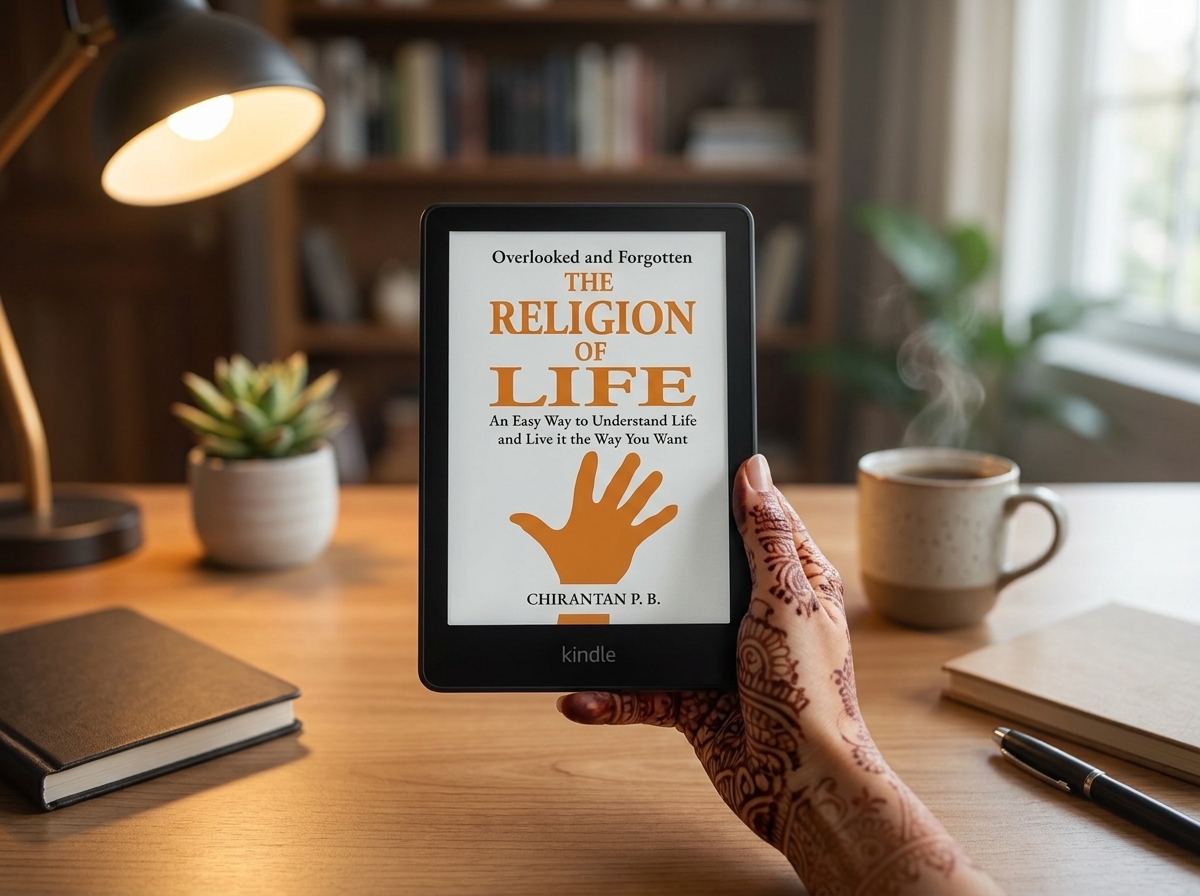
That was my experience reading The Religion of Life: An Easy Way to Understand Life and Live it the Way You Want by Chirantan P. B.
As someone who has spent years reviewing books across genres, I have noticed that many self development and philosophy books begin with a promise. They promise happiness, success, inner peace, productivity, wealth, or enlightenment. This book takes a different route. It begins with a feeling that many of us already have but rarely put into words.
Something feels wrong.
Not necessarily in our personal lives alone, but in the larger systems around us. We are more connected than ever, yet many people feel isolated. We have more information than any generation before us, yet confusion seems to grow. We have countless tools to manage stress, but stress itself does not appear to be leaving.
The author starts from that uncomfortable observation and builds an argument around a surprisingly simple idea: life itself should be treated as humanity’s most fundamental religion.
Now, that might sound abstract at first. I thought so too. But what interested me was how the book keeps bringing the discussion back to practical human experiences rather than remaining trapped in philosophy.
What the Book Is About
At its core, The Religion of Life argues that nearly every human system, belief structure, conflict, and personal struggle can be better understood if we place life itself at the center.
The opening chapters establish this foundation in a direct and almost startling way. The author repeatedly returns to the idea that life is the source from which everything else emerges. Strip away identities, ideologies, traditions, and social labels, and what remains is the simple fact that we are alive.
There is a section early in the book that discusses death and the difference between a living person and a corpse. It is intentionally blunt. The author’s point is that everything we associate with a person, their hopes, emotions, achievements, relationships, and memories, exists because of life. Once life is gone, everything else disappears with it.
From there, the book expands outward.
It moves into discussions about fear, anger, violence, social conditioning, trauma, self respect, love, human evolution, psychology, and what the author calls “Universal Love.” Throughout these chapters, the central idea remains the same: many of our problems begin when we lose sight of life’s value and become trapped by identities, fears, and survival driven thinking.
One thing I appreciated is that the book does not present life as a mystical concept. The author frequently uses psychology, evolutionary theory, social behaviour, and human biology to support his arguments. Whether readers agree with every conclusion or not, there is a consistent attempt to connect philosophical ideas with observable human behaviour.
What Stood Out to Me
The strongest aspect of this book, in my opinion, is not its philosophy. It is its willingness to connect very different subjects into a single framework.
For example, the chapters discussing violence were unexpectedly interesting.
Most books treat violence as a political or criminal issue. Here, the author traces violence back to fear and anger, describing them as evolutionary survival mechanisms. The argument is that these emotions helped our ancestors survive, but in modern society they often create reactions that no longer serve us.
One chapter examines how violence permeates everyday life through language, stories, media, and even children’s rhymes. The discussion about “Jack and Jill” was one of those moments where I found myself thinking, “I’ve heard this rhyme my entire life and never considered it this way.”
Whether readers agree with every interpretation is almost secondary. The value comes from being encouraged to look at familiar things from a different angle.
Another section that caught my attention was the discussion around Maslow’s hierarchy of needs. Many readers will already know the framework, but the author uses it to explain why fear and anger continue to dominate so much of human behaviour.
The argument is straightforward. When people feel that their security, belonging, status, or survival is threatened, rational thinking often takes a back seat. Looking around at social media arguments, political divisions, and public discourse in 2026, it is difficult to say the author is completely wrong.
The chapters on self respect were probably among the most practical parts of the book.
I liked that the author distinguishes between self respect and self esteem. Many books treat them as interchangeable concepts. Here, self respect is described as something deeper, rooted in understanding who you are, accepting your imperfections, and making choices that align with your values.
There is also a recurring emphasis on personal responsibility. The book does not encourage readers to blame society for everything. Instead, it repeatedly asks readers to examine their own reactions, beliefs, habits, and emotional patterns.
That makes some sections uncomfortable. But often those are the sections worth reading carefully.
The Emotional Core
Beneath all the discussions about psychology, evolution, violence, and social systems, this is actually a book about compassion. Not the social media version of compassion. Not the performative version. The genuine version. One of the ideas that appears repeatedly throughout the book is that most people are products of their experiences, environments, fears, and circumstances.
There is a chapter titled The Odd Thing that stood out to me for this reason. The author argues that nobody is born wicked. While he does not excuse harmful actions, he encourages readers to understand how people become who they are. That distinction matters. Understanding is not the same as approval. And in a world where people are often eager to judge before they understand, that message feels increasingly relevant.
The sections on Universal Love continue this emotional thread. Normally, I am cautious when books start discussing universal love because they can become overly vague. Surprisingly, this book tries to explain the experience through psychology and neuroscience rather than purely spiritual language.
The author describes moments of emotional catharsis, connection, empathy, and expanded perspective. Even readers who are not spiritually inclined may recognise versions of these experiences from their own lives.
- Perhaps while listening to music.
- Perhaps while helping someone.
- Perhaps while standing somewhere beautiful and suddenly feeling connected to something larger than themselves.
Those passages were some of the most heartfelt in the book.
Who This Book Is For
I do not think this book will appeal equally to everyone.
- If you are looking for a highly structured productivity system with daily checklists and measurable goals, this probably is not the book you need.
- If you want a fast paced narrative filled with dramatic stories, this is not that either.
- This book is better suited for readers who enjoy philosophy, psychology, personal growth, and questions about how human beings think and behave.
- It is particularly relevant for people who feel overwhelmed by modern life and want to understand why so many systems seem to generate conflict rather than clarity.
- I can also see it resonating with readers who enjoy books that sit somewhere between science, philosophy, and self reflection.
That said, some sections can feel repetitive. The central idea of life as the ultimate foundation is repeated often throughout the book. I understand why the author does this, because the entire framework depends on that concept, but some readers may wish for a little more variety in presentation.
Still, repetition seems to be a deliberate choice here rather than a flaw in execution.
Final Thoughts
What I appreciated most about The Religion of Life is its sincerity. The book is not trying to impress readers with intellectual complexity. It is trying to simplify. That sounds easy. It is not.
Many writers can make simple things complicated. Very few can take complicated issues like violence, fear, identity, trauma, belonging, self respect, and human connection and bring them back to a single foundational idea.
Will every reader agree with every argument? Probably not.
Did every chapter land equally strongly for me? No.
But I finished the book feeling that the author genuinely wants readers to look at themselves, other people, and the world with greater understanding.
In a time when outrage is profitable and division is everywhere, there is something refreshing about a book that keeps returning to the value of life itself. And honestly, that message feels timely in 2026.
A thoughtful blend of philosophy, psychology, and personal reflection that offers readers a different lens through which to view modern life.

With over 11 years of experience in the publishing industry, Priya Srivastava has become a trusted guide for hundreds of authors navigating the challenging path from manuscript to marketplace. As Editor-in-Chief of Deified Publications, she combines the precision of a publishing professional with the empathy of a mentor who truly understands the fears, hopes, and dreams of both first-time and seasoned writers.