
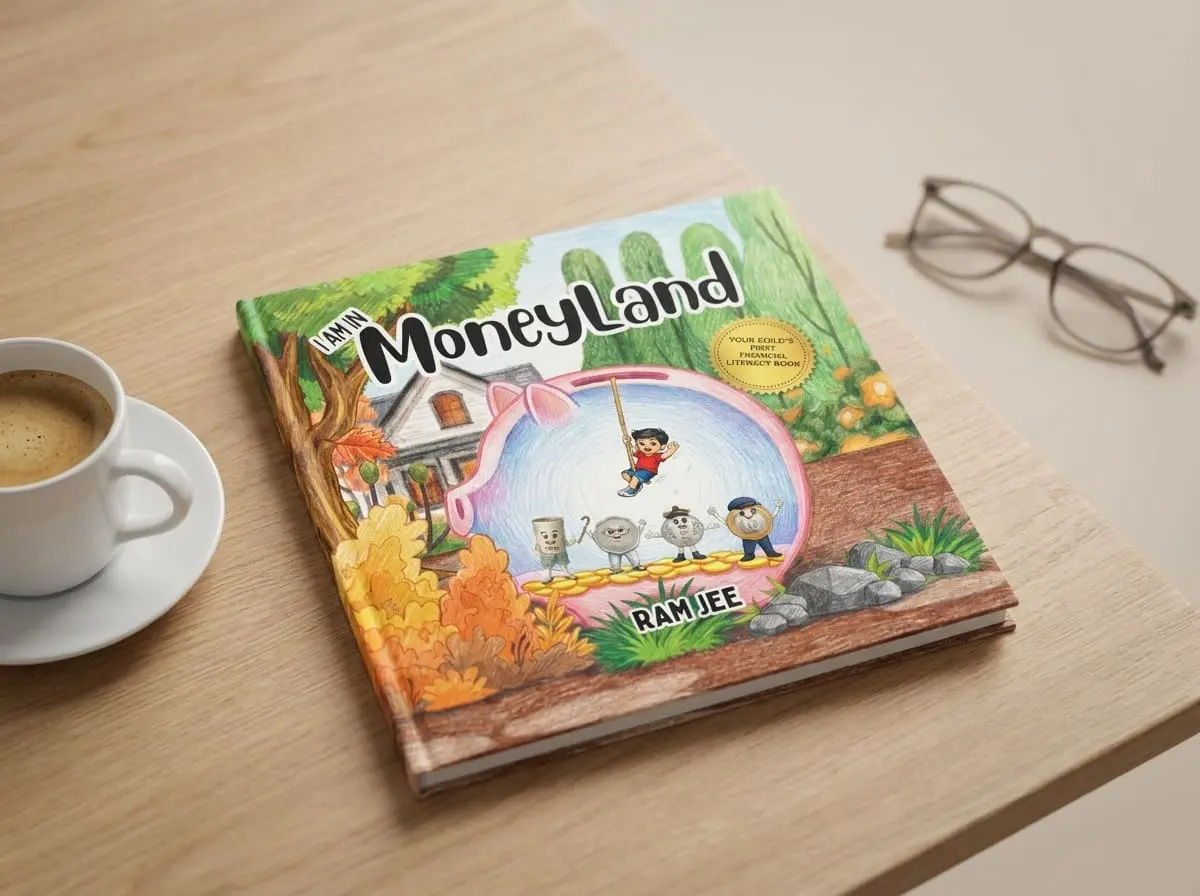
Rating:
⭐⭐⭐⭐½ (4.5 out of 5)
I have read a lot of children’s books over the years. Some are beautifully illustrated but emotionally empty. Some have a lovely lesson but forget that children also need wonder, laughter, and imagination. And then, once in a while, a book comes along that genuinely feels like it was created with affection for children instead of just being designed to “teach” them something.
I AM IN MONEYLAND by RAM JEE gave me that feeling.
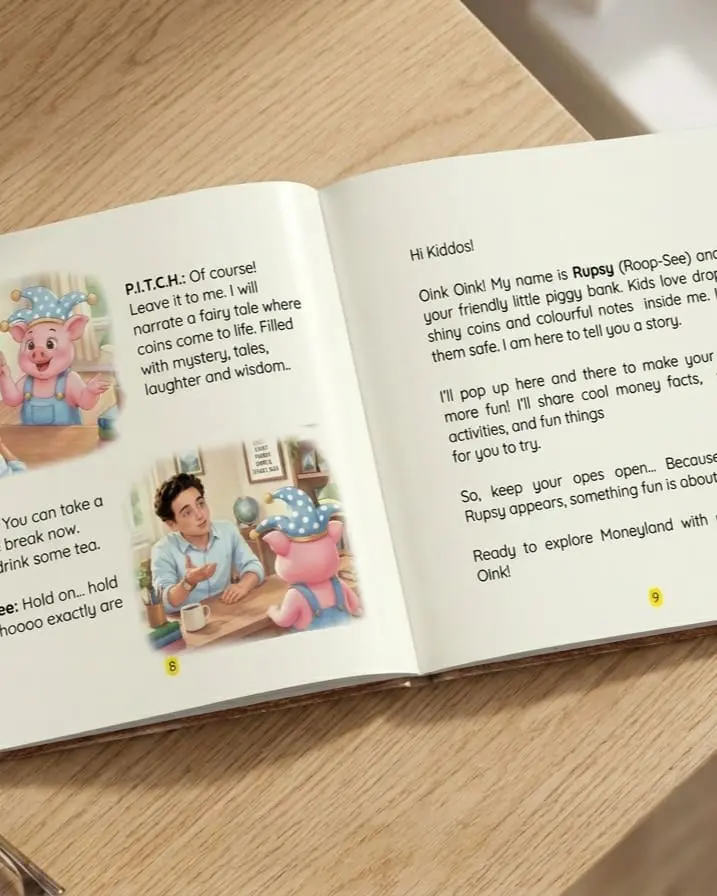
The first thing I noticed was the warmth of the artwork. Before I even started reading properly, I found myself smiling at the tiny details. The piggy bank characters, the playful coin personalities, the soft colors, the expressions on the child’s face, the whimsical scenes inside “Moneyland”… it all feels inviting. Not flashy. Not overloaded. Just welcoming in a way many modern children’s books forget to be.
And honestly, in 2026, when children are surrounded by fast moving screens every second, there’s something refreshing about a book that encourages imagination through illustrated storytelling instead of overstimulation.
I think parents looking for books that gently introduce values, self understanding, money awareness, and emotional intelligence to children will probably appreciate this one more than they expect.
What the Book Is About
At its heart, I AM IN MONEYLAND is a fantasy driven children’s story built around financial literacy, curiosity, identity, and life lessons. But saying only that would make it sound more academic than it actually is.
The story follows a young boy who enters a magical world connected to money, coins, piggy banks, and imaginative characters who each carry their own personality and lessons. What I liked is that the book never becomes preachy. That balance is difficult to achieve in children’s writing.
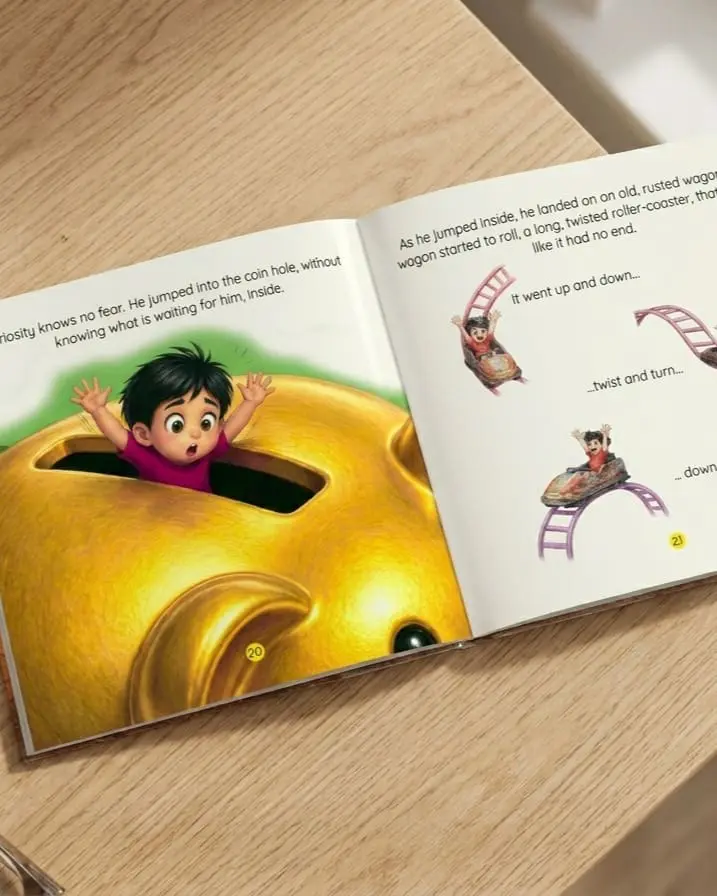
There’s a charming sequence where the child jumps into the coin slot of a giant piggy bank and suddenly enters this imaginative universe filled with animated money characters, storytelling creatures, playful conversations, and situations that quietly teach children how to think about money, choices, comparison, greed, happiness, and self worth.
One of my favorite portions involved TwoTi Fruiti and the conversation around toys. It starts in a playful way, almost funny, with the child expecting someone who loves toys to own endless things. But then the scene slowly shifts into something deeper about wanting too much and the emotional emptiness that sometimes comes with it. The book handles this in a surprisingly gentle and intelligent way for young readers.
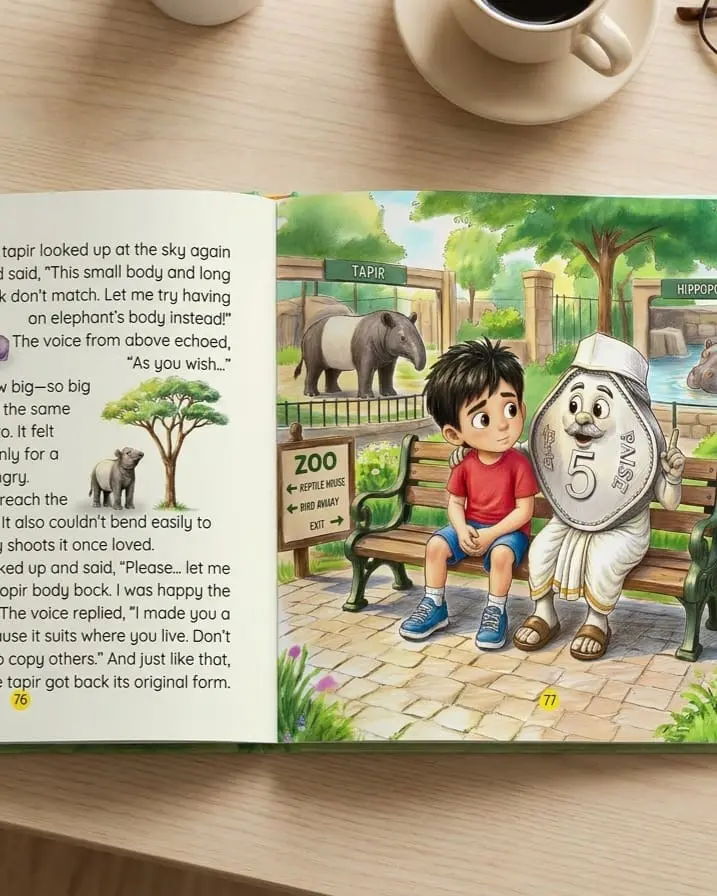
Another section that genuinely caught my attention was the tapir story later in the book. That little moment about wanting to become something else, then realizing your own form already suits you, felt bigger than a simple animal story. I think adults reading with their children will understand that message immediately. We live in a time where comparison affects everyone, even kids. Social media, school competition, appearance, achievements. Children absorb more than we think they do.
So when a children’s book quietly says, “You don’t need to become someone else to have value,” it matters.
What Stood Out to Me
The biggest strength of I AM IN MONEYLAND is its visual storytelling.
I really want to appreciate the design work here because children experience books differently than adults. Adults can forgive plain visuals if the writing is strong. Children usually cannot. Their emotional connection begins with imagery, colors, facial expressions, shapes, and movement within the illustrations.
RAM JEE and the design team clearly understood this.
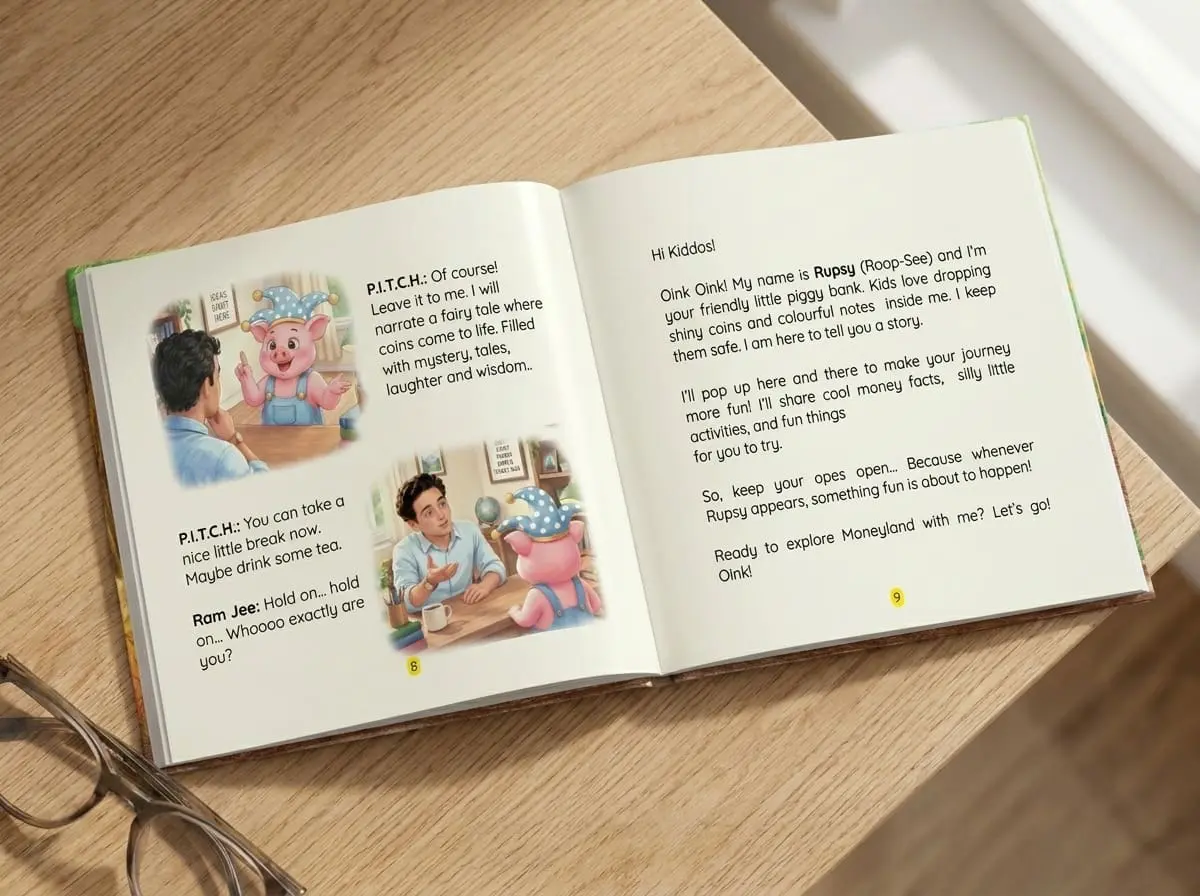
The pages are spacious and readable. The fonts are child friendly without becoming cartoonish. The artwork has softness instead of visual chaos. Every character looks distinct enough for children to remember them. Even the piggy bank personalities have emotional expressions that make them feel alive.
I especially liked how the book mixes fantasy with familiar emotional situations. That combination is what keeps children engaged.
There’s also a very smart pacing choice throughout the book. The lessons are broken into tiny emotional experiences rather than long explanations. As someone who has worked around manuscripts for years at Deified Publication, I can say this is much harder than it looks. Many writers accidentally start sounding like school textbooks when writing educational children’s fiction.
This book avoids that trap most of the time.
Another thing I appreciated was the conversational tone between characters. The child actually sounds curious instead of artificially “wise.” Sometimes children’s books make kids speak like miniature philosophers. Real children ask direct questions. They interrupt. They react emotionally. This book understands that.
The piggy bank guide character, RUPSY, also works surprisingly well. That character could easily have become annoying or overly instructional, but instead comes across playful and energetic. Children will probably enjoy that character a lot.
I also think the author deserves credit for making financial literacy emotionally approachable. Most money books for children focus heavily on saving, spending, and budgeting. Those topics are important, obviously. But I AM IN MONEYLAND also connects money with feelings, habits, desires, identity, and contentment.
That’s a far more meaningful conversation.
Because honestly, adults themselves are still struggling with those things.
The Emotional Core of the Book
What touched me most was the emotional innocence of the storytelling.
This is not one of those hyper sarcastic children’s books trying desperately to entertain adults in the room. It genuinely respects a child’s emotional world.
There’s kindness in the way the story unfolds.
I think children reading this book will feel curiosity first. Then amusement. Then slowly they’ll start understanding the deeper messages without even realizing it. That’s probably the best way to teach anything.
And for parents, there’s another layer.
I kept imagining a mother or father reading this aloud before bedtime and suddenly finding themselves reflecting on their own relationship with money, comparison, happiness, and excess. Some books accidentally become conversations between generations. This felt like one of those books.
The emotional softness of the illustrations also helps enormously. The pink room scene with TwoTi Fruiti, the zoo scene with the coin character, the roller coaster coin ride sequence, all of them create emotional memory points for young readers.
Children remember feelings attached to images.
I think this book understands that instinctively.
Now, to be fair, there were moments where I wanted slightly tighter editing in certain text sections. A few lines feel a little longer than needed for younger children reading independently. Some dialogue exchanges could also have been simplified further to improve rhythm during read aloud sessions.
But honestly, these are relatively small issues in a book that already does many things right.
And I would rather read a children’s book with heart and occasional imperfections than a perfectly polished book that feels emotionally manufactured.
Who This Book Is For
I think I AM IN MONEYLAND will work especially well for children between ages 5 and 10, though younger children may enjoy it when read aloud by parents.
This book is ideal for:
Parents who want children to learn about money in a healthy emotional way.
Schools introducing early financial literacy concepts.
Families searching for bedtime books with meaningful conversations hidden inside the adventure.
Children who enjoy imaginative worlds, talking objects, fantasy characters, and illustrated storytelling.
Gift buyers looking for something more thoughtful than generic cartoon books.
I also think educators may find value here because the book opens doors to discussions around self worth, gratitude, comparison, wants versus needs, and emotional decision making.
And visually, it’s genuinely attractive enough to hold a child’s attention.
That matters more than people realize.
Final Thoughts
After finishing I AM IN MONEYLAND, I felt grateful that someone attempted to make financial literacy feel human instead of mechanical.
RAM JEE clearly understands that children are emotionally intelligent long before adults give them credit for it. The book never talks down to them. Instead, it invites them into a colorful imaginative world and gently leaves little lessons inside the adventure.
As an editor and lifelong reader, I can usually tell when a children’s book was built from market trends alone. This one feels more personal than that. There’s sincerity here. There’s care in the illustrations. There’s warmth in the pacing. And there’s a genuine desire to help children think about life beyond just money itself.
No, the book is not perfect. A few sections could be sharper. Some transitions move a little quickly. But emotionally, the book succeeds where many children’s books fail.
It makes learning feel safe, imaginative, and joyful.
And honestly, I think many parents will end up enjoying this book almost as much as their children.
FAQs
Is I AM IN MONEYLAND worth reading?
Yes, especially for parents who want children to understand money in an emotionally healthy way. The book mixes storytelling, fantasy, and life lessons without sounding like a lecture.
Who should read I AM IN MONEYLAND?
The book is best suited for children aged 5 to 10, parents, schools, and educators looking for meaningful illustrated books around financial literacy and self growth.
What genre is I AM IN MONEYLAND?
It’s a children’s illustrated fantasy book with themes of financial literacy, emotional learning, imagination, and self understanding.
Is I AM IN MONEYLAND only about money?
Not really. Money is the doorway into the story, but the book also talks about comparison, gratitude, identity, happiness, and emotional choices in ways children can understand.

With over 11 years of experience in the publishing industry, Priya Srivastava has become a trusted guide for hundreds of authors navigating the challenging path from manuscript to marketplace. As Editor-in-Chief of Deified Publications, she combines the precision of a publishing professional with the empathy of a mentor who truly understands the fears, hopes, and dreams of both first-time and seasoned writers.