
Rating:
⭐⭐⭐⭐ (4.3 out of 5)
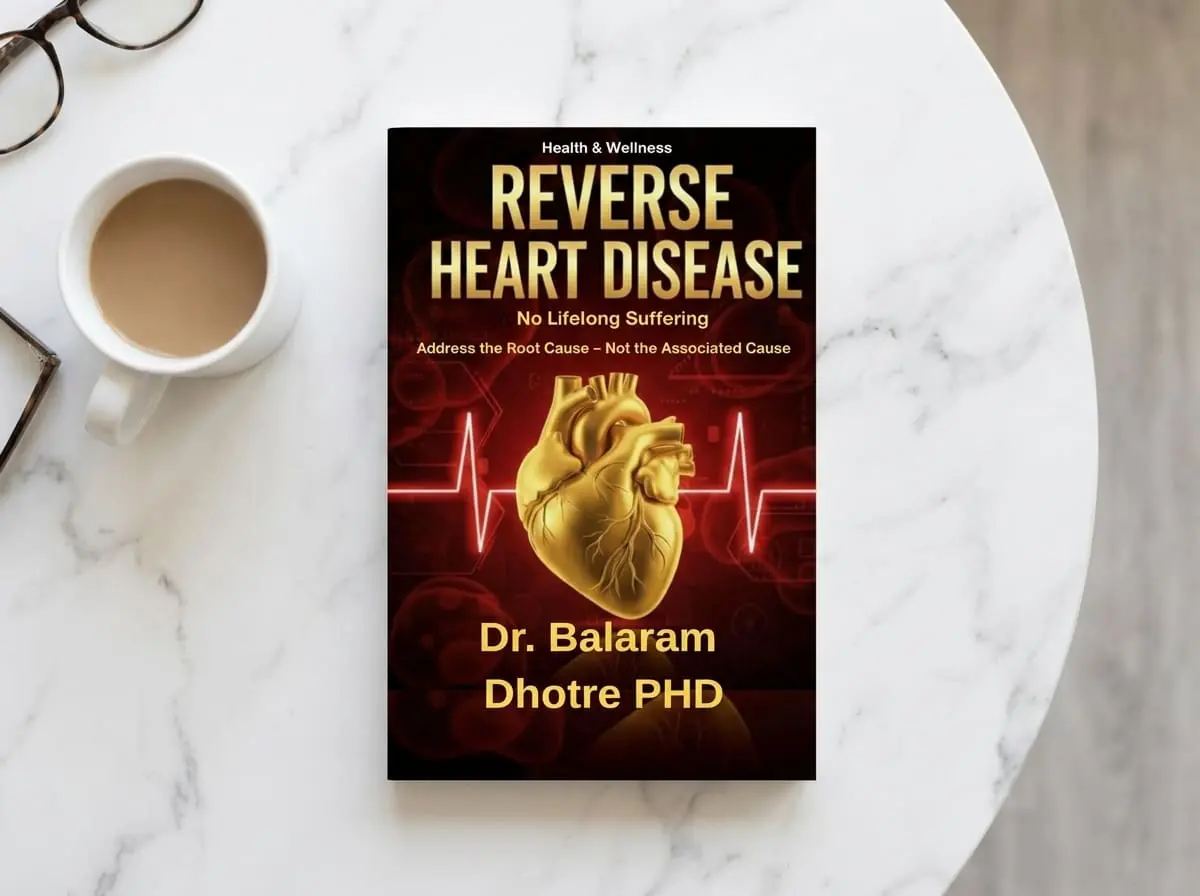
Every now and then, I come across a book that is less interested in giving answers and more interested in challenging assumptions. Reverse Heart Disease: No Lifelong Suffering, Address the Root Cause – Not the Associated Cause by Dr. Balaram Dhotre is one such book.
I have been reviewing books for many years, and health books generally fall into two categories. Some focus on motivation and lifestyle. Others focus on medical information and research. This book sits somewhere in between. It is deeply personal, highly opinionated, and driven by a central question that the author keeps returning to again and again:
Why are chronic diseases increasing despite all the treatments available today?
That question becomes the foundation of the entire book.
What struck me from the beginning was the author’s refusal to accept lifelong disease management as the final answer. He repeatedly challenges the idea that heart disease, diabetes, high cholesterol, and similar conditions should simply be controlled indefinitely. Whether readers agree with every conclusion or not, there is no denying the conviction behind the writing.
Dr. Dhotre writes not only as a researcher but also as someone who personally faced heart disease. That personal experience gives the book a different tone from many health titles. It feels less like a textbook and more like a determined investigation.
What the Book Is About
At its core, Reverse Heart Disease argues that modern medicine has focused too heavily on associated causes rather than true causes.
The author spends a significant portion of the book explaining the difference between what he calls an “associated cause” and a “true cause.” Through examples ranging from malaria to machine repair, he builds the argument that successful healing requires identifying the exact source of a problem rather than managing symptoms or statistical associations.
One thing I noticed while reading is how carefully the book builds its case chapter by chapter. It does not jump directly into heart disease. Instead, it starts with broader questions about chronic illness, lifelong treatment, and why so many people continue suffering despite medical advances.
The early chapters discuss the author’s own experience with heart disease, angiography findings, recommendations for bypass surgery, his interest in Ayurveda, and eventually his research journey into alternative explanations for cardiovascular disease.
From there, the book moves into a detailed critique of conventional heart disease theories. Dr. Dhotre examines the historical development of the saturated fat hypothesis, discusses the work of Ancel Keys, explains epidemiological studies, and questions whether association should automatically be interpreted as causation.
The later chapters focus heavily on nutrition. According to the author’s framework, micronutrient deficiencies play a central role in chronic disease development. Vitamin C receives particular attention, along with amino acids, minerals, collagen formation, endothelial health, LDL cholesterol, ApoB, and Lipoprotein(a).
The final chapters attempt to present an alternative explanation for heart disease development and discuss how treatment should be approached if the author’s proposed root cause is correct.
What makes the structure interesting is that the book reads almost like a detective investigation. Each chapter attempts to remove one layer of accepted thinking before introducing another possibility.
What Stood Out to Me
The strongest aspect of this book is undoubtedly its clarity of purpose.
Many health books wander through dozens of ideas. This one remains focused on a single mission. Dr. Dhotre wants readers to question whether modern medicine has correctly identified the primary cause of heart disease.
That focus gives the book momentum.
I also found the author’s use of analogies surprisingly effective. Throughout the book, he compares the human body to machines, factories, construction projects, and manufacturing systems. Normally these comparisons can feel oversimplified, but here they help readers understand the author’s reasoning process.
The potato chip factory example particularly stood out. The author uses it to explain how raw materials, tools, and processors all work together to create a final product. He then applies the same logic to human biology, arguing that vitamins and minerals function as essential processors while proteins, fats, and carbohydrates provide building materials.
Whether one agrees with the conclusion or not, the analogy is easy to follow.
Another thing that stood out was the historical discussion surrounding heart disease research. The chapters covering Ancel Keys, epidemiological studies, dietary guidelines, and the development of risk factor theory add an investigative dimension to the book.
I’ve read many books that criticize mainstream nutritional recommendations. Often they rely heavily on emotional arguments. Dr. Dhotre instead spends considerable time discussing how scientific ideas evolved over time. That historical context makes the discussion more interesting because readers can see how certain assumptions became accepted.
The personal sections also add value. The author’s account of being diagnosed with heart disease and searching for answers gives emotional weight to what could otherwise become a purely scientific debate.
At the same time, I think readers should understand what this book is trying to do.
This is not a balanced overview of all viewpoints in cardiovascular science.
It is a book presenting a specific argument.
The author is advocating a particular framework and spends most of the book building evidence for that framework. Readers looking for a conventional medical guide may find the approach unconventional. Readers who enjoy questioning accepted ideas will probably find it more engaging.
The Emotional Core
For me, the emotional center of Reverse Heart Disease is hope.
Not the kind of hope built on promises.
The kind built on asking whether things could be understood differently.
Throughout the book, there is a recurring frustration with the concept of lifelong suffering. The author clearly struggles with the idea that millions of people are told to manage disease forever rather than recover from it.
That frustration becomes the emotional fuel behind the writing.
I found myself thinking about how many people live with constant health anxiety. They track blood sugar, cholesterol numbers, blood pressure readings, medications, appointments, and test reports. For many, it becomes a permanent part of life.
This book speaks directly to those people.
The message is essentially: “What if there is more to understand?”
Even readers who disagree with parts of the author’s conclusions may connect with that question.
There is also an interesting blend of scientific discussion and personal determination throughout the book. Dr. Dhotre repeatedly returns to the belief that the body possesses remarkable healing capabilities when provided with the correct nutritional support.
That perspective gives the book an optimistic tone despite dealing with serious diseases.
In 2026, when chronic illnesses continue affecting millions worldwide, it is easy to understand why books like this attract attention. People are searching for explanations that go beyond symptom management. This book attempts to provide one.
Who This Book Is For
I think Reverse Heart Disease will resonate most strongly with readers who:
- Have heart disease, high cholesterol, diabetes, or hypertension.
- Feel frustrated by lifelong medication plans.
- Enjoy reading alternative perspectives on health.
- Like understanding the history behind medical theories.
- Want detailed discussions about nutrition and cardiovascular disease.
It may also appeal to readers interested in functional medicine, preventive health, and nutritional approaches to disease management.
However, this book may not be ideal for readers seeking a neutral overview of heart disease research. The author has a clear position, and the book is structured around defending that position.
I would recommend approaching it with curiosity rather than immediate acceptance or rejection.
Read it, think about it, compare it with other sources, and decide what makes sense to you.
That’s probably the best way to engage with a book like this.
Final Thoughts
After finishing Reverse Heart Disease, I came away with mixed feelings in the best possible sense.
Not because the book confused me.
Because it pushed me to think.
I appreciated the author’s determination to investigate a problem that affects millions of people. I appreciated the personal honesty in sharing his own health journey. I appreciated the effort to connect scientific concepts with practical explanations that ordinary readers can understand.
The book’s greatest strength is its willingness to challenge assumptions and ask difficult questions.
Its greatest limitation is that readers looking for extensive discussion of opposing viewpoints may wish for more balance.
Still, I think Dr. Balaram Dhotre has written something that many readers will find fascinating. It combines personal experience, scientific inquiry, historical analysis, and nutritional theory into a single narrative focused on one central goal: understanding the root cause of chronic disease.
You may agree with every argument. You may disagree with several.
Either way, I suspect you’ll finish the book with more questions than you started with. And honestly, sometimes that is exactly what a good health book should do.
FAQs
Is Reverse Heart Disease worth reading?
If you’re interested in alternative perspectives on heart disease, cholesterol, nutrition, and chronic illness, I think it is worth reading. The book presents a detailed argument that challenges several commonly accepted ideas.
Who should read Reverse Heart Disease?
People dealing with heart disease, diabetes, high cholesterol, high blood pressure, or anyone interested in nutritional approaches to health may find value in it.
What is Reverse Heart Disease about?
The book argues that chronic diseases persist because treatment often focuses on associated causes rather than true root causes. Dr. Balaram Dhotre presents his own framework centered on nutrition, micronutrients, and cardiovascular health.
Is the book scientific or personal?
It is both. The book combines the author’s personal experience as a heart disease survivor with discussions of research, epidemiology, nutrition, and disease mechanisms.

With over 11 years of experience in the publishing industry, Priya Srivastava has become a trusted guide for hundreds of authors navigating the challenging path from manuscript to marketplace. As Editor-in-Chief of Deified Publications, she combines the precision of a publishing professional with the empathy of a mentor who truly understands the fears, hopes, and dreams of both first-time and seasoned writers.