
Rating:
⭐⭐⭐⭐ (4.3 out of 5)
There are some books that try very hard to sound intelligent. You can almost hear the author saying, “Look how much I know.” And honestly, after reviewing books for years, those are usually the ones I struggle to finish. They may have information, but they rarely have warmth.
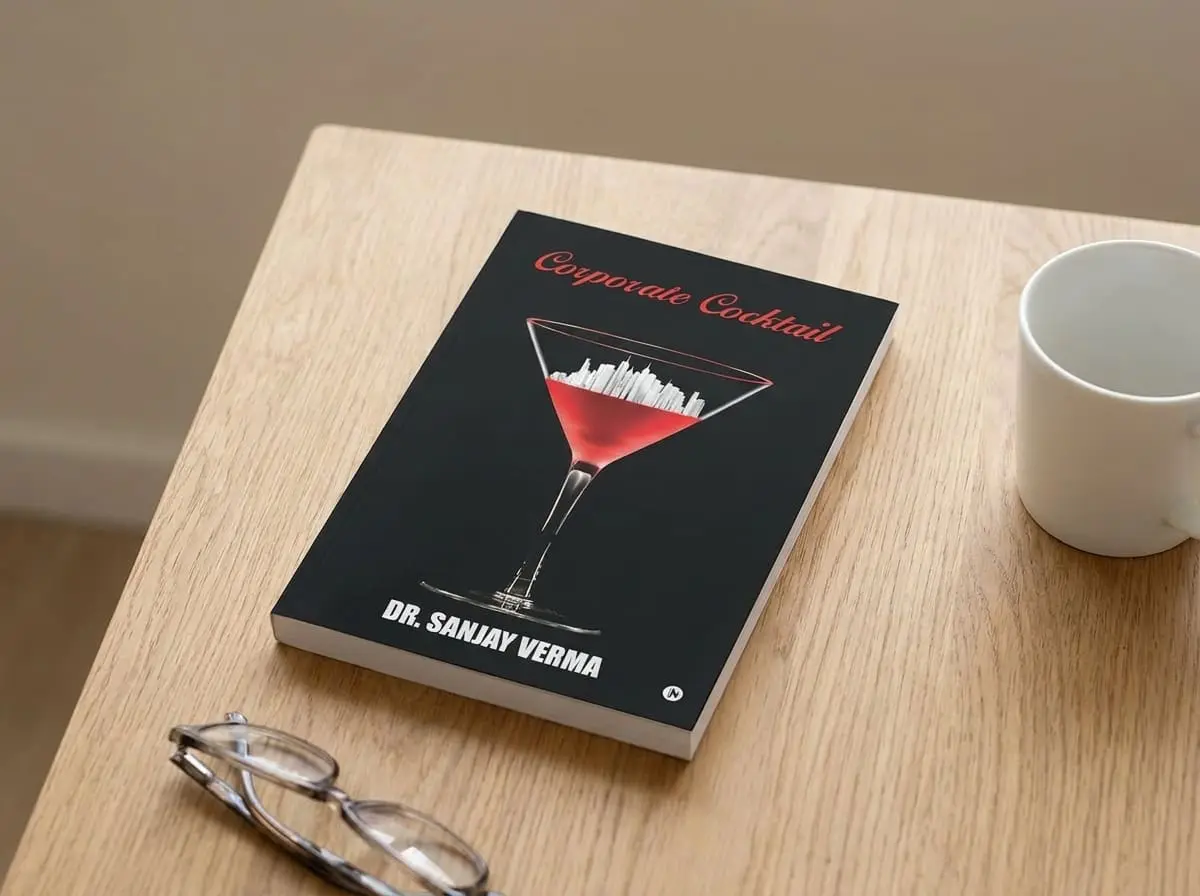
Corporate Cocktail by Dr. Sanjay Verma surprised me because it doesn’t come across like that at all.
Yes, this is a corporate and self development book. Yes, it talks about leadership, branding, ethics, productivity, work culture, attitude, digital learning, trust, and professional capability. But underneath all of that, this book feels deeply human. I think that’s what made me continue reading chapter after chapter. It never felt like someone preaching from a stage. It felt more like sitting with an experienced senior over chai while he shares stories collected over decades of observing people, workplaces, ambitions, mistakes, and relationships.
And in 2026, when almost every productivity book is trying to make people hustle harder, Corporate Cocktail keeps returning to one simple idea again and again: success without humanity becomes hollow very quickly.
That message hit me harder than I expected.
What Corporate Cocktail Is About
At its core, Corporate Cocktail by Dr. Sanjay Verma is a collection of reflections, stories, workplace lessons, moral observations, and personal philosophies connected to modern corporate life. The structure of the book is interesting because it does not follow one single narrative. Instead, it moves through themes.
The table of contents itself gives a good sense of the book’s intention. Chapters focus on developing oneself as a better human being, enhancing professional capability, leadership and teams, project and organization, learning and capability development, human capital, ethics and values, and digital branding.
What I appreciated was that the author never limits the discussion to office cabins and management jargon. He constantly brings life into the conversation. One chapter may discuss productivity and organizational capability, and suddenly there’s a story about a father, a child, or a struggling family. Then another section moves into branding and digital storytelling before circling back to values and personal responsibility.
There’s a sincerity in the way these transitions happen.
The book uses a lot of short illustrative stories. Some are emotional, some philosophical, and some very practical. One moment that genuinely affected me was the story where a child asks his father how much he earns per hour because he wants to “buy” some time with him. I know many readers have heard variations of this story before, but in the context of a chapter discussing workaholism and work life imbalance, it lands differently.
Another section that caught my attention was the recurring emphasis on attitude. Dr. Verma repeatedly argues that skill alone is not enough in professional life. A person’s behavior, empathy, ethics, and willingness to support others shape their success more than most corporate systems acknowledge.
I think many professionals reading this book will see parts of themselves inside these chapters. Some chapters feel motivational, some reflective, and some almost like life coaching sessions written in essay form.
What Stood Out to Me
One thing I noticed very early is that Corporate Cocktail is heavily story driven. Dr. Sanjay Verma clearly believes people remember stories more than theories. Instead of bombarding readers with frameworks every few pages, he uses incidents, analogies, historical examples, and emotional situations to communicate ideas.
Sometimes this works beautifully.
The section discussing trust genuinely stood out for me. The author doesn’t define trust in a dry textbook way. Instead, he builds the emotional weight around it through examples involving relationships, teamwork, marriage, military leadership, and parenting. There’s a story involving a husband and wife that becomes psychologically intense, almost uncomfortable at one point, but it successfully communicates how fragile and complicated trust can become inside human relationships.
I also found the chapter on “big rocks” memorable. The classic metaphor about prioritizing important things in life could have easily felt repetitive because many readers already know it. But the surrounding commentary about family, neglected relationships, and the illusion of endless time gives it fresh emotional relevance.
The writing itself is straightforward. Dr. Verma is not trying to impress readers with literary experimentation. His language is accessible and conversational, which honestly suits this type of book. I think many working professionals who don’t usually read dense non fiction will find this approachable.
That said, there were moments where the book felt slightly overextended. Some stories go on longer than necessary, and occasionally the same moral idea appears in multiple chapters from slightly different angles. Personally, I didn’t mind it too much because the conversational tone softens the repetition, but readers looking for extremely concise business writing may find certain sections lengthy.
Still, I’d rather read a book that repeats an honest idea than one that sounds emotionally empty.
Another thing I genuinely appreciated was the inclusion of themes like digital storytelling, personal branding, and learning culture alongside ethics and humanity. Many business books separate “professional growth” from “human values,” almost as if they belong in different worlds. Corporate Cocktail keeps trying to connect them.
The chapter discussing personal branding was especially relevant today. In an era where everyone is building online identities, Dr. Verma reminds readers that branding is not just visibility. It is behavior. It is consistency. It is how people remember your values after interacting with you. I think younger professionals and creators will connect strongly with this part.
There’s also an interesting mix of references throughout the book. The author mentions figures like Steve Jobs, Bill Gates, Narendra Modi, Swami Vivekananda, Coca Cola, BMW, and even spiritual and mythological references from Indian tradition. Normally this kind of mix can feel chaotic, but here it somehow reflects the book’s title itself. It really is a “cocktail” of corporate lessons, moral observations, psychology, spirituality, and lived experience.

The Emotional Core of the Book
I think the emotional center of Corporate Cocktail is loneliness inside modern achievement.
Maybe that sounds dramatic, but that feeling kept returning while I was reading.
Many sections of the book discuss people who are professionally successful yet emotionally disconnected. Fathers too busy for children. Employees burnt out from work culture. Teams struggling because trust has disappeared. Individuals chasing promotion after promotion without clarity about what kind of life they actually want.
There’s one line of thinking throughout the book that kept making me reflect on people I know personally. The idea that many adults slowly lose warmth while becoming “successful.” I’ve genuinely seen this happen in real life. People become efficient but emotionally unavailable.
Dr. Sanjay Verma keeps resisting that mindset throughout the book.
The stories about kindness, gratitude, helping strangers, ethical behavior, and emotional intelligence may sound simple on paper, but together they create a strong emotional rhythm. I think readers who are exhausted with hyper aggressive corporate culture will probably feel relieved reading parts of this book.
And honestly, some parts hit differently because they feel rooted in Indian middle class reality. The family dynamics, career pressure, respect for elders, social responsibility, and emotional guilt around work life balance feel familiar instead of imported from Western management books.
That authenticity matters.
Who Should Read Corporate Cocktail?
I think Corporate Cocktail is best suited for working professionals, managers, HR leaders, educators, trainers, and readers interested in self improvement with an emotional angle.
Young professionals entering corporate life may benefit from the chapters on attitude, trust, leadership, capability building, and branding. Mid career readers may connect more deeply with the sections about burnout, priorities, relationships, and ethical responsibility.
This book might also work well for people who enjoy motivational nonfiction but want something softer and more reflective than aggressively ambitious business books.
If you prefer ultra data driven management writing with heavy research frameworks and technical corporate models, this may not fully satisfy you because the book relies more on human observation and storytelling than hard analytics.
But if you enjoy books that mix workplace wisdom with life reflection, there’s a good chance this one will connect with you.
Final Thoughts
Corporate Cocktail by Dr. Sanjay Verma feels like a book written by someone who has spent years observing human behavior inside offices, institutions, families, and social systems. It carries the voice of someone who genuinely wants people to become not just more successful, but more decent.
And honestly, I miss that kind of sincerity in modern nonfiction.
The book does not pretend life is simple. It acknowledges ambition, stress, ego, disappointment, failure, insecurity, and emotional exhaustion. But again and again, it argues that empathy, ethics, trust, gratitude, and emotional awareness still matter.
In my years reviewing books at Deified Publication, I’ve noticed that readers remember books less for information and more for emotional honesty. Corporate Cocktail has that honesty. It may not be flawless structurally, and a tighter edit in certain sections could have made the pacing stronger, but the heart behind the writing feels genuine.
And sometimes that matters more than perfection.
FAQ
Is Corporate Cocktail worth reading?
Yes, especially if you enjoy reflective nonfiction that combines workplace lessons with emotional and ethical discussions. The storytelling approach makes it accessible even for readers who usually avoid business books.
Who should read Corporate Cocktail by Dr. Sanjay Verma?
Working professionals, managers, HR professionals, educators, and readers interested in self growth, leadership, workplace psychology, and life philosophy will probably connect most with the book.
Is Corporate Cocktail only about corporate life?
Not really. While the corporate world is the backdrop, the book talks equally about family, trust, ethics, relationships, attitude, and personal fulfillment.
What genre is Corporate Cocktail?
It sits somewhere between corporate nonfiction, self improvement, leadership writing, and reflective life philosophy.

With over 11 years of experience in the publishing industry, Priya Srivastava has become a trusted guide for hundreds of authors navigating the challenging path from manuscript to marketplace. As Editor-in-Chief of Deified Publications, she combines the precision of a publishing professional with the empathy of a mentor who truly understands the fears, hopes, and dreams of both first-time and seasoned writers.