
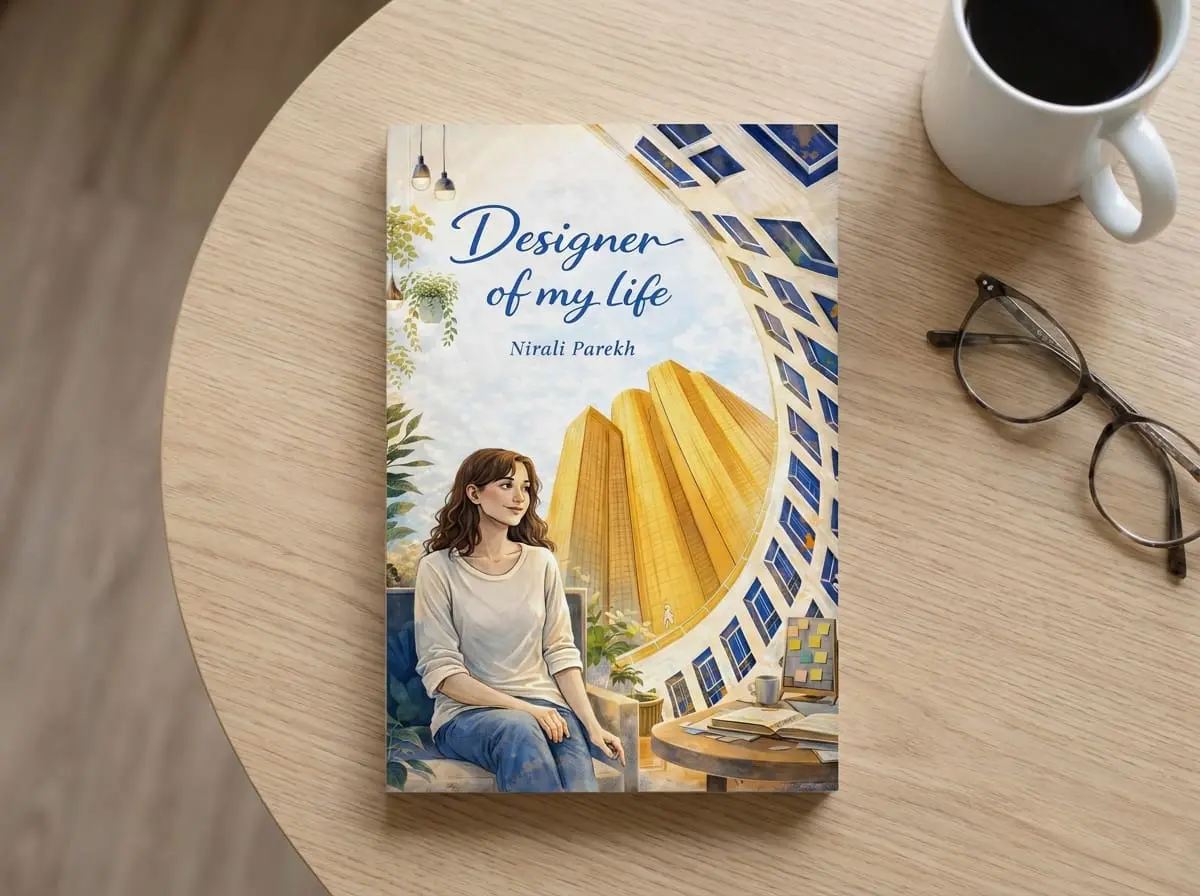
Rating:
⭐⭐⭐⭐ (4.3 out of 5)
As someone who has spent more than fifteen years reading and reviewing books at Deified Publication, I’ve learned that some books try very hard to impress you with complexity, while others simply speak in a human voice and trust that honesty is enough. Designer of My Life by Nirali Parekh belongs to the second category.
I started reading this book expecting another motivational reflection on life choices and creativity. Honestly, there are so many books right now trying to package self help into pretty metaphors that I’ve become a little cautious. But somewhere between Mini sitting cross legged with red and blue crayons in Chapter 1 and the closing reflection about “designing your life consciously,” I realized this book was doing something more personal.
It isn’t trying to sound smarter than the reader.
It isn’t shouting life lessons at you.
Instead, it speaks softly and directly about growing up, adapting to systems, losing instinct, seeking approval, failing, rebuilding confidence, and slowly returning to yourself. And maybe because 2026 feels like a year where everyone is exhausted from performing perfection online, this message lands harder than expected.
There’s a line early in the book where Mini says, “But the sky is both,” while holding two crayons after being told to choose one colour. I actually smiled at that moment because I’ve seen children think exactly like this before adults teach them to simplify themselves.
That, I think, is the emotional foundation of this entire book.
What the Book Is About
Designer of My Life follows Mini through different phases of life, beginning with instinctive childhood creativity and moving through school systems, career pressure, fear, failure, structure, ambition, and eventually self awareness.
The structure of the book is interesting because each chapter contains both story sections and reflective sections. The storytelling portions are very minimal on the surface. The scenes are small. A classroom. A sketchbook. A form waiting to be filled. A faculty member criticizing unfinished work. Friends discussing careers over tea. But underneath those ordinary moments, Nirali Parekh is really writing about identity formation.
Mini is not presented as some dramatic hero with huge life changing events happening every few pages. She feels like someone many readers will recognize instantly. A thoughtful child who slowly learns how institutions shape behaviour. Someone creative who begins to question herself after years of trying to fit inside systems built around approval, structure, and predictability.
I appreciated that the book doesn’t romanticize creativity either. A lot of books about design or artistic life pretend passion automatically solves everything. Here, we see Mini struggling with uncertainty, fear of disappointing people, and comparison with peers choosing safer career paths. In the chapter “Agency,” there’s a scene where everyone around Mini seems certain about engineering, stability, and “practical” choices while she remains unsure. That uncertainty is written very honestly.
One thing I noticed throughout the book is how carefully Nirali Parekh uses repetition. Certain ideas return again and again. Curiosity versus approval. Process versus perfection. Observation versus assumption. At first I wondered if the reflections might become repetitive, but gradually I understood why the author structured it this way. Growth itself is repetitive. Most of us don’t learn something once and transform overnight. We revisit the same fears repeatedly.
The reflections between chapters almost feel like journal entries written years later by someone looking back with more clarity.
What Stood Out to Me
The biggest strength of Designer of My Life is its emotional accessibility.
Nirali Parekh writes in very clear, simple language, but simplicity is harder to pull off than people think. In my years reviewing books, I’ve seen many writers confuse simplicity with shallowness. This book avoids that problem. The prose remains readable while still carrying emotional meaning underneath.
I especially liked the scenes from Mini’s school years because they capture something universal about childhood adaptation. The chapter “Adaptation” genuinely made me think about how early people begin negotiating their instincts in exchange for acceptance.
There’s a moment where Mini hides a red crayon in her pocket after being told to use only one colour. Such a small image, but it says so much about what happens when individuality first meets structure.
And honestly, some sections hit me unexpectedly hard.
Particularly the reflections about becoming “acceptable” instead of authentic. I think many adults reading this will recognize themselves there. You start life curious and experimental, then slowly begin asking different questions:
“What do I want to explore?” becomes “What is expected of me?”
That line genuinely lingered in my mind after reading.
Another thing I appreciated was how the book treats failure. The chapter “Process Over Perfection” could easily have become generic motivational writing, but the scenes make it feel grounded. Mini rebuilding models repeatedly, dealing with criticism, continuing despite exhaustion, learning iteration through practice rather than inspirational speeches. That part felt earned.
There’s also a maturity in the way the book discusses design itself. This is not only about becoming a professional designer. The word “design” becomes a philosophy for attention, awareness, and intentional living. The author repeatedly suggests that every decision shapes identity, whether we realize it or not.
Sometimes the reflective sections become a little too direct. A few passages explain emotions that readers probably already understood from the scenes. Personally, I think the storytelling portions are stronger than the explanatory reflections because Mini’s actions already communicate the themes beautifully. But honestly, I can also understand why the author chose clarity over ambiguity here. This book seems written for readers seeking reassurance and reflection, not literary puzzles.
And I have to mention the ending.
The final chapters about integration and vision felt emotionally satisfying because Mini is no longer searching for permission. She begins mentoring someone younger, and the conversation about “listening for what stays” felt like the emotional conclusion the book had been building toward all along.
The Emotional Core
At its heart, Designer of My Life is really about recovering trust in yourself.
Not confidence in the loud social media sense. Not achievement. Not productivity.
Trust.
Trusting instinct again after years of conditioning.
Trusting curiosity even when outcomes remain uncertain.
Trusting that meaningful work often looks unfinished while it’s happening.
I think this is why the book connected with me emotionally more than I expected. I’ve met many young writers and artists through publishing who are terrified of making imperfect choices. They want certainty before beginning anything. This book argues the opposite. It says clarity often arrives after movement.
There’s something deeply human about that idea.
I also liked that Mini’s growth is gradual. She does not suddenly become fearless. Even in later chapters, uncertainty remains part of her personality. That felt realistic to me. Real growth rarely removes fear completely. Usually, people simply learn how to continue despite it.
The friendship dynamics also add warmth to the book. Neel, Nishi, and Naintara are not overly dramatic supporting characters, but they represent different responses to ambition, conformity, and creativity. Their conversations help Mini understand herself better.
And honestly, the book reminded me of my own early twenties a little. Not because I studied design, but because I remember how difficult it was to separate genuine desire from social expectation. I think many readers will see parts of themselves here.
Who This Book Is For
This book will probably connect most strongly with readers who are questioning career paths, identity, creativity, or the pressure to become “successful” in socially approved ways.
Students in design, architecture, writing, or creative fields may particularly relate to Mini’s struggles with structure, criticism, and comparison. But I honestly think the themes are broader than creative professions. Anyone who has felt trapped between instinct and expectation may find comfort here.
If you enjoy highly plot driven fiction with twists and fast pacing, this may not be your kind of read. The book is reflective by nature. It values observation and internal evolution more than dramatic external events.
I’d also recommend it to readers who enjoy books about personal growth but are tired of aggressive self help language. Nirali Parekh writes with empathy instead of authority. The book feels more like a conversation than a lecture.
And in 2026, when so many people are burning out from constant performance culture, this message about conscious living feels especially relevant.
Final Thoughts
I finished Designer of My Life feeling calmer than when I began it. Not because the book gives easy answers, but because it gives readers permission to rethink the questions they’ve been asking themselves.
Nirali Parekh has written something sincere here. And sincerity is harder to achieve than cleverness.
The book’s strongest moments come from its ordinary scenes. A child hiding a crayon. A student hesitating before raising her hand. A designer rebuilding imperfect work again and again. These moments work because they feel emotionally recognizable.
Could some reflections have been tighter? Yes, probably. A few sections repeat ideas already communicated through the story. But even then, I never felt manipulated emotionally, and that matters to me as a reviewer.
What I admired most was the consistency of the book’s voice. It never pretends to have all the answers. It simply encourages readers to become more conscious of the lives they are already shaping every day.
And honestly, I think many people need that reminder right now.
FAQ
Is Designer of My Life worth reading?
Yes, especially if you enjoy reflective books about creativity, identity, personal growth, and conscious living. It’s not action heavy fiction, but emotionally it connects in a very genuine way.
Who should read Designer of My Life by Nirali Parekh?
Readers in their twenties and thirties may connect strongly with Mini’s experiences around career choices, approval, failure, and self trust. Creative professionals and students will likely find many relatable moments here.
What genre is Designer of My Life?
It sits somewhere between reflective fiction, literary self growth, and philosophical storytelling. The structure combines narrative scenes with personal reflections.
Is Designer of My Life emotionally heavy?
Not in an overwhelming way. The book discusses fear, self doubt, and uncertainty, but there’s warmth throughout it. It feels encouraging rather than emotionally draining.

With over 11 years of experience in the publishing industry, Priya Srivastava has become a trusted guide for hundreds of authors navigating the challenging path from manuscript to marketplace. As Editor-in-Chief of Deified Publications, she combines the precision of a publishing professional with the empathy of a mentor who truly understands the fears, hopes, and dreams of both first-time and seasoned writers.