
Rating:
⭐⭐⭐⭐1/2 (4.5 out of 5)
I have read a lot of self help books over the years. Honestly, enough to become a little skeptical whenever a new one claims it will “change your life.” Most books in this space usually fall into two categories. Either they sound like motivational speeches stretched into 250 pages, or they become so spiritual and abstract that they stop feeling connected to real human life.
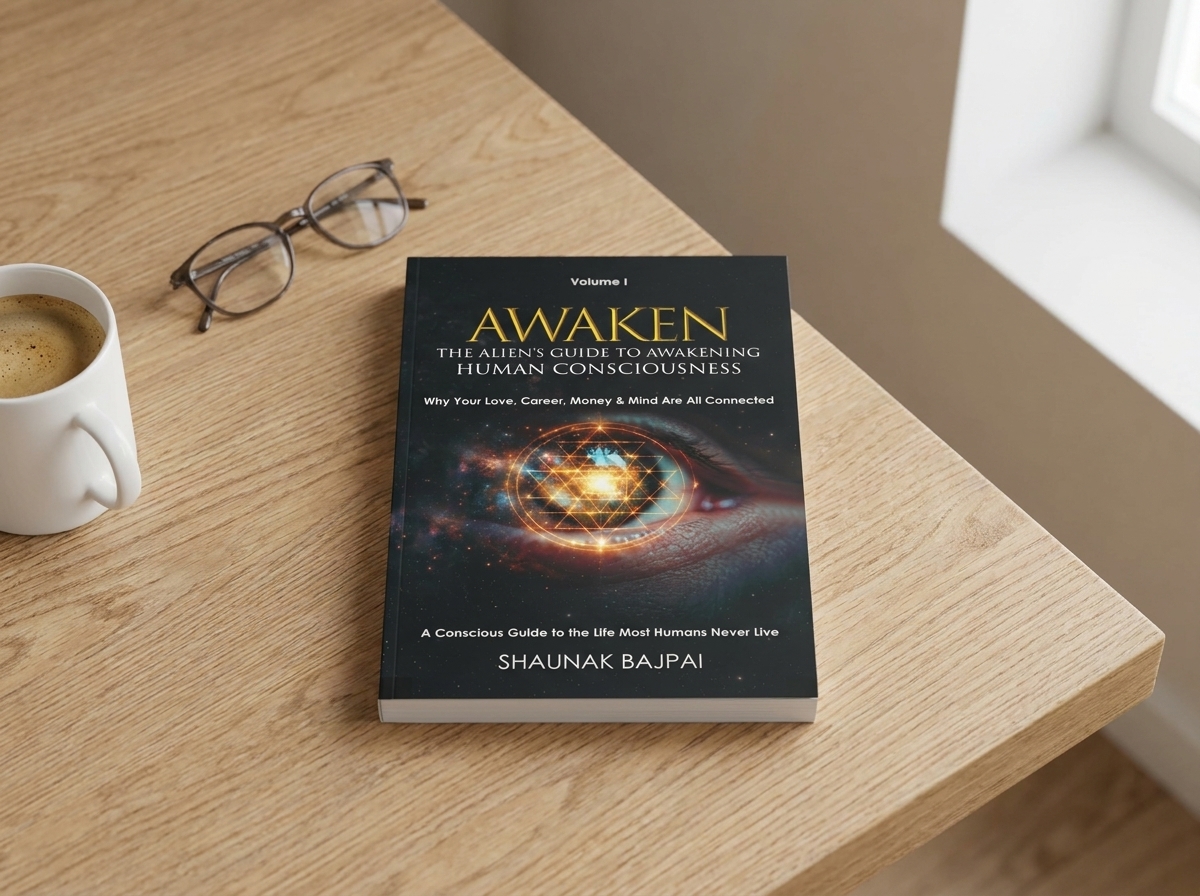
AWAKEN: The Alien’s Guide to Awakening Human Consciousness by Shaunak Bajpai surprised me because it tries very hard to bridge both worlds. It talks about money, careers, relationships, family conditioning, social media addiction, consciousness, karma, emotional intelligence, and even Vedic astrology, but underneath all of that, the book is really asking one difficult question:
What if the life you are building is not actually yours?
And I think that question is why this book will connect with many readers in 2026, especially younger readers who feel overwhelmed, distracted, emotionally exhausted, and strangely disconnected even while doing “everything right.”
There were moments while reading where I found myself disagreeing with the author. There were also moments where I caught myself putting the book down because a line felt uncomfortably true. That rarely happens with modern self improvement books anymore.
What the Book Is About
At its core, AWAKEN argues that most humans are living fragmented lives. Career is separated from love. Money is separated from mental health. Relationships are separated from purpose. The author believes this fragmentation is the reason so many people look successful externally but internally feel lost.
The book repeatedly returns to four interconnected pillars:
Career. Love. Money. Mind.
Shaunak Bajpai keeps insisting these are not separate struggles. According to him, every decision spills into another area of life. A career chosen from fear affects relationships. Emotional wounds affect money decisions. Social media affects identity and attention span. Childhood conditioning affects romantic choices. It all loops back.
What I appreciated is that the book does not present this idea in a polished corporate language. It speaks directly, sometimes almost aggressively. There are passages that read like a conversation with someone shaking you awake at 2 a.m. after you have spent years sleepwalking through routines.
One chapter that genuinely stood out to me was the section on career choices. The author writes about students choosing careers based on parental pressure, money anxiety, social status, or comparison instead of actual alignment with personality and purpose. I have seen this happen constantly in real life. I have met people earning extremely well who look emotionally drained every single day. So when the book says, “Most education systems are designed to produce workers, not thinkers,” I understood exactly where that frustration was coming from.
The family relationship chapter also felt more emotionally grounded than I expected. There is a section discussing how unresolved wounds pass from parent to child through behaviour patterns, emotional reactions, and fear based parenting. It reminded me of conversations I have had with readers over the years who were trying to heal from things their parents probably never even understood themselves.
Then there is the chapter on social media, and honestly, that part felt painfully current. The author describes algorithms almost like mirrors reflecting unconscious desires back at us endlessly. Some readers may find those sections intense, but I think the observations about doom scrolling, comparison culture, dopamine addiction, and emotional numbness are hard to ignore now.
What Stood Out to Me
The strongest thing about AWAKEN is not its philosophy. It is the emotional honesty behind the philosophy.
This is not a neat, polished “5 steps to happiness” kind of book. In fact, sometimes it feels messy and overwhelming because the author is trying to connect everything together at once. Career anxiety becomes connected to childhood conditioning. Relationship failure becomes connected to lack of self awareness. Social media becomes connected to spiritual emptiness.
Normally this would feel chaotic, but somehow the intensity becomes part of the reading experience.
There is one line in the book that I kept thinking about afterward. The author says that humans are spending their lives optimizing one domain while unconsciously destroying the others. I think many people will recognize themselves in that sentence immediately.
Another thing that stood out was the voice of the book itself. Shaunak Bajpai writes with conviction. Sometimes maybe too much conviction. There are places where I wished the writing allowed more nuance or breathing room because the intensity rarely drops. Every chapter wants to confront you directly.
But strangely, that also becomes part of the identity of AWAKEN.
The “alien” perspective could have easily become gimmicky, but the author mostly uses it as a lens to observe human behaviour from outside social conditioning. It gives the book a detached, almost philosophical tone in places, especially when discussing civilization, distraction, consumerism, and modern loneliness.
The sections involving Vedic astrology will probably divide readers. Personally, I think even readers who are skeptical can still engage with those chapters metaphorically rather than literally. The author often frames astrology as a tool for self reflection rather than rigid destiny. Still, if someone strongly dislikes spiritual frameworks, those sections may not fully land for them.
I also noticed that the book constantly returns to awareness as the central solution. Awareness before choosing a career. Awareness before entering relationships. Awareness before consuming content online. Awareness before reacting emotionally. In lesser hands, repetition like this can become tiring, but here it creates a kind of thematic rhythm throughout the book.
And honestly, some passages are genuinely memorable. The chapter discussing social media addiction and unconscious scrolling felt sharper than many books entirely dedicated to digital wellness. There is a section where the author compares social feeds to mental diets, arguing that humans are becoming what they consume emotionally and psychologically. That idea is not entirely new, but the way it is written here feels urgent and personal.
The Emotional Core
I think the emotional core of AWAKEN is grief.
Not dramatic grief. More like the grief of realizing you may have spent years becoming someone you never consciously chose to become.
That feeling runs underneath almost every chapter.
The career chapters carry the grief of lost purpose. The relationship sections carry the grief of emotional disconnection. The family chapters carry inherited pain. The money chapters carry emptiness hidden behind achievement. Even the social media chapters carry grief because they describe humans slowly losing attention, presence, and self awareness.
And yet the book is not hopeless.
What makes AWAKEN emotionally effective is that it genuinely believes humans can wake up from conditioning. Maybe not perfectly. Maybe not completely. But enough to begin rebuilding consciously.
I think younger readers in particular will connect deeply with this message because many people today genuinely feel trapped between ambition, comparison, financial pressure, family expectations, and emotional burnout.
There is also something interesting about how the author blends ancient ideas with modern anxieties. One page talks about algorithms and dopamine loops. Another discusses karma and Vedic philosophy. Another talks about Steve Jobs visiting Neem Karoli Baba’s ashram. Another critiques hustle culture and blind consumerism.
Sometimes it feels like reading philosophy written by someone who grew up online but became deeply exhausted by modern digital life.
And honestly, that combination feels very contemporary.
Who This Book Is For
I do not think AWAKEN is for readers looking for simple productivity advice or quick motivation. If someone wants a very structured, scientific, evidence heavy self improvement book, this may not fully satisfy them.
But if you are someone questioning your life direction, emotional patterns, digital habits, relationships, or career choices, I think this book may hit very differently.
It is especially suited for readers in their twenties and thirties who feel emotionally disconnected despite outward progress. Readers interested in spirituality, consciousness, psychology, self awareness, and modern existential questions will probably connect most with it.
I can also see this book resonating with people who enjoyed authors like Osho, J. Krishnamurti, or even certain reflective parts of Mark Manson, though AWAKEN has its own voice and intensity.
That said, the book is not subtle. It repeats certain ideas heavily, and some readers may find the tone too confrontational or philosophically ambitious. There are moments where editing could have tightened repetition and sharpened focus.
Still, I would rather read an overly sincere book than a completely hollow one.
And AWAKEN is definitely sincere.
Final Thoughts
In my years reviewing books at Deified Publication, I have learned that readers remember honesty more than perfection. A technically polished book without emotional truth disappears quickly from memory. But books carrying genuine urgency tend to find their audience even when imperfect.
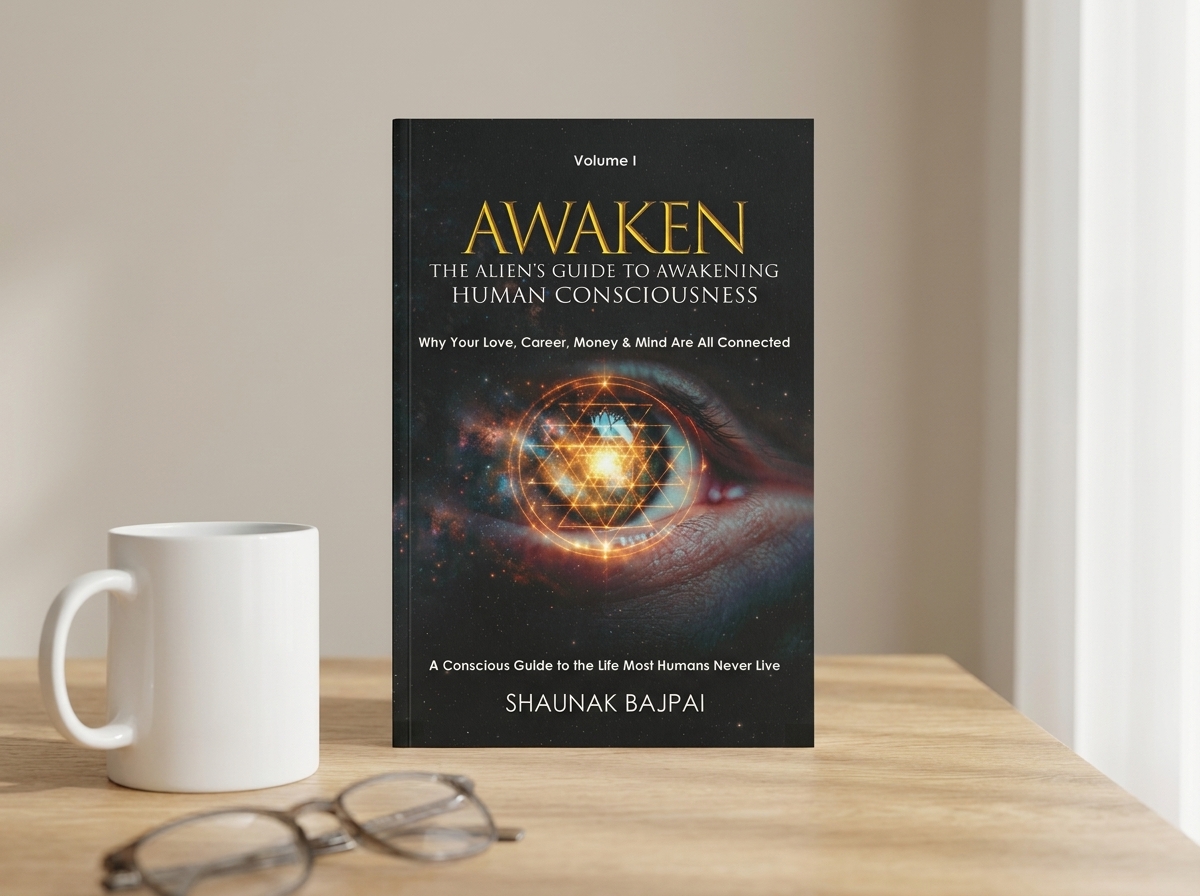
That is exactly how I felt about AWAKEN by Shaunak Bajpai.
It is ambitious. Sometimes overwhelming. Sometimes repetitive. Sometimes deeply insightful. But it is never emotionally empty.
There were parts where I found myself arguing internally with the author, and oddly enough, I think that is part of the experience this book wants to create. It wants readers to question themselves, not simply agree passively.
And in a world where most people are constantly distracted, emotionally exhausted, and consuming endless noise online, maybe a book that asks uncomfortable questions is arriving at the right time.
I do not think every reader will connect with AWAKEN equally. But the readers who do will probably underline entire pages.

With over 11 years of experience in the publishing industry, Priya Srivastava has become a trusted guide for hundreds of authors navigating the challenging path from manuscript to marketplace. As Editor-in-Chief of Deified Publications, she combines the precision of a publishing professional with the empathy of a mentor who truly understands the fears, hopes, and dreams of both first-time and seasoned writers.