
Rating:
⭐⭐⭐⭐ (4.5 out of 5)
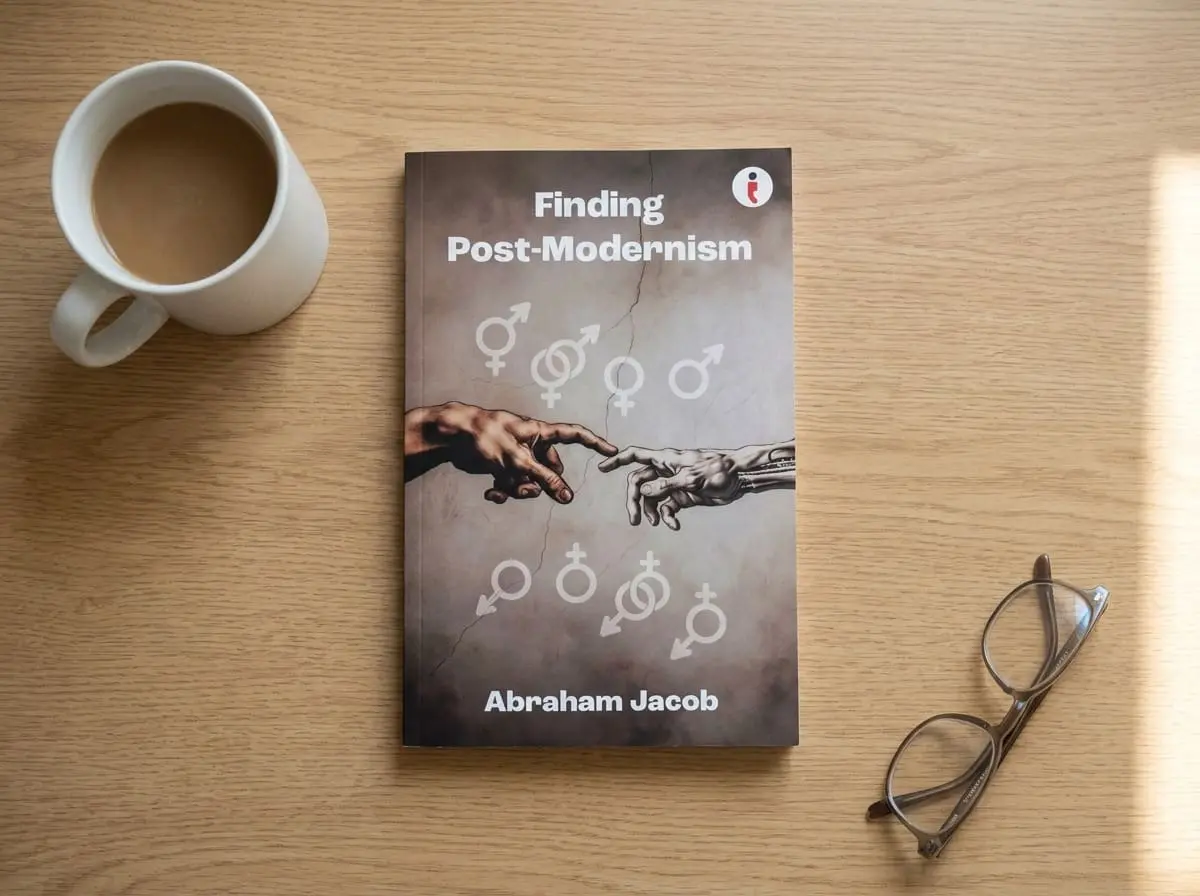
I have spent years reading books on philosophy, religion, politics, psychology, literature, and honestly, most books that try to explain “post modernism” either become painfully academic or so simplified that they lose their soul somewhere in the process. That is probably why Abraham Jacob’s Finding Post Modernism caught my attention almost immediately. It is not trying to impress you with jargon every second. At the same time, it also refuses to treat readers like they cannot think deeply.
What I found interesting from the very beginning was the emotional tone of the book. This is not written like a cold university textbook. There is frustration in these pages. There is anxiety about modern civilization. There is grief over what humanity may be losing. And there is also this strange hope that maybe philosophy, science, ethics, language, religion, and even technology can still somehow speak to each other again.
This kind of discussion feels extremely relevant. We are living in a time where people argue about truth every single day. AI can generate realities that never existed. Social media creates ideological tribes within minutes. Language itself feels unstable online because the same sentence can mean ten different things depending on who is reading it. So when Abraham Jacob writes about uncertainty, fragmentation, nihilism, and the collapse of universal certainty, it does not feel like abstract philosophy anymore. It feels personal.
And honestly, I think that is where this book becomes strongest.
What the Book Is About
At its core, Finding Post Modernism tries to understand how Western thought reached a stage where certainty itself became suspect. Abraham Jacob traces philosophical history from modernism into post modernism through religion, science, aesthetics, politics, sociology, feminism, language theory, economics, existentialism, and eventually artificial intelligence.
The table of contents itself tells you how ambitious this project is. The book moves through thinkers like Lev Shestov, Martin Buber, Jacques Derrida, Jean Baudrillard, Hannah Arendt, Simone Weil, Herbert Marcuse, Walter Benjamin, Slavoj Žižek, Richard Rorty, Gilles Deleuze, Hilary Putnam, and many others. Usually when authors attempt something this broad, the book becomes chaotic. Here, surprisingly, there is a visible thread connecting everything.
Jacob seems deeply interested in one central question: what happens to human civilization when faith in absolute truth collapses?
That question appears again and again through different chapters.
In the early pages, the author describes how modern philosophy and modern art faced a crisis after rationalism and empiricism failed to answer emotional and existential suffering. He discusses the destruction caused by world wars, industrialization, social fragmentation, and scientific uncertainty. One line that genuinely caught my attention was the discussion about how philosophy became trapped in incomprehensibility because language itself became unstable.
I found the chapter on religious and moral concerns especially interesting because it does not approach religion in a simplistic “belief versus atheism” format. Instead, thinkers like Lev Shestov are presented almost as people wrestling against despair itself. The pages discussing Dostoevsky, Job, suffering, and faith have emotional weight. You can sense that the author is not merely summarizing philosophical theories. He is emotionally invested in what these ideas mean for ordinary human beings.
Then the book moves into aesthetics and language. The sections on Walter Benjamin, surrealism, Picasso, post modern art, and deconstruction were honestly some of my favorite parts from the uploaded pages. There is a recurring concern throughout the book that modern art and language have become disconnected from stable meaning. The author keeps returning to the idea that fragmentation may produce creativity, but it can also produce alienation.
I also appreciated that the author connects philosophy with politics and economics instead of treating them separately. The chapters discussing capitalism, consumerism, Marxism, class structures, media influence, and technological power feel especially timely right now.
And then there is the science section.
I think many readers will be surprised by how much space the book gives to mathematics, phenomenology, epistemology, quantum uncertainty, and philosophy of science. The pages discussing William of Occam, Edmund Husserl, Hilary Putnam, functionalism, internal realism, and the instability of language become dense at times, but they also reveal what the author is trying to do. He wants readers to understand that post modernism did not emerge from literature alone. It emerged because multiple systems of certainty started collapsing simultaneously.
That is a huge claim. But the book commits to it fully.
What Stood Out to Me
The first thing that stood out to me was the sincerity of the writing.
I have read enough philosophical writing to recognize when authors are hiding confusion behind complicated language. Abraham Jacob does not completely avoid complexity because honestly, this subject cannot be simplified too much without losing meaning. But there is sincerity here. Even when the arguments become intense, the writing still feels like someone trying to genuinely understand civilization rather than merely showing intellectual superiority.
The second thing I noticed was the emotional framing of philosophy.
Most philosophy books discuss ideas as if thinkers existed outside ordinary human pain. Here, the author repeatedly connects philosophy to despair, war, loneliness, uncertainty, industrialization, alienation, and spiritual exhaustion. The discussion about post war Europe, nihilism, and existential collapse gives emotional context to why these philosophies emerged in the first place.
The sections involving Walter Benjamin were particularly memorable for me. The author presents Benjamin not simply as an academic thinker, but almost as a tragic intellectual figure attempting to preserve meaning in a collapsing civilization. There is this recurring image throughout the book of humanity trying to hold onto coherence while everything around it fragments.
I also liked the way the author approaches feminism.
Many books insert feminism as a token chapter without integrating it into the larger philosophical structure. Here, feminism is treated as part of the broader transformation of knowledge systems, social structures, and human relationships. Even from the limited pages available, you can see the author attempting to connect gender, technology, identity, emotional life, and social change into the larger post modern condition.
Another thing I appreciated was the discussion around language.
The pages on Derrida, Wittgenstein, Chomsky, and semantic instability genuinely made me stop and think. One section discusses how meaning changes depending on structures and interpretations, and how language may never fully deliver objective truth. In an internet era where words are constantly weaponized, manipulated, clipped, reposted, and interpreted differently across communities, these arguments feel much less theoretical than they once did.
The AI related observations near the conclusion also caught my attention because they feel uncannily relevant right now. The author talks about humans becoming machine like, social bonds weakening, sensuality fading, and technological systems increasingly shaping consciousness itself. Reading those sections in 2026 honestly gave me chills a little.
That said, I should also mention something that may not work for every reader.
This is not a beginner friendly philosophy book in the traditional sense.
Some chapters become extremely dense because the author moves rapidly between thinkers, theories, and historical movements. If someone has never encountered terms like existentialism, phenomenology, deconstruction, structuralism, or epistemology before, they may occasionally feel overwhelmed.
There were moments where I wished the transitions between thinkers had slightly more breathing room. Sometimes the book moves so quickly from art to sociology to theology to science that readers may need to slow down and reread sections carefully.
But honestly, I do not necessarily see this as a flaw. I think the density reflects the scale of what the author is attempting.
The Emotional Core
Underneath all the philosophy, politics, and theory, I think Finding Post Modernism is really a book about human beings searching for meaning after certainty collapses.
That emotional current appears almost everywhere.
The author seems deeply concerned that modern civilization has become spiritually exhausted. There are repeated references to fragmentation, nihilism, isolation, technological domination, consumerism, and the weakening of authentic human relationships. Yet the book does not descend completely into hopelessness.
I think that balance matters.
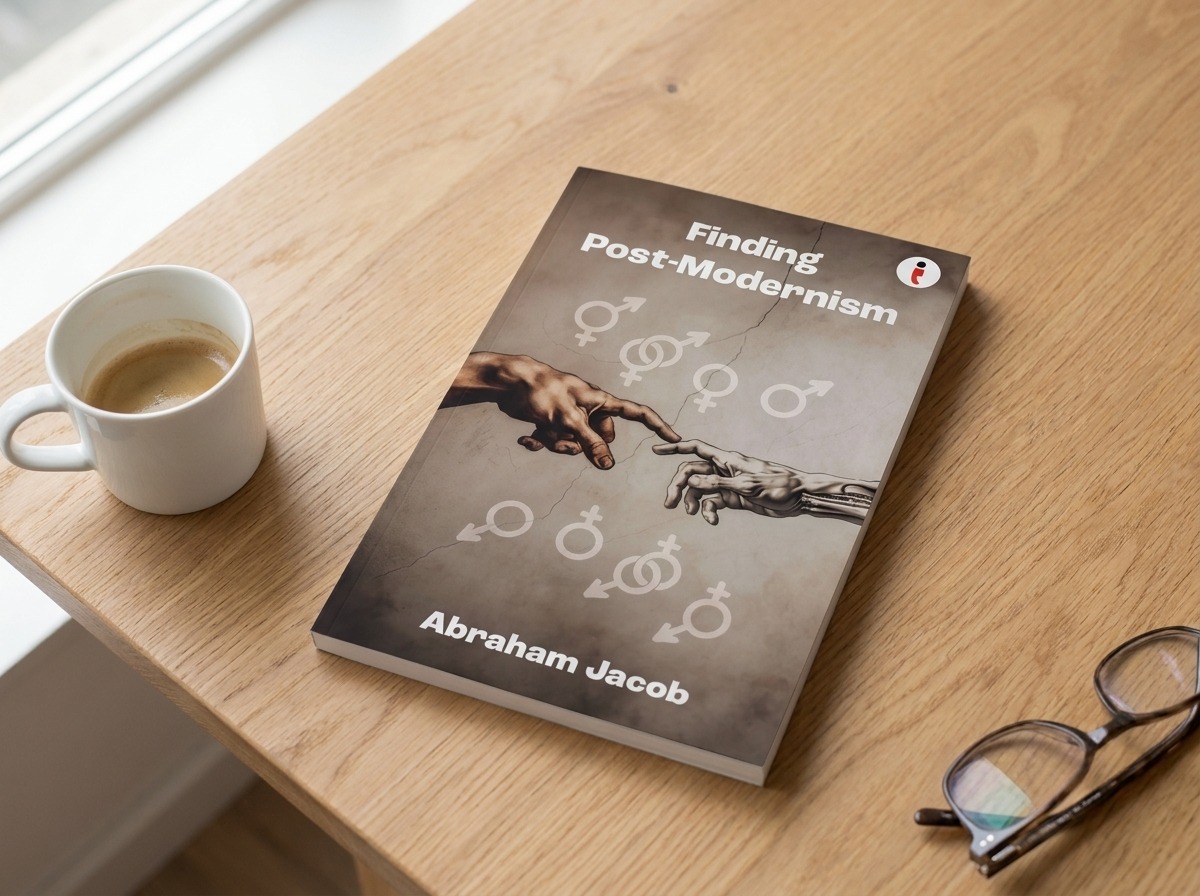
There are books that criticize modernity so aggressively that they become emotionally exhausting. Abraham Jacob avoids that trap because he still believes dialogue matters. The title itself says something important. The book is not called “Destroying Post Modernism” or “Defending Post Modernism.” It is called Finding Post Modernism.
That difference matters because the tone throughout the book feels investigative rather than ideological.
One emotional thread I kept noticing was the fear that humans may lose the ability to distinguish between reality, simulation, language, ideology, and technological manipulation. The discussions surrounding media systems, artificial intelligence, hyper reality, and fragmented truth feel deeply connected to contemporary life.
I actually found myself thinking about younger readers while reading these sections. Imagine growing up in a world where algorithms shape your opinions before you fully understand yourself. A world where images are edited beyond recognition. A world where truth is often reduced to whichever narrative spreads faster.
This book seems worried about that future.
But it is also asking whether philosophy still has a role in helping people remain human.
And honestly, I think that question alone makes this book worth discussing.
Who This Book Is For
This book is definitely for readers who enjoy big intellectual conversations.
If you love philosophy, cultural criticism, sociology, psychology, literary theory, political thought, theology, or intellectual history, there is a lot here to engage with.
Readers who enjoy authors like Jordan Peterson, Byung Chul Han, Jean Baudrillard, Alain de Botton, Roger Scruton, Slavoj Žižek, or even Yuval Noah Harari may find parts of this book interesting, although Abraham Jacob has his own voice and framework.
I also think this book would appeal to university students who are trying to understand how existentialism, post structuralism, feminism, media theory, deconstruction, and AI discussions connect historically.
That said, this may not work for readers looking for light casual reading.
This is the kind of book that asks for attention. Sometimes you will probably underline passages. Sometimes you may disagree strongly. Sometimes you may reread a paragraph because the idea is layered. And honestly, I think that is perfectly fine.
I would especially recommend this to readers who feel intellectually restless right now. People who sense that modern life has become fragmented but cannot fully explain why. People who feel uncomfortable with blind technological optimism but also do not want simplistic nostalgia.
There is something deeply human in the way this book wrestles with uncertainty.
Final Thoughts
As an editor at Deified Publication, I read many books that attempt to sound intelligent. Far fewer books actually feel urgent.
Finding Post Modernism feels urgent.
Not because it provides easy answers. Honestly, it does not. In fact, one of the book’s central ideas seems to be that absolute certainty may no longer be available in the way earlier civilizations imagined.
But Abraham Jacob still insists that the search matters.
I respected that.
I respected the ambition of bringing together theology, art, philosophy, science, feminism, economics, politics, language theory, and artificial intelligence into one large conversation about civilization itself. Even when the arguments became dense, I could feel the seriousness behind the writing.
There is also something admirable about a book that refuses intellectual laziness. It asks readers to think slowly, question assumptions, and confront uncomfortable realities about technology, ideology, morality, and human identity.
Will everyone agree with every argument here? Probably not.
But honestly, I think disagreement is part of the experience this book wants to create.
And maybe that is fitting for a book about post modernism.
FAQ
Is Finding Post Modernism worth reading?
If you enjoy philosophy, cultural criticism, sociology, or intellectual history, then yes, I think this book offers a lot to think about. It is dense in places, but the ideas feel relevant to modern life, especially in the age of AI and digital fragmentation.
Who should read Finding Post Modernism?
Readers interested in existentialism, post modern philosophy, feminism, language theory, religion, political thought, and philosophy of science will probably connect strongly with this book.
Is Finding Post Modernism beginner friendly?
Partially. The writing is more accessible than many academic philosophy books, but some chapters still require patience because the concepts and thinkers discussed are complex.
What makes Abraham Jacob’s book different?
The biggest difference is how emotionally invested the book feels. It is not merely summarizing theories. The author genuinely seems concerned about where modern civilization is heading.

With over 11 years of experience in the publishing industry, Priya Srivastava has become a trusted guide for hundreds of authors navigating the challenging path from manuscript to marketplace. As Editor-in-Chief of Deified Publications, she combines the precision of a publishing professional with the empathy of a mentor who truly understands the fears, hopes, and dreams of both first-time and seasoned writers.