
Rating:
⭐⭐⭐⭐ (4.3 out of 5)
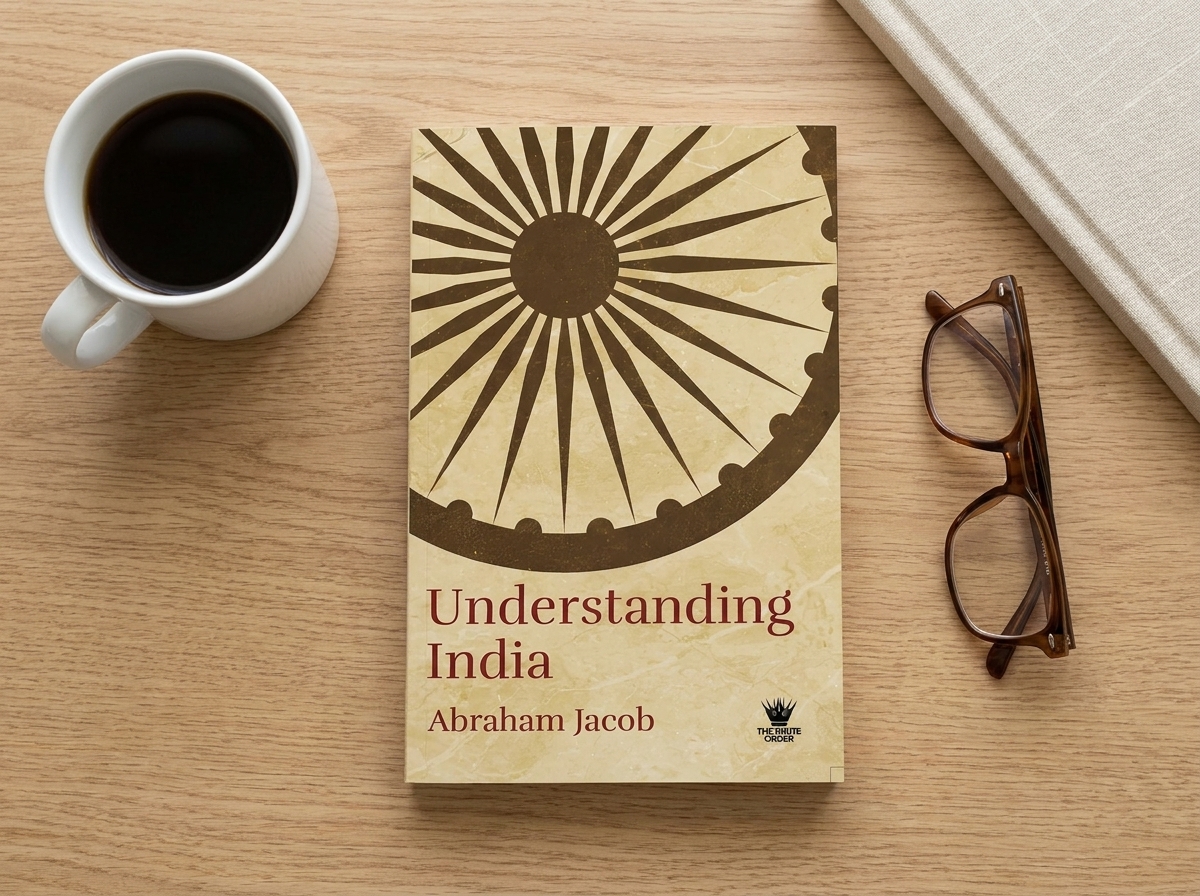
I have spent years reading books about India. Some are romantic about the past. Some are angry. Some are academic to the point where you feel like you’re reading a government report instead of a living conversation about civilization. And then there are books like Understanding India by Abraham Jacob that sit somewhere in between history, philosophy, religion, and cultural criticism.
Honestly, I wasn’t expecting this book to feel this intense.
From the very first chapter, there is a sense that the author is not trying to comfort the reader. He is trying to challenge inherited ideas. That changes the entire reading experience. You are not simply learning dates or events here. You are being asked to reconsider how Indian consciousness itself was formed over centuries.
And I think that is what makes this book interesting in 2026, especially at a time when conversations around identity, religion, nationalism, caste, and history have become emotionally charged everywhere.
There were moments while reading this where I found myself agreeing with the author strongly. Then a few pages later I would feel resistance. Then curiosity again. Good non fiction sometimes does that. It unsettles your certainty.
As an editor at Deified Publication, I read many manuscripts that try to discuss Indian civilization in broad strokes, but very few attempt something this ambitious. Abraham Jacob is not merely narrating history. He is trying to trace the emotional and philosophical evolution of an entire civilization.
That is a very risky thing to attempt. Sometimes the book succeeds beautifully. Sometimes it becomes dense and argumentative. But it never becomes lazy.
What the Book Is About
At its core, Understanding India is a study of Indian thought through religious texts, philosophical traditions, reform movements, mythology, politics, and social structures. The table of contents itself tells you how wide the scope is. The book moves from the Vedas and Upanishads to Buddhism, Jainism, the Epics, caste structures, Bhakti movements, Christianity in India, Islam in India, British colonial influence, and finally modern Hindu nationalism and identity formation.
That is a massive intellectual landscape to cover in a single book.
One thing I appreciated is that Abraham Jacob does not write with blind reverence. He often questions accepted narratives. For example, in the early chapters discussing the Vedas and Upanishads, he repeatedly returns to the idea that ancient Indian thought originally contained wonder, openness, and philosophical curiosity before later becoming rigid through ritualism, caste structures, and sectarian identity.
There’s a passage in the sections discussing Vedic literature where he describes the Vedas almost as humanity standing in awe before existence itself. I liked that observation because it captures something many readers forget. Ancient texts were not originally textbooks. They were emotional responses to mystery, fear, nature, suffering, and meaning.
But the author also argues that over centuries, these living traditions hardened into systems of control and social hierarchy. That thread runs through the entire book.
His chapters on the evolution of Hinduism are probably among the strongest sections in the book. He discusses how different sects, beliefs, local traditions, tribal influences, gods, rituals, and philosophies were gradually absorbed into a broad umbrella identity later called Hinduism. Whether readers agree or disagree with all his conclusions, the argument is presented with conviction and supported through historical references and philosophical commentary.
I also found the chapters on Buddhism and Jainism fascinating because the author presents them not merely as religions but as reactions against ritualism and caste based structures. There is this recurring tension throughout the book between free inquiry and institutional authority. That tension gives the book its emotional and intellectual energy.
What Stood Out to Me
What stood out most to me was the tone.
This is not written like a cold academic text even though the material is deeply intellectual. Abraham Jacob writes with opinion, emotion, and frustration at times. You can feel that he deeply cares about what India became and what it could have been.
Sometimes I actually felt like I was listening to someone thinking aloud rather than reading a polished historical thesis.
There is a section where the author discusses how many Indians continued rituals whose meanings had long been forgotten because Sanskrit itself became inaccessible to ordinary people. That observation hit me hard because honestly, I have seen versions of this in real life too. Families performing traditions with sincerity but without understanding where they came from or why they began.
The book repeatedly asks uncomfortable questions.
- How did a civilization known for philosophical diversity become socially rigid?
- How did spiritual traditions coexist with caste oppression?
- How did reform movements emerge and then get absorbed back into orthodoxy?
- How did religion slowly merge with political identity?
Those questions give the book its backbone.
I also appreciated that the author does not reduce India into a simple story. He acknowledges contradictions constantly. In one section he discusses how Indian civilization could produce astonishing philosophical openness while simultaneously creating deeply unequal social structures. That duality appears again and again.
The chapter on Christianity in India surprised me too. Most mainstream discussions either ignore the ancient Christian presence in Kerala or simplify it heavily. Here, the author examines both the historical possibilities and the lack of definitive evidence with reasonable balance. I liked that he was willing to say where certainty becomes difficult.
Similarly, the sections discussing colonial influence and the rediscovery of Sanskrit texts through European scholars were genuinely interesting. The author argues that modern Hindu identity itself was reshaped through reactions to colonial criticism and nationalist movements. Whether readers fully agree or not, it is a perspective worth engaging with seriously.
Now, to be fair, this book is not easy reading all the time.
Some chapters become repetitive because the author circles back repeatedly to caste, ritualism, and institutional religion. I understand why he does it because these themes are central to his argument, but occasionally I wished for tighter editing.
Also, readers looking for neutral academic distance may struggle here. Abraham Jacob clearly has strong opinions about organized religion, caste structures, and modern political interpretations of Hinduism. Personally, I did not mind that because at least the book feels honest about its perspective instead of pretending complete objectivity.
But yes, readers should know this going in.
The Emotional Core
For me, the emotional center of Understanding India is not anger or criticism. It is disappointment mixed with longing.
Again and again, the author seems drawn toward the early philosophical openness found in the Vedas and Upanishads. He writes almost mournfully about how curiosity slowly gave way to dogma, hierarchy, ritual, and identity politics.
There is sadness in that.
And honestly, even if you disagree with parts of the book, you can still feel the sincerity behind it.
One section discussing how different communities gradually hardened into caste identities genuinely made me think about modern India. We often talk about progress and technology now, but some social divisions still continue beneath everything. The book keeps bringing you back to those uncomfortable realities.
At the same time, there are moments of admiration too. The author clearly respects the intellectual richness of Indian philosophy. His discussions around the Upanishads, metaphysics, Advaita, and existential inquiry are written with fascination rather than cynicism.
I think readers who enjoy books by writers like Nirad C. Chaudhuri, Ramachandra Guha, Devdutt Pattanaik, or even parts of Romila Thapar’s work may find this book interesting because it combines cultural reflection with historical interpretation.
Though I should say this clearly. Understanding India is not a beginner friendly introduction to Indian philosophy. It demands attention. Some chapters require rereading because the arguments become layered and philosophical.
But there’s also something rewarding about books that trust readers to think deeply.
Who This Book Is For
This book is for readers who enjoy history, philosophy, religion, and civilizational debates.
- It is for people who don’t mind disagreement.
- It is for readers who ask difficult questions about India instead of searching only for comforting narratives.
If you enjoy highly plot driven nonfiction with short punchy chapters and simplified conclusions, this may feel heavy for you. But if you enjoy intellectually engaged books where the author is actively wrestling with ideas, then you’ll probably appreciate this.
Students of Indian history may find it valuable because it connects philosophical movements with social structures in a readable way.
Readers interested in caste history, Hinduism, Buddhism, colonial influence, and identity politics will likely find many sections worth underlining.
And honestly, disagreement is not a weakness in a book like this. Sometimes it becomes part of the reading experience itself.
Final Thoughts
I finished Understanding India feeling mentally exhausted but also strangely energized.
Not because the book gives neat answers. It doesn’t.
What it does instead is force readers into conversation with history, faith, identity, and inherited beliefs. Some parts are provocative. Some are beautifully reflective. Some sections could have benefited from tighter pacing. But overall, I think Abraham Jacob has written a courageous and intellectually sincere work.
In my years reviewing books, I’ve learned that the most memorable nonfiction books are often the ones that risk making readers uncomfortable. This is one of those books.
You may argue with it. You may underline half of it angrily. You may disagree with entire chapters. But I doubt serious readers of Indian history and philosophy will come away feeling indifferent.
And honestly, books that create genuine engagement are becoming rarer.
FAQ Section
Is Understanding India worth reading?
Yes, especially if you enjoy books about Indian history, philosophy, religion, and cultural identity. It’s not light reading, but it gives readers a lot to think about.
Who should read Understanding India by Abraham Jacob?
Readers interested in Indian civilization, caste history, Hinduism, Buddhism, reform movements, and modern Indian identity will likely appreciate this book most.
Is Understanding India beginner friendly?
Not completely. Some chapters are dense and philosophical. Readers new to Indian intellectual history may need patience, but thoughtful readers will still find value in it.
What genre is Understanding India?
It falls somewhere between cultural history, philosophical nonfiction, religious studies, and socio political commentary.

With over 11 years of experience in the publishing industry, Priya Srivastava has become a trusted guide for hundreds of authors navigating the challenging path from manuscript to marketplace. As Editor-in-Chief of Deified Publications, she combines the precision of a publishing professional with the empathy of a mentor who truly understands the fears, hopes, and dreams of both first-time and seasoned writers.