
Rating:
⭐⭐⭐⭐ (4.4 out of 5)
There are some books you read and admire for their intelligence. Then there are books that make you uncomfortable because somewhere in the middle of reading them, you realise they are talking about you.
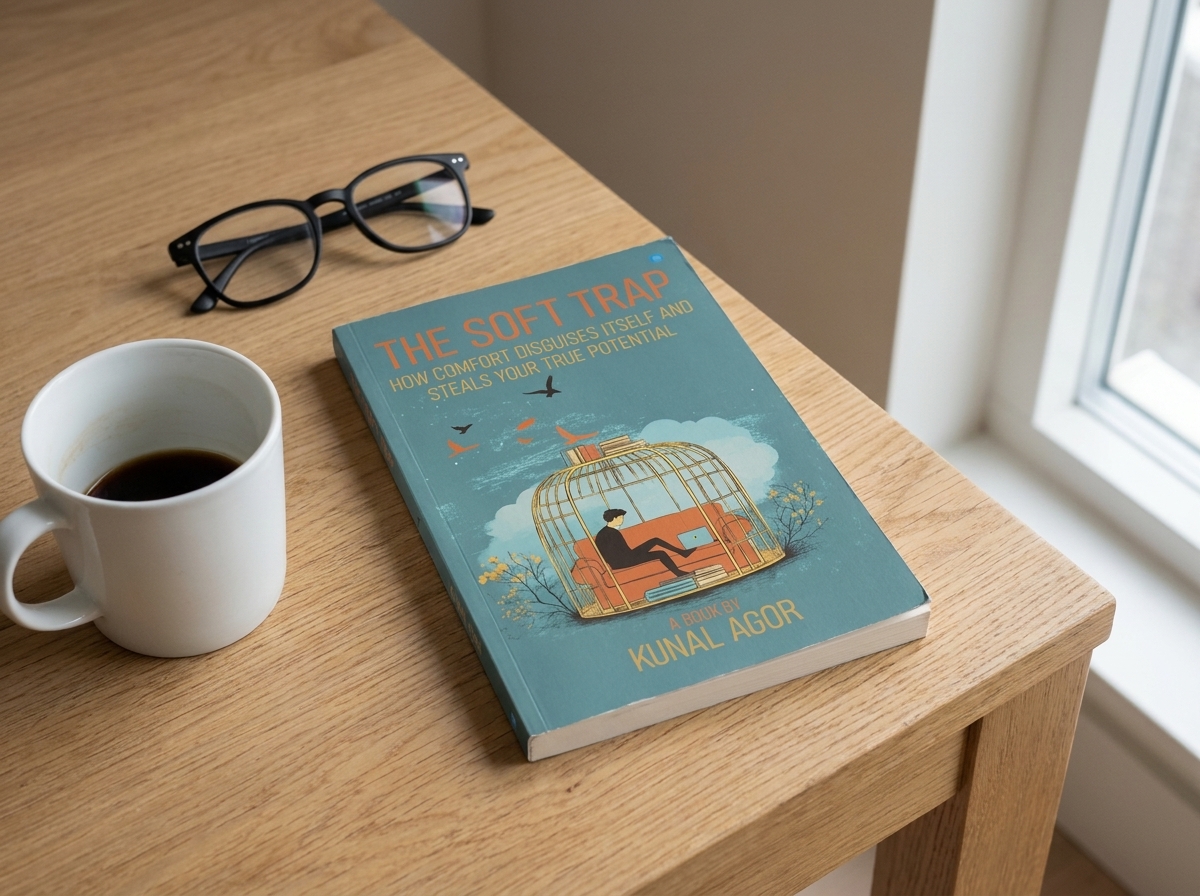
That was my experience with The Soft Trap by Kunal Agor.
I picked this book expecting another motivational self help title about growth, ambition, and breaking comfort zones. Honestly, I’ve read enough books in this genre over the last fifteen years to recognise patterns very quickly. A lot of them sound energetic on the surface but emotionally hollow underneath. They repeat familiar advice with louder words.
But this one surprised me.
Not because it says something completely new. It doesn’t. In fact, the central idea is very simple. Most people do not completely fail in life. They slowly settle. And after a point, that settling begins to look normal.
What makes The Soft Trap work is the way Kunal Agor presents this idea through human lives instead of lectures. The book follows Nishant, Arjun, and Pankaj, three working professionals whose choices slowly shape very different futures. And while reading their stories, I kept thinking of real people I know. Old colleagues. Friends from college. Relatives. Even parts of myself from certain years.
That recognition is what gives this book emotional weight.
What the Book Is About
At its core, The Soft Trap is about comfort that slowly turns into limitation.
The story begins in Mumbai around 2008, with three young men entering corporate life full of ambition and possibility. Nishant arrives with hunger and curiosity. Arjun has creativity and ideas but lacks the courage to fully act on them. Pankaj already carries the burden of responsibilities and fear after a failed business attempt.
At first, all three seem to be moving forward together. Promotions arrive. Salaries increase. Their families feel proud. Society calls them successful.
But the book keeps asking an important question throughout: Is external progress always real growth?
That question becomes the backbone of the entire narrative.
I actually liked how the author uses very ordinary situations instead of dramatic events. There are scenes involving EMIs, promotions, office politics, family expectations, late night conversations, tea at home, self doubt before career changes, and the fear of starting over in your late thirties.
These moments feel believable because they are believable.
One section that genuinely stood out to me is when Nishant’s wife Rachel asks him a painfully direct question after years of corporate routine: “Are you happy?”
Such a simple line. But I think many readers will recognise the emotional pressure behind it immediately.
The book slowly shifts from storytelling into reflection and practical guidance. Later chapters discuss fear of loss, illusion of progress, social conditioning, routines, habits, learning cycles, and action oriented growth. There are exercises, reflection prompts, and frameworks designed to make readers examine their own lives honestly.
Sometimes books like this become too preachy once they enter “life lesson” territory. Thankfully, The Soft Trap manages to retain emotional grounding for most of its journey.
What Stood Out to Me
The first thing I noticed was the accessibility of the writing.
Kunal Agor writes in very simple language. There are no complicated philosophical arguments or intellectual gymnastics here. Some readers may actually underestimate the book because of that simplicity. But personally, I think simple writing is much harder than decorative writing. Especially when discussing ambition, fear, and identity.
The pacing also works well because the book moves between narrative storytelling and reflective sections. One moment you are reading about Nishant questioning his corporate life at thirty eight. Then suddenly the author brings in a practical framework explaining how people get trapped in routines disguised as success.
I also appreciated how Indian middle class psychology is portrayed very accurately here.
That section about stability being celebrated more than fulfilment honestly felt very real to me. The book discusses how society praises government jobs, secure salaries, flats on EMI, and predictable routines while often discouraging risk, creativity, or reinvention.
There is one line about people mistaking preparation for progress that I kept thinking about afterwards. The author talks about people endlessly consuming motivational content, attending workshops, planning goals, but never actually moving.
I have genuinely seen this happen around me.
People who talk about writing books for ten years but never write a chapter. People who buy fitness memberships every January but never build discipline. People who dream about leaving jobs they hate but spend years convincing themselves “later” is a strategy.
The book understands this behaviour very well.
Another thing I liked was the contrast between the three central characters.
Arjun represents compromise disguised as responsibility. He is talented and creative but keeps postponing risk until life slowly hardens around routine. Pankaj represents fear after failure. He convinces himself safety is wisdom because he has already experienced pain once. Nishant represents discomfort with stagnation. Even when life looks stable externally, something inside him keeps resisting emotional numbness.
Together, these characters create a wider reflection on adulthood itself.
And honestly, in 2026, this message feels timely. A lot of people today are financially functional but emotionally exhausted. They are surviving efficiently. But somewhere deep down, they know they stopped expanding years ago.

The Emotional Core
What gives The Soft Trap emotional strength is that it does not insult ordinary people. That matters.
Some motivational books speak as if people who choose stability are weak or lazy. This book does not do that. It understands fear. It understands responsibility. It understands family pressure, bills, ageing parents, children, loans, and social expectations.
There is empathy in the writing. I especially felt this during the sections involving Pankaj. His fear does not come from stupidity. It comes from being wounded once before. That emotional detail makes his choices understandable even when frustrating.
The scenes involving Rachel also add warmth to the book. She does not simply “motivate” Nishant like a stereotypical inspirational spouse. Instead, she forces honesty into the room. Sometimes love looks like encouragement. Sometimes it looks like confrontation.
And I think the book handles that beautifully. The later chapters become more introspective and philosophical. The author discusses the “safe circle,” fear cycles, loss aversion, and the illusion of movement. I liked the example comparing routine life to driving endlessly on a smooth circular road. You feel motion, but you are not reaching anywhere new.
That metaphor works because it captures modern professional life so accurately. At the same time, I do think some sections become slightly repetitive. Around the middle portion, the book circles around similar ideas of stagnation and comfort repeatedly. A tighter edit could have made certain chapters sharper.
But strangely, even that repetition mirrors the theme itself. The repetitive feeling almost reflects routine life. I am not sure if that was intentional, but it created an interesting reading experience.
Who This Book Is For
I think The Soft Trap will connect deeply with working professionals in their late twenties, thirties, and forties. Especially people who feel “functional” but internally disconnected from excitement, purpose, or challenge.
If you are someone standing at a career crossroads, this book may genuinely speak to you.
It is also very relevant for Indian readers because the cultural details feel familiar. Family expectations, respect attached to stability, fear of disappointing parents, conversations around marriage and security, office life, promotions, social comparison, all of this feels rooted in real middle class experience.
At the same time, this may not work for readers looking for highly literary prose or extremely complex psychological analysis. The writing style is straightforward and intentionally accessible.
Personally, I think that accessibility is part of the book’s strength.
Sometimes people do not need intellectual complexity. They need clarity.
And this book offers clarity in a very human way.
Final Thoughts
As someone who reads constantly because of my work at Deified Publication, I often ask myself one question after finishing a book:
“Did this book genuinely say something I needed to hear?”
In the case of The Soft Trap, the answer is yes.
Not because it completely transformed my worldview overnight. Books rarely do that honestly. But because it forced reflection without sounding arrogant about it. It reminded me how easy it is to mistake comfort for fulfilment. How easily routines become identities. How often fear disguises itself as practicality.
There’s a section near the end where the author writes about growth not being a destination but a practice. That line summarises the spirit of the entire book beautifully.
I also appreciated that the book ends with questions rather than dramatic certainty. It understands that growth is ongoing. Life keeps presenting new versions of comfort and fear.
That felt honest to me.
I do think the book could have benefited from slightly tighter editing in certain reflective sections, and some readers may wish for deeper emotional exploration of supporting characters. But overall, the emotional sincerity of the book outweighs those flaws.
The Soft Trap is not trying to impress readers with sophistication. It is trying to wake them up gently before routine hardens into regret.
And honestly, many readers probably need that reminder right now.
FAQ
Is The Soft Trap worth reading?
Yes, especially if you feel stuck in routine life or disconnected from your bigger ambitions. The book speaks honestly about comfort, fear, and personal growth without sounding overly preachy.
Who should read The Soft Trap by Kunal Agor?
Working professionals, entrepreneurs, students entering corporate life, and anyone questioning whether their current life actually reflects their potential.
Is The Soft Trap fiction or self help?
It blends both. The book uses fictional characters and storytelling but also includes practical frameworks, reflection exercises, and growth strategies.
What is The Soft Trap about?
The book follows three professionals whose lives slowly diverge based on their choices around fear, ambition, stability, and growth. It focuses on how comfort can slowly limit personal potential.

With over 11 years of experience in the publishing industry, Priya Srivastava has become a trusted guide for hundreds of authors navigating the challenging path from manuscript to marketplace. As Editor-in-Chief of Deified Publications, she combines the precision of a publishing professional with the empathy of a mentor who truly understands the fears, hopes, and dreams of both first-time and seasoned writers.