
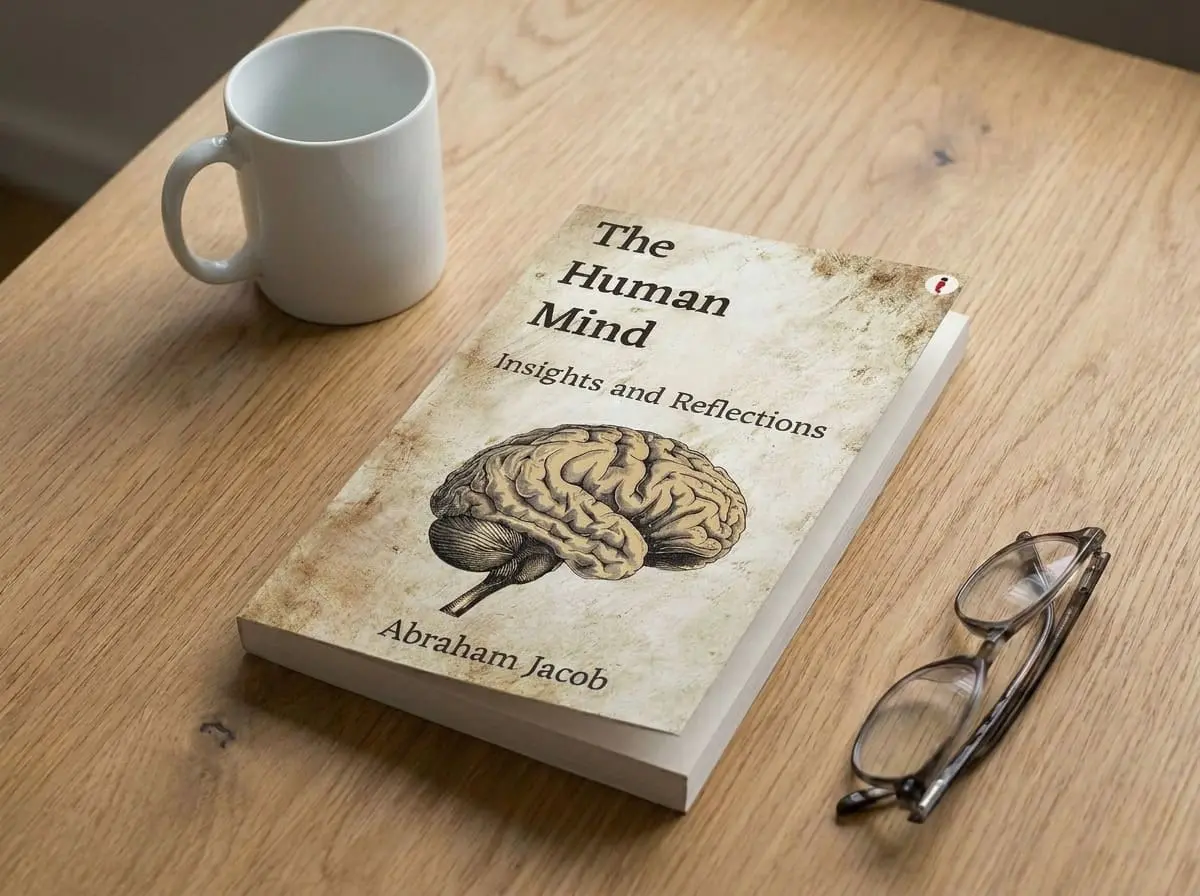
Rating:
⭐⭐⭐⭐ (4.3 out of 5)
I have read many books on psychology over the years. Some are highly academic and difficult to connect with emotionally. Some are written in a very simplified way that ends up flattening the complexity of the human mind. Then there are books that sit somewhere in between. Books that genuinely try to understand why human beings behave the way they do, why suffering repeats itself through generations, why religion, childhood, desire, guilt, memory, sexuality, and even loneliness continue shaping modern life no matter how advanced society becomes.
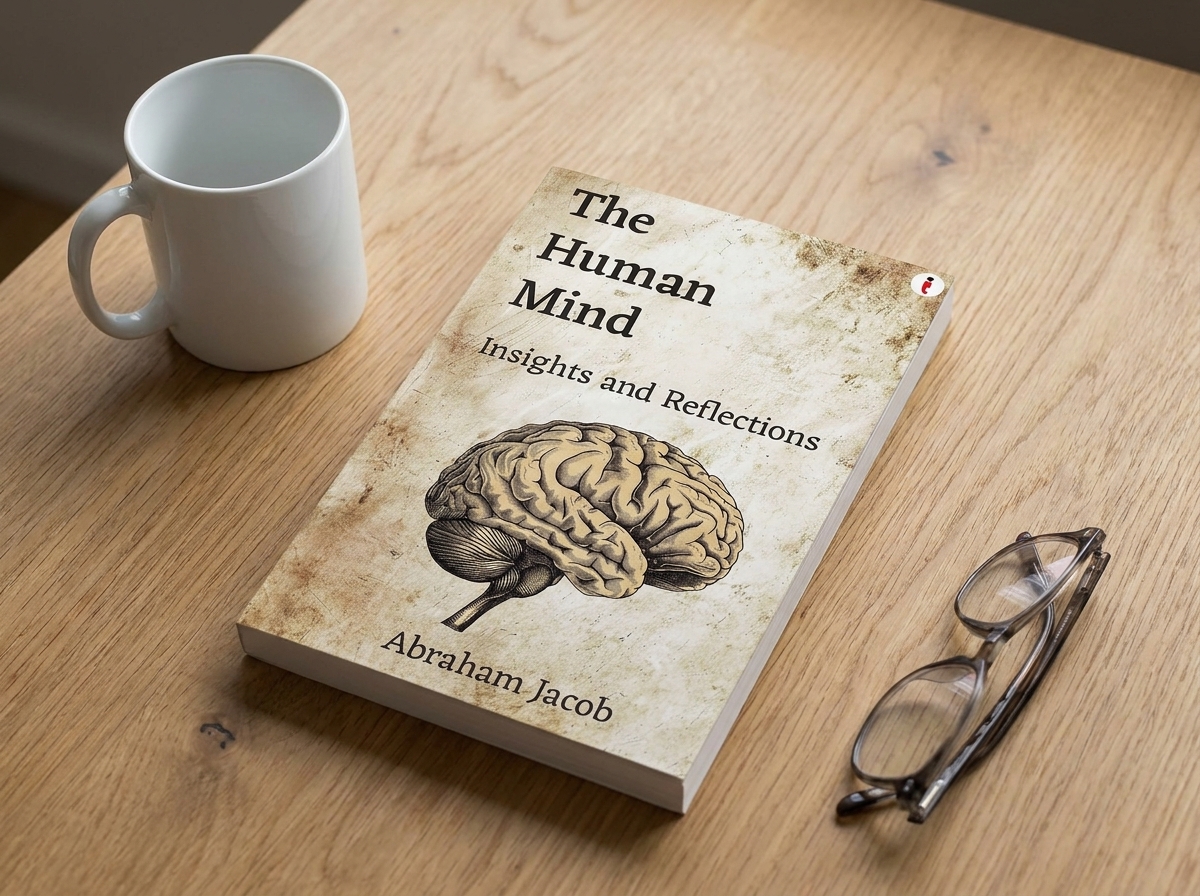
The Human Mind: Insights and Reflections by Abraham Jacob belongs to that middle space.
What surprised me most was not just the range of thinkers covered in the book, but the tone of the writing itself. There is seriousness here, but not coldness. Abraham Jacob writes like someone who has spent years thinking deeply about people, institutions, faith, civilization, and human weakness. Maybe that comes from his unusual life experience. A person who has worked in administration, military service, literature, and public systems probably sees humanity from many angles. I could sense that while reading this.
And honestly, in 2026, this kind of book feels strangely relevant. We live in a time where everyone talks about mental health online, but very few people actually sit down and ask larger questions about consciousness, morality, meaning, loneliness, guilt, or identity. This book attempts exactly that.
What the Book Is About
At its core, The Human Mind is a wide ranging reflection on the development of psychology and psychoanalysis across the twentieth century and beyond. But it is not written like a dry university textbook. Abraham Jacob combines psychology, philosophy, religion, sociology, neuroscience, and history into one long conversation about what it means to be human.
The book begins with the intellectual chaos of the modern world. The opening chapter talks about industrialization, war, Marxism, Darwinism, existentialism, and the collapse of old certainties. There is a feeling throughout the introduction that humanity lost something important while becoming modern. I found that interesting because many psychology books jump directly into theories and clinical language. This one first asks what kind of society created the need for modern psychology in the first place.
From there, the book moves through the origins of psychiatry and psychoanalysis, discussing thinkers like Sigmund Freud, Carl Gustav Jung, Jacques Lacan, Jean Piaget, R. D. Laing, Michel Foucault, and many others.
What I appreciated was that Abraham Jacob does not blindly worship these figures. He gives them space, explains their ideas carefully, but also questions them. For example, the sections on Freud acknowledge how revolutionary psychoanalysis was in opening discussions about the unconscious mind and repression, but the book also spends considerable time discussing the limitations of psychoanalysis itself.
There is an entire concluding section examining why psychoanalysis often failed to fully heal people despite its intellectual brilliance. I found those chapters surprisingly honest. The author discusses issues like transference, emotional dependency between doctor and patient, the difficulty of uncovering truth through memory, and the fact that knowledge alone does not automatically cure suffering. That last point hit me hard because I think many educated people secretly believe that understanding ourselves intellectually should fix everything. Life rarely works that way.
What Stood Out to Me
The chapter on child psychology was one of the strongest parts of the book for me.
I have read plenty of discussions around attachment theory, developmental psychology, and childhood trauma before, but Abraham Jacob writes about children in a way that feels deeply human rather than clinical. The sections discussing Jean Piaget and developmental stages are detailed without becoming exhausting. There is a real attempt to explain how children gradually build reality itself through experience, symbols, memory, imitation, and social interaction.
There is one part discussing how a child slowly moves from simple reflexes to abstract thinking, and I remember thinking how fragile human consciousness actually is. We like to imagine adults as rational and fully formed, but this book constantly reminds the reader that much of adulthood is built on emotional structures formed very early in life.
The discussions around mothering, attachment, and emotional development were also fascinating. Abraham Jacob brings in thinkers like Melanie Klein and Karen Horney while also questioning where psychology sometimes overreached. He repeatedly returns to the tension between biology and environment. Are we shaped more by genes or by upbringing? By instinct or society? The book never gives a simplistic answer.
Another section I found memorable was the exploration of Jung.
A lot of modern internet culture treats Jung almost like a mystical meme generator. Shadow work. Archetypes. Masculine energy. Feminine energy. But Abraham Jacob presents Jung in a fuller and more complicated way. The book examines Jung’s childhood, his religious upbringing, his fascination with myth and spirituality, and even some of the stranger aspects of his thinking. There is admiration there, but also skepticism.
I liked that balance.
The same applies to the book’s treatment of psychiatry and neuroscience. The chapters discussing schizophrenia, antidepressants, biological psychiatry, CT scans, neurotransmitters, and modern clinical psychology are informative without turning mechanical. Abraham Jacob seems genuinely interested in whether mental illness is biological, social, existential, or spiritual. He never reduces human beings to chemicals alone.
And honestly, I appreciated that restraint.
Today, many conversations about mental health become extreme in one direction or another. Either everything is framed as trauma and social conditioning, or everything becomes a brain chemistry issue. This book keeps wrestling with uncertainty. It admits that psychology still does not fully understand consciousness, suffering, free will, or meaning.
That humility gave the book credibility for me.
The Emotional Core
What makes The Human Mind: Insights and Reflections different from many psychology books is that underneath all the theories, there is sadness in it. Not depressing sadness exactly, but an awareness of how difficult human existence can be.
Several passages discussing loneliness, guilt, alienation, desire, madness, and spiritual emptiness genuinely affected me. Especially the sections comparing modern secular psychology with Buddhism and religion.
There is a chapter near the end called “A Return to Buddhism,” and I found it unexpectedly moving. Abraham Jacob discusses suffering not merely as pathology, but as something deeply woven into human existence itself. The book contrasts desire driven modern identity with Buddhist ideas around impermanence and dissatisfaction. Whether a reader agrees or not, those pages feel sincere.
I also found the discussions around madness and genius interesting because the author does not romanticize suffering. He recognizes the agony behind mental illness while still acknowledging that some psychologically unusual people perceive reality differently from others.
That balance matters.
I think younger readers especially might connect with the book’s larger question underneath everything else: what actually makes a meaningful human life?
Not a productive life. Not merely a successful life. A meaningful one.
That question appears again and again throughout the book, sometimes directly and sometimes indirectly.
Who This Book Is For
This is not the kind of psychology book you read for quick productivity hacks or social media style mental health advice.
If someone wants short dopamine friendly self help content, this may feel too dense for them.
But if you are someone who enjoys thinking deeply about human behavior, philosophy, religion, psychoanalysis, childhood development, identity, suffering, or modern civilization, then there is a lot here to engage with.
I would especially recommend it to readers who enjoy books by writers like Viktor Frankl, Irvin D. Yalom, or readers interested in intellectual history and the evolution of psychological thought.
Students of psychology may also appreciate how broad the book is. It moves across Freud, Jung, behaviorism, humanism, feminism, neuroscience, existentialism, religion, and psychiatry while still maintaining a central thread.
That said, I do think some sections could have been slightly tighter. A few chapters become academically heavy, especially when multiple theorists are discussed back to back. There were moments where I wished the author had slowed down and expanded certain personal or historical examples more fully instead of moving rapidly between ideas.
Still, I never felt the book lacked sincerity. And for me, sincerity matters more than polish sometimes.
Final Thoughts
By the time I finished The Human Mind Book Review, what lingered most was not a single theory or psychologist. It was the sense that Abraham Jacob genuinely cares about understanding people in their contradictions.
The book asks difficult questions without pretending to solve all of them. It questions psychiatry while still respecting science. It discusses religion without becoming preachy. It critiques psychoanalysis while acknowledging its historical importance. It recognizes biological explanations without reducing humanity to biology alone.
That balance is rare.
As an editor at Deified Publication, I read many books that sound intelligent but feel emotionally empty. This one did not feel empty to me. Imperfect sometimes, yes. Dense in places, definitely. But emotionally and intellectually alive.
And honestly, I think readers who are willing to sit with big questions about the mind, suffering, morality, desire, memory, and identity will find themselves underlining many pages.
FAQ
Is The Human Mind by Abraham Jacob worth reading?
Yes, especially if you enjoy psychology, philosophy, psychoanalysis, or intellectual history. It is more reflective and analytical than commercial self help books.
What is The Human Mind: Insights and Reflections about?
The book examines the evolution of psychological thought through thinkers like Freud, Jung, Piaget, Lacan, and others while also discussing neuroscience, spirituality, childhood development, psychiatry, and modern society.
Who should read The Human Mind?
Readers interested in psychology, existential questions, religion, psychoanalysis, and human behavior will probably appreciate it most.
Is this book beginner friendly?
Mostly yes, though some chapters become intellectually dense. Readers completely unfamiliar with psychology may need to take their time with certain sections.

With over 11 years of experience in the publishing industry, Priya Srivastava has become a trusted guide for hundreds of authors navigating the challenging path from manuscript to marketplace. As Editor-in-Chief of Deified Publications, she combines the precision of a publishing professional with the empathy of a mentor who truly understands the fears, hopes, and dreams of both first-time and seasoned writers.