

Rating:
⭐⭐⭐⭐ (4.3 out of 5)
There are some books you read for entertainment, and then there are books that feel uncomfortably familiar. The Burnt Sugar Club by Akoparna B belongs to the second category. I finished reading it with this strange heaviness in my chest because so many moments inside this novel felt real in a way that modern fiction often struggles to achieve.
In my years reviewing books at Deified Publication, I have read countless stories about friendship, heartbreak, women finding themselves, burnout, toxic relationships, and emotional healing. A lot of them say the right things. Very few actually sound like people I know in real life. This one does.
What struck me immediately was how ordinary the characters seem on the surface. Emma is overworked and emotionally exhausted. Ava is consumed by insecurity about her appearance. Hope gives everything to people while quietly neglecting herself. Iris is trapped in the aftermath of humiliation and emotional abuse. Emerald becomes the kind of friend many people wish they had when life starts collapsing.
None of these women feel exaggerated. That matters.
Because honestly, modern readers are tired of characters who sound like motivational quotes wearing human skin. Akoparna B writes women who are messy, insecure, emotionally confused, loving, selfish, kind, exhausted, and deeply human all at once.
And I think that is exactly why this novel works.
What The Burnt Sugar Club Is About
At its core, The Burnt Sugar Club is about five women whose lives intersect through emotional chaos, loneliness, friendship, and survival. The title itself tells you a lot. Burnt sugar is bitter before it becomes sweet again, and that metaphor runs through the entire novel.
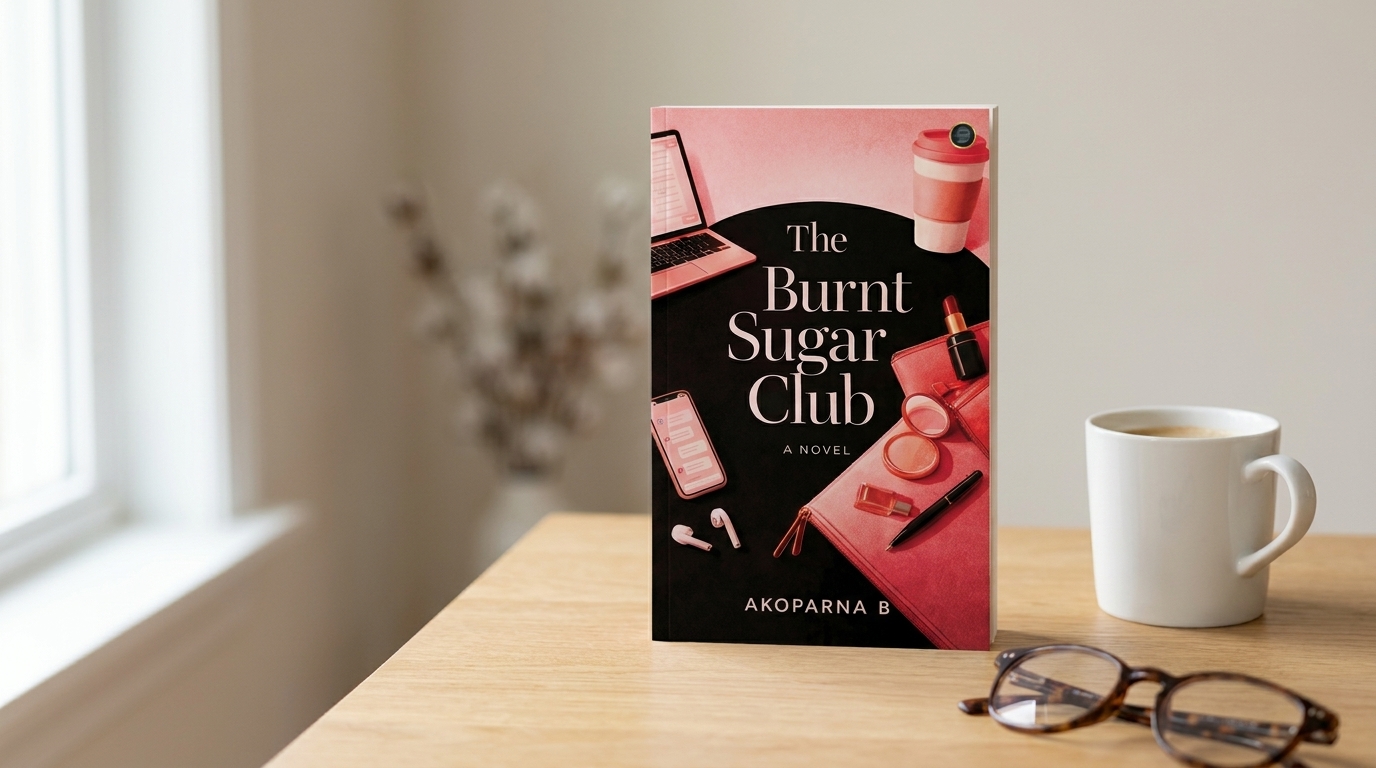
Emma’s storyline became the emotional anchor for me. She begins as someone crushed under work pressure and emotional guilt. Early in the book, there is a scene where she is staring at her laptop, carrying this invisible burden of always needing to prove herself. The writing there feels painfully familiar for anyone who has experienced burnout culture in corporate spaces.
Then there is the complicated emotional tension involving Jace and Evren. I appreciated that Akoparna B did not reduce this into a shallow love triangle. Emma’s guilt feels real. Her confusion feels real. There is one moment where she wonders if she emotionally cheated simply by imagining another version of her life, and honestly, I think many readers will recognize themselves in that discomfort.
Ava’s chapters hit me differently. Her obsession with skincare, perfection, cosmetic fixes, and physical flaws is written with surprising empathy. I have seen many novels attempt body image discussions, but they usually become preachy very quickly. Here, Ava’s pain comes through small details instead. The way she zooms into her reflection. The way she believes people are lying when they call her beautiful. The way she spends money trying to repair flaws that do not even exist.
That emotional spiral felt painfully authentic.
Hope’s storyline might actually be my favorite. She is the dependable friend, the emotionally available person everyone leans on. But underneath that kindness is loneliness. The scene where she meets Evren late at night after having a terrible day carries this emotional softness that never feels artificial.
And then there is Iris.
Her chapters become much darker, especially once Reid enters the picture. The scenes involving manipulation, public humiliation, emotional intimidation, and the aftermath of social cruelty are some of the strongest sections in the book. There is one confrontation scene at her apartment door that genuinely made me tense while reading. The dialogue there feels immediate and frightening because it sounds exactly like the kind of manipulative language emotionally abusive people use in real life.
The novel slowly turns these separate emotional struggles into a found family dynamic. That evolution is what gives the story its heart.
What Stood Out To Me
The biggest strength of The Burnt Sugar Club is emotional observation.
Akoparna B notices tiny emotional details many writers overlook. Someone pretending they are okay because they do not want to burden others. Someone laughing in the middle of emotional pain because vulnerability feels embarrassing. Someone choosing work because work feels easier than confronting their personal life.
Those moments appear repeatedly throughout the novel.
I also appreciated how modern the emotional landscape feels without trying too hard to sound trendy. There are references to online confession platforms, beauty standards, social media humiliation, toxic workplace culture, emotional burnout, therapy language, and self image obsession. But the book never sounds like it is trying to impress younger readers with internet vocabulary.
It simply feels current.
The friendship dynamics are another major strength. In many contemporary novels, friendship exists only as background decoration while romance takes center stage. Here, friendship genuinely matters. Some of my favorite scenes are not romantic scenes at all. They are moments where women defend each other, reassure each other, or simply sit together after emotional devastation.
Emerald especially became memorable for me because she represents the kind of friend who does not offer perfect speeches. She simply shows up.
That matters more.
I also think Akoparna B handles pacing surprisingly well for a character driven novel. The chapters are short enough to keep emotional momentum moving, and the shifting perspectives help prevent the story from becoming emotionally repetitive.
That said, I do think some readers may find certain emotional monologues slightly repetitive in the middle sections. There are moments where characters revisit the same insecurity several times before emotional progression happens. Personally, I understood why the author did this because healing is repetitive in real life too. But some readers looking for fast plot movement may feel the story lingers longer inside emotional reflection.
Still, I would rather read a book that feels emotionally honest than one rushing toward dramatic twists every twenty pages.
The Emotional Core Of The Novel
What stayed strongest in my mind after finishing this book was not the romance. It was the exhaustion.
The exhaustion of constantly performing strength.
Emma trying to convince herself she loves the right person while emotionally drifting elsewhere. Ava trying to earn beauty through suffering. Hope trying to become emotionally useful enough to deserve love. Iris trying to rebuild dignity after public humiliation.
There is this recurring feeling throughout the novel that these women have spent years apologizing for existing imperfectly.
That emotional thread gives the story its depth.
And yet, despite the heavy themes, the book is not emotionally hopeless. I appreciated that the novel believes healing is possible without pretending healing is clean or easy. Characters relapse emotionally. They make bad decisions. They misunderstand themselves. Some relationships survive while others collapse.
That realism helped the emotional payoffs land harder.
The final sections involving Emma’s book launch and the evolution of these friendships genuinely felt earned to me. Especially Emma’s speech near the ending where she talks about being her own biggest bully and learning to rebuild herself after emotional collapse. That scene could have easily become melodramatic in weaker hands, but here it felt sincere.
Honestly, I think many readers in 2026 will connect deeply with this novel because burnout, insecurity, emotional isolation, and identity confusion have become incredibly common experiences. People are exhausted. Emotionally and mentally.
This book understands that exhaustion.
Who Should Read The Burnt Sugar Club
I think this novel will connect most strongly with readers who enjoy emotionally driven contemporary fiction rather than heavily plot focused stories.
If you love books centered around women’s friendships, emotional healing, complicated relationships, and self identity, there is a very good chance this book will resonate with you.
Readers who enjoy authors like Sally Rooney, Colleen Hoover’s more emotionally reflective work, or even certain introspective elements from contemporary women’s fiction will probably find something meaningful here.
At the same time, this book may not work for everyone.
If you prefer fantasy, mystery, high action plots, or extremely fast pacing, this might feel emotionally dense. The novel spends a lot of time inside feelings, insecurities, conversations, and personal reflection.
Personally, I think that slowness actually suits the story.
Because healing itself is rarely dramatic. Most of the time it happens through conversations, small acts of kindness, difficult realizations, and people choosing not to abandon each other.
This novel understands that.
Final Thoughts
The Burnt Sugar Club surprised me.
I expected an emotional women’s fiction novel. What I did not expect was how grounded the emotional writing would feel. Akoparna B clearly understands the inner lives of people who look functional from the outside while quietly struggling underneath.
There are scenes in this book that I know readers will see themselves in. Maybe uncomfortably so.
Emma burning toast while spiraling emotionally.
Ava staring at flaws nobody else can see.
Iris believing humiliation has permanently damaged her life.
Hope loving people more than herself.
Those moments feel lived in.
I also appreciate that the novel never pretends friendship magically fixes trauma. Healing here feels ongoing. Messy. Human.
And honestly, I think that honesty is what gives the book its strength.
As an editor and longtime reader, I can say this confidently: The Burnt Sugar Club may not be flawless, but it has emotional sincerity, and that matters more to me than polished perfection.
Some books entertain you for a weekend.
Others remind you that people around you are carrying invisible battles every single day.
This one belongs to the second category.
FAQ Section
Is The Burnt Sugar Club worth reading?
Yes, especially if you enjoy emotionally grounded contemporary fiction focused on women’s friendships, burnout, relationships, and healing. The emotional realism is the book’s strongest quality.
Who should read The Burnt Sugar Club?
Readers who enjoy character driven stories, modern women’s fiction, emotional healing arcs, and friendship centered novels will probably connect strongly with this book.
What genre is The Burnt Sugar Club?
It fits best within contemporary women’s fiction with strong emotional and psychological themes.
Does The Burnt Sugar Club have romance?
Yes, but romance is not the only focus. Friendship, identity, emotional recovery, insecurity, and self worth are equally important parts of the story.

With over 11 years of experience in the publishing industry, Priya Srivastava has become a trusted guide for hundreds of authors navigating the challenging path from manuscript to marketplace. As Editor-in-Chief of Deified Publications, she combines the precision of a publishing professional with the empathy of a mentor who truly understands the fears, hopes, and dreams of both first-time and seasoned writers.