
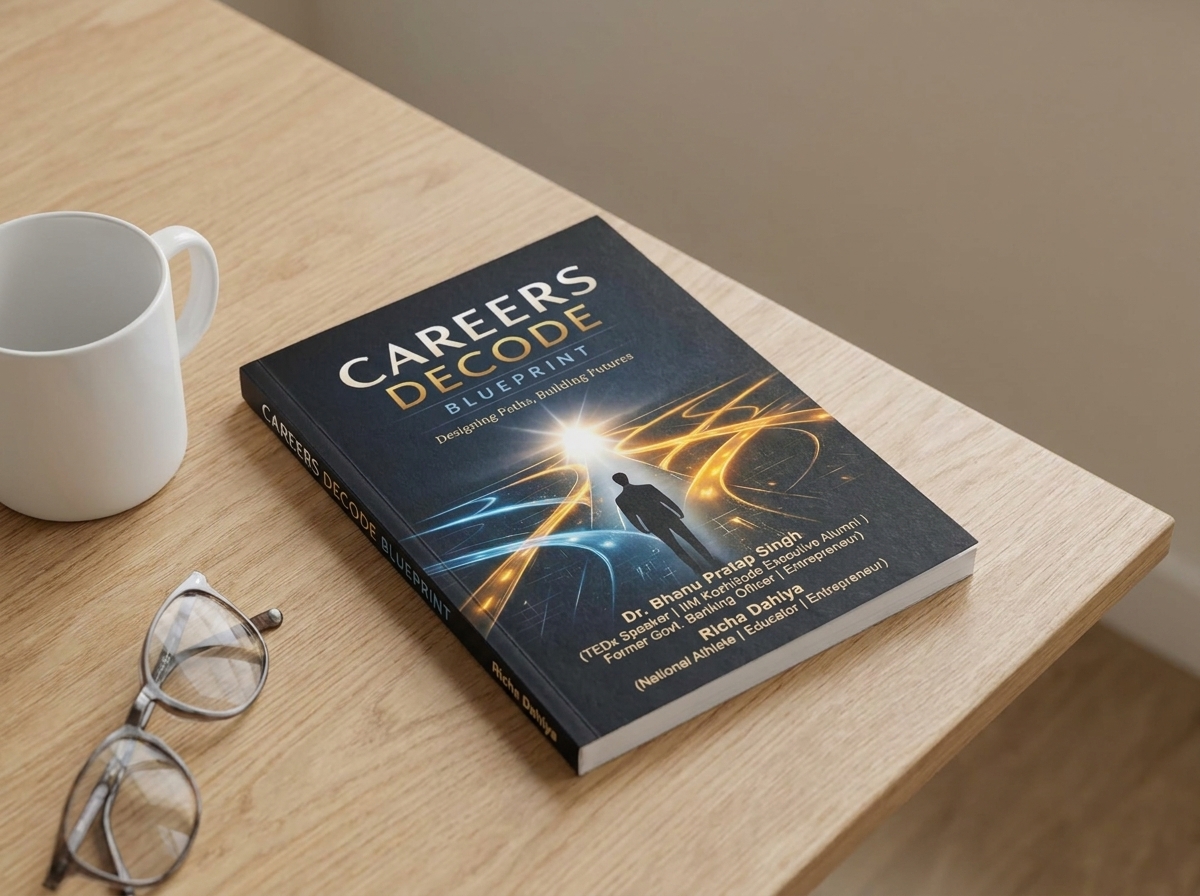
Rating:
⭐⭐⭐⭐ (4.3 out of 5)
I have read career books for years. Some are too motivational. Some sound like corporate presentations stretched into 250 pages. And some speak to young people as if confusion is a weakness that needs to be fixed immediately.
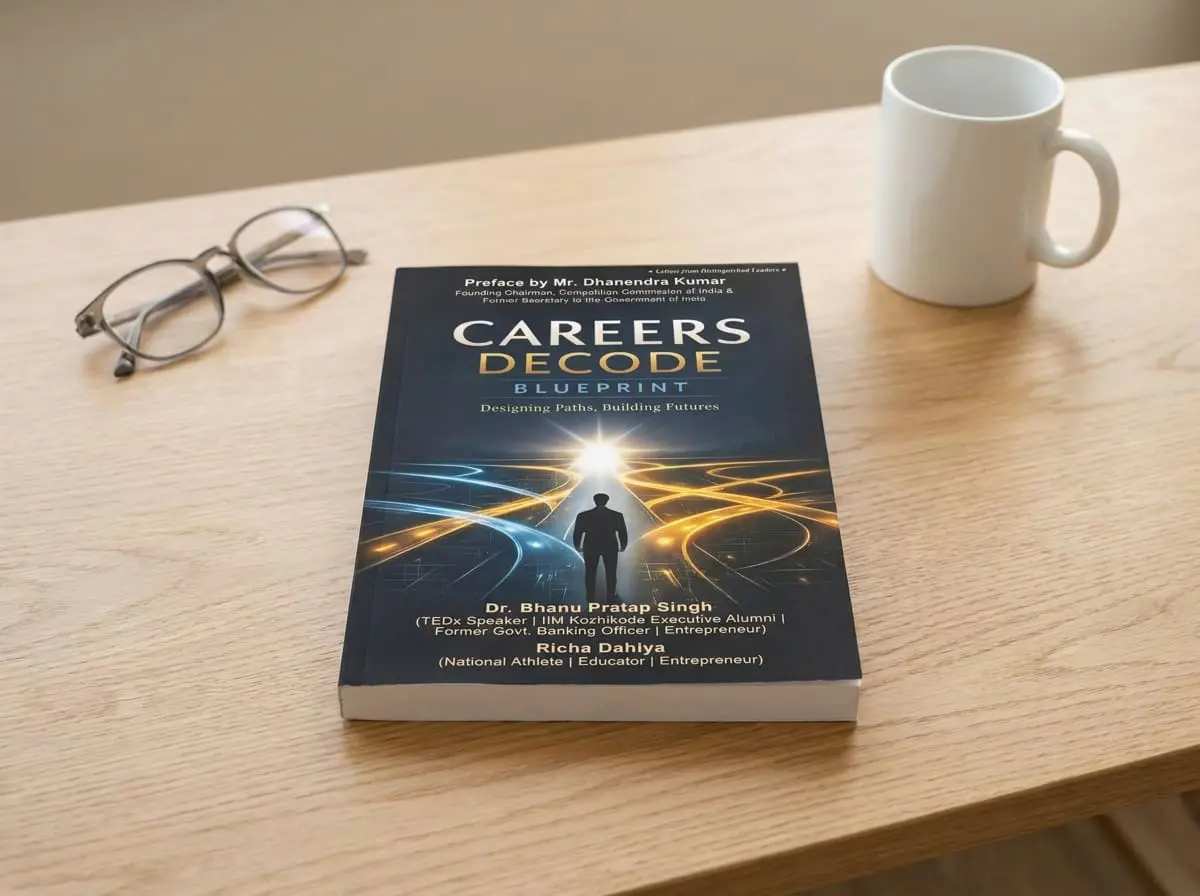
Careers Decode Blueprint by Bhanu Pratap Singh and Richa Dahiya felt different to me for one very simple reason.
It speaks to uncertainty with respect.
That mattered to me more than I expected.
There is a section early in the book where Bhanu writes about sitting in a government banking institution during his training period and suddenly asking himself, “Is this actually the life I wanted?” I think many people reading this will recognize that feeling instantly. Maybe not in a bank. Maybe in an engineering college, maybe in a coaching institute, maybe during a late metro ride after work. But the feeling is familiar.
And what I appreciated is that the book does not shame the reader for feeling lost.
In my years reviewing books at Deified Publication, I have noticed that the books readers remember are rarely the loudest ones. They are the ones that make people feel understood. This book does that repeatedly.
Not perfectly. I do think a few sections become a little dense with information and statistics. But emotionally, the book knows exactly who it is talking to. Young Indians trying to build a life while carrying family expectations, social comparison, financial anxiety, and the pressure to “settle” before they even understand themselves.
Honestly, I found myself underlining more passages than I expected.
What the Book Is About
Careers Decode Blueprint: Designing Paths, Building Futures is essentially a modern Indian career guide, but reducing it to only that would be unfair.
Yes, the book covers practical things. There are chapters on digital careers, AI, government jobs, communication skills, networking, financial literacy, entrepreneurship, global education, and competitive examinations like UPSC, SSC, IBPS, SBI, RBI, and railway recruitment.
The practical detail is actually impressive. For example, the government careers section does not just glorify public service from a distance. Bhanu Pratap Singh writes from lived experience. He talks about examination halls at seven in the morning, about years of preparation, about emotional resilience, and about the mental pressure involved in competitive exams where lakhs of people compete for very few positions. That specificity gives the writing credibility.
There is also a useful realism in the way the book explains modern digital careers. The chapter on content creation especially stood out to me because it refuses to sell fantasy. The authors openly say content creation is not fast money and not easy. They discuss audience building, consistency, niche clarity, and genuine value creation instead of pretending every Instagram reel leads to instant success.
I liked that. Too many books either dismiss digital careers entirely or romanticize them beyond reality. This one sits somewhere in the middle.
The chapter discussing India’s digital infrastructure was another interesting surprise. The references to Digital India, UPI, BharatNet, internet access, creator economy growth, and the rise of online education give the book a strong connection to present day India instead of abstract career advice copied from western self help books.
And then there is the emotional layer underneath everything. The real argument of the book is not “choose this career.” The real argument is this: Most people never truly choose. They inherit expectations.
That idea appears repeatedly throughout the book in different forms. Family pressure. Social comparison. Respectability politics. Fear of disappointing people. Fear of uncertainty.
There is a line where the authors write that many careers are inherited rather than consciously chosen. I kept thinking about that sentence long after I finished reading.
Because honestly, I have seen this happen in real life again and again.
What Stood Out to Me
The strongest thing about Careers Decode Blueprint is its voice.
Bhanu Pratap Singh and Richa Dahiya write with clarity, but also with emotional honesty. The book does not try too hard to sound intellectual even when discussing philosophy, psychology, or economics.
And yet, there are sections that carry surprising depth.
The chapter around purpose and Dharma genuinely caught my attention.
Usually when books mention the Bhagavad Gita or Swami Vivekananda, it feels decorative. Here, those references are connected carefully to modern career confusion. The discussion around Dharma is framed not as “follow your passion blindly,” but as responsibility, contribution, alignment, and meaningful work.
I appreciated that nuance.
The section about Dr. B.R. Ambedkar was also beautifully handled. The authors do not present him as a distant historical figure. Instead, they frame his education, constitutional work, and public service as purpose expressed through action.
There is maturity in that writing.
I also found the communication chapter surprisingly strong. One moment especially stood out to me. Bhanu describes entering a room filled with highly accomplished people and realizing that the most impressive person there was not the loudest speaker. It was the person who listened deeply. That observation felt very real.
After editing books and meeting writers for years, I honestly think communication is still one of the most misunderstood skills in India. Many people focus on sounding smart instead of being present. The book addresses this very directly.
And then there are the personal sections.
The pages about Bhanu’s mother and grandmother were probably the most human parts of the entire book for me.
Those pages did not feel written to impress anybody. There is a tenderness there that changes the tone of the book completely. Suddenly this is not just a career guide. It becomes a reflection on identity, trust, courage, and emotional grounding.
I think many readers will connect deeply with those chapters, especially readers who come from middle class Indian households where love is often expressed through sacrifice rather than language.
Richa Dahiya’s portions add another important dimension. Her perspective as an educator comes through clearly in the sections discussing students, confusion, pressure, and self understanding. There is one line where she talks about students who looked successful externally but internally felt disconnected from their lives. That observation felt painfully accurate.
Especially in 2026. We are producing highly skilled young people who often have no relationship with themselves beyond performance.
This book recognizes that problem.
The Emotional Core
I think the emotional core of this book is permission.
- Permission to question.
- Permission to admit confusion.
- Permission to reconsider a path even after investing years into it.
There is a passage where Bhanu writes about realizing he was performing a role rather than fully living as himself. I actually had to reread that page. Because I know readers who are living exactly like that right now. Doing everything correctly on paper. Good salary. Respectable degree. Stable path. And yet feeling disconnected from their own life.
What I appreciated is that the book does not encourage reckless rebellion either. It is not saying “quit your job tomorrow and follow your dreams.”
The tone is more grounded. The authors repeatedly emphasize skill building, discipline, contribution, consistency, financial literacy, and long term thinking. That balance makes the advice feel trustworthy.
I also think the book understands Indian emotional reality unusually well. Many western career books assume complete individual freedom. But Indian career decisions are often tied to parents, siblings, finances, marriage expectations, social mobility, and community perception.
This book acknowledges all of that. There is empathy for both ambition and fear. And honestly, some sections made me emotional.
The scene where a young man approaches Bhanu after an event and tells him that one paragraph he wrote changed the way he viewed his career genuinely affected me. Not because it was dramatic. Because it felt believable. As someone who has spent years around books, I can tell you this happens more often than people realize. A sentence reaches somebody at exactly the right moment in their life. And suddenly their direction changes. That is the kind of impact this book seems interested in. Not internet virality. Actual human clarity.
Who This Book Is For
I think Careers Decode Blueprint will connect most strongly with:
- Students who feel overwhelmed by too many career options.
- Young professionals who followed the “safe path” but feel disconnected from it.
- UPSC, SSC, banking, or government exam aspirants who want emotional realism instead of motivational slogans.
- Creators and entrepreneurs trying to understand the digital economy practically.
- Parents and teachers who genuinely want to understand what young Indians are struggling with today.
- And honestly, I think this book could help many people in smaller cities and towns who feel trapped between ambition and limitation.
The book repeatedly argues that geography no longer defines opportunity the way it once did. Whether discussing digital careers, content creation, online education, freelancing, or global access, the authors keep returning to the idea that modern India has opened doors that earlier generations never had. That optimism gives the book energy.
At the same time, I should mention that the book might feel a little extensive for readers looking for a very short, fast career handbook. This is not a quick checklist book. It mixes philosophy, psychology, storytelling, data, personal reflection, career strategy, and cultural commentary together. Personally, I enjoyed that mix. But some readers may prefer a simpler structure.
I also think a few chapters could have been slightly tighter in editing. Occasionally the writing becomes repetitive around themes of purpose and self awareness.
Still, I would rather a book care too much than feel emotionally empty.
Final Thoughts
By the end of Careers Decode Blueprint, I did not feel like I had read a conventional career guide.
I felt like I had listened to two people trying very sincerely to help young Indians think clearly about their lives.
And sincerity matters.
Especially now. In 2026, career anxiety has become almost constant. Everybody is comparing themselves to somebody. AI is changing industries. Social media keeps speeding up expectations. Students are expected to decide their future before they even understand themselves emotionally.
This book speaks directly into that chaos. Not with fake certainty. With honesty. I think that is why parts of the book worked so well for me. The best sections are not the ones giving instructions. The best sections are the ones asking better questions. Questions about alignment. Questions about contribution. Questions about identity. Questions about what success actually means. And maybe that is the real value of this book. Not giving readers a single path. But helping them recognize when the path they are walking no longer feels like their own.
As an editor and lifelong reader, I can say this confidently: Books that genuinely respect the reader are rarer than people think. Careers Decode Blueprint does.
FAQ Section
Is Careers Decode Blueprint worth reading?
I think it is worth reading if you are genuinely confused about career direction or trying to rethink success beyond salary and social pressure. It combines practical guidance with emotional honesty in a way many career books do not.
Who should read Careers Decode Blueprint?
Students, young professionals, competitive exam aspirants, creators, entrepreneurs, and even parents will probably find value here. Especially readers navigating career confusion in modern India.
What is Careers Decode Blueprint about?
The book discusses career planning, self understanding, AI, digital careers, government jobs, entrepreneurship, financial literacy, communication skills, and purpose driven work through an Indian perspective.
Is Careers Decode Blueprint only for students?
Not really. I actually think many working professionals in their late twenties or thirties may connect even more deeply with some chapters because the book discusses misalignment, pressure, and identity very honestly.

With over 11 years of experience in the publishing industry, Priya Srivastava has become a trusted guide for hundreds of authors navigating the challenging path from manuscript to marketplace. As Editor-in-Chief of Deified Publications, she combines the precision of a publishing professional with the empathy of a mentor who truly understands the fears, hopes, and dreams of both first-time and seasoned writers.