
Rating:
⭐⭐⭐⭐ (4.3 out of 5)
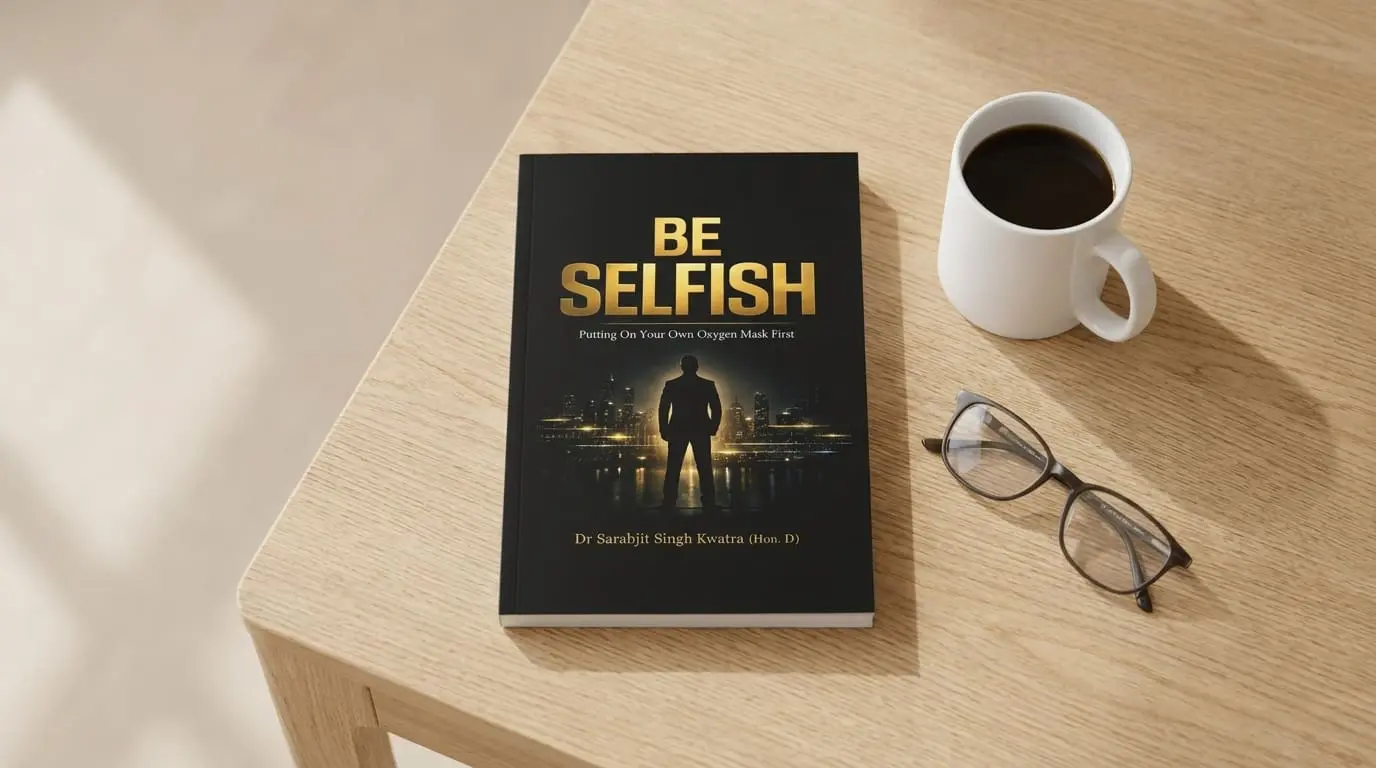
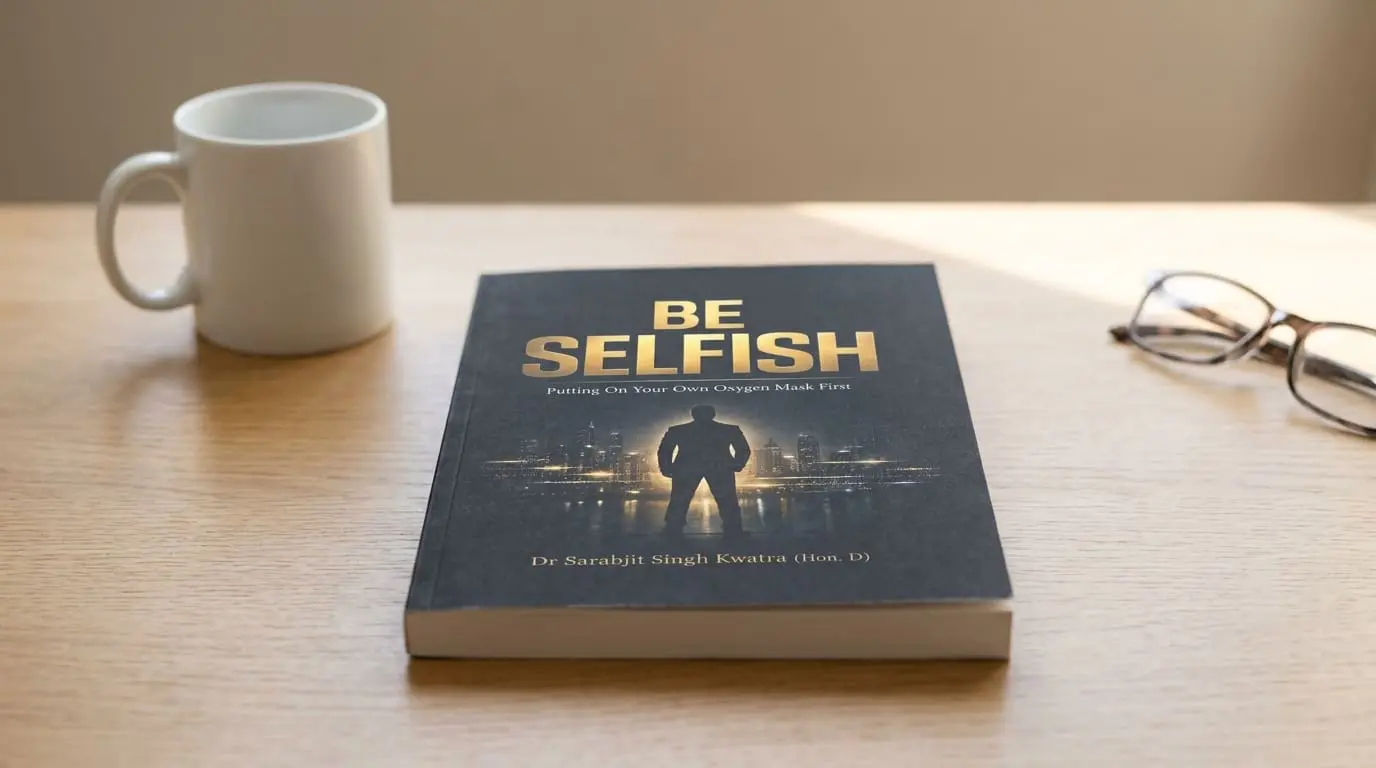
I did not expect Be Selfish: Putting On Your Own Oxygen Mask First by Dr. Sarabjit Singh Kwatra to feel this personal.
Honestly, when I first saw the title, I thought this would be another aggressive productivity book telling people to cut everyone off, wake up at 4 AM, optimize every breath, and somehow become a “high performer” through sheer discipline. There are already too many books doing that. And after reviewing books for years at Deified Publication, you start recognizing patterns very quickly.
But this one surprised me.
Not because it is revolutionary in every single idea. Some concepts around boundaries, burnout, focus, and self investment are familiar. What surprised me was the tone underneath the philosophy. There is genuine frustration here. You can feel the author reacting to a culture where exhaustion has become a personality trait.
There is a line early in the book that really captures its central argument:
“The world does not need more tired people. It needs you recharged, focused, and fiercely alive.”
That sentence explains the entire book.
And in 2026, honestly, it feels timely.
We are living in a strange era where people are simultaneously overworked and emotionally drained while also being expected to constantly perform online, answer instantly, stay available, keep smiling, keep sacrificing. Somewhere along the way, burnout started looking noble. Dr. Kwatra pushes hard against that idea.
What the Book Is About
At its core, Be Selfish argues that self investment is not selfish in the destructive sense. The author separates what he calls “toxic selfishness” from “strategic selfishness.”
That distinction matters.
This is not a book encouraging arrogance or emotional coldness. In fact, many parts of the book repeatedly connect self care to leadership, family, creativity, and long term contribution. The central belief is simple:
You cannot consistently give your best to others if you are mentally exhausted, emotionally depleted, physically unhealthy, and constantly reactive.
The “oxygen mask” metaphor appears throughout the book. It sounds familiar because we have all heard it on flights. Secure your own oxygen mask before helping others. But Dr. Kwatra expands it into an entire philosophy for work, relationships, and leadership.
The structure of the book is very practical. The table of contents alone tells you the direction clearly. Chapters focus on boundaries, resilience, AI age skill mastery, decision making, calculated risks, leadership, creativity, and time management.
What I appreciated is that the book does not remain stuck in abstract motivation. It keeps returning to systems, frameworks, exercises, and behavioral shifts.
For example:
The “Risk Reward Matrix” in Chapter 11 reframes career decisions in a surprisingly grounded way. Instead of glorifying reckless leaps, the author talks about “micro experiments” and calculated risks. I liked that balance. Too many business books romanticize chaos.
Similarly, the “CENTER Coaching Model” in Chapter 15 gives a structured leadership framework that actually feels usable in workplaces.
There are also recurring ideas about “time vampires,” emotional depletion, resentment cycles, and the hidden cost of always saying yes. I have genuinely seen these patterns in publishing, corporate spaces, and even creative communities.
Sometimes the people who look the most dependable externally are completely collapsing internally.
This book speaks directly to them.
What Stood Out to Me
One thing I noticed while reading Be Selfish is that Dr. Sarabjit Singh Kwatra writes like someone who has spent years observing workplace psychology closely.
There is less inspirational fluff here than I expected.
For instance, Chapter 13 on time management could easily have become generic productivity advice. Instead, it focuses heavily on attention leakage and reactive living. There is a section where the author talks about how many professionals believe they work ten productive hours while actually functioning deeply for only four or five. That hit a nerve because, honestly, I think most of us know this is true.
The book repeatedly attacks performative busyness.
Another section I kept thinking about was the discussion around resentment. The author argues that when people constantly prioritize others while ignoring themselves, bitterness eventually enters the relationship anyway. I have seen this happen in real life more times than I can count.
People think endless sacrifice automatically creates love or loyalty. Sometimes it creates silent anger instead.
I also liked how the author blends psychological language with corporate realities. There are references to cognitive reframing, nervous system regulation, resilience journaling, and habit architecture, but the language stays readable.
And then there are these unexpectedly sharp lines scattered across the book:
“You are not giving the world your best. You are giving it your leftovers.”
That one stings a little.
The leadership chapters were probably my favorite part overall. Especially Chapter 15, “Leading From the Center.”
There is a refreshing shift from the traditional “selfless servant leader” archetype. The book argues that emotionally depleted leaders create unstable teams because exhaustion spreads downward. Stability spreads too.
I thought that was interesting.
One section describes a leader who keeps emailing employees at 2 AM while preaching work life balance during meetings. That contradiction felt painfully realistic.
The book also uses small case study style examples throughout. Maya, Rajiv, Priya, Esha Taran. These examples help break the heavier conceptual sections and make the advice easier to visualize.
That said, I do think the book occasionally becomes repetitive. The central philosophy is powerful, but because the same core idea returns in multiple chapters, a few sections could have been tighter. Around the middle portion, especially in mindset focused chapters, I found myself wanting a little more variation in tone and pacing.
Still, I understand why the repetition exists.
The author is not merely presenting information. He is trying to dismantle years of guilt conditioning around self prioritization.
The Emotional Core
What makes Be Selfish work emotionally is that beneath all the productivity systems and leadership frameworks, this is actually a book about permission.
- Permission to rest without guilt.
- Permission to protect your energy.
- Permission to stop equating suffering with goodness.
And maybe that is why I think many readers will connect with it.
There is a section discussing how children are rewarded for compliance early in life, and how adulthood carries that conditioning into workplaces. Reading that, I suddenly remembered conversations with friends who feel guilty taking a Sunday off. Or people apologizing for not replying instantly. Or employees terrified of appearing unavailable.
Some parts of this book almost read like recovery work for chronic people pleasers.
I think readers who are emotionally exhausted will feel seen here.
Not magically healed. The book is not pretending life becomes easy after a few boundaries. But seen.
Chapter 12 on resilience especially stood out emotionally. The author talks about reframing crises not as proof of failure but as exposure points revealing weak systems. That perspective shift might sound simple, but honestly, for anxious professionals, it can change everything.
There is also a practical breathing protocol discussed during stress response sections. I appreciated that the book includes physical regulation techniques alongside mental frameworks. Burnout is not only intellectual. Your body carries it too.
And weirdly enough, despite the title, I did not come away from the book feeling selfish at all.
I came away thinking about sustainability.
Who This Book Is For
I think Be Selfish will resonate most with:
- People in high pressure corporate jobs.
- Managers carrying invisible emotional labor.
- Founders and entrepreneurs trying to prove themselves constantly.
- Caregivers who have forgotten what personal boundaries even look like.
- Young professionals already burning out before thirty.
And honestly, even creative people. Writers, designers, creators. The sections on focus, attention fragmentation, and internal validation apply there too.
- If you love heavily academic psychology books, this may feel too conversational at times.
- If you want a soft spiritual self help book full of affirmations, this is probably not that either.
This book is sharper than that. More tactical.
At the same time, readers expecting ruthless hustle culture may also be surprised. Dr. Kwatra repeatedly argues for sustainability over obsession.
Personally, I think the strongest aspect of the book is that it connects self leadership with collective leadership. The message is not “care only about yourself.” The message is “care for yourself properly so you stop operating from depletion.”
There is a difference.
Final Thoughts
In my years reviewing books, I have noticed that many self development books fail because they either become unbearably preachy or emotionally empty.
Be Selfish avoids both problems more often than not.
It has conviction. Sometimes almost too much conviction. But it also has sincerity.
You can feel that Dr. Sarabjit Singh Kwatra genuinely believes modern professionals are breaking themselves trying to earn worth through exhaustion.
And honestly, I think he is right about that.
Will every framework in the book work for every reader? Probably not.
Will some readers find the repetition heavy in places? Maybe.
But there is still real value here. Especially for people trapped inside cycles of burnout, guilt, over availability, and chronic self neglect.
The biggest strength of Be Selfish Book Review conversations online will probably be this: the book gives language to feelings many professionals already have but rarely articulate openly.
Sometimes a book arrives at the right cultural moment.
This feels like one of those books.
FAQ
Is Be Selfish worth reading?
I think it is worth reading if you constantly feel exhausted, overcommitted, or emotionally stretched thin. The book offers practical frameworks alongside mindset shifts.
Who should read Be Selfish by Dr. Sarabjit Singh Kwatra?
Professionals, managers, entrepreneurs, creatives, and people struggling with burnout will probably connect with it the most.
Is Be Selfish a motivational book?
Not really in the traditional sense. It feels more like a practical performance and leadership manual built around energy management and self leadership.
What is Be Selfish about?
The book argues that strategic self investment leads to better leadership, better focus, healthier boundaries, and sustainable success.

With over 11 years of experience in the publishing industry, Priya Srivastava has become a trusted guide for hundreds of authors navigating the challenging path from manuscript to marketplace. As Editor-in-Chief of Deified Publications, she combines the precision of a publishing professional with the empathy of a mentor who truly understands the fears, hopes, and dreams of both first-time and seasoned writers.