

Rating:
⭐⭐⭐⭐1/2 (4.5 out of 5)
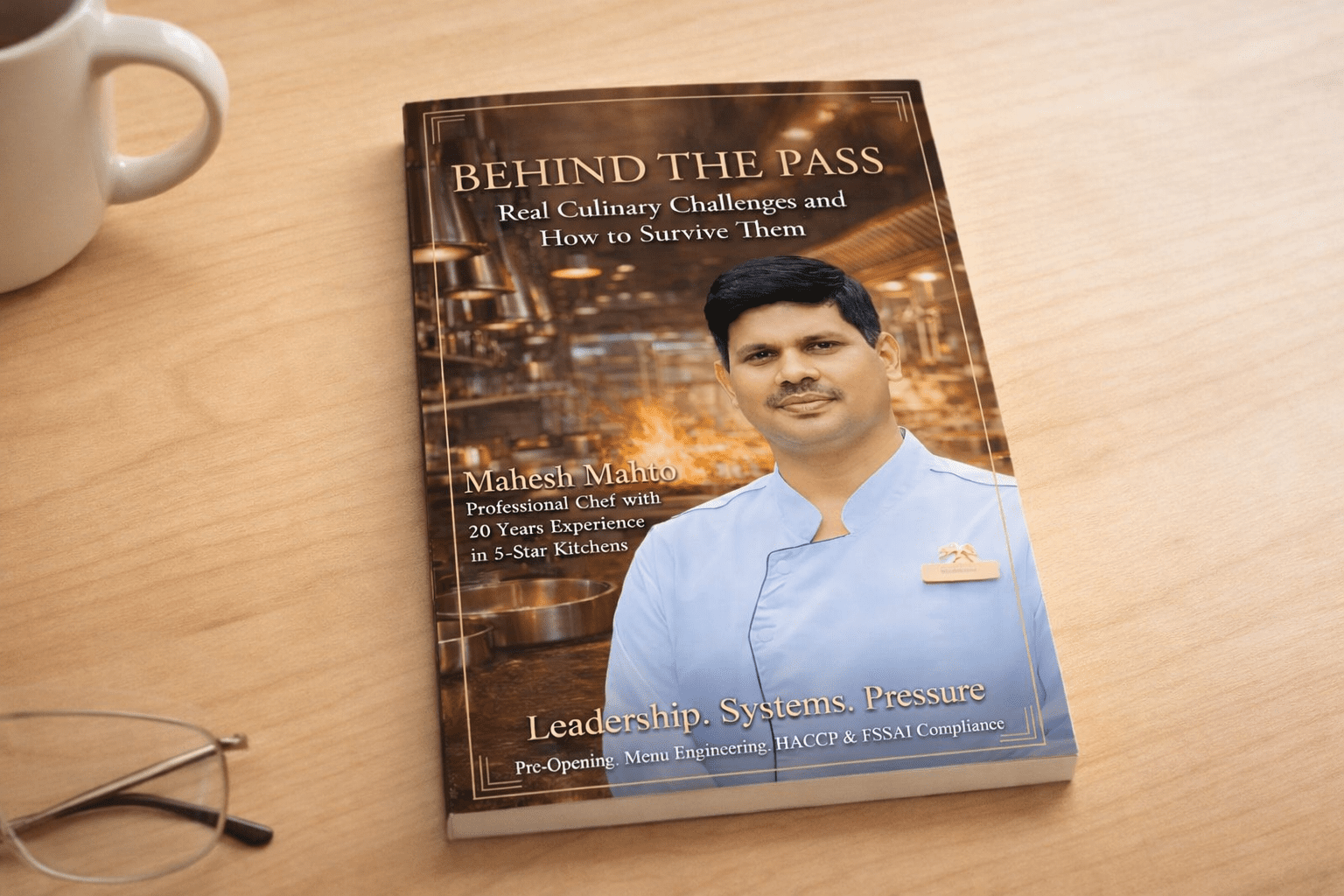
I’ll be honest, when I first picked up Behind the Pass: Real Culinary Challenges and How to Survive Them, I expected something very technical. Maybe even a bit dry. Kitchen systems, operations, flow… these things can easily turn into lectures if not handled well.
But somewhere between the early chapters on service collapse and the later sections on leadership and control, I found myself leaning in. Not because the writing is dramatic or flashy. It’s not trying to impress you. It’s actually doing something rarer. It’s telling the truth without decoration.
And I think that’s what stayed with me.
As someone who has spent years reading books across genres, and now as Editor-in-Chief at Deified Publication, I’ve seen many “insider” books. Some romanticize. Some complain. Some oversimplify. This one… doesn’t do any of that. It feels like someone standing inside a busy kitchen, looking around, and finally saying, “This is what’s really going wrong.”
And honestly, that felt refreshing.
What the Book Is About
At its core, Behind the Pass by Mahesh Mahto is not about food. That might sound strange at first, but once you start reading, it becomes very clear.
This book is about systems. About why kitchens fail even when the food is good. About what happens before things go wrong.
From the pages you shared, I noticed how early the book establishes this idea that service collapse is rarely sudden. There’s even a line that talks about how kitchens don’t fail in one moment. They gradually lose structure until everything gives way. That idea shows up again and again.
The chapters are structured in a very practical way. Each one takes a real problem. For example, inconsistent raw material, communication breakdown, poor prep discipline, or cost control issues. Then it breaks it down. Not just what happened, but why it happened. And then what should be done differently.
There’s a strong emphasis on things like prep as leadership, communication as a system, and even how menu design affects service pressure. I found that particularly interesting because most people think menus are just creative decisions. Here, they are treated as operational decisions.
One section that really stood out to me was about “The Pass as a Control Point.” The idea that the pass is not about cooking but about controlling information. That’s such a subtle shift, but once you see it, it changes how you look at the entire kitchen dynamic.
And then there’s the repeated idea that strong kitchens are built slowly. One correction at a time. Not through big motivational pushes, but through small structural improvements.
It’s not storytelling in the usual sense. But it is very grounded in real experiences.
What Stood Out to Me
There are a few things in this book that I kept coming back to.
First, the way Mahesh Mahto talks about pressure.
In many books, pressure is treated like an external force. Something you deal with. Here, it’s almost like a diagnostic tool. Pressure reveals what’s already broken. There’s a section that explains how pressure doesn’t create problems, it exposes them. And I remember thinking, this applies far beyond kitchens.
I’ve seen this in publishing too. Deadlines don’t create chaos. They show you where your process was weak to begin with.
Second, the idea that people are often blamed for system failures.
There’s a part that talks about how kitchens blame individuals when things go wrong, but the real issue is design. That line stayed with me. Because it’s uncomfortable. It asks you to look at leadership differently.
Instead of asking, “Who made the mistake?” it asks, “Why did the system allow this mistake to happen?”
That’s a harder question. And I think that’s why many people avoid it.
Third, the writing style itself.
It’s very direct. Almost stripped down. No unnecessary storytelling. No emotional layering. At first, I wondered if some readers might find it too straightforward. But after a while, I started appreciating it. It matches the subject. Kitchens don’t have time for long explanations. They need clarity.
And the book reflects that.
Though, if I’m being honest, I did feel that some sections could have benefited from a slightly more narrative touch. Not to make it dramatic, but to make it a bit more relatable for readers who are not from a culinary background.
Still, for the audience it is meant for, this approach makes sense.
The Emotional Core
This is not an emotional book in the usual way. There are no personal stories meant to make you feel something deeply.
But there is something else here. A kind of honesty that hits in a different way.
There’s a recurring theme of responsibility. Not in a motivational sense, but in a structural sense. The idea that leadership is not about reacting faster, but about designing better systems.
And I think that’s where the book connects emotionally, at least for me.
It made me think about how often we accept chaos as normal. Not just in kitchens, but in work, in teams, even in daily routines. And how rarely we step back and ask, is this actually designed well?
There’s also something very grounding about the way the book talks about consistency. Not as perfection, but as predictability. That shift felt important.
In 2026, where everything is about speed and output, this message feels especially relevant.
It doesn’t try to inspire you. But it does make you rethink things. And sometimes, that’s more valuable.
Who This Book Is For
This book is very clearly written for professionals.
If you are a chef, a kitchen manager, or someone working in hospitality, this will probably feel very real to you. You’ll recognize the situations. The breakdowns. The patterns.
If you’re a student in culinary school, I think this could be even more useful. Because it shows you what actually happens in real kitchens, not just what is taught in training environments.
For general readers, it depends.
If you enjoy understanding how systems work, or if you’re interested in leadership and operations, you might find this fascinating. There’s a lot here that applies beyond kitchens.
But if you’re looking for stories, personalities, or a more narrative driven experience, this might feel a bit technical at times.
And that’s okay. Not every book is meant for everyone.
What I appreciate is that the book knows exactly who it is speaking to. It doesn’t try to please everyone.
Final Thoughts
I keep thinking about one idea from this book.
That strong systems don’t eliminate pressure. They absorb it.
It sounds simple, but it changes everything.
Mahesh Mahto has written something very practical here. It’s not trying to impress you. It’s trying to help you see clearly. And in many ways, that makes it more powerful than books that rely on big ideas or emotional hooks.
As an editor, I value clarity. As a reader, I value honesty. And this book offers both.
Is it perfect? Not entirely. A bit more storytelling might have made it more accessible to a wider audience. But for its intended readers, it does exactly what it promises.
And I respect that.
FAQ
Is Behind the Pass worth reading?
Yes, especially if you work in hospitality or are interested in operational systems. It offers very practical insights that feel grounded in real experience.
Who should read Behind the Pass by Mahesh Mahto?
Chefs, kitchen managers, hospitality professionals, and culinary students will benefit the most. Others can still learn from its approach to systems and leadership.
What is Behind the Pass about?
It focuses on why kitchens fail, not because of recipes but because of systems, communication, and pressure. It explains how to fix these issues step by step.
Is this book beginner friendly?
Somewhat. It is clear and structured, but it assumes a certain level of familiarity with kitchen operations.

With over 11 years of experience in the publishing industry, Priya Srivastava has become a trusted guide for hundreds of authors navigating the challenging path from manuscript to marketplace. As Editor-in-Chief of Deified Publications, she combines the precision of a publishing professional with the empathy of a mentor who truly understands the fears, hopes, and dreams of both first-time and seasoned writers.