
Rating:
⭐⭐⭐⭐ (4.2 out of 5)
I’ll be honest, when I first picked up Pratidhwani: Echo of Emotion, I wasn’t expecting it to linger in my mind the way it did. I’ve read hundreds of short story collections over the years at Deified Publication, and usually you get a mix, some strong, some forgettable. But here, something felt different right from the beginning.
Maybe it was the simplicity. Or maybe it was the way these stories didn’t try too hard.
There’s this strange comfort in books that don’t shout to be noticed. They just sit there, almost gently, and then suddenly you realize they’ve said something important without making a big deal out of it.
And that’s exactly how this book felt to me.
What the Book Is About – More than just short stories
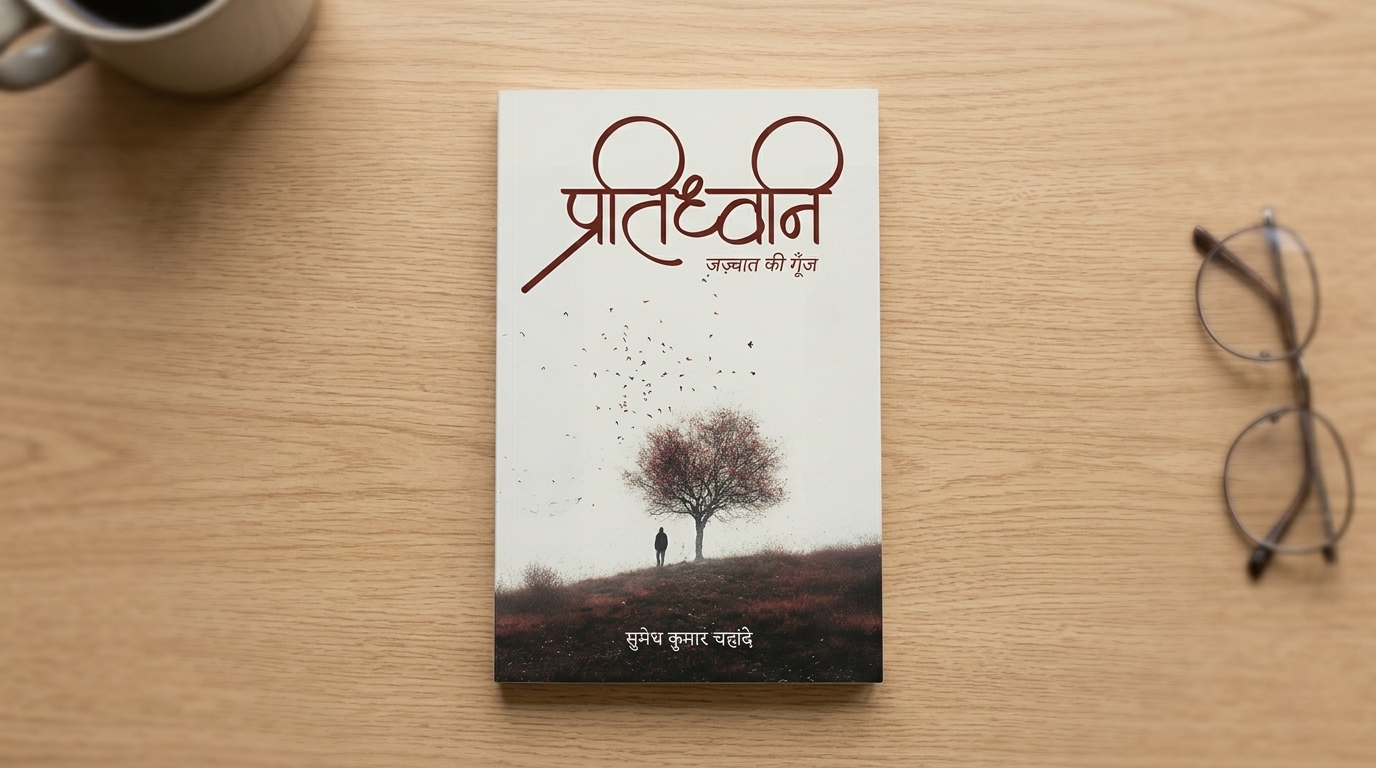
Pratidhwani by Sumedh Kumar Chahande is a collection of 19 short stories, each built around very ordinary moments. But the interesting part is how these moments slowly reveal something deeper.
Not in a dramatic, heavy way. More like… a realization you come to on your own.
From what I read, the stories move across different situations and characters. There’s Rahul traveling to Puducherry, carrying emotional weight that he doesn’t fully understand yet. There’s an elderly woman who becomes more than just a fellow traveler. There are relationships, missed chances, quiet realizations, and those moments where life quietly shifts direction.
I remember one part where Rahul reflects on how sometimes we think something is the end, but maybe it’s just a different beginning. That line didn’t feel like philosophy. It felt like something someone would think while staring out of a bus window.
Then there’s the story around the “trophy” which, at first, feels like a simple achievement narrative. But as it unfolds, it turns into something about perception. About what we celebrate and what we overlook. That image of a bird building a nest near a developing structure stayed in my head longer than I expected.
Another story, “Naav aur Chappu” had this beautiful metaphor about a boat and missing oars. It wasn’t loud or symbolic in an obvious way, but it made me think about incompleteness in life. About how we keep moving anyway.
And then there’s “Mamta.” That one felt very grounded. Observational. Almost like someone just watching life unfold and slowly understanding it.
So yes, it’s a short story collection. But it’s also a set of reflections disguised as stories.
What Stood Out to Me – The way it’s written
In my years reviewing books, I’ve noticed that short stories often struggle with balance. Either they try to say too much in too little space, or they end up feeling incomplete.
This book avoids both, most of the time.
What really stood out to me was the restraint in the writing. Sumedh Kumar Chahande doesn’t over-explain. He trusts the reader a lot. Sometimes maybe a little too much, but mostly it works.
For example, in the “Chair” story, Rahul’s internal conflict isn’t spelled out directly. It’s built through small details. His thoughts, his reactions, the way conversations unfold. It felt very real because that’s how people actually process things. Not in clear conclusions, but in fragments.
I also noticed how often conversations drive the stories. Not dramatic dialogues, but very normal, almost everyday conversations. Like the one between Rahul and the aunt. It didn’t feel like a scripted moment. It felt like something I’ve heard before in real life.
And that’s where the strength lies.
There’s also this recurring pattern where objects or situations carry deeper meaning. A telephone booth. A bookstore. A journey. A chair. But they are never forced into symbolism. They just exist, and slowly, meaning builds around them.
If I had to compare, it reminded me a bit of slice-of-life storytelling you find in Hindi literature. Not flashy, not experimental, but grounded.
That said, I do feel that a few stories could have been tighter. There are moments where the pacing slows down more than necessary. Some readers might feel that nothing much is “happening.” But I think that depends on what you expect from a book like this.
The Emotional Core – Where it actually connects
This is the part I kept coming back to.
What this book does well is not making you emotional in an obvious way. It doesn’t try to pull tears out of you. Instead, it creates situations where you recognize something from your own life.
That’s more powerful, in my opinion.
Like Rahul’s journey. It’s not just about travel. It’s about confusion, disappointment, and slowly understanding things that don’t make sense immediately.
There’s a moment where he realizes that what he thought was failure might not actually be failure. That felt personal. I’ve seen people go through that. I’ve felt that myself at different points.
And then the story about unspoken feelings left in a bookstore. That idea stayed with me longer than I expected. Because honestly, how many times do we leave things unsaid and then convince ourselves it was the right thing to do?
The emotional tone of the book is very human. Not dramatic. Not overly poetic. Just… honest.
Some parts hit differently, especially if you’ve gone through phases of self-doubt or quiet reflection.
Who This Book Is For – And who might not connect
I think this is important to say clearly.
This book is for readers who enjoy slow, reflective storytelling. People who like noticing small details. People who don’t need big plot twists to stay engaged.
If you’ve ever enjoyed sitting with your own thoughts, you’ll probably connect with this.
Also, if you like Hindi literature that feels close to real life rather than grand storytelling, this might work for you.
But if you’re someone who wants fast-paced stories, strong dramatic arcs, or clear resolutions, this might feel a bit underwhelming.
There are moments where the stories end softly. Not with closure, but with a feeling. And that’s not for everyone.
Final Thoughts – My honest take
As Editor-in-Chief at Deified Publication, I’ve learned to separate books that try to impress from books that simply express.
Pratidhwani falls in the second category.
It doesn’t try to be loud. It doesn’t try to prove anything. And because of that, it feels more genuine.
Is it perfect? No. Some stories could have been sharper. A few moments feel stretched. But overall, there’s sincerity here. And that matters.
I think Sumedh Kumar Chahande understands something important about storytelling. That sometimes, the smallest moments carry the biggest meaning.
And honestly, in 2026, when everything feels rushed and noisy, a book like this feels needed.
Not for everyone. But for the right reader, it will connect deeply.
FAQ
Is Pratidhwani worth reading?
Yes, especially if you enjoy reflective short stories. It’s not about action, it’s about observation and emotion.
Who should read Pratidhwani by Sumedh Kumar Chahande?
Readers who like slow, meaningful storytelling and relatable life moments will connect the most.
What is Pratidhwani about?
It’s a collection of 19 short stories based on simple life situations that reveal deeper truths over time.
Is Pratidhwani fast-paced or slow?
It’s definitely on the slower side. The focus is on feeling and reflection rather than plot movement.

With over 11 years of experience in the publishing industry, Priya Srivastava has become a trusted guide for hundreds of authors navigating the challenging path from manuscript to marketplace. As Editor-in-Chief of Deified Publications, she combines the precision of a publishing professional with the empathy of a mentor who truly understands the fears, hopes, and dreams of both first-time and seasoned writers.