
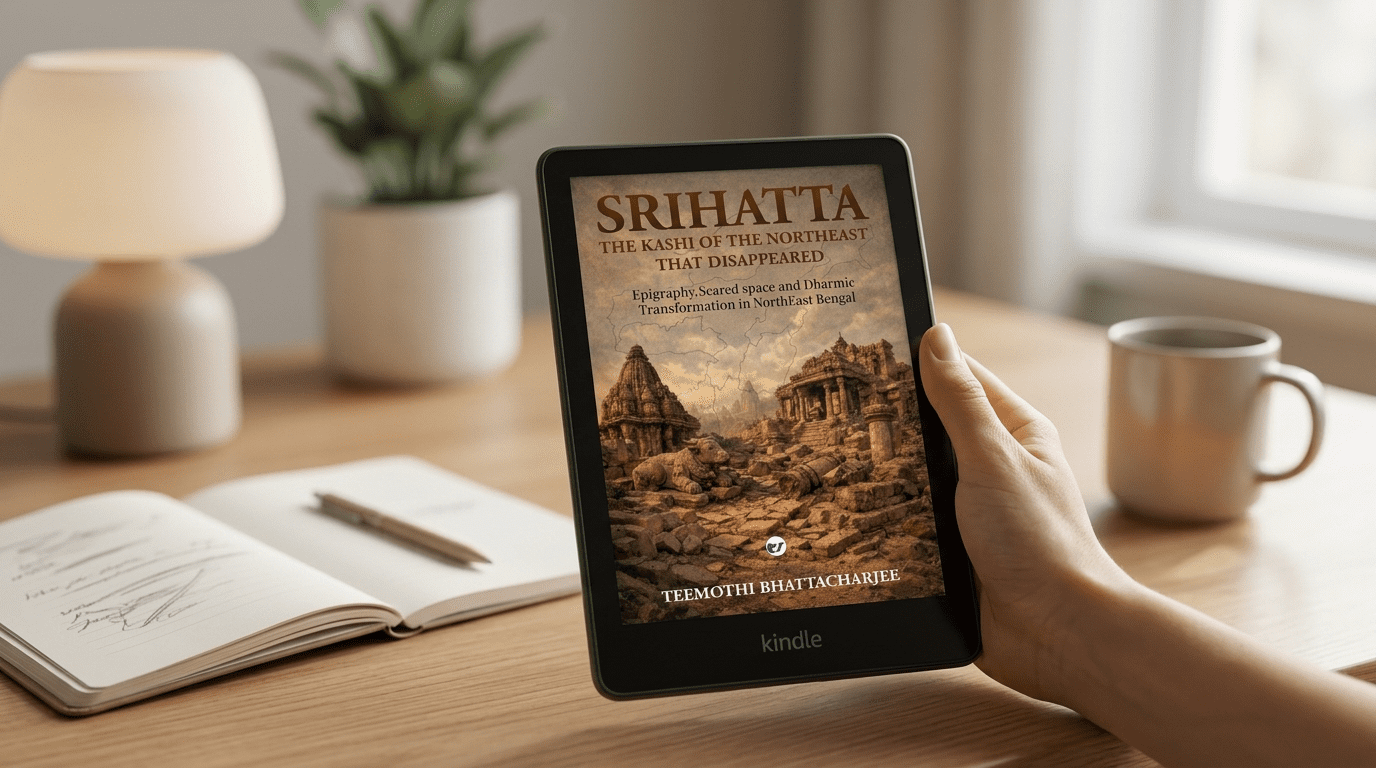
Rating:
⭐⭐⭐⭐ (4.2 out of 5)
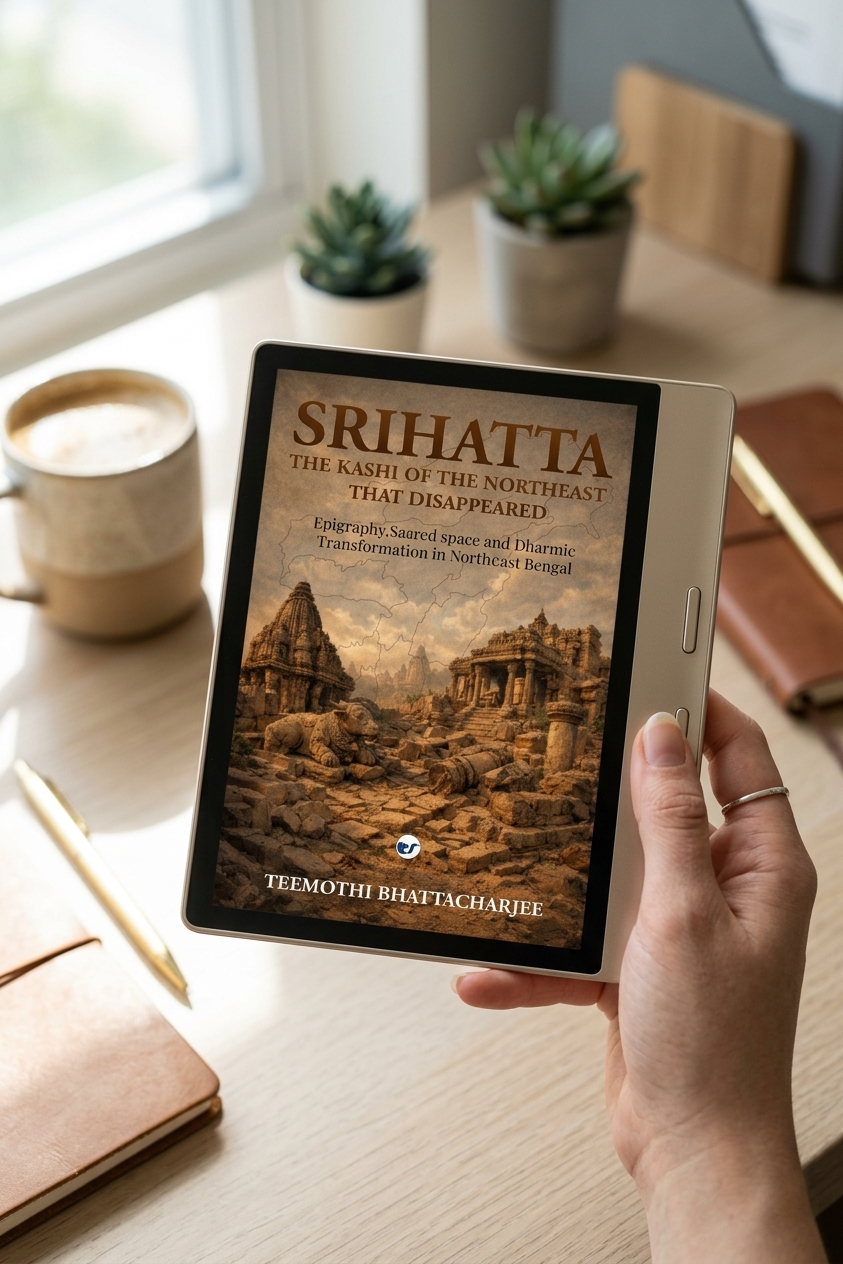
I don’t usually pause this long after finishing a historical study. But with Srihatta: The Kashi of the Northeast That Disappeared, I did. I kept sitting with it, almost like you sit after a long conversation that leaves you slightly unsettled but also strangely clearer.
As Editor-in-Chief at Deified Publication, I’ve read a fair number of academic history books. Some impress you with information, some with argument. Very few stay with you emotionally. This one did something unusual. It made absence feel real. Not absence as emptiness, but as something that was actively created, shaped, almost designed.
And that idea stayed with me.
What the Book Is About
At its surface, this book by Teemothi Bhattacharjee is about a region called Srihatta, which corresponds roughly to today’s Surma Barak valley. But honestly, calling it “about a region” feels too small.
The book is trying to answer a much deeper question. How does something that once clearly existed in inscriptions, administrative systems, sacred geography, and intellectual networks slowly disappear from mainstream history?
From the very first chapter, “Recovering Srihatta: Name, Geography, and Historical Silence,” you can see where this is going. The author does not accept the easy explanation that Srihatta faded away because of decline or collapse. Instead, he keeps returning to this idea that disappearance is not always physical. Sometimes it is historiographical.
There’s a line of thinking that comes up again and again. Srihatta did not vanish. It stopped being recorded in the systems that later historians depended on.
And that shift is explored through epigraphy, through how inscriptions worked as tools of power, through how sacred landscapes were reorganized, and through how language itself changed from Sanskrit to Persianate administrative systems.
One section that really caught my attention was the discussion on inscriptions as instruments of authority. Not just records. The book makes it clear that inscriptions did not merely describe reality. They created it. They formalised power, land rights, legitimacy.
So when inscriptions disappear, it is not just a loss of data. It is a collapse of a way of being visible in history.
That’s a powerful idea.
What Stood Out to Me
There’s a lot in this book, and I mean that in both a good way and a slightly overwhelming way.
But a few things stayed with me more strongly than others.
First, the idea of “disappearance without destruction.”
In the chapter on sacred displacement, the author makes it very clear that Srihatta was not wiped out through dramatic events like invasion or collapse. Instead, institutions lost patronage. Agraharas stopped functioning. Sanskrit inscriptions ceased. Temples did not necessarily vanish overnight, but they lost their role in public authority.
I’ve read many histories where change is dramatic, almost cinematic. Here, it feels administrative. Gradual. Almost invisible.
And maybe that is why it is more unsettling.
Second, the way the book connects economy, ritual, and power.
There’s a section where the author explains how markets, or hatta, were not just economic spaces. They were sacred spaces too. Places where ritual, trade, and authority intersected. The presence of Shaiva guardianship around trade routes and settlements was something I found particularly interesting. It reframes how we think about early Indian settlements.
You start to see that sacred geography was not separate from political geography. It was intertwined.
Third, the argument around Islamisation.
I appreciated that the book does not reduce this to simple narratives of conversion or cultural replacement. Instead, it situates change within structures of power, patronage, and administration.
There’s a very clear statement that religious transformation followed shifts in authority, not the other way around.
That kind of clarity is rare. And honestly, it takes courage to write like that in today’s climate where people often prefer simplified narratives.
Also, the section discussing how Sanskrit losing its administrative role led to a kind of epistemic break really stayed with me. It made me think about how language itself determines what survives in memory.
The Emotional Core
You wouldn’t expect an academic book like this to have an emotional core. But it does.
It’s subtle. It builds slowly.
There’s a recurring feeling while reading that something important is being forgotten not because it lacked value, but because the systems that recorded value changed.
And I think many of us can relate to that in a very personal way.
Have you ever felt like a phase of your life disappeared just because no one documented it, no one remembered it, no one spoke about it anymore?
That’s what this book feels like at times.
There’s also a kind of quiet frustration running through the text. Not anger, not nostalgia, but a steady insistence that the absence of evidence is not evidence of absence.
I found myself underlining that idea mentally again and again.
Who This Book Is For
Let me be honest here. This is not a light read.
If you are looking for a simple historical narrative with clear storytelling and quick takeaways, this might feel dense.
The language is academic. The arguments are layered. You have to stay with it.
But if you enjoy history that challenges how history itself is written, then this book can be deeply rewarding.
I would recommend it to readers interested in Indian history, especially those curious about regions that sit outside the usual spotlight of places like Gauda or Nadia.
Also, if you are someone who enjoys thinking about memory, power, and how narratives are constructed, this book offers a lot to sit with.
Even for writers and researchers, there is something valuable here. The methodology itself is interesting. The way the author uses epigraphy, sacred geography, and silence as sources is something you don’t often see brought together this way.
That said, I do think some readers might find certain sections repetitive or a bit heavy in terminology. At times, I wished for slightly simpler transitions between ideas. Not simplification, but just a bit more breathing space.
Final Thoughts
In my years of reviewing books, I’ve noticed that some books give you answers, while others give you better questions.
This one definitely belongs to the second category.
Srihatta: The Kashi of the Northeast That Disappeared does not try to romanticise the past. It does not try to fit into easy narratives. Instead, it keeps asking you to reconsider what it means for something to disappear.
And more importantly, who decides what is remembered.
I closed the book feeling a little unsettled, but also grateful. Grateful that someone took the effort to reconstruct a history that was not loudly erased, but slowly pushed out of view.
And maybe that’s the point.
Some histories don’t end. They are just waiting to be seen again.
FAQ Section
Is Srihatta worth reading?
Yes, especially if you enjoy deep historical analysis. It requires patience, but it rewards you with a fresh way of thinking about history.
Who should read Srihatta?
Readers interested in Indian historiography, epigraphy, and regional histories will find this book meaningful.
Is Srihatta an easy read?
Not really. It is academic and dense in parts, so it suits readers comfortable with analytical writing.
What is Srihatta about in simple terms?
It explains how a historically important region became invisible in mainstream history, not because it disappeared physically, but because the systems that recorded it changed.

With over 11 years of experience in the publishing industry, Priya Srivastava has become a trusted guide for hundreds of authors navigating the challenging path from manuscript to marketplace. As Editor-in-Chief of Deified Publications, she combines the precision of a publishing professional with the empathy of a mentor who truly understands the fears, hopes, and dreams of both first-time and seasoned writers.