
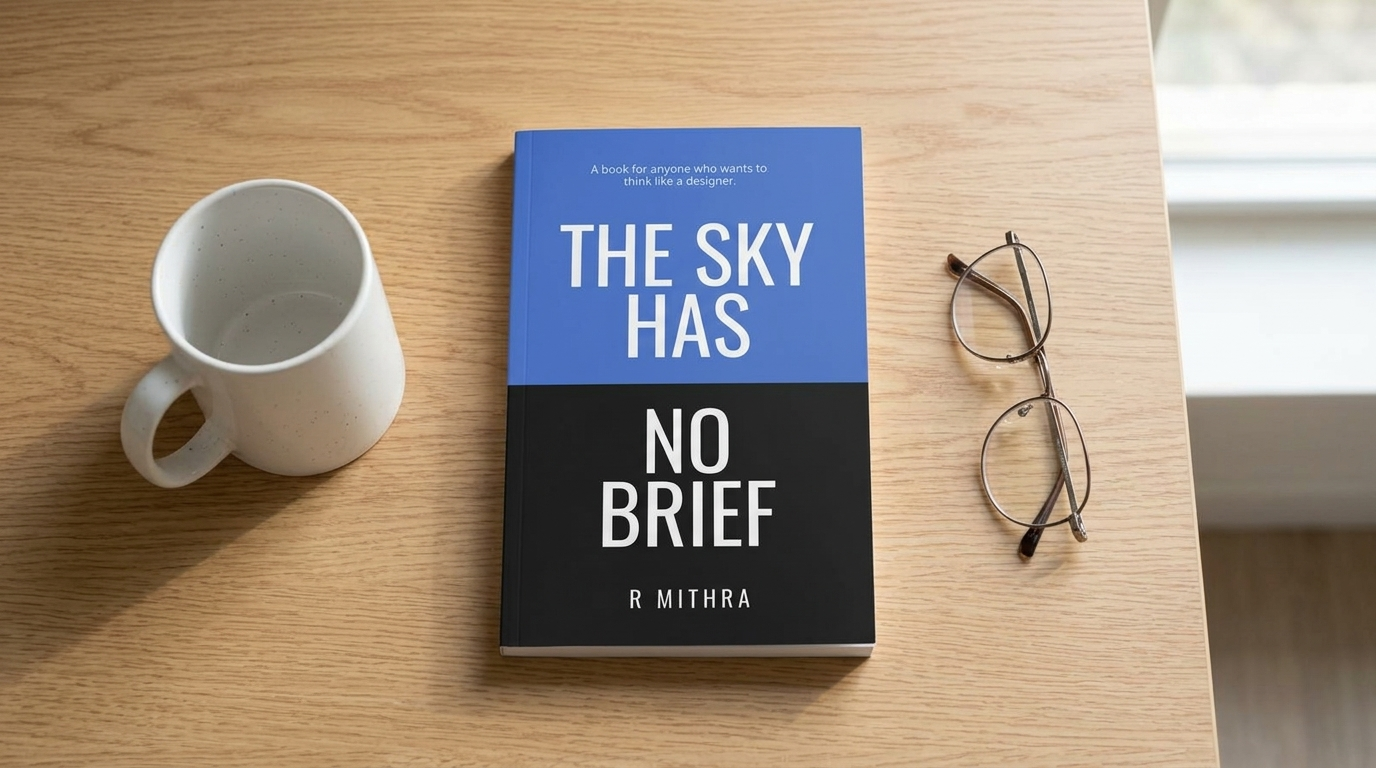
Rating:
⭐⭐⭐⭐ 1/2 (4.5 out of 5)
I read THE SKY HAS NO BRIEF slowly.
Not because it’s a difficult book. But because it kept making me pause.
You know those books where you read a page and then just… sit there for a bit? Not because something dramatic happened, but because something inside you shifted slightly. This felt like that.
In my years at Deified Publication, I’ve gone through countless books on design, creativity, thinking. Many of them are structured, polished, full of frameworks. Useful, yes. But sometimes they feel like they’re trying to teach you a system before understanding you as a person.
This one felt different.
It didn’t rush to teach.
It kept reminding.
And honestly, I wasn’t expecting that.
What the Book Is About
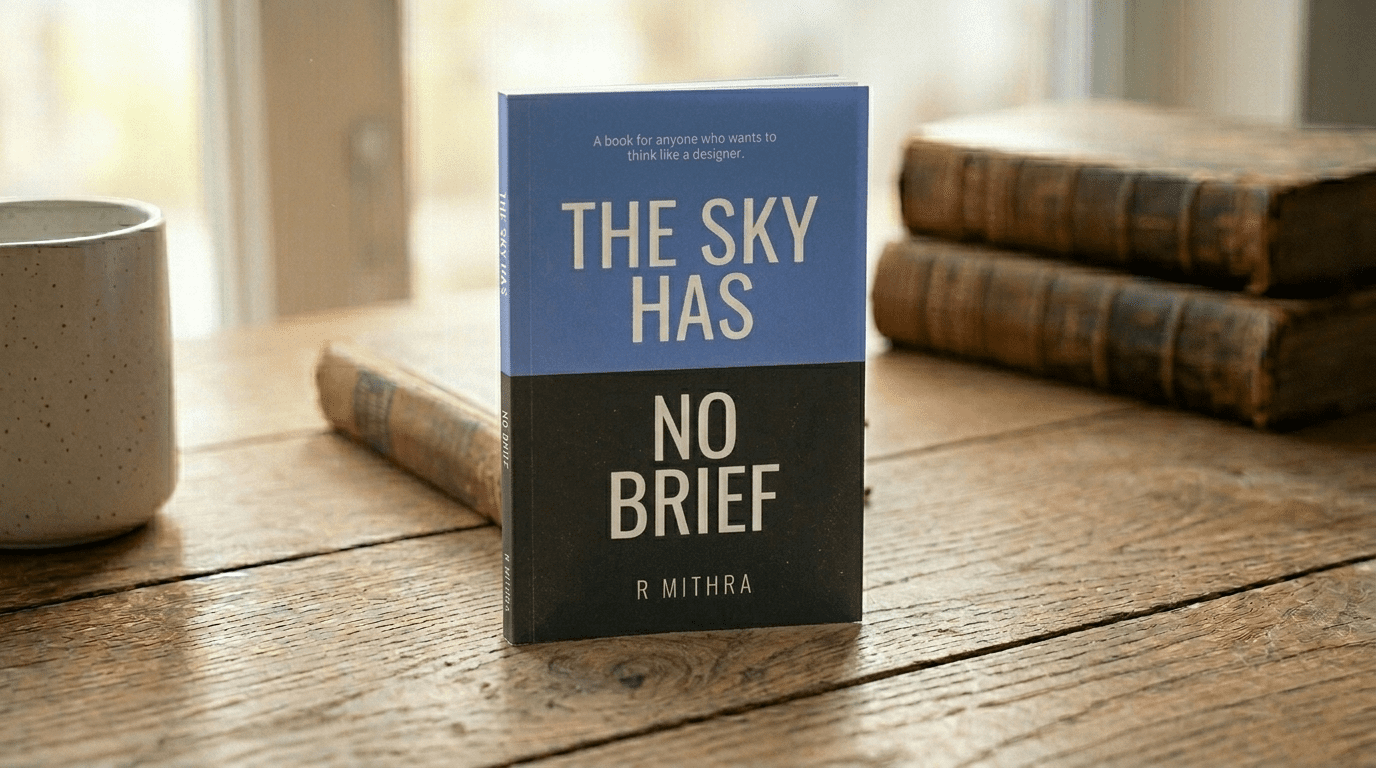
At first glance, THE SKY HAS NO BRIEF by R Mithra might sound like a design book. The subtitle says it clearly. A book for anyone who wants to think like a designer.
But I think calling it just a “design book” would be a bit limiting.
It’s more about how you see the world.
The book begins with a simple but powerful idea. That every human being is already a designer. Not in the professional sense, but in the instinctive sense. The way a child arranges things, builds something out of nothing, feels satisfaction in creating something personal.
And that hit me.
Because somewhere along the way, most of us lose that instinct. Not because we forget it, but because it gets buried under rules, deadlines, expectations.
The book is structured in parts that gradually expand your thinking. It starts with this idea of returning to your original instinct. Then it moves into understanding two worlds. The real world of requirements and the thinking space of imagination. And then it goes deeper into how you approach problems before you even open any tool.
There’s a strong emphasis on thinking before making. In fact, the author keeps returning to this idea in different ways. That execution without thinking leads to work that looks right but feels empty.
And I think that’s the core of the book.
Not how to design.
But how to think before you design.
What Stood Out to Me
There are quite a few moments in this book that stayed with me, but a few really stood out.
One is the idea that “everybody is a designer.”
It sounds simple. Almost obvious. But the way it’s explained makes you reconsider what design actually means. It’s not limited to people with software skills or portfolios. It’s the flower vendor arranging a bouquet, the teacher structuring a lesson, the child creating something out of scraps.
I kept thinking about that.
Because it shifts design from being a profession to being a way of seeing.
Another thing that stayed with me is the distinction between making something look good and making something feel right.
The book says very clearly that these are not the same thing. And I think that’s something many designers struggle with, especially early on. You learn tools, techniques, visual principles. But the deeper question is always, how does this make someone feel?
There’s also this beautiful concept of the “two worlds.”
The real world, which is about requirements, deadlines, business needs. And the thinking space, which is about imagination, emotion, human experience.
And design happens somewhere in between.
I liked how the book doesn’t treat these as separate phases, but as something you constantly move between.
Another moment that stayed with me is the story of the arrow and the eye.
That whole reference from the Mahabharata where Arjuna says he sees only the eye.
It’s used to explain clarity in design. Not getting lost in everything else. Finding the one thing that actually matters.
I’ve read a lot of books that talk about focus. But this example made it feel… simpler.
And more real.
Also, the way the book talks about “the problem underneath the problem” felt very practical. There’s an example using something as simple as biryani to explain storytelling and experience design.
It sounds unusual, but it works.
Because suddenly something abstract becomes relatable.
I could actually imagine a team sitting in a room and that analogy shifting how they think.
The Emotional Core
If I had to describe how this book feels, I’d say it feels like a conversation with someone who has been through the industry long enough to stop pretending.
There’s no urgency in the tone. No pressure to “be better” immediately.
Instead, there’s this consistent reminder that you already have what you need. You just need to become aware of it.
And I think that’s where the emotional strength of the book lies.
There’s a line in the preface where the author talks about how tools keep changing, but thinking remains constant.
That stayed with me more than I expected.
Because right now, in 2026, everything feels fast. Tools are evolving constantly. AI is everywhere. There’s this underlying anxiety in creative fields about relevance.
And this book doesn’t deny that.
But it gently shifts the focus back to something more stable. Your thinking. Your way of seeing.
There’s also something quietly reassuring about the idea that you don’t need to chase every tool to stay relevant. You need to stay curious.
That felt grounding.
At the same time, I’ll say this. The book is reflective. It doesn’t try to entertain you in a conventional way. So if you’re expecting dramatic stories or fast paced reading, this might feel slow.
But maybe that’s the point.
It asks you to slow down.
Who This Book Is For
I think THE SKY HAS NO BRIEF will resonate most with a certain kind of reader.
If you are a design student or early in your career, this could be very useful. Not because it gives you step by step instructions, but because it shapes how you think before you even begin.
If you are already working in design, especially in fast paced environments, this might feel like a reset. A reminder of why you started in the first place.
Even beyond design, I think this book is relevant for anyone who creates. Writers, marketers, educators, entrepreneurs.
Because the core idea is not limited to design.
It’s about thinking with intention.
That said, this might not be for everyone.
If you’re looking for very structured frameworks, tools, or technical guidance, you might feel like something is missing.
This book is more about reflection than instruction.
And that requires a certain patience from the reader.
Final Thoughts
I kept thinking about the title even after I finished the book.
THE SKY HAS NO BRIEF.
It’s a simple line, but it carries a lot.
It suggests freedom, yes. But also responsibility. Because if there’s no brief, then the direction comes from you.
And I think that’s what the book is trying to remind you.
Not to reject structure. Not to ignore tools. But to not let them define how you think.
There are moments where the ideas repeat slightly across chapters. And sometimes the tone leans a bit philosophical.
But I didn’t mind that too much.
Because repetition, in this case, feels intentional. Like the author is trying to bring you back to the same idea from different angles until it really lands.
And eventually, it does.
FAQ
Is THE SKY HAS NO BRIEF worth reading?
I think yes, especially if you’re interested in design thinking or creativity. It offers a different perspective from typical design books.
Who should read THE SKY HAS NO BRIEF?
Design students, professionals, and anyone who wants to think more intentionally about their work.
Is this book technical or philosophical?
It leans more toward reflection and mindset than technical instruction.
Does it help improve design skills?
Indirectly, yes. It helps you think better, which eventually improves how you design.

With over 11 years of experience in the publishing industry, Priya Srivastava has become a trusted guide for hundreds of authors navigating the challenging path from manuscript to marketplace. As Editor-in-Chief of Deified Publications, she combines the precision of a publishing professional with the empathy of a mentor who truly understands the fears, hopes, and dreams of both first-time and seasoned writers.