
Rating:
⭐⭐⭐⭐ (4.4 out of 5)
I don’t usually sit with career guides the way I sit with stories. But this one surprised me a little. Not because it tries to be emotional or dramatic. It doesn’t. It’s actually very direct. Almost like someone older, experienced, sitting across you and saying, “Listen carefully, this is how it really works.”
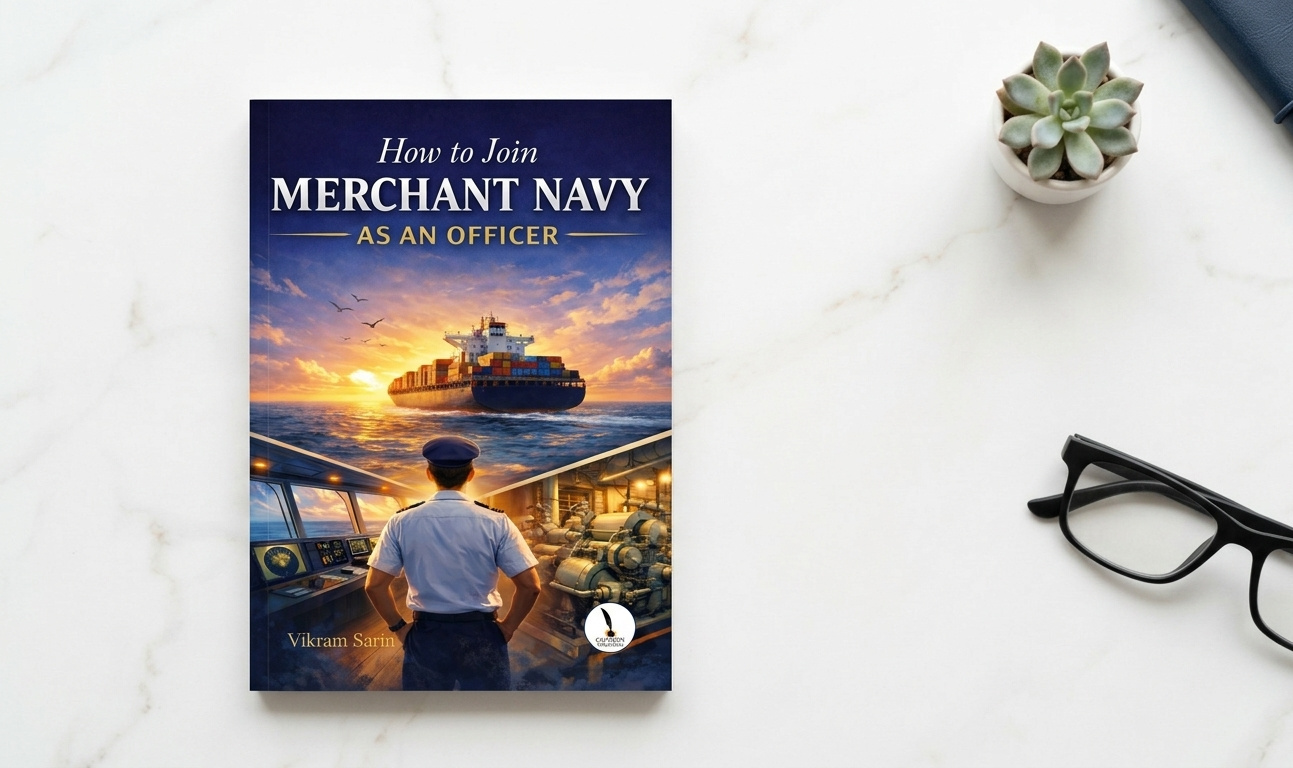
How to Join Merchant Navy as an Officer by Vikram Sarin felt like that kind of conversation.
And maybe that’s why I kept reading.
In my years as an editor at Deified Publication, I’ve seen many books aimed at students. Some are too technical, some are overly motivational, and some honestly confuse more than they help. This one sits somewhere in between. It tries to simplify a complicated path without pretending it’s easy.
And I appreciate that.
What the Book Is About
At its core, this book is exactly what the title promises. It’s a structured guide for students who want to join the Merchant Navy as officers. But what makes it slightly different is the way it builds that structure step by step, almost like a roadmap you can follow from school to ship.
From the very beginning, the author makes one thing clear. This is not a shortcut career.
That line stayed with me.
The book starts by explaining what the Merchant Navy actually is. Not in abstract terms, but in very practical language. It talks about how more than eighty percent of global trade moves through ships, how everyday things we use have likely traveled across oceans, and how this profession quietly supports the world.
Then it moves into deeper sections. Different types of ships. Life at sea. The difference between deck and engine departments. Career progression. Exams. Medical fitness. Interviews. Even things like avoiding fraud and choosing the right institute.
It’s not trying to impress you with complexity. It’s trying to make sure you don’t make mistakes.
And honestly, that intention shows throughout.
What Stood Out to Me
What I noticed most was the clarity.
This book doesn’t assume that the reader already knows anything. It starts from very basic questions. What is Merchant Navy. What subjects should you choose after Class 10. Why is PCM important. How IMU CET works. What documents you need. What life actually feels like on a ship.
There’s a section on life at sea that I kept thinking about. The idea of a ship as a small floating world, with officers, engineers, cooks, routines, watches, storms, long months away from home.
It’s described very simply, but you can almost see it.
And then there’s the part about staying away from family. Missing festivals, birthdays, normal life. That part isn’t softened or hidden. It’s stated clearly. Which I think is important, because many career guides only talk about salary and travel.
This one talks about the cost as well.
Another thing that stood out is how the book separates the deck and engine career paths. It doesn’t treat them as interchangeable. It explains what each role involves, what kind of person might fit each path, and how progression happens step by step.
Deck Cadet to Captain. Junior Engineer to Chief Engineer.
There’s a kind of honesty in showing that progression takes years. Exams. Sea time. discipline.
No shortcuts.
I also liked the repeated emphasis on discipline. It comes up again and again. In studies, in training, in life at sea. It almost feels like the backbone of the entire book.
And maybe that’s intentional.
The Emotional Core
This is not an emotional book in the usual sense. It doesn’t try to move you through storytelling or characters.
But there is something underneath.
A kind of quiet seriousness.
I think it comes from the author’s own experience. Knowing that students are often misled. That parents are confused. That wrong decisions can cost years.
There’s a line in the preface where he talks about meeting students who had wrong information or were misled by agents.
That part felt real to me.
Because I’ve seen this happen. Not just in maritime careers, but in many professional paths. Students relying on half knowledge, advertisements, or someone’s opinion, and then realizing too late that things are different.
This book tries to prevent that.
It keeps bringing the reader back to reality. Check official sources. Verify institutes. Don’t trust shortcuts. Stay disciplined.
There’s something reassuring about that tone. Not comforting in a soft way, but steady.
Like someone who has seen enough to know what matters.
Who This Book Is For
I think this book is very clearly written for a specific kind of reader.
Students in Class 9, 10, 11, 12 who are considering Merchant Navy as a career.
Also parents, honestly. Because there are sections that directly address what parents should verify, what they should be careful about, and how they can support their child.
If you are already in the field or looking for advanced technical knowledge, this might feel too basic.
But if you are at the stage of asking, “Where do I even begin?” then this book makes sense.
It doesn’t overwhelm you. It guides you.
At the same time, I will say this. The writing style is very straightforward. Almost instructional. If you are someone who prefers a more engaging or narrative driven approach, you might find it a bit repetitive in places.
Some chapters follow a very similar pattern. Point by point explanations, summaries, structured lists.
But then again, maybe that’s exactly what a student needs when trying to understand something complex.
Clarity over style.
Final Thoughts
I think what stayed with me after finishing How to Join Merchant Navy as an Officer is not a single chapter or section, but the overall tone.
It doesn’t promise you an easy life.
It doesn’t try to sell a dream without showing the effort behind it.
It simply lays out the path and says, if you are willing to work for it, this is possible.
And in 2026, when there is so much noise around careers, quick success, shortcuts, this kind of clarity feels valuable.
It’s not perfect. It can feel repetitive. It leans heavily on structure rather than storytelling.
But it is honest.
And sometimes, that’s exactly what a student needs.
FAQ
Is How to Join Merchant Navy as an Officer worth reading?
I think if you are serious about this career, it’s genuinely useful. It gives a clear roadmap and avoids confusion.
Who should read this book?
Students after Class 10 or 12 who are considering Merchant Navy, and parents who want to understand the process.
Does the book explain real life at sea?
Yes, in a simple and practical way. It talks about routines, challenges, and time away from family.
Is this book too basic?
Maybe for advanced readers. But for beginners, that simplicity is actually helpful.

With over 11 years of experience in the publishing industry, Priya Srivastava has become a trusted guide for hundreds of authors navigating the challenging path from manuscript to marketplace. As Editor-in-Chief of Deified Publications, she combines the precision of a publishing professional with the empathy of a mentor who truly understands the fears, hopes, and dreams of both first-time and seasoned writers.