
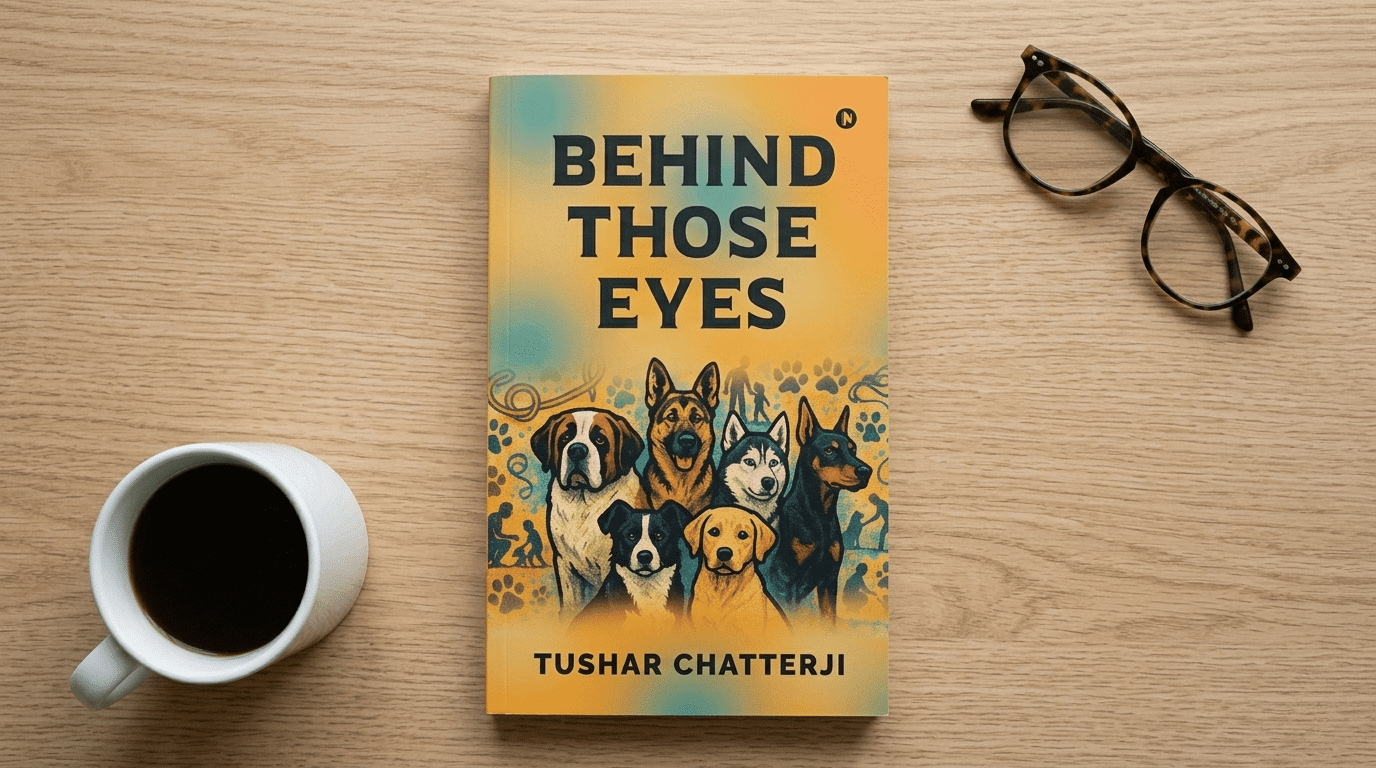
Rating:
⭐⭐⭐⭐ (4.5 out of 5)
I picked up Behind Those Eyes thinking it would be a simple book about dogs. Maybe heartwarming, maybe a little emotional, the kind you read on a slow Sunday afternoon and then move on.
But I don’t think I moved on.
There’s something about reading a story told from a dog’s perspective that unsettles you in a very gentle way. Not loudly. Not dramatically. It just lingers. I found myself pausing mid-page, especially in the early chapters, thinking about the way we look at strays on the road… and more importantly, how we don’t look at them at all.
In my years as an editor at Deified Publication, I’ve read quite a few animal-centered narratives. Some try too hard to be emotional. Some become overly philosophical. This one sits somewhere in between. And I think that’s what makes it work.
What the Book Is About
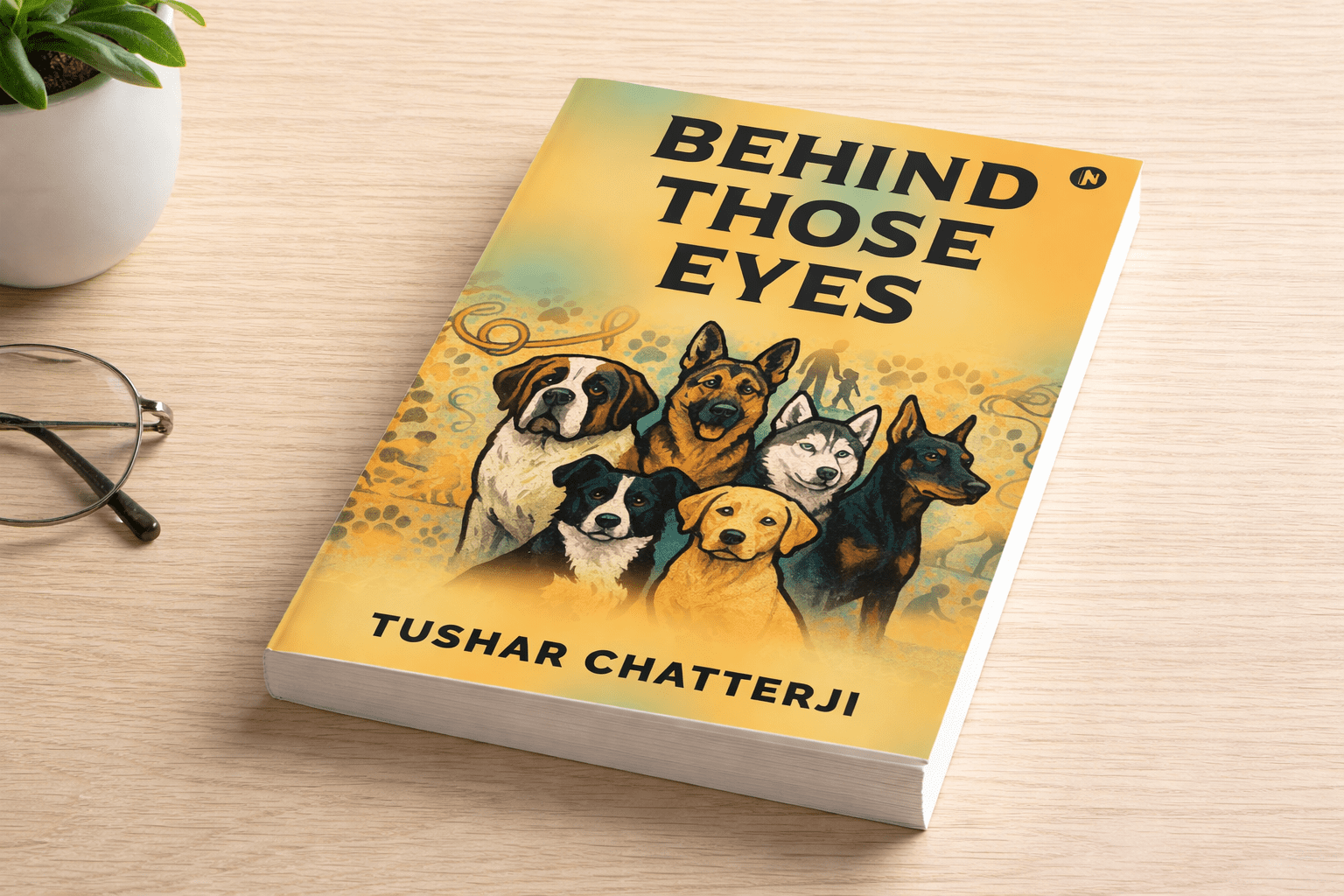
At its core, Behind Those Eyes by Tushar Chatterji is a collection of interconnected stories seen through the lives of six dogs. But that description feels a bit too neat for what the book is actually doing.
The first story, “From Stray to Stay,” introduces us to Piku, and honestly, it sets the tone for everything that follows. The story begins in the harshest possible way. A stray pup, born out of chance, abandoned by circumstance, trying to make sense of a world that is loud, cold, and completely indifferent.
What struck me immediately is the narrative voice. It’s reflective, almost philosophical at times, but still grounded in sensory experience. The rain isn’t just rain. It’s cold, sharp, intrusive. The city isn’t just a setting. It’s overwhelming, noisy, confusing.
There’s a moment where the pup steps out into the world for the first time and everything hits at once. Sound, smell, movement. And you realize how terrifying existence must feel when you don’t even understand what anything is yet.
Then comes the turning point. A human notices.
That shift, from being unseen to being seen, is written in such a subtle way that it almost slips past you. But it changes everything.
From there, the story slowly transforms into something warmer. Piku finds a home, a family, a name. There’s Ma, Papa, and Rhea, and what I appreciated is that the book doesn’t suddenly become perfect and idealistic. It stays grounded in small, everyday moments. Learning what “no” means. Understanding tone before language. Figuring out love through repetition and presence.
The later parts of Piku’s story… I’ll be honest, they stayed with me the most. Especially the sections where time begins to show. Where the body slows down but the bond deepens. There’s something about watching a pet age through their own perspective that feels almost too intimate.
And then, beyond Piku, the book expands into other lives. Other dogs, other stories, each carrying their own mix of belonging, loss, loyalty, and confusion.
What Stood Out to Me
I think what stood out most in Behind Those Eyes Book Review is how the author handles perspective.
Writing from a dog’s point of view is tricky. It can easily become either too human or too simplistic. Here, it leans toward being human in reflection but stays animal in experience. That balance isn’t perfect all the time, but when it works, it really works.
For example, Piku doesn’t understand words in the beginning. She understands tone. Emotion. Rhythm. That detail feels very true. I’ve seen it in real life too. Dogs don’t need language to understand you. Sometimes they understand you better without it.
There’s also a recurring theme of observation. The way humans behave is almost… strange when seen from the outside. The constant rushing, the noise, the distraction. There’s a part early in the story where the pup describes humans as chaotic beings moving too fast for no clear reason, and I actually smiled at that. It felt accurate in a way that’s slightly uncomfortable.
Another thing I appreciated is the emotional pacing. The book doesn’t rush into heavy moments. It lets them build. The childhood phase, the playful chaos with Rhea, the small domestic details, all of that creates a foundation. So when things start to shift later, when aging and loss enter the picture, it hits harder.
If I had to mention something that didn’t fully land for me, it would be the language at times. The prose can get a bit elaborate, especially in the early chapters. Phrases like “cosmic arithmetic” or the stylized wordplay might feel a little too self-aware for some readers.
But at the same time, I get why it’s there. The author is trying to elevate the perspective, to give voice to something that doesn’t usually get one.
The Emotional Core
This is where the book really sits.
Not in plot. Not in structure. In feeling.
There’s a moment later in Piku’s life where she realizes her family is preparing for a future without her. It’s not said directly. It’s overheard. Felt through tone, through pauses in conversation, through the way hands linger a little longer than before.
I didn’t expect that to hit as hard as it did.
Because it reminded me of something very real. The way animals experience time differently, but relationships just as deeply. Maybe even more purely.
There’s also something about the idea of being “seen.” The book keeps coming back to it. A stray that is ignored by everyone suddenly becomes the center of someone’s world. That shift, from invisibility to belonging, is probably one of the most powerful emotional threads here.
And then there’s loyalty. Not the dramatic, heroic kind. The everyday kind. Waiting at the door. Listening to a voice. Matching someone’s mood without being asked.
Honestly, I teared up a little in parts. Not because the book tries to make you cry, but because it reminds you of things you’ve felt before.
Who This Book Is For
I think Behind Those Eyes will resonate most with:
- People who have had pets and understand that bond without needing explanation
- Readers who enjoy emotional, character-driven storytelling
- Anyone who has ever looked at a stray and wondered about its life
- Those who prefer reflective, slower narratives over fast-paced plots
At the same time, this might not be for readers looking for a light, breezy read. It has moments of warmth, yes, but it also carries weight.
And if you’re someone who prefers very minimal, straightforward writing, the slightly poetic style might feel a bit much in places.
Final Thoughts
As I finished Behind Those Eyes, I kept thinking about how easy it is to overlook entire lives happening around us.
Dogs we pass on the street. The way they look at us. The way we look away.
This book doesn’t try to guilt you. It just gently shifts your perspective.
In 2026, when everything feels fast and transactional, a story like this feels… grounding. It reminds you to slow down. To notice. To care, even in small ways.
Is it perfect? No. There are moments where the language could have been simpler. A few sections feel stretched.
But does it stay with you?
Yes. It does.
And maybe that’s enough.
FAQ Section
Is Behind Those Eyes worth reading?
I think it is, especially if you connect with animal stories and emotional narratives. It’s not light, but it’s meaningful.
What is Behind Those Eyes about?
It’s a collection of stories told through the lives of dogs, focusing on love, loss, belonging, and the human-animal bond.
Who should read Behind Those Eyes by Tushar Chatterji?
Pet lovers, reflective readers, and anyone curious about seeing life from a different perspective.
Is this book sad or uplifting?
It’s both. There are warm, joyful moments, but also parts that stay heavy for a while.

With over 11 years of experience in the publishing industry, Priya Srivastava has become a trusted guide for hundreds of authors navigating the challenging path from manuscript to marketplace. As Editor-in-Chief of Deified Publications, she combines the precision of a publishing professional with the empathy of a mentor who truly understands the fears, hopes, and dreams of both first-time and seasoned writers.