
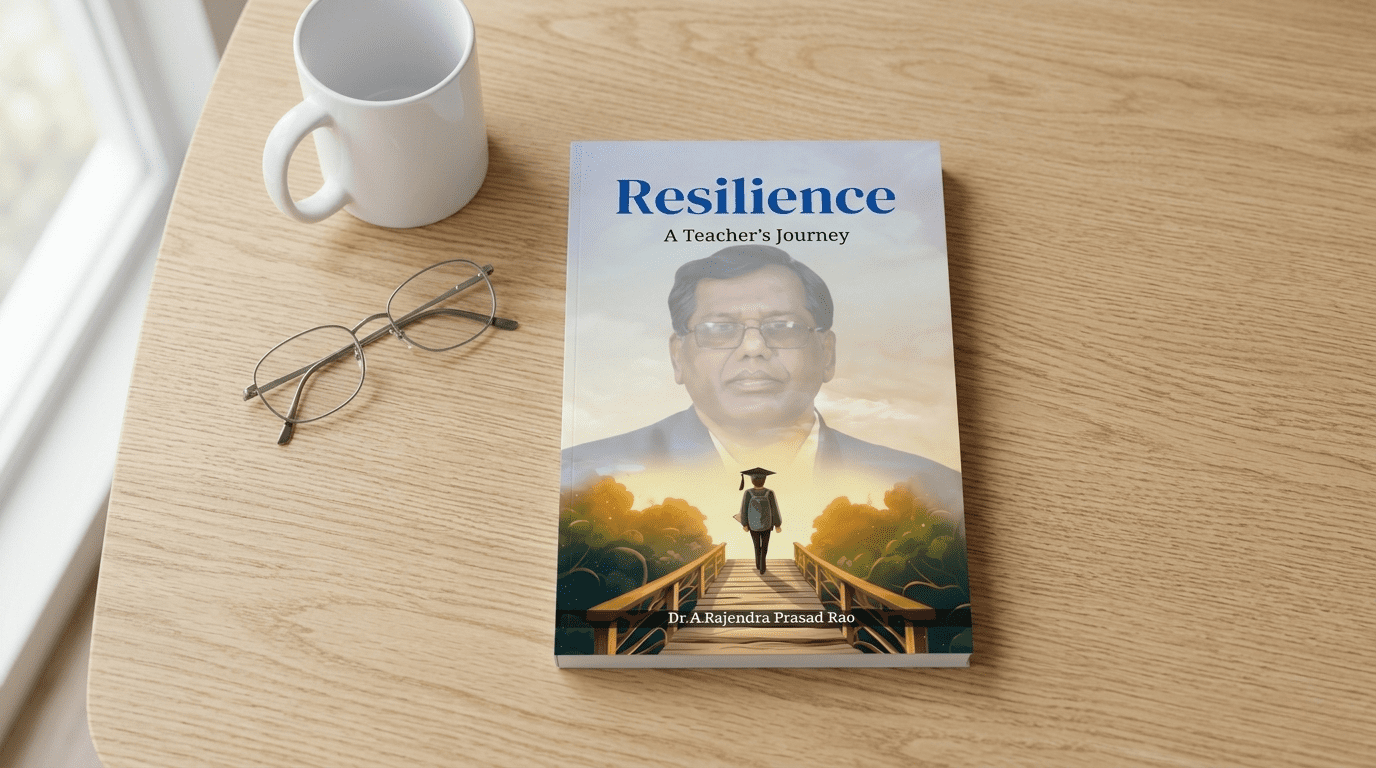
Rating:
⭐⭐⭐⭐ (4.6 out of 5)
I finished reading Resilience: A Teacher’s Journey a couple of days ago, and I’ve been carrying parts of it with me since. Not in a dramatic way. More like… small flashes. A mother stepping into a crowd to protect her husband. A boy walking barefoot to school. A teacher noticing a struggling student and quietly changing his life.
In my years as an editor at Deified Publication, I’ve read many autobiographies. Some feel distant, like a list of achievements. Some feel polished to the point that the human disappears. This one isn’t like that. It’s raw in places, a little uneven, sometimes repetitive, but deeply, unmistakably human.
And honestly, that matters more than perfect writing.
What the Book Is About
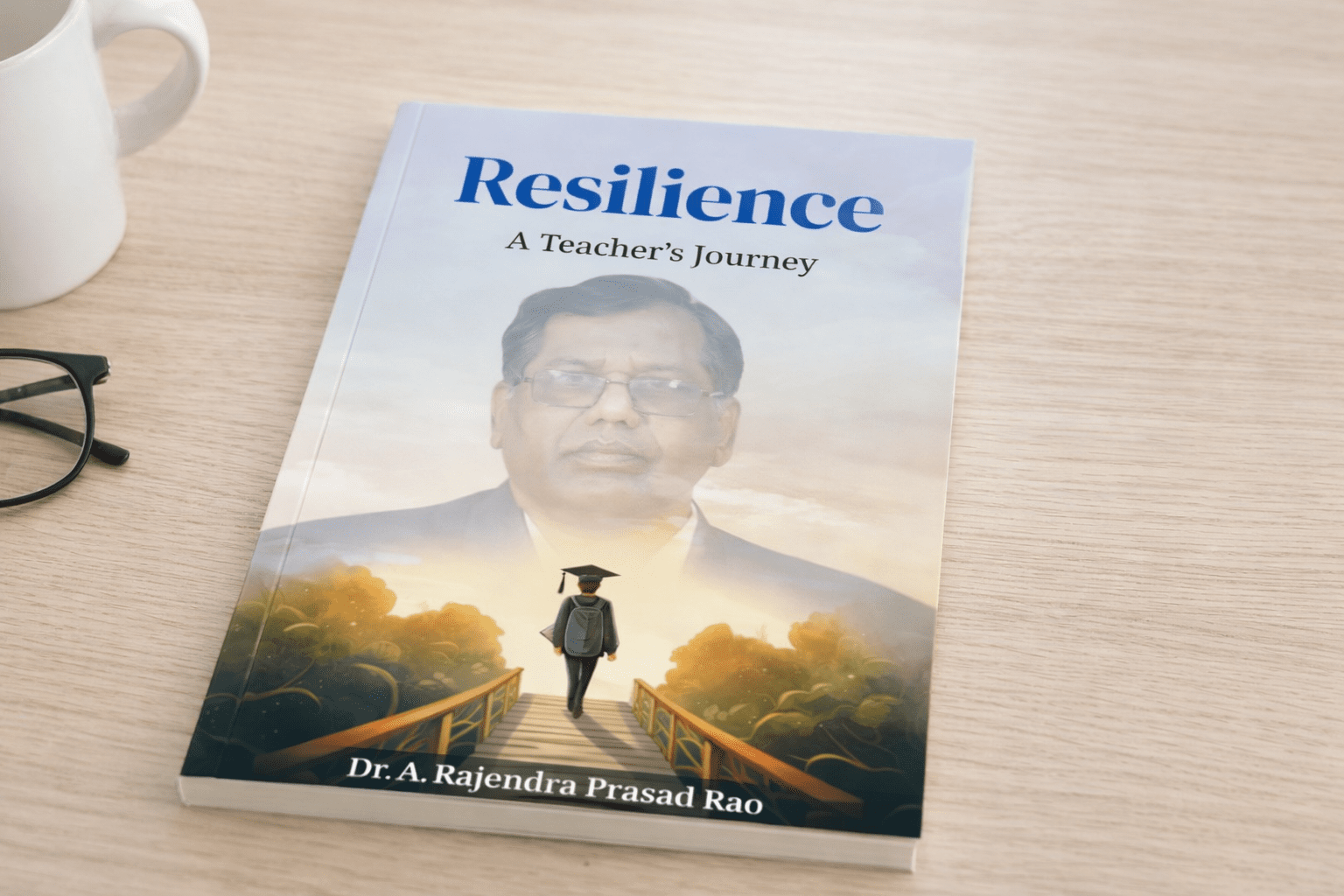
At its core, Resilience: A Teacher’s Journey by Dr. A. Rajendra Prasad Rao is exactly what the title suggests. It traces a life that begins in a rural Telangana village and unfolds across decades shaped by hardship, education, loss, and purpose.
He was born in 1962 in Chityal village, into a large agricultural family rooted in tradition. The early chapters spend time on village life, and I appreciated that he doesn’t romanticize it. Yes, there is warmth, but there is also hierarchy, superstition, and struggle. The description of farming life, the dependence on monsoons, and the physicality of daily work feels very lived-in.
What stayed with me early on was the complexity of his family. Multiple marriages, step-siblings, layered relationships. It could have become confusing, but instead, it feels like a reflection of a certain time and place in India that many readers will recognize, especially if they’ve grown up in similar environments.
Then comes a turning point that honestly shook me a bit. There’s an incident where his father, a knowledgeable man deeply engaged in philosophy, astrology, and scriptures, becomes the target of jealousy and is accused of practicing black magic. The situation escalates to the point where a mob gathers. And then his mother steps in. She breaks social norms, enters the crowd, and physically pulls her husband away to safety.
That moment… I paused there.
Because you can feel the fear, the tension, and also the quiet strength of someone who refuses to let things collapse.
From there, the story moves through his school life, his growing love for education, and the influence of teachers who shaped him. One small moment I really liked was when he incorrectly answered “good, gooder, goodest” in class and got humiliated. It’s such a small thing, but the way he describes it, you can see how that embarrassment turns into determination.
And then comes poverty. Real, uncomfortable poverty. Walking kilometers to school. Living in rented rooms. Going hungry. Wearing a dhoti to class because there were no proper clothes. Those details don’t feel inserted for effect. They just… exist.
There’s also this beautiful thread of mentorship. His headmaster, Sri Puram Radhakishan, becomes a kind of anchor in his life. Not just academically, but emotionally. Supporting him, guiding him, even funding parts of his education. I’ve seen stories like this in real life too, and every time I read something like this, it reminds me how one person can alter someone’s trajectory completely.
The later parts of the book move into his career as a teacher and administrator, his association with Saraswati Vidya Peetham, and his role in shaping students’ lives. But what continues to run underneath everything is loss.
He loses his first wife to cancer. He raises his daughters. He rebuilds. And then later, he faces another devastating loss involving his daughter and her children. That section is difficult to read, not because of dramatic writing, but because of how plainly it is told.
Sometimes plain truth hits harder.
What Stood Out to Me
I think what stood out most to me was the consistency of tone. Dr. A. Rajendra Prasad Rao doesn’t try to impress. He narrates.
And that simplicity works in his favor.
The childhood chapters are particularly strong. The farming scenes, the bullock carts, the jaggery-making process, even the small detail of eating roti with onions and chilies with laborers. These aren’t decorative descriptions. They feel like memories being recalled exactly as they are.
There’s also a strong emphasis on teachers throughout the book. Not in a preachy way, but in a deeply personal way. You can see how different teachers shaped him. Some through encouragement, some through discipline, and some even through punishment.
There’s one incident where he’s punished severely because he carelessly stored sports equipment that got damaged by rats. It’s harsh. Honestly, it made me uncomfortable. But it also reflects a time when discipline looked very different. And instead of resentment, he carries that moment as a lesson in responsibility.
That kind of framing tells you a lot about his mindset.
Another thing I noticed is how often he returns to the idea of dignity. Whether it’s labor, education, or relationships, there’s a quiet insistence that everything deserves respect. Even the way he writes about farm workers shows that awareness.
At the same time, I did feel that the narrative occasionally becomes a bit linear. Event after event, chapter after chapter. As a reader, I sometimes wanted a little more reflection between incidents. A pause. A deeper unpacking of emotions.
But then again, maybe that’s not how he processes life.
The Emotional Core
If I had to describe the emotional center of this book in one word, it would be endurance.
Not loud resilience. Not motivational resilience. Just… continuing.
There’s grief here that doesn’t get dressed up in poetic language. The loss of his wife. The later tragedy involving his daughter. These are not written to make you cry. But you might still feel a lump in your throat.
I did, at least.
There’s also a kind of quiet gratitude running through the book. Towards teachers, family, mentors, even circumstances that were painful. That balance between pain and gratitude feels very real.
And I think that’s why the book stays with you. Not because it tries to inspire you, but because it shows you what it looks like to keep going.
Who This Book Is For
I think this book will connect deeply with:
- People from rural or small-town backgrounds who will see their own childhood reflected here
- Teachers and educators who understand the long-term impact of mentorship
- Readers who prefer real-life stories over dramatic storytelling
- Anyone going through a difficult phase and looking for something grounding rather than overly motivational
At the same time, if you’re someone who prefers highly polished writing or a fast-paced narrative, this might feel slow at times.
And that’s okay. Not every book is for every reader.
Final Thoughts
As someone who reads a lot of autobiographies, I can say this without hesitation. Resilience: A Teacher’s Journey feels honest.
It’s not perfect. There are moments where the writing could be tighter. Some sections could have been edited more sharply. But none of that takes away from what the book is trying to do.
And what it does, it does sincerely.
In 2026, when everything feels fast, curated, and filtered, there’s something grounding about reading a life told in such a straightforward way.
I didn’t come away from this book feeling inspired in a loud, dramatic sense. I came away feeling… steady.
And sometimes, that’s exactly what you need.
FAQ Section
Is Resilience: A Teacher’s Journey worth reading?
I think it is, especially if you enjoy real-life stories that focus on growth, hardship, and education. It’s not flashy, but it feels genuine.
Who should read Resilience by Dr. A. Rajendra Prasad Rao?
Teachers, students, and readers from rural or modest backgrounds will likely connect the most with this story.
What is the book about in simple terms?
It follows the life of a man who grows up in a village, faces personal and financial struggles, becomes a teacher, and navigates deep personal loss while continuing to serve others.
Is this book emotional?
Yes, but in a subtle way. It doesn’t try to make you emotional, but certain moments do stay with you.

With over 11 years of experience in the publishing industry, Priya Srivastava has become a trusted guide for hundreds of authors navigating the challenging path from manuscript to marketplace. As Editor-in-Chief of Deified Publications, she combines the precision of a publishing professional with the empathy of a mentor who truly understands the fears, hopes, and dreams of both first-time and seasoned writers.