
Rating:
⭐⭐⭐⭐ (4.4 out of 5)
Something About This Book Felt… Familiar
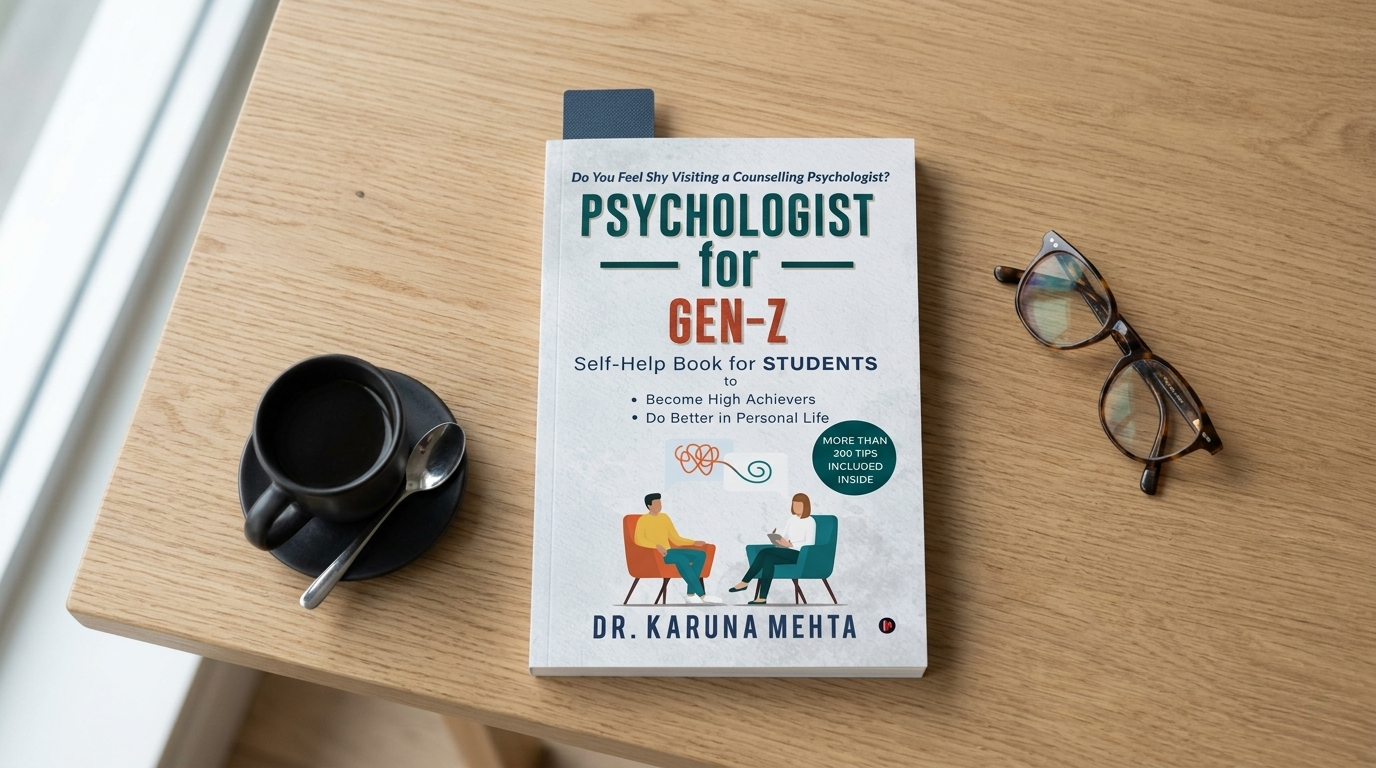
I picked up PSYCHOLOGIST for GEN-Z with a very specific curiosity. Not excitement, not skepticism… something in between.
Maybe it’s because, over the years, I’ve read dozens of self-help books for students. Some try too hard to sound “modern,” some drown you in theory, and some just repeat the same advice in new packaging. So I’ve become a little cautious.
But this one felt… grounded.
As I flipped through the chapters, I kept thinking about the students I’ve met—interns, young writers, even readers who’ve emailed me over the years. The same questions come up again and again:
“Why can’t I focus?”
“Why do I panic before exams?”
“Am I just not smart enough?”
And what I appreciated right away is that this book doesn’t pretend these are rare problems. It treats them like everyday struggles. Which, honestly, they are.
What the Book Is About
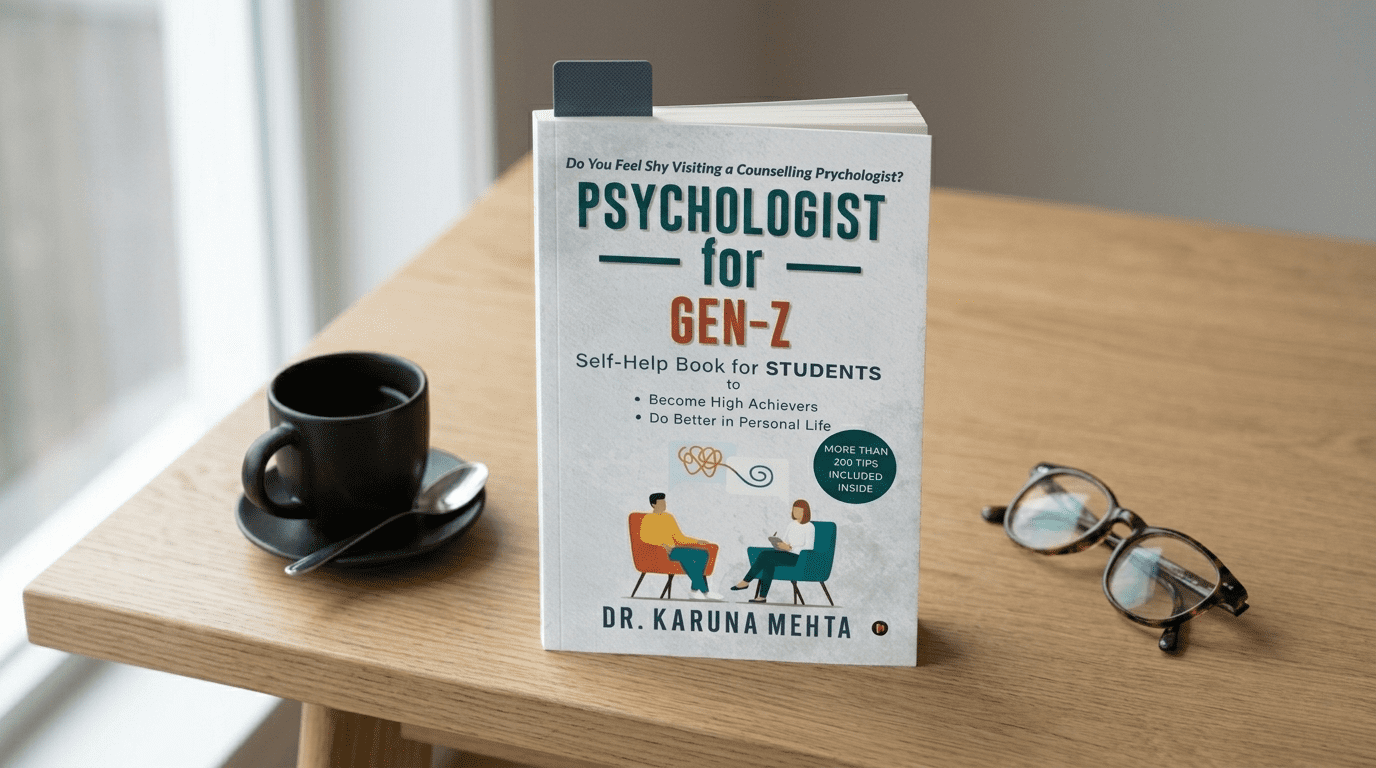
At its core, PSYCHOLOGIST for GEN-Z by Dr. Karuna Mehta is a guide for students trying to figure themselves out—not just academically, but emotionally and socially too.
It moves across multiple areas of student life. You’ll find chapters on things like intelligence and memory, but also on personality, friendship, stress, aggression, and even how counselling actually works.
There’s a clear structure here. It starts with understanding how the mind works—learning, memory, aptitude—and then gradually shifts into more personal territory:
how you behave, how you relate to others, how you handle pressure.
I noticed chapters like:
- Examination Anxiety
- Resilience – Bouncing Back
- Believe in Yourself
- Interpersonal Skills
- Managing Stress
- Mental Health is Equally Important as Physical Health
And they’re not just conceptual. Each chapter tries to connect theory with everyday situations.
For example, in the exam anxiety section, the book doesn’t just say “don’t stress.” It actually talks about physical symptoms—like feeling restless, unable to concentrate, even forgetting things you studied. That felt very real. I’ve seen students go through exactly that.
And then it gently shifts to solutions—planning, time management, talking to friends or teachers, even changing how you think about pressure.
It’s not revolutionary advice. But it’s presented in a way that feels accessible.
What Stood Out to Me
A few things stayed with me even after I closed the book.
First, the way it explains psychological ideas without making you feel small.
There’s a section on aptitude where the author explains how different abilities—verbal, numerical, spatial—work together. It doesn’t label you as “smart” or “not smart.” Instead, it subtly reminds you that strengths vary.
I liked that. Because a lot of students carry this silent burden of comparison.
Then there’s the chapter on personality.
It talks about how personality isn’t just about appearance or how confident you seem on the outside. It’s a mix of thoughts, emotions, learned behaviour. And there’s this underlying idea that you can change aspects of it. Not overnight, not magically—but gradually.
That felt honest.
Another part that really caught my attention was the discussion on aggression.
It doesn’t just say anger is bad. It explains where it can come from—biological factors, frustration, learned behaviour. There’s even a mention of how people pick up aggressive responses by observing others, including media.
I paused there for a moment. Because… that’s something we don’t talk about enough.
And then, the section on resilience.
There’s a line about how some people take longer to recover from setbacks while others bounce back faster. It doesn’t judge either group. It just explains that coping capacity differs.
As someone who has seen both kinds of people closely, that felt quietly validating.
Also, I appreciated the practical tips scattered throughout.
Simple things like:
- making your own notes
- revising in your own words
- not panicking after one exam
- focusing on understanding rather than rote learning
These are not flashy ideas. But they work.
The Emotional Core
If I had to describe what this book is really trying to do, I’d say—it wants to reassure without being overly soft.
There’s a certain tone running through it. Calm, slightly academic, but also caring in its own way.
It doesn’t dramatize student struggles. It doesn’t say “everything will magically be okay.”
Instead, it says:
“This is what’s happening to you. This is why it happens. And here’s what you can try.”
That kind of clarity can be surprisingly comforting.
I kept thinking about one particular idea from the mental health chapter—the connection between psychological and physical health.
We often separate the two, especially in academic environments. Marks matter, performance matters… but how you feel internally is ignored until it becomes a problem.
This book gently pushes against that.
It also tries to reduce the hesitation around counselling. There’s a clear effort to show that seeking help is not something to be afraid of. That part felt important, especially in 2026, when conversations around mental health are increasing but still carry stigma in many places.
Emotionally, this isn’t a book that overwhelms you.
It sits beside you.
It explains.
And then it leaves you to think.
Who This Book Is For
I think this book will connect most with:
- School and college students who feel lost or pressured
- Anyone struggling with exam anxiety or focus issues
- Students who feel they’re “not good enough” academically
- Young readers trying to improve social skills or confidence
It’s also useful for parents and teachers, actually. Especially those who want to understand what students might be going through internally.
That said…
If you’re someone who reads a lot of advanced psychology or expects deep, research-heavy analysis, this might feel a bit basic. The language is simple, the ideas are introductory.
But I don’t think that’s a flaw.
I think it’s intentional.
This book isn’t trying to impress. It’s trying to reach.
Final Thoughts
In my years as an editor at Deified Publication, I’ve seen two kinds of self-help books.
The ones that try to sound powerful.
And the ones that try to be useful.
PSYCHOLOGIST for GEN-Z clearly belongs to the second category.
It doesn’t have dramatic storytelling. It doesn’t rely on big emotional hooks. And yes, at times, it can feel a little textbook-like.
But then there are moments—small, quiet insights—that stay with you.
Like the idea that stress isn’t always bad, but too much of it becomes harmful.
Or that personality can evolve.
Or that not understanding something doesn’t mean you lack intelligence.
These are simple thoughts. But for the right reader, they can shift something internally.
And honestly, sometimes that’s enough.
FAQ
Is PSYCHOLOGIST for GEN-Z worth reading?
I think it is, especially if you’re a student dealing with stress, exams, or self-doubt. It’s simple but practical.
Who should read PSYCHOLOGIST for GEN-Z?
Primarily students, but also parents and teachers who want to understand student psychology better.
Is this book too basic?
It can feel basic if you’re already familiar with psychology concepts. But for beginners, it’s actually helpful.
Does the book give practical advice or just theory?
It balances both. There’s explanation, but also actionable tips you can actually use.

With over 11 years of experience in the publishing industry, Priya Srivastava has become a trusted guide for hundreds of authors navigating the challenging path from manuscript to marketplace. As Editor-in-Chief of Deified Publications, she combines the precision of a publishing professional with the empathy of a mentor who truly understands the fears, hopes, and dreams of both first-time and seasoned writers.