
Rating:
⭐⭐⭐⭐ (4.3 out of 5)
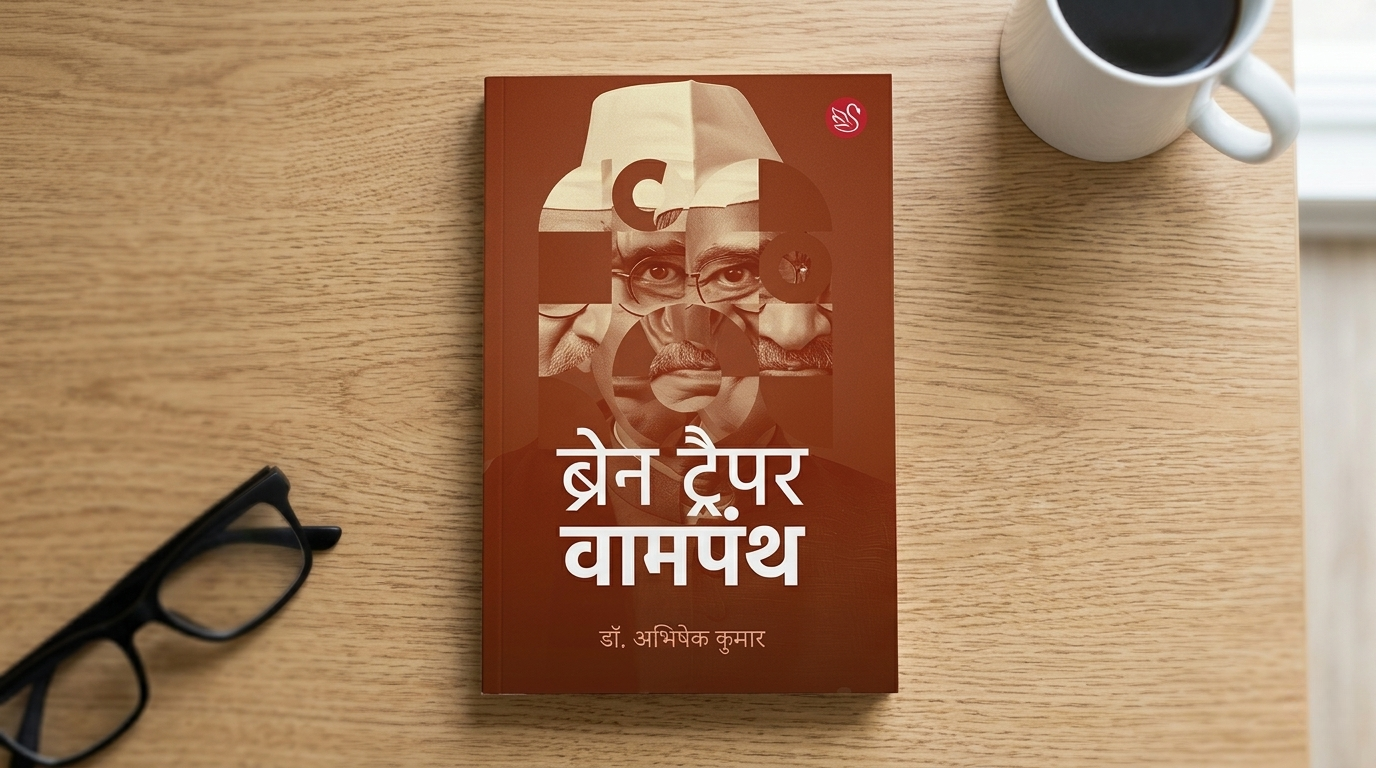
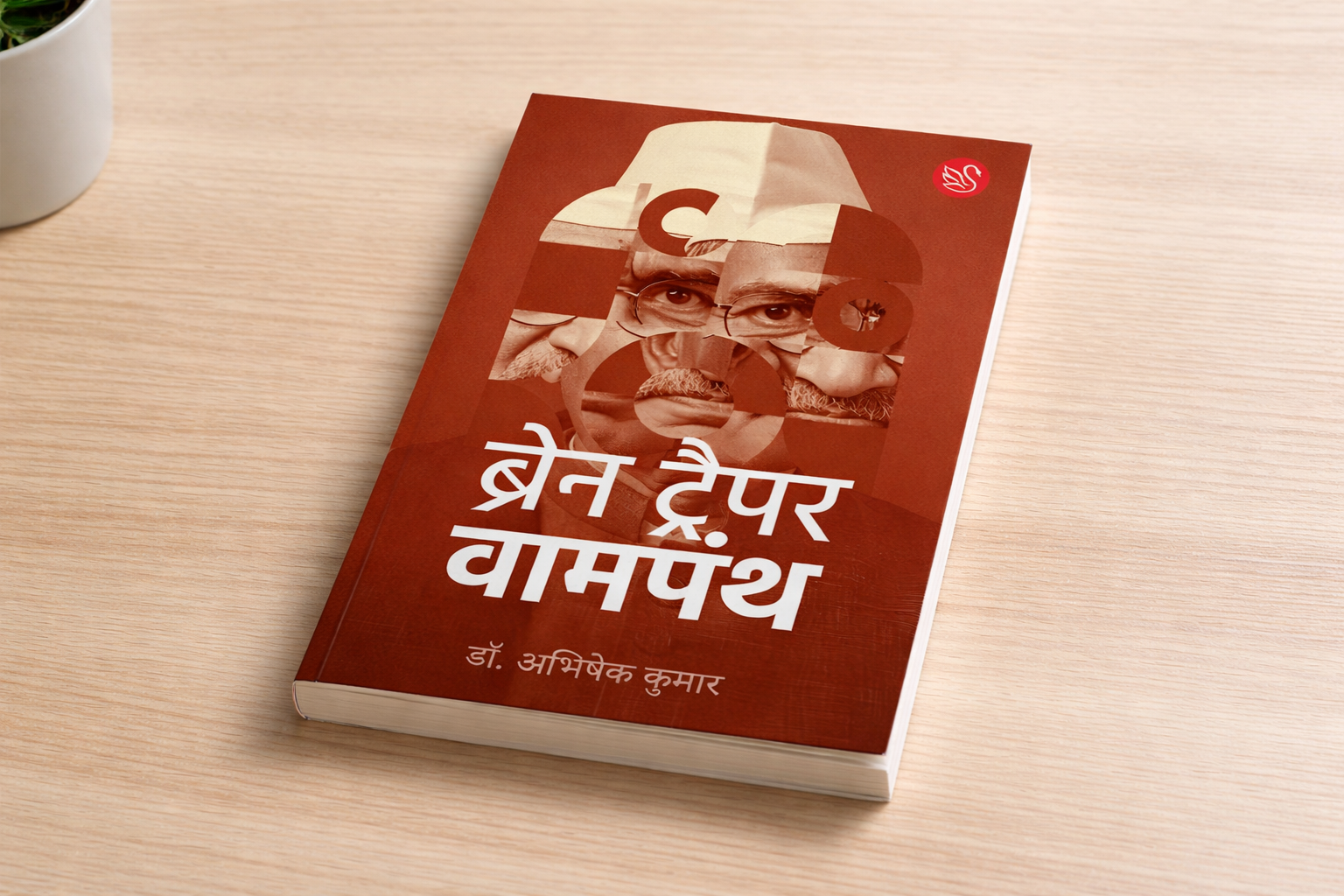
Some books announce their intent from the very cover, and ब्रेन ट्रैपर वामपंथ is one of those. Before I even moved past the cover image, I paused. The fragmented face design, the intense gaze, the title itself, everything suggests a book interested in ideology not as abstract theory, but as something that enters the mind, shapes perception, and then begins to influence identity. As someone who has spent over fifteen years reading across politics, philosophy, literature, and social commentary, I can say this much honestly: this is not a neutral book, and it does not pretend to be.
And strangely, that clarity of intent is part of what gives it force.
In ब्रेन ट्रैपर वामपंथ, Dr. Abhishek Kumar gathers 21 essays that examine leftist thought through political, psychological, cultural, and even physiological lenses. That combination itself stood out to me. Many ideological books either stay at the level of slogans or get lost in dense theory. Here, the author repeatedly returns to one central concern: why do young minds, especially adolescents, become so emotionally susceptible to certain revolutionary narratives?
I found that framing interesting because it shifts the conversation from “which ideology is right” to “how does ideological attraction work in the first place?” Even if one disagrees with the author’s conclusions, that question is worth sitting with in 2026, when political identities are increasingly shaped online, emotionally, and at younger ages.
The First Feeling This Book Gave Me
What stayed with me in the opening chapters was the author’s recurring metaphor of the mind as something that can be “hacked” by ideas. He uses adolescence as the key entry point, describing that age as a time of hormonal intensity, anger, identity-search, and moral absolutism. I’ve seen versions of this in real life too, not just in politics but in literature fandoms, social movements, and even startup culture. At a certain age, certainty itself feels intoxicating.
That’s what made the first essay unexpectedly effective for me. The writing is direct, often provocative, and clearly aimed at readers who may have witnessed ideological polarization among students, campuses, and digital youth culture.
At the same time, because the tone is strongly polemical, readers looking for academic detachment may feel the book is more argumentative than analytical in places. Personally, I did not mind that, because the author is transparent about his stance. But yes, it’s worth saying: this is a book of ideological critique, not a textbook.
What the Book Is About
At its core, ब्रेन ट्रैपर वामपंथ is a collection of essays that attempts to decode what the author sees as the mechanisms of leftist ideological influence.
The chapters move through several recurring zones:
- adolescent psychology and ideological attraction
- social and religious reform narratives
- class struggle and power accumulation
- critical theory and narrative-setting
- new left movements and Frankfurt School influences
- media, literature, feminism, and cultural institutions
- identity politics and victimhood frameworks
What I appreciated structurally is that the essays are short enough to remain readable but linked by a clear thematic spine: the author believes that narratives, especially those framed around injustice and revolution, become persuasive because they offer young people meaning, moral urgency, and belonging.
There’s a recurring tension throughout the book between idealism and instrumentalization. Dr. Abhishek Kumar seems less interested in attacking young people for believing in equality and more interested in arguing that emotional idealism can be strategically redirected by ideological actors.
That distinction gave the book more nuance than the title initially suggested.
What Stood Out to Me
The strongest aspect of ब्रेन ट्रैपर वामपंथ Book Review, for me, is its narrative pattern recognition.
In my years reviewing socio-political books, what often separates memorable commentary from forgettable polemic is whether the author can identify repeated cultural patterns. Here, the author repeatedly returns to how institutions, literature, journalism, campus politics, and identity narratives create reinforcing loops.
The chapters on critical theory, media, and literary spaces were especially striking because they move beyond electoral politics and focus on culture as the real battleground. As an editor, those sections naturally caught my attention. The author argues that control over narrative ecosystems can be more influential than direct political control.
Now, whether every reader will agree with the extent of that claim is another matter.
I do think some chapters lean toward overgeneralization. At moments, the book treats broad schools of thought as if they move with one singular motive, and real intellectual traditions are usually messier than that. Left thought itself has many internal contradictions, and I occasionally wished the essays had acknowledged those fractures more fully.
Still, from a readability standpoint, the confidence of the prose works in its favor. The author never sounds unsure of the thesis he wants to advance.
The Emotional Core
Oddly enough, the emotional center of this book is not anger.
It is concern.
Beneath the sharp rhetoric, I sensed a deep anxiety about young minds, culture, and civilizational continuity. The repeated focus on teenagers, students, campus spaces, literature, and journalism made me feel the book is really asking a parental question: Who is shaping the next generation’s imagination?
That concern gives the essays their urgency.
I also think readers from India in 2026 may find this message timely because ideological polarization is no longer restricted to political spaces. It now enters reels, memes, book clubs, university societies, news clips, and even dating conversations. In that sense, the author’s concern with “narrative trapping” feels culturally relevant.
I wasn’t expecting to feel this, but some passages made me think less about left vs right and more about how vulnerable any searching mind can be to emotionally rewarding certainty.
That part stayed with me.
Who This Book Is For
This book will likely resonate most with:
- readers interested in Indian political thought
- parents, teachers, and mentors concerned about youth ideological influence
- students of media narratives and campus discourse
- readers of ideological critique and cultural commentary
- anyone curious about how political identities are psychologically formed
If you are looking for a neutral academic study of Marxism, this may not be the right fit.
But if your question is “What is this book about, and is it worth reading?”, then yes, ब्रेन ट्रैपर वामपंथ offers a clear, readable, unapologetically positioned argument that can help readers understand one side of a very live cultural debate.
Final Thoughts
As Priya Srivastava, and as someone who reads both literature and ideological nonfiction with equal care, I think ब्रेन ट्रैपर वामपंथ succeeds best when it examines how ideas emotionally recruit the young. That is where the writing feels most alive and most useful.
Could it have benefited from engaging more deeply with counterarguments? Yes, absolutely.
Would that have made it richer for readers still deciding where they stand? I think so.
But honesty matters in reviews, and honestly, this book knows exactly what it wants to say. It does not circle around its thesis. It states it, defends it, and repeats it across multiple cultural domains until the reader can see the pattern the author wants them to notice.
That clarity alone makes it a significant read for people following contemporary ideological debates in India.
Quick Reader FAQ
Is ब्रेन ट्रैपर वामपंथ worth reading?
Yes, if you enjoy ideological critique, cultural commentary, and books that question how youth politics is shaped.
Who should read ब्रेन ट्रैपर वामपंथ?
Students, educators, parents, political readers, and anyone interested in media and campus narratives.
Is this a neutral political theory book?
No. It is a clearly positioned argumentative essay collection.
Does Dr. Abhishek Kumar write in an easy style?
Yes, the prose is direct and readable, even when discussing theory-heavy subjects.

With over 11 years of experience in the publishing industry, Priya Srivastava has become a trusted guide for hundreds of authors navigating the challenging path from manuscript to marketplace. As Editor-in-Chief of Deified Publications, she combines the precision of a publishing professional with the empathy of a mentor who truly understands the fears, hopes, and dreams of both first-time and seasoned writers.