
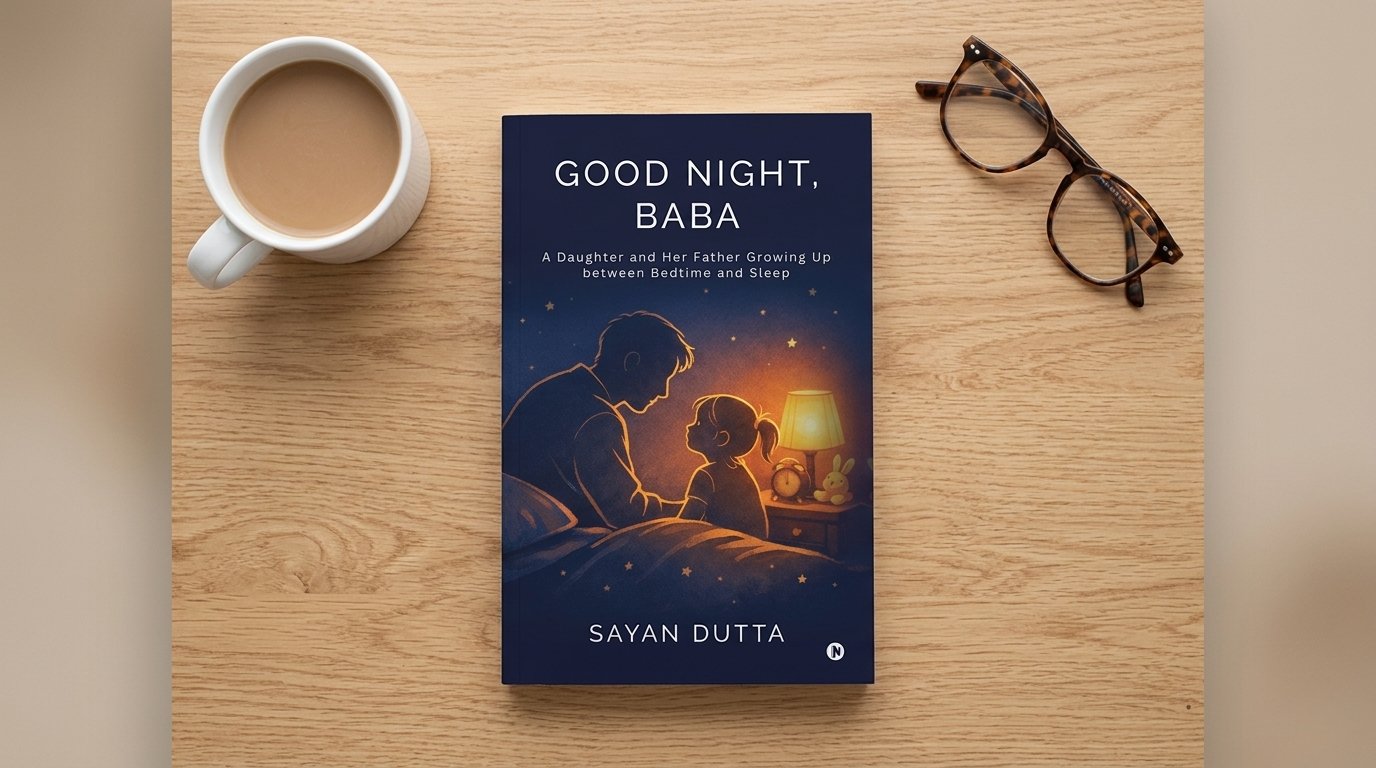
Rating:
⭐⭐⭐⭐ (4.4 out of 5)
Some books don’t shout, they stay with you
As Priya Srivastava, Editor-in-Chief at Deified Publication, and someone who has spent more than fifteen years reading everything from literary fiction to intimate memoirs, I’ve learned that some books announce themselves loudly, while others arrive like a familiar hand on your shoulder. Good night, Baba by Sayan Dutta belongs very much to the second kind.
I finished this book with a strange ache I know many readers, especially parents, will recognise. Not sadness exactly. More like that tender awareness of time passing in ordinary rooms.
A child asks for water.
A father stays one minute longer.
A pillow becomes a house.
A bedtime story slowly turns into a real-life confession.
Honestly, while reading this, I kept thinking of how the smallest domestic rituals often become the emotional architecture of a family. We rarely notice it while living it. Years later, those are the things that return first.
What moved me most is that Sayan Dutta understands this deeply. He never tries to make bedtime “dramatic.” Instead, he notices what bedtime actually is: the final honest space of the day, where children say what daylight didn’t allow them to say. That insight begins as early as the prologue and continues beautifully into the epilogue, where the father realises he too has been growing up through these nights.
In 2026, when so many families are pulled apart by speed, screens, schedules, and exhaustion, this message feels especially timely.
What the Book Is About: More than bedtime, it’s about emotional inheritance
If someone asks what Good night, Baba is about, the simple answer is this: it follows a father and daughter across the evolving rituals of sleep, from early childhood dependence to late childhood independence. But that summary barely touches what the book is actually doing.
The structure is beautifully intentional.
The book moves in acts, almost like emotional phases of childhood.
Act I captures the earliest need for reassurance. A forgotten tuition story, a glass of water, bigger questions after lights out, the child holding the father’s ear as an anchor. These chapters are short, reflective, and psychologically observant in a way I genuinely admired.
Then it grows.
By the middle sections, bedtime becomes about rituals of safety: songs, the familiar pat on the back, pillow walls that create a “house,” story games that gradually shift into real conversations. The chapter “Baba, tell me a story” to “Baba, can I tell you something” was one of the places where I had to pause because it captures, with such emotional accuracy, the exact moment parenting changes shape.
By the final act, the daughter no longer needs stories. She brings her own. School politics. GOAT debates. Change. Decisions. The father is no longer the builder of worlds but the witness to the world she is building herself.
I think that’s what makes this book summary difficult to reduce to plot. This is less about events and more about emotional transitions.
What Stood Out to Me: The emotional intelligence of structure
I’ve read enough parenting memoirs and family reflections to know when a writer is leaning on sentiment, and when they are actually paying attention to lived truth.
Sayan Dutta is paying attention.
What stood out to me first was the craft choice of dividing the book into acts based on developmental phases. That was smart, but more importantly, it works. The progression from dependence to internalised safety feels organic and earned.
For example, the early chapter about the daughter needing the father’s ear to fall asleep is mirrored later by the chapter where she no longer needs the reassuring pat on the back. That repetition with evolution is excellent emotional structuring.
There’s also a real understanding of how children communicate.
The chapter The Glass of Water That Wasn’t About Water gets this exactly right. Any parent reading it will smile because yes, sometimes the request is never the request. It’s a test of return. A check: if I call, will you come back?
I also loved how Sayan Dutta lets rituals carry meaning.
The pillow fortress in Let’s Make the House is such a lovely image. On the surface, it’s a bedtime game. Underneath, it becomes a metaphor for shared protection, the parent silently helping guard what the child cannot yet name. That chapter, for me, was one of the strongest in the book.
If I had one gentle critique, it’s that because the prose is so consistently reflective, some readers who prefer narrative conflict or external events may wish for a few more sharply differentiated moments. The emotional tone is intentionally soft and meditative throughout, which suits the subject, but it may feel repetitive for readers looking for dramatic variation.
Still, for the genre and intention, it lands beautifully.
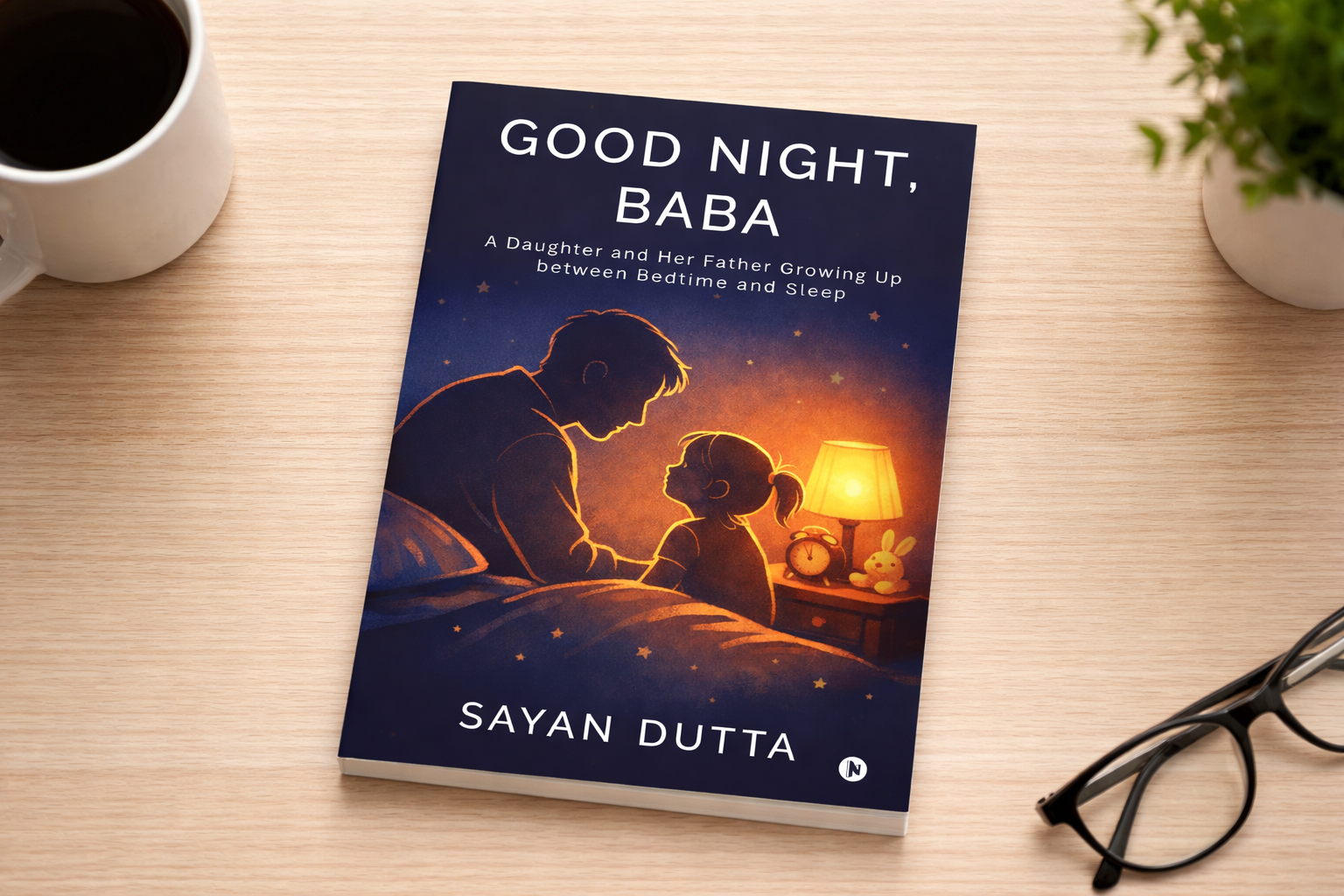
The Emotional Core: The ache of becoming unnecessary, and why it hurts in the best way
This is where Good night, Baba Book Review really becomes personal for me.
The deepest emotional current in this book is not the daughter growing up.
It is the father learning how love changes from presence to trust.
That distinction matters.
The final chapters, especially “Good Night, Baba” and the epilogue, carry a very specific ache that many parents, and honestly even many adult children, will feel in their chest. The absence of the final call from the bed is not loss. It is proof that the years of staying worked.
There’s a line of emotional truth running through the entire book: safety becomes inheritance.
I wasn’t expecting that idea to hit me as hard as it did.
As an editor, I also admired how the father’s voice matures alongside the child. Early chapters are built around soothing, repetition, and ritual. Later ones move into conversation, negotiation, and shared thinking. The voice itself grows with the relationship.
Some parts really hit differently, especially the school change chapter, Can you Decide? That small shift from control to inclusion says so much about respectful parenting without ever sounding instructional.
It made me think of all the times in real life when children don’t necessarily need solutions. They need to know their feelings have a place in the decision.
That’s the emotional intelligence this book offers.
Who This Book Is For: Not every reader, but deeply right for some
So, should you read Good night, Baba?
I think this book is especially for:
- parents of young or growing children
- fathers who want language for feelings they rarely articulate
- readers who love reflective family writing
- anyone navigating the bittersweet reality of a child becoming more independent
- gift buyers looking for meaningful parenting or family-life books
It may also deeply resonate with adult readers who are remembering their own bedtime rituals with a parent.
This might not be for everyone.
If you are looking for fast-moving plot, heavy conflict, or dramatic memoir revelations, this isn’t that kind of book. It lives in pauses, patterns, and emotional recognition.
But if you’ve ever stood at a child’s doorway for one extra second, this book will probably feel like it knows you.
Final Thoughts: A book that understands how ordinary love becomes memory
As Priya Srivastava from Deified Publication, I can say this with honesty: Good night, Baba is one of those rare family reflections that earns its tenderness through observation, not exaggeration.
Sayan Dutta has written something simple on the surface, but emotionally layered underneath. The father-daughter bond here is not idealised in a flashy way. It is built through repeated presence, the kind that feels almost invisible while it’s happening.
And maybe that’s why it stays.
I kept thinking about the final image after I finished the book: the father no longer needed at the bedside in the same way, yet present in everything that child has internalised.
That’s parenting. That’s memory. That’s what this book captures so well.
FAQ: Good night, Baba reader questions
Is Good night, Baba worth reading?
Yes, especially if you enjoy reflective parenting books and emotionally observant family writing.
Who should read Good night, Baba?
Parents, fathers, family-life readers, and anyone drawn to books about memory and childhood transitions.
What genre is Good night, Baba?
It reads like reflective family memoir blended with parenting observations and literary nonfiction.
What is Good night, Baba about?
It follows the evolving bedtime bond between a father and daughter across different stages of childhood.

With over 11 years of experience in the publishing industry, Priya Srivastava has become a trusted guide for hundreds of authors navigating the challenging path from manuscript to marketplace. As Editor-in-Chief of Deified Publications, she combines the precision of a publishing professional with the empathy of a mentor who truly understands the fears, hopes, and dreams of both first-time and seasoned writers.