
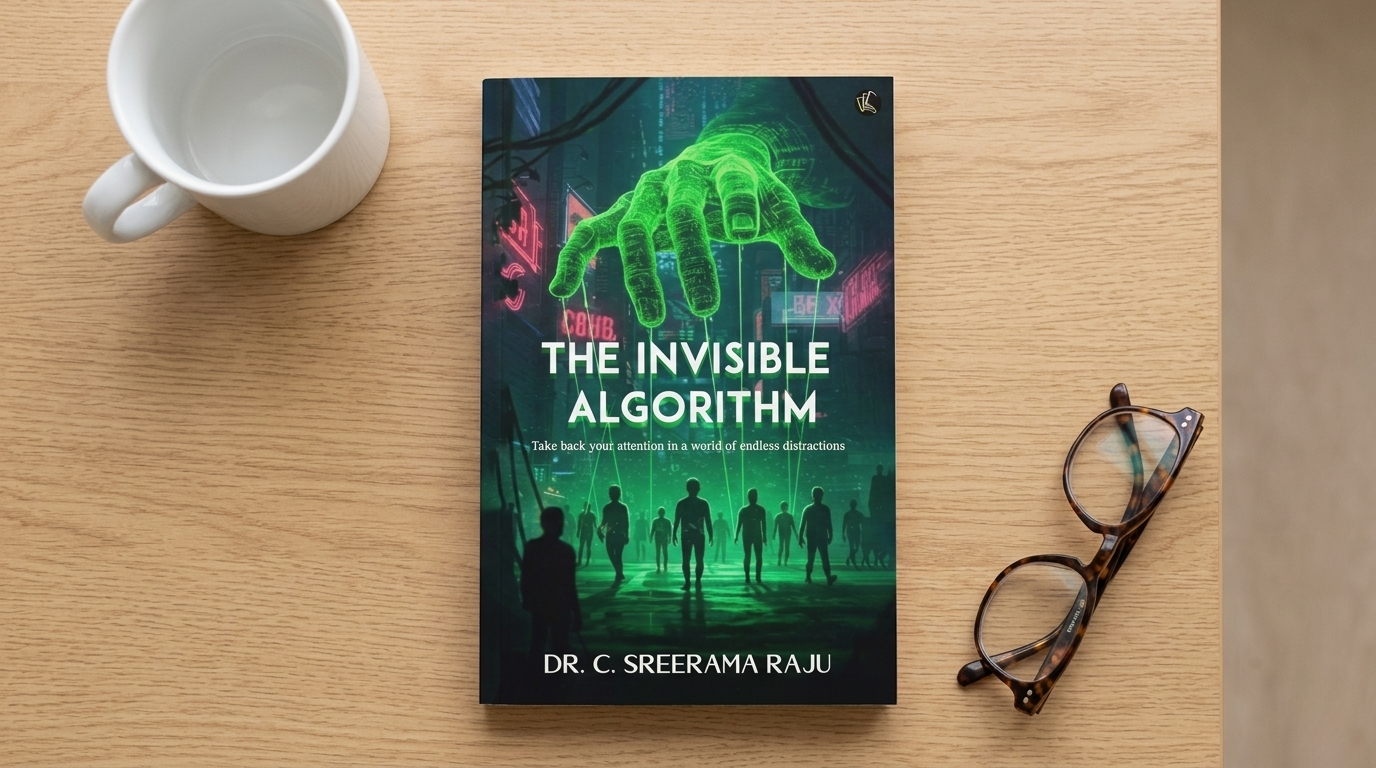
Rating:
⭐⭐⭐⭐½ (4.5 out of 5)
There are some books you finish and place back on the shelf.
And then there are books that quietly alter the way you move through your ordinary day.
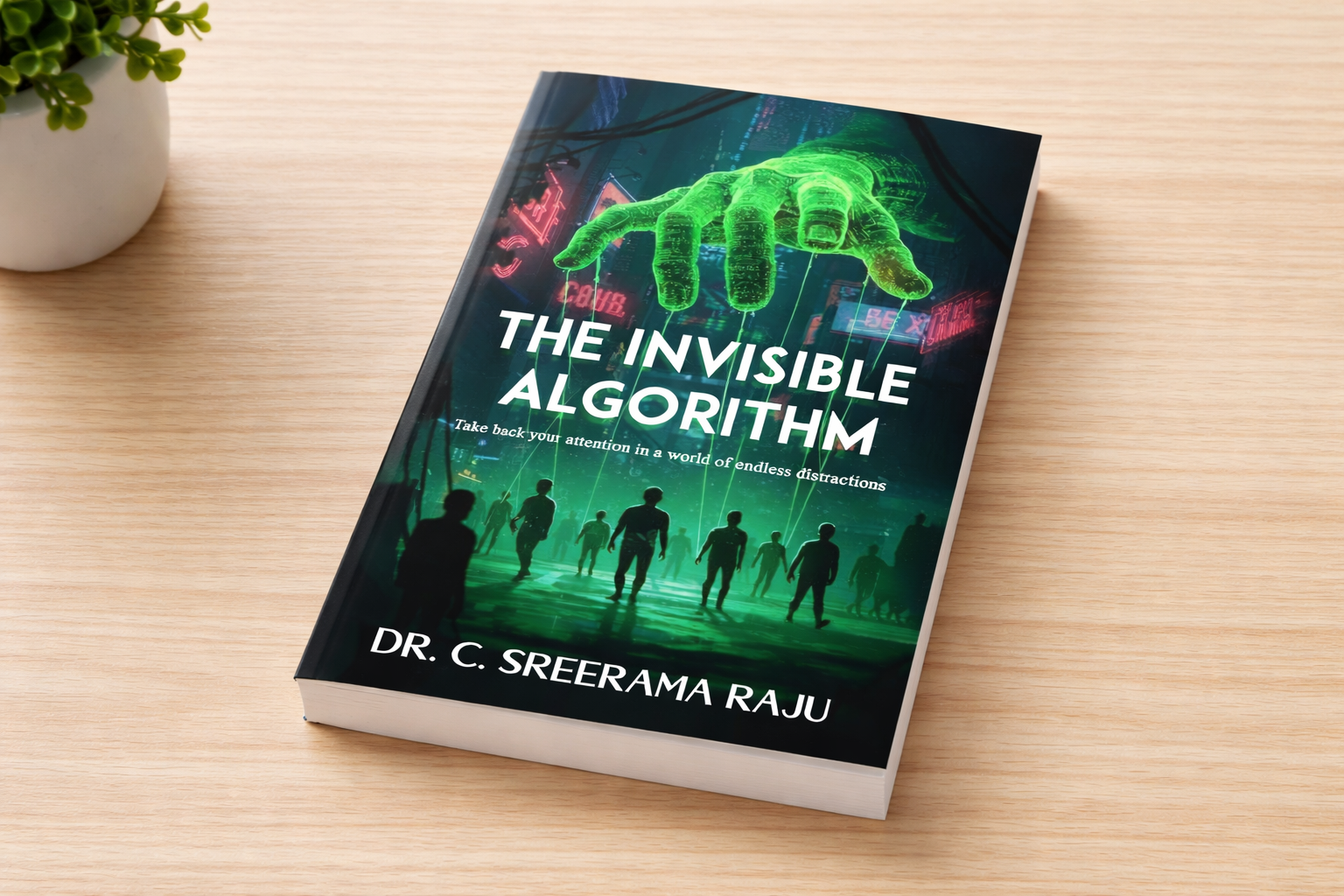
The Invisible Algorithm by Dr. C. Sreerama Raju felt like the second kind for me.
I did not just read this book. I kept catching myself living it. The next morning, when I instinctively reached for my phone before even sitting up in bed, one line from the book came rushing back to me: are you living by choice, or by default? I actually stopped. That pause lasted maybe three seconds, but honestly, it stayed with me much longer than some entire books do.
As someone who has spent over fifteen years reading across genres and now reviewing books at Deified Publication, I’ve seen many books on productivity, digital wellness, and habit change. Most of them either scare the reader with tech doom or oversimplify the problem into “just use more discipline.” What I appreciated here is that The Invisible Algorithm understands something more human: the issue is not weakness, it is design.
And that changes the emotional temperature of the entire reading experience.
What stayed with me from the opening pages
The opening chapter, The Digital Puppet Masters, immediately frames the modern feed not as a neutral space but as a designed environment. I liked that Dr. Raju does not begin with blame. Instead, he begins with recognition.
There’s this deeply familiar image of a person opening Netflix, YouTube, or Instagram for “just five minutes” and emerging much later with a strange emptiness. I think almost every modern reader will see themselves in those pages.
What worked for me structurally is how the book moves from awareness to intervention.
First, it names the invisible forces: autoplay, notification badges, endless scroll, recommendation loops, validation metrics, outrage incentives. Then it gently shifts into tools that feel practical enough to use the same day.
That pacing matters.
A lot of books in this space get stuck in diagnosis. This one keeps asking: now that you can see the strings, what do you do next?
What the book is really about
On the surface, The Invisible Algorithm is a digital detox and attention-recovery guide.
But I think that description is too small.
This is really a book about agency.
Yes, Dr. C. Sreerama Raju gives specific tools: the two minute breath-before-scroll method, stopping cues, phone-free anchors, notification audits, bedtime resets, single-screen focus blocks, a seven-day reset plan, even a printable checklist mindset. All of that is useful.
But beneath the practical systems, the deeper message is more philosophical.
The book keeps returning to the idea that attention is life.
Where your attention goes, your emotional climate follows.
Your relationships follow.
Your sense of self follows.
I found the chapters on the illusion of control especially sharp. The author explains how recommendation systems make abundance feel like freedom while actually narrowing our choices into predictable pathways. That idea hit hard because I’ve seen it outside reading too, even in the books people discover. Sometimes readers think they are choosing a title, but really a system has been repeating it until it feels familiar enough to trust.
That’s such a modern truth.
What stood out to me most
For me, the strongest part of The Invisible Algorithm book review experience was how the book balances behavioral science with lived emotional reality.
The sections on Netflix recommendation systems, social media outrage loops, Amazon’s purchase nudges, and notification design are intellectually solid, but what makes them land is the human framing.
Claire comparing herself to a vacation photo.
Mark slipping into gaming reward cycles.
Lisa trapped inside ideological echo chambers.
These narrative examples give the theory a face.
I’ve read enough nonfiction to know when examples are merely decorative. Here, they actually deepen the point. They show how algorithmic design touches loneliness, envy, anxiety, and belonging.
And honestly, that’s what made the book feel timely in 2026, when most people are no longer asking whether technology shapes them, but how much of themselves they are willing to hand over.
Another thing I genuinely admired was the Digital Detox Toolkit section.
This was not vague self-help language. It was specific, actionable, and realistic.
The “Name the Reward” tool, where you ask what an app is paying you with, novelty, validation, outrage, belonging, is simple but surprisingly revealing. I tried it myself while opening Instagram and realized I was not looking for information at all. I was looking for relief from mental fatigue.
That level of self-recognition is where change begins.
The emotional core of the book
I think the emotional heart of this book lies in one very humane idea:
You do not need more willpower. You need better defaults.
I loved this because it removes shame from the conversation.
So many readers who struggle with screen fatigue secretly believe the problem is moral weakness. The book gently dismantles that belief. It says the environment is engineered to capture you, so redesigning the environment is not cheating, it is wisdom.
Some parts genuinely made me pause.
The passages on protecting the first 60 minutes after waking and the last 60 minutes before sleep reminded me of how many people I know, myself included at times, have surrendered those sacred emotional windows to feeds and alerts.
There is something almost tender in the way the book asks readers to reclaim mornings and nights.
Not as punishment.
As care.
That emotional framing makes the practical advice easier to trust.
Who should read The Invisible Algorithm
If you are wondering is The Invisible Algorithm worth it, I’d say yes, especially if any of these feel familiar:
- you wake up and reach for your phone before your thoughts arrive
- your mood shifts based on what your feed serves you
- you feel mentally scattered after short scrolling sessions
- your mornings and sleep feel fractured
- you want digital balance without deleting your whole social life
This book will especially resonate with students, young professionals, creators, and anyone whose work depends on staying online without being consumed by it.
That said, I’ll add one honest note as a reviewer.
A few sections repeat similar ideas around agency and attention economy, particularly in the middle chapters. I understood why, because repetition helps behavior change, but some readers looking for faster pacing in nonfiction may feel those parts could have been tighter.
Still, the repetition serves the book’s practical purpose more than it harms it.
Final thoughts
So, should you read The Invisible Algorithm by Dr. C. Sreerama Raju?
I think this is one of those rare digital wellness books that respects the reader’s intelligence.
It does not demonize technology.
It does not romanticize unplugging.
It does not pretend discipline alone can outmatch billion-dollar design systems.
Instead, it offers something far more believable: small changes, better defaults, more conscious attention.
By the final chapters, especially The Choice Is Still Yours and the toolkit reset plan, I felt the book had earned its optimism. It does not promise perfection. It promises awareness, structure, and a way back to yourself.
And maybe that is enough.
Honestly, maybe that is more than enough.
At Deified Publication, I read many books that inform. Fewer books actually alter behavior. The Invisible Algorithm belongs in the second category for me.
FAQs
Is The Invisible Algorithm worth reading?
Yes, especially if digital overwhelm, doomscrolling, or attention fatigue are affecting your daily life.
Who should read The Invisible Algorithm?
Students, professionals, creators, and anyone trying to reduce screen dependency without abandoning technology.
What is The Invisible Algorithm about?
It’s about understanding how digital systems shape behavior and how to reclaim agency using practical daily tools.
Is this book more theory or practical?
A healthy mix of both, but the tools and 7-day reset plan make it highly usable.

With over 11 years of experience in the publishing industry, Priya Srivastava has become a trusted guide for hundreds of authors navigating the challenging path from manuscript to marketplace. As Editor-in-Chief of Deified Publications, she combines the precision of a publishing professional with the empathy of a mentor who truly understands the fears, hopes, and dreams of both first-time and seasoned writers.