
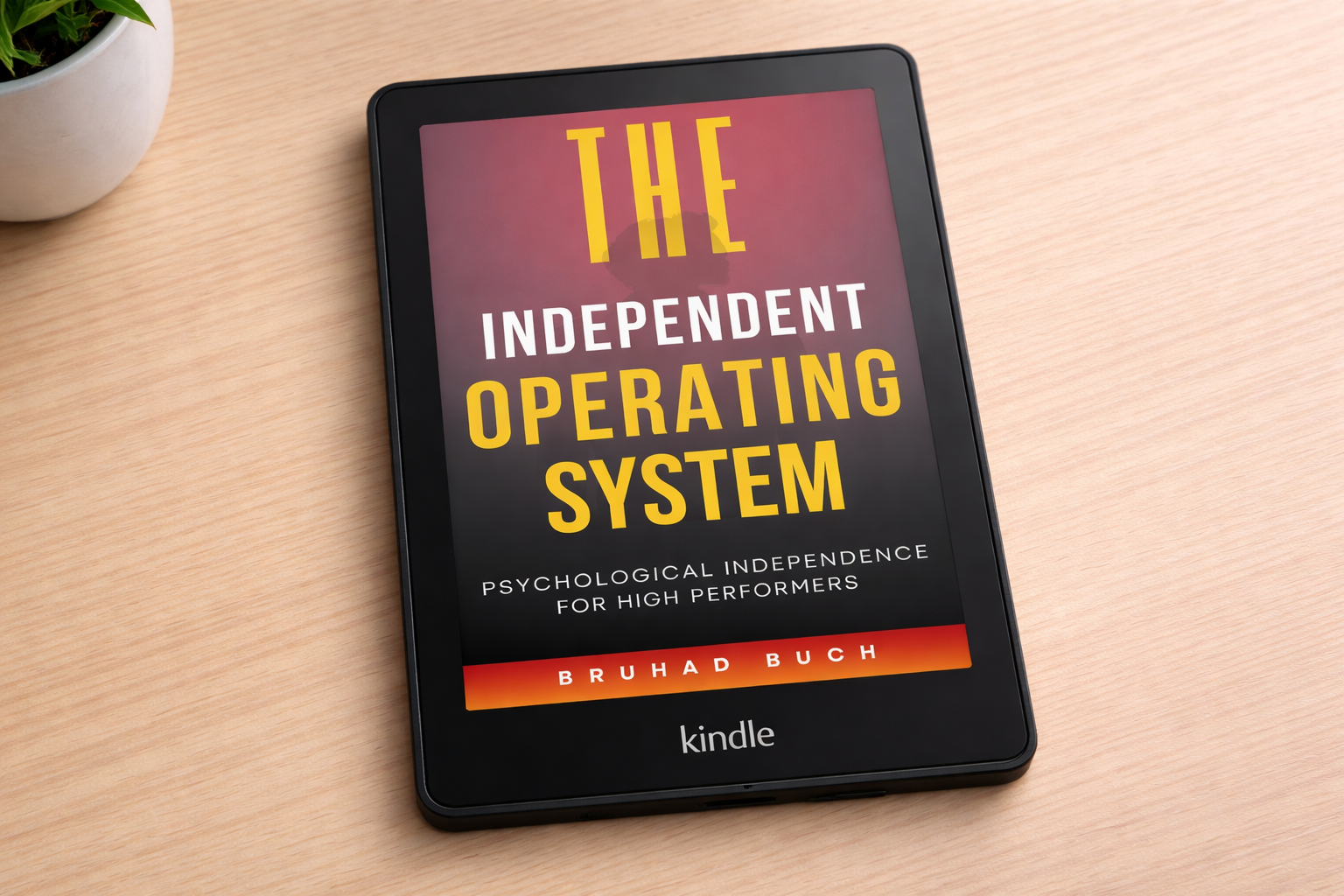
Rating:
⭐⭐⭐⭐½ (4.5 out of 5)
The line that stayed in my head long after reading
There are some books you finish and immediately move on from.
And then there are books like The Independent Operating System, the kind that keeps interrupting your ordinary day.
I found myself thinking about one central idea again and again: how much of our ambition is actually ours, and how much of it is borrowed from applause, comparison, deadlines, trends, LinkedIn updates, promotions, and invisible expectations?
In my years reviewing books on leadership, psychology, performance, and personal transformation, I have read many books that talk about confidence. Very few talk about the architecture beneath confidence.
That is what BRUHAD BUCH is doing here, and honestly, I think that is what makes this book feel unusually relevant in 2026.
This is not another motivational productivity book telling you to wake up earlier or hustle harder. It feels closer to a systems level reset. The author keeps returning to a deeper question: what operating system is actually running your decisions?
I was especially struck by how the book names patterns many high performers live with but rarely articulate. The validation loop. The comparison loop. The waiting to be chosen. The subtle dependency on recognition. There is this eerie accuracy in the way those mental habits are described.
I have seen this in real life with founders, authors, bankers, and even senior leaders who look externally successful but internally still feel unstable whenever recognition slows.
This book puts language to that instability.
And language, sometimes, is the beginning of freedom.
What the Book Is About: More than mindset, it is mental architecture
At its core, The Independent Operating System is about psychological independence for high performers.
But I think calling it a mindset book would undersell it.
The structure reads almost like a carefully designed internal diagnostic manual.
The early sections, especially the Prologue: The Day You Realize No One Is Coming and Chapter 1: The Validation Economy, establish the central problem with unusual precision. The author argues that many professionals are capable, disciplined, and hardworking, yet still anxious because their internal standards are being unconsciously authored by external signals.
That framing landed hard for me.
The book keeps separating enablers from architects. Bosses, markets, mentors, technology, visibility, feedback, all of these can enable progress. But they cannot define the operating system of your ambition.
That responsibility remains internal.
Then the book moves beautifully into The Comparison Loop, which I think may be one of the strongest chapters conceptually. The idea that comparison disguises itself as awareness, intelligence, market tracking, or “staying updated” felt incredibly true to modern professional life.
The line of thinking around you compare endpoints to midpoints is something I kept thinking about for days.
Later, Architectural Ownership turns the philosophy into practice. The 45 day build cycle framework, declared direction, self assigned standards, and daily non negotiable action convert abstract independence into something operational.
This is where the book becomes highly usable.
So if someone is searching for The Independent Operating System book summary or wondering what’s it about, I would say this:
It is a book about reclaiming authorship over your ambition so that your confidence, decisions, and leadership stop fluctuating with attention.
What Stood Out to Me: Craft, structure, and the honesty of the voice
What impressed me most as an editor was the structural discipline of the writing.
The pacing is intentional.
Short lines.
Compressed paragraphs.
Repetition used almost like psychological reinforcement.
This style mirrors the book’s core subject. The writing itself feels like system installation.
That is not easy to pull off.
A weaker author would have turned this into generic self help language. BRUHAD BUCH instead builds the narrative through layered diagnosis.
For example, the movement from Validation Economy to Comparison Loop to Architectural Ownership is not random chapter sequencing. It mirrors the actual evolution of internal authority.
First, you identify external power.
Then you see how comparison destabilizes direction.
Then you rebuild authorship through declared cycles.
That progression shows strong command over reader psychology.
I also appreciated how the book resists false drama. There are no exaggerated “life changed overnight” moments. Instead, the transformation is presented as small structural corrections repeated consistently.
That makes the book more trustworthy.
One of my favorite sections is the insistence on replacing vague language like I hope to or I’m trying to with I am building and for the next 45 days, I will.
I have genuinely seen this shift change outcomes for writers and founders I have worked with.
Language reveals ownership.
And ownership shapes behavior.
If I had one mild critique, it is that some readers who prefer case studies, stories, or broader narrative examples may find the style highly distilled. The book prioritizes conceptual precision over anecdotal storytelling.
Personally, I liked that. But this might not be for everyone.
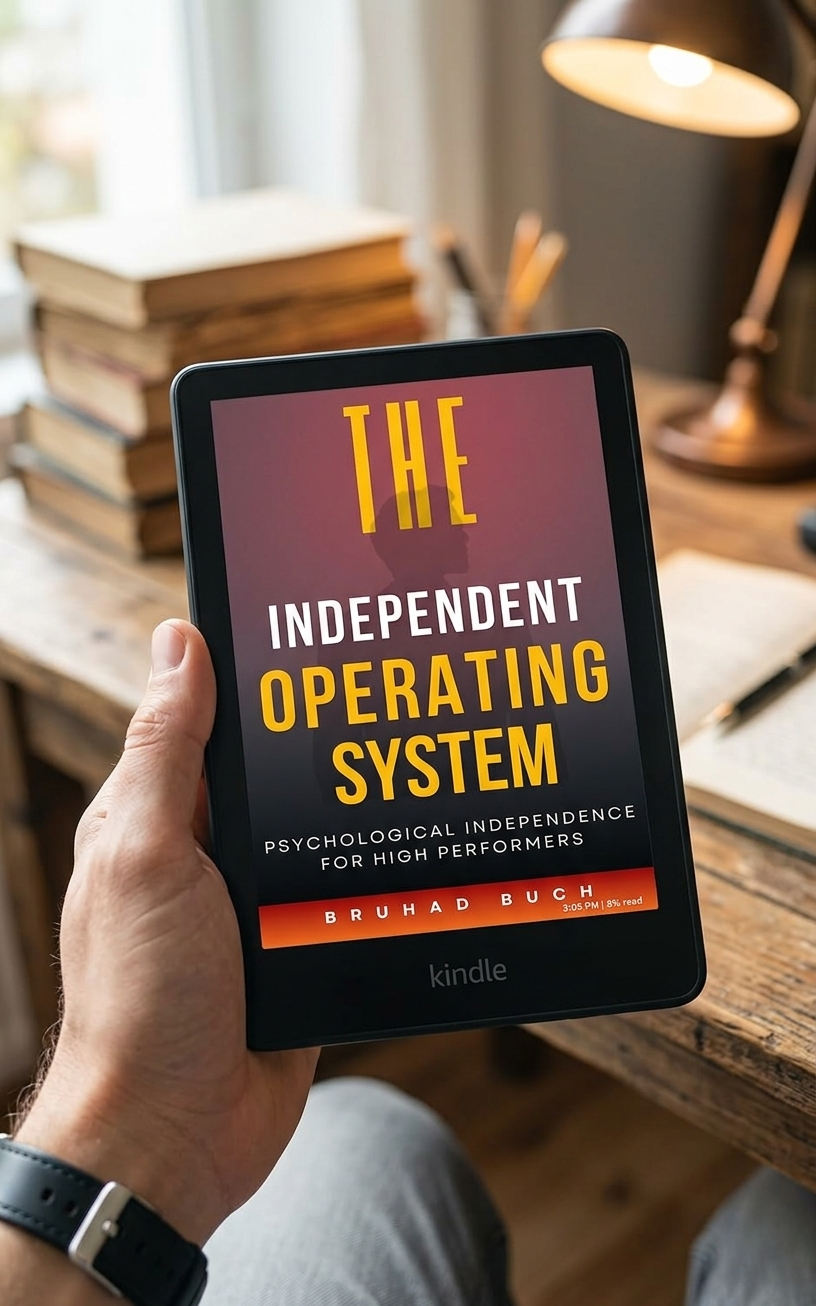
The Emotional Core: Why this hits harder in 2026
What makes The Independent Operating System emotionally powerful is that beneath the systems language, it is really a book about anxiety, identity, and self trust.
Not anxiety in the clinical sense.
More the professional hum many people carry.
The feeling that you are doing well but still somehow not settled.
The screenshots from the book’s chapters make this emotional layer unmistakable. Phrases around feeling unseen, waiting to be chosen, negotiating worth with invisible judges, and realizing no promotion can fix internal noise feel deeply human.
I think many ambitious people will recognize themselves here.
Especially in 2026, when AI, content visibility, constant comparison, and accelerated career narratives have made external measurement almost unavoidable.
The book’s answer is not withdrawal from the world.
It is better authorship within it.
That distinction matters.
I honestly felt a strong emotional pull in the conclusion where the author reframes “No one is coming” not as abandonment, but as freedom.
That idea can feel severe at first.
But by the time the book reaches The Power of Ownership, it starts feeling strangely relieving.
Not because pressure disappears.
Because ambiguity reduces.
And reduced ambiguity is what gives the mind stability.
That emotional insight is sharper than most leadership books in this category.
Who This Book Is For: Should you read it?
If you are asking is The Independent Operating System worth it, I think the answer depends on what kind of reader you are.
This book is especially strong for:
Professionals in fast moving careers who constantly measure themselves against peers
Founders and creators who are overexposed to visible success narratives
Leaders who want clearer internal standards during uncertainty
High performers whose confidence rises and falls with recognition
People in transition who feel capable but directionally unstable
I would particularly recommend it to ambitious professionals in banking, consulting, startups, publishing, product, and AI adjacent careers.
It may be less ideal for readers who want heavily research cited psychology or long narrative storytelling.
This is more philosophical systems writing than academic behavioral science.
Still, for the right reader, the clarity it creates can be profound.
Final Thoughts: The rare self leadership book that changes posture
I finished The Independent Operating System with the feeling that this is less a book about achievement and more a book about internal sovereignty.
That difference is everything.
BRUHAD BUCH is not teaching readers how to impress the world faster.
He is asking them to build a life and career that no longer requires constant reassurance.
As someone who has spent fifteen years around books that promise transformation, I can say this one stands apart because it works at the level of operating assumptions.
The best line I can leave readers with is this:
This is the kind of book that changes the way you interpret your own ambition.
And once that lens changes, your work changes too.
FAQ
Is The Independent Operating System worth reading?
Yes, especially if you are a high performer dealing with comparison, external validation, or unstable confidence.
Who should read The Independent Operating System?
Professionals, leaders, founders, and creators who want clearer internal authority.
What genre is this book?
Leadership psychology, self direction, performance philosophy, and modern professional clarity.
What makes it different from other self help books?
Its focus on mental architecture, authorship, and build cycles instead of surface motivation.

With over 11 years of experience in the publishing industry, Priya Srivastava has become a trusted guide for hundreds of authors navigating the challenging path from manuscript to marketplace. As Editor-in-Chief of Deified Publications, she combines the precision of a publishing professional with the empathy of a mentor who truly understands the fears, hopes, and dreams of both first-time and seasoned writers.