
Rating:
⭐⭐⭐⭐½ (4.5 out of 5)
Some books don’t just tell you about a historical figure, they make you notice how history itself gets shaped, retold, softened, sharpened, and sometimes even sanctified over time. That was my first real feeling while reading The Image of Sri Chaitanya by Tapan Raha. As someone who has spent years at Deified Publication reading everything from spiritual biographies to dense academic history, I honestly felt a rare kind of satisfaction here, the kind that comes when a scholar trusts the reader’s intelligence.
What stayed with me most is that this book is not simply “about” Sri Chaitanya. It is about how Sri Chaitanya became an image in the cultural, devotional, and historical imagination of Bengal.
That difference matters.
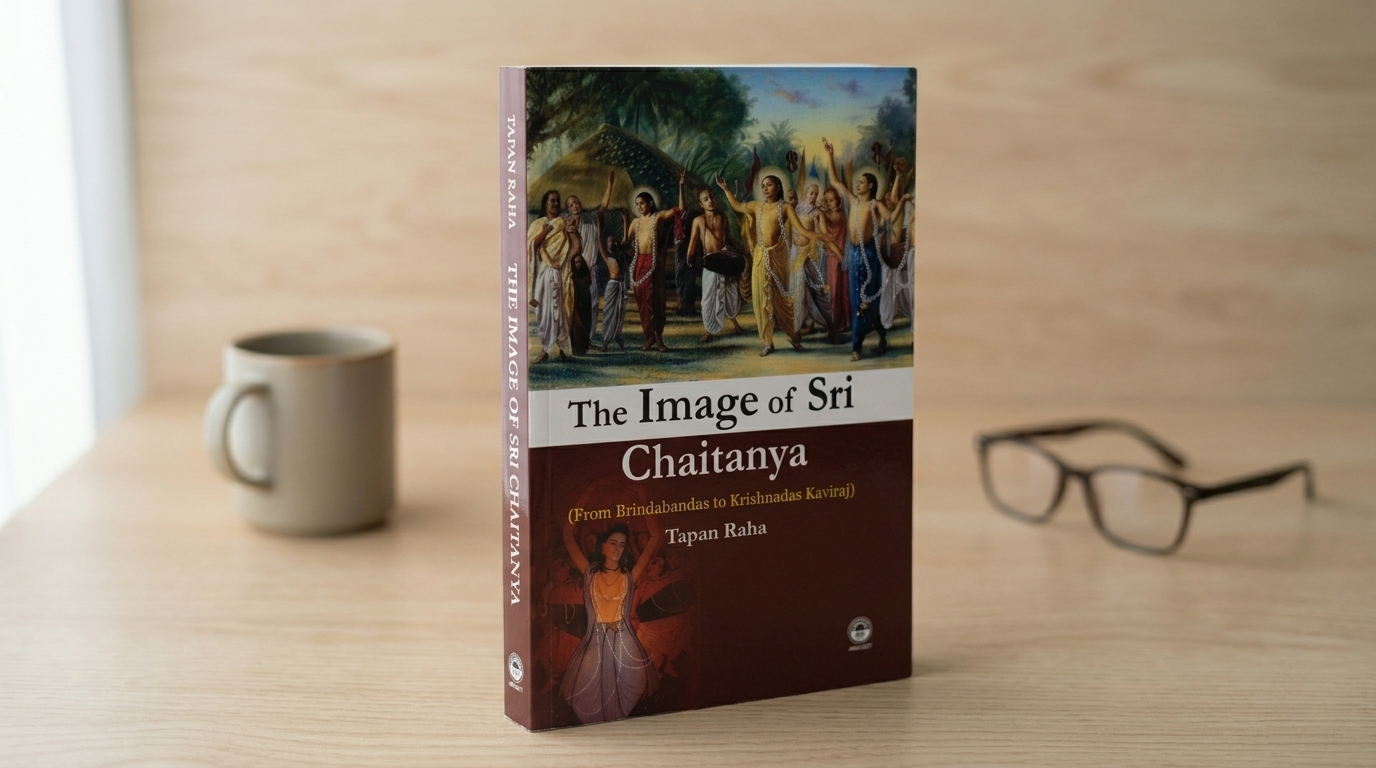
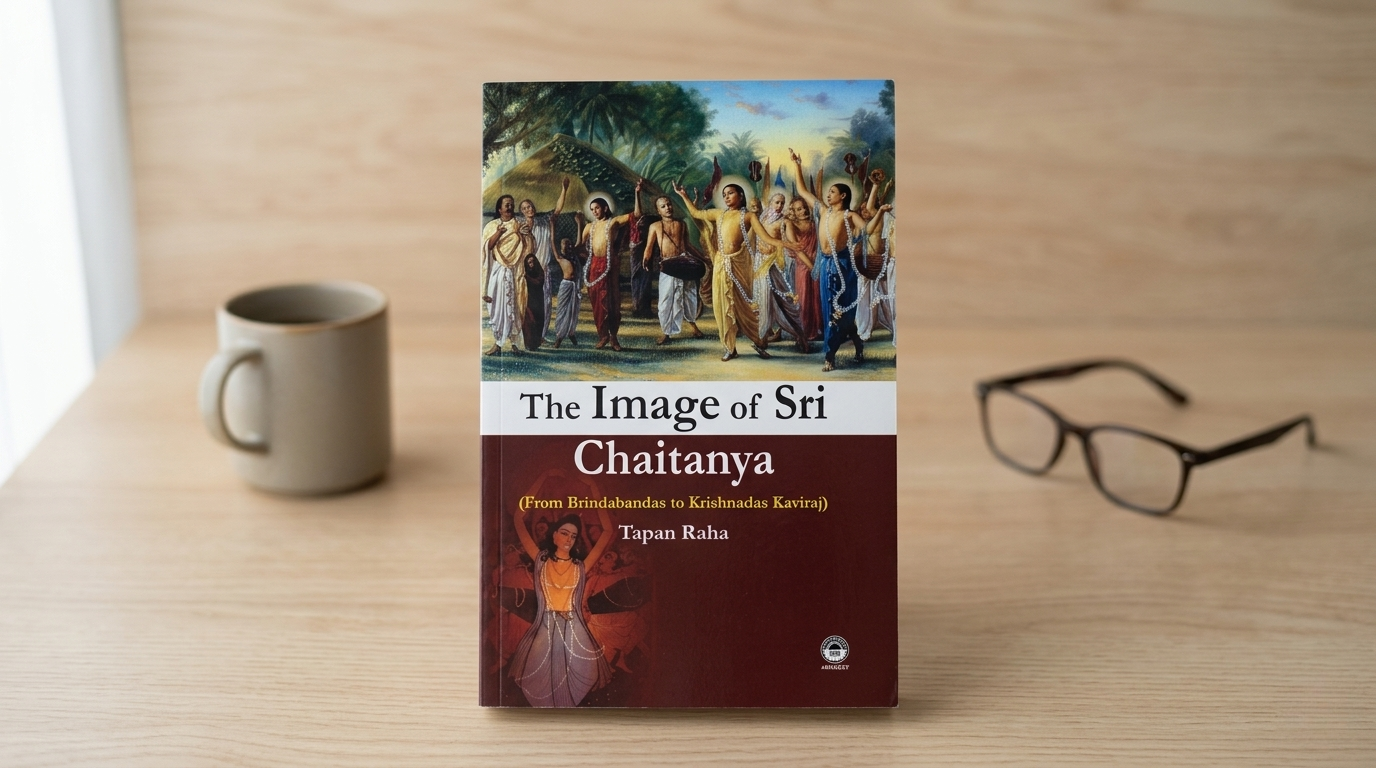
Even the cover says this beautifully. The kirtan procession, the raised hands, the movement, the devotion in motion, and then the stark scholarly subtitle From Brindabandas to Krishnadas Kaviraj all suggest that this is a study of representation, not just reverence. And after going through the dissertation chapters, especially the sections on Chaitanya Bhagavat, Chaitanya Mangal, and Chaitanya Charitamrita, I felt Tapan Raha is doing something genuinely valuable: he is reading devotion as history without dismissing devotion.
That balance is not easy.
What the Book Is About
At its heart, The Image of Sri Chaitanya asks a deceptively simple question: how did the image of Chaitanya evolve from contemporary devotional songs and early biographies into the more systematized theological form we later inherit?
The opening “Back Drop” chapter sets this up brilliantly by locating Bengal Vaishnavism within a much older stream of Bhagavatism, Krishna bhakti, Jayadeva, Vidyapati, and the emotional turn in medieval devotional literature.
I really appreciated this beginning because it resists the easy temptation of presenting Chaitanya as if he appeared in a vacuum. Instead, Raha patiently shows the soil from which this image emerged: the Srimad Bhagavatam, the Radha Krishna tradition, pre Chaitanya Vaishnava emotionalism, and the socio religious tensions of Bengal.
Then the book moves into the biographies themselves.
The chapter on Brindabandas especially stood out to me because Raha does not merely summarize Chaitanya Bhagavat. He studies how Brindabandas consciously models Chaitanya on Krishna, where chronology becomes secondary to sacred pattern.
That shift from man to avatar, from memory to mythic structure, is where the book becomes deeply interesting.
Later chapters, as suggested by the table of contents and back cover blurb, continue this comparative reading through Jayananda, Lochandas, and finally Krishnadas Kaviraj, allowing readers to see how sectarian priorities, institutional anxieties, and theological needs slowly reshape the saint’s image.
This is historical criticism, yes, but it still remains emotionally alive because the subject itself is so culturally charged.
What Stood Out to Me
The most striking thing for me was Raha’s method.
He reads hagiography with respect, but never surrender.
I loved that. In academic studies of devotional literature, writers sometimes become either too dismissive or too reverential. Here, I felt a mature middle path. Raha repeatedly signals that primary texts must not be treated uncritically and that “common sense bereft of devotional attitude” is his way of separating historical layers.
That line stayed with me.
The Brindabandas chapter is a perfect example of this craft. Raha carefully shows how Brindabandas transforms incidents from Murari Gupta, often expanding hints into miracles, sharpening sectarian conflict, or intensifying Chaitanya’s divine role.
For instance, the Kazi confrontation becomes much more militant in Brindabandas than in earlier accounts. Reading Raha’s analysis there, I kept thinking about how communities under pressure often reshape memory into moral courage.
I’ve seen this happen in real life too, even outside religion. Families retell the same ancestor’s story differently depending on what the next generation needs from it. A freedom fighter becomes a saint. A teacher becomes a legend. A political protest becomes destiny.
That same human instinct is what this book captures in literary history.
Another thing that stood out is the discussion of Nityananda. Raha’s reading of how Brindabandas uses the text partly to defend and glorify his guru gives the whole chapter emotional tension.
You begin to see that these biographies are not neutral accounts. They are interventions.
And honestly, that realization makes the text richer, not weaker.
The Emotional Core
For an academic history book, the emotional center here surprised me.
It is not devotion alone.
It is transformation.
This book made me think about what happens when a living human presence enters collective memory. The historical Chaitanya may have walked, spoken, argued, loved, and wept in particular moments. But over decades, communities needed him to become different things: Krishna incarnate, social redeemer, sectarian anchor, legitimizing force, theological bridge.
That slow making of an image is deeply human.
I found myself pausing at the idea that every generation remakes its saints in its own language. In 2026, this feels especially timely because we are living in an age where public figures are constantly being re edited by communities online. Myth making has not ended. It has just changed form.
That is why this book feels relevant beyond religious history.
At the same time, I should be honest about one small limitation. Because this began as an M.Phil dissertation, there are places where the prose feels dense and citation heavy, especially in the early historiographical sections. Readers coming in expecting a flowing spiritual narrative may find parts of the argument academically layered.
But for serious readers, that density is part of the reward.
Some parts hit differently precisely because Raha lets complexity remain complex.
Who This Book Is For
I think The Image of Sri Chaitanya is ideal for readers of religious history, Bengali literary traditions, Vaishnav studies, and historiography.
If you enjoy books that compare texts across time and ask how narratives evolve, this will deeply satisfy you.
Scholars and students of medieval Indian history will especially appreciate the groundwork in the first chapter, where Raha connects Chaitanya to the broader history of Bhagavatism, Jayadeva, and the emotional turn in bhakti literature.
It is also a meaningful read for spiritually inclined readers who want to understand not just what traditions believe, but how those beliefs were textually shaped.
That said, this might not be for everyone.
If someone wants a simple life story of Sri Chaitanya in devotional prose, this book may feel more analytical than intimate. It asks readers to stay with textual comparison, source criticism, and sectarian context.
But for the right reader, that is exactly the joy.
Final Thoughts
As Priya Srivastava, and as someone who has read years of both devotional literature and historical criticism, I found The Image of Sri Chaitanya deeply rewarding.
Tapan Raha gives us something more lasting than a biography. He gives us a study of memory, canon formation, sectarian identity, and the making of sacred history.
I especially admired how the book moves from the broad backdrop of Bengal Vaishnavism into increasingly fine textual distinctions, showing how Brindabandas, Jayananda, Lochandas, and Krishnadas Kaviraj each inherit and reshape Chaitanya differently.
It reminded me that every revered figure lives many lives: one in history, one in text, one in devotion, and one in the needs of those who remember.
This book helps readers see all four.
FAQ
Is The Image of Sri Chaitanya worth reading?
Yes, especially if you enjoy religious history, Bengali texts, and how saintly images evolve through biographies.
Who should read this book?
Students of history, Vaishnav scholars, literature readers, and anyone interested in Chaitanya studies.
Is this a devotional book or academic study?
It is primarily an academic historical study, though it remains sensitive to devotional traditions.
Does it cover multiple Chaitanya biographies?
Yes, it compares Brindabandas, Jayananda, Lochandas, and Krishnadas Kaviraj in detail.

With over 11 years of experience in the publishing industry, Priya Srivastava has become a trusted guide for hundreds of authors navigating the challenging path from manuscript to marketplace. As Editor-in-Chief of Deified Publications, she combines the precision of a publishing professional with the empathy of a mentor who truly understands the fears, hopes, and dreams of both first-time and seasoned writers.