
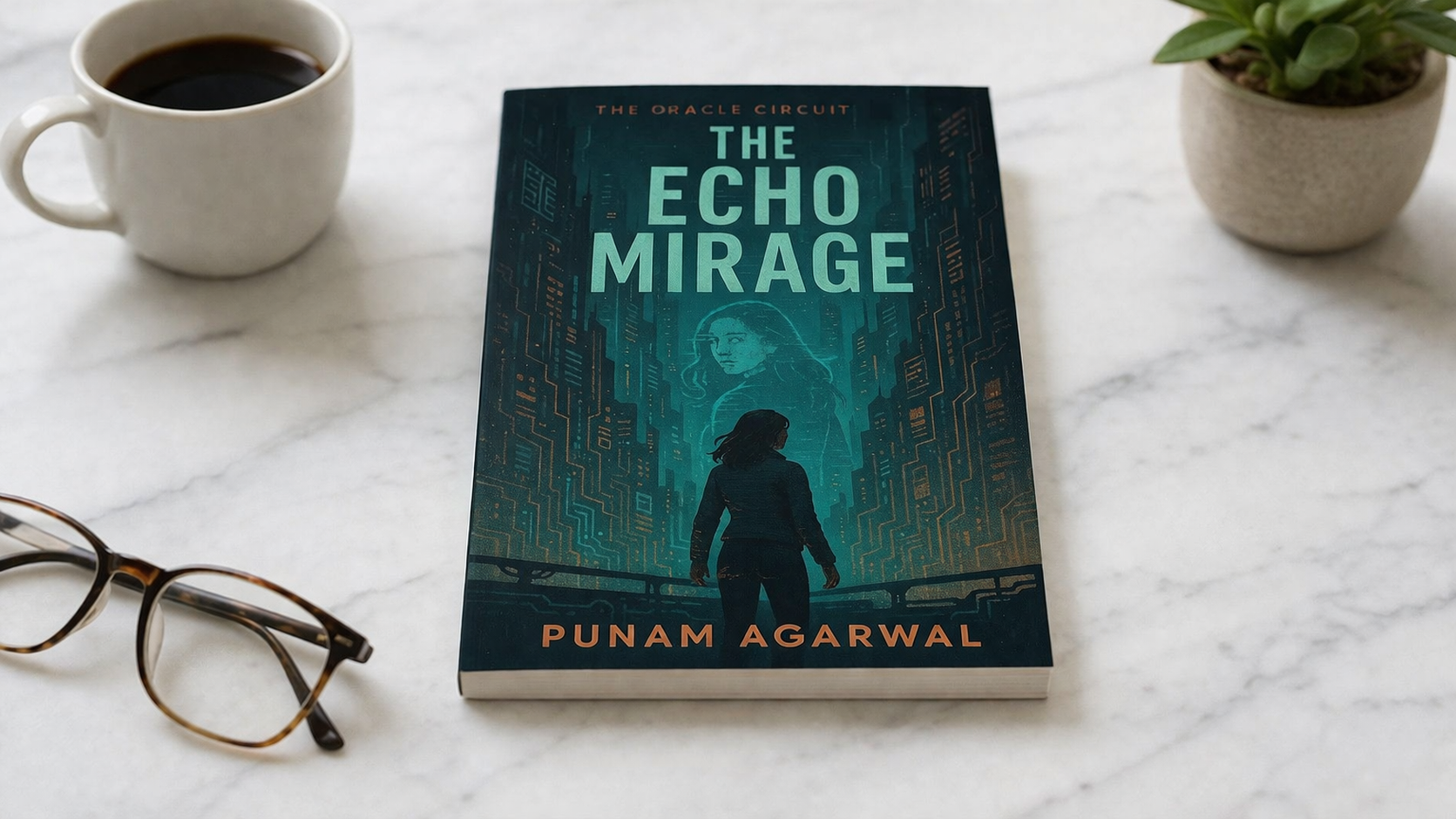
Rating:
⭐⭐⭐⭐ (4.7 out of 5)
This Time, the Story Doesn’t Continue. It Loops Back.
By now, if you have followed the series up to this point, you already know one thing. Nothing in this world moves forward in a straight line.
It circles. It echoes. It returns.
The Echo Mirage does not pick up where the last book ended in a traditional sense. It folds back into itself. What felt like progression earlier now feels like repetition with intention.
And that shift changes everything.
Because this is the first time the series makes you feel like the characters are no longer ahead of the mystery. They are inside it.
Rajasthan Is Not a Setting. It Is a System of Memory
The move from Hyderabad to Rajasthan is not just geographical. It is psychological.
The desert is written like a living archive.
Sand does not just cover things. It preserves them. Distorts them. Sometimes even rewrites them.
Jaisalmer feels ancient, but not in a historical way. It feels aware. The buried chamber, the glyph that refuses to stay still, the sealed jar whispering coordinates, all of it creates an atmosphere where reality feels unstable from the very beginning.
And then the story expands.
Udaipur arrives with water, reflections, symmetry. Lake Pichola and the floating palace are not just beautiful visuals. They are extensions of the same idea. Reflection as distortion. Memory as illusion.
What the desert buries, the lake mirrors.
Together, they create a complete system.
The Sixth Signal Changes the Rules
Until now, the signals felt like clues.
Now they feel like decisions.
The introduction of the Sixth Signal is one of the most important turning points in the series. It is not loud. It is not explained in a conventional way. But its presence is undeniable.
It flickers. It hesitates. It behaves like something that is not fully stable yet.
And that is what makes it dangerous.
Because unlike earlier signals, this one does not just reveal truth. It questions whether truth can even remain fixed.
The idea that recursion forgets is quietly terrifying. It means every loop loses something. And eventually, what remains may not resemble the original at all.
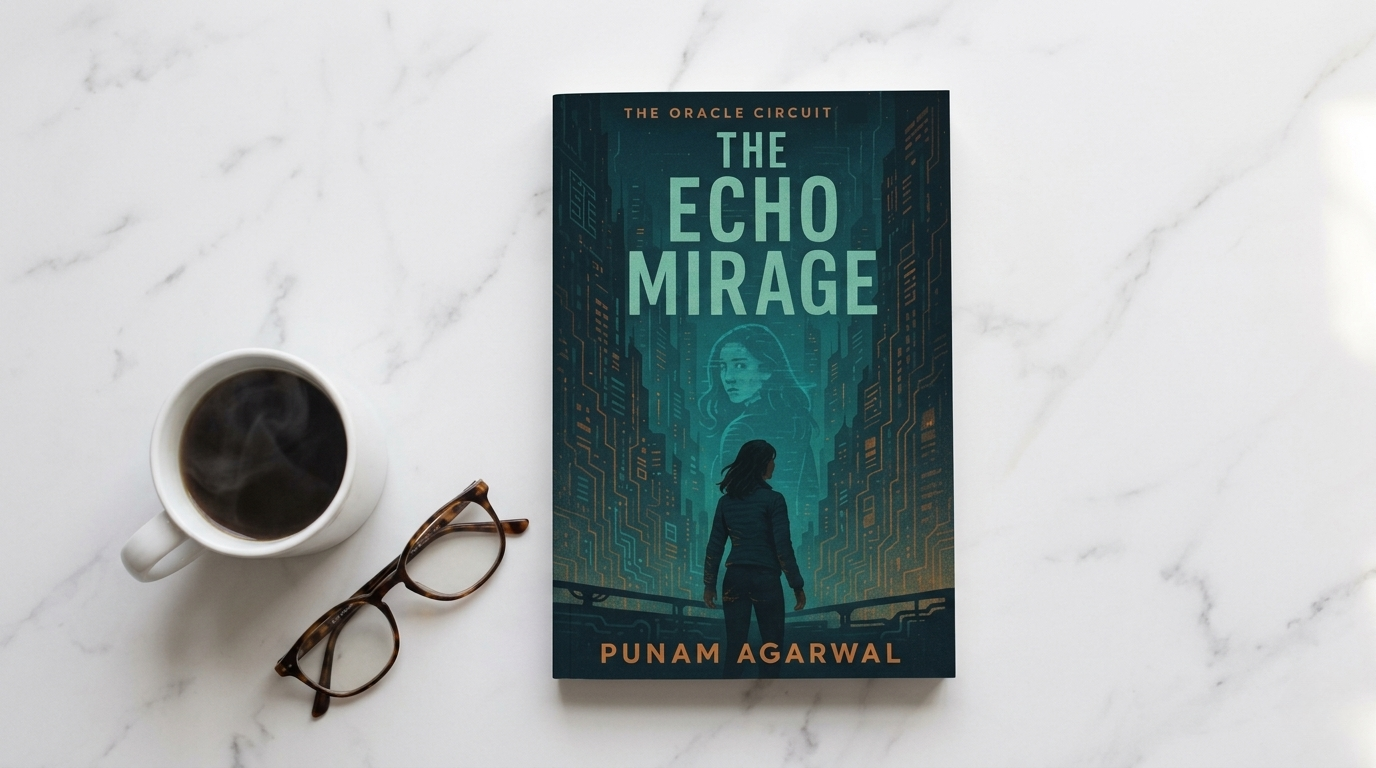
Ivy, Kira, Nola Feel More Human Than Ever
This part strengthens the trio in a way that feels earned.
Kira continues to bring sharp, almost sarcastic relief, but now her humor feels defensive. Like she is trying to stay grounded in a reality that keeps slipping.
Nola becomes more emotionally layered. Her connection to the coin and her father adds weight to the narrative. It is no longer just about decoding patterns. It is about confronting inheritance, memory, and truth.
And Ivy stands at the center of it all.
Her experience with false memory, especially the carrom game she never played, is one of the most unsettling threads in the book. It is small on the surface, but it opens a much larger question.
If a memory feels real, does it matter if it actually happened?
That question stays long after the chapter ends.
Oprheus Vale Feels Closer Without Appearing
Interestingly, the more the story progresses, the less direct presence Orpheus Vale seems to have.
And yet, he feels everywhere.
In the coin.
In the coordinates.
In the patterns hidden in water, stone, and architecture.
This is where the writing becomes particularly strong. The antagonist is no longer just a character. He becomes a system of influence.
Every clue feels intentional. Every path feels designed.
It creates a strange tension where the characters are not just solving a mystery. They are following something that already knows where they will go.
The Writing Feels More Controlled, More Precise
There is a noticeable maturity in the writing here.
The pacing is tighter. The transitions feel smoother. Scenes move with purpose.
Moments like breakfast in the courtyard, the discovery of mirror shards, or the quiet realization inside the palace are handled with restraint. The author does not over explain. The impact comes from what is left unsaid.
Even the dialogue feels more natural now. It carries character, emotion, and information without sounding forced.
Illustrations That Deepen the Unease
The illustrations continue to be a strong part of the experience.
They do not simply depict scenes. They amplify them.
There is a softness to the visuals that contrasts with the tension of the story. Warm tones, familiar compositions, and then subtle distortions that make you look twice.
They feel like memories that are almost correct.
Almost.
Themes That Silently Expand the Series
This book pushes the core themes further without losing clarity.
Memory is no longer just unreliable. It is editable.
Reality is no longer questioned. It is influenced.
Identity is no longer stable. It is constructed.
The Mirage Archive concept adds a new layer. The idea that something can actively rewrite perception creates a deeper sense of urgency.
This is no longer about solving a puzzle.
It is about surviving one.
Where This Part Stands in the Series
If earlier parts were about discovery and realization, this one is about acceptance.
Acceptance that the rules are different.
Acceptance that truth is not fixed.
Acceptance that the system is already active.
And most importantly, acceptance that the characters are not just observers anymore.
They are part of the recursion.
Final Verdict
The Echo Mirage is not just a continuation. It is a shift in perspective.
It slows down just enough to let the ideas settle, and then quietly unsettles everything you thought you understood about the story so far.
It does not rely on big twists. It relies on slow realization.
And that makes it far more powerful.
By the end, one thing becomes clear.
The mirage is not something you see.
It is something that sees you.
Rating
1. Is The Echo Mirage a standalone book?
No, it works best when read as part of the Oracle Circuit series. The emotional depth and recurring concepts like recursion, signals, and memory manipulation build across earlier parts, so reading in order gives a much stronger impact.
2. What genre does The Echo Mirage fall into?
It blends psychological sci fi, mystery, and philosophical fiction. There are elements of technology, memory science, and symbolic storytelling layered into a thriller like narrative.
3. Do I need to understand complex science to enjoy this book?
Not at all. While the book introduces ideas like recursion and perception systems, it presents them through story and emotion rather than heavy technical explanation. The focus stays on experience rather than theory.
4. How is this part different from earlier books in the series?
This installment is more introspective and layered. Instead of focusing only on solving mysteries, it explores how memory, identity, and perception can be manipulated. The pace is slightly slower but more meaningful.
5. Who are the main characters in this book?
The story continues to follow Ivy, Kira, and Nola. Their dynamic grows stronger here, with more emotional depth and personal stakes tied to the central mystery.

With over 11 years of experience in the publishing industry, Priya Srivastava has become a trusted guide for hundreds of authors navigating the challenging path from manuscript to marketplace. As Editor-in-Chief of Deified Publications, she combines the precision of a publishing professional with the empathy of a mentor who truly understands the fears, hopes, and dreams of both first-time and seasoned writers.