
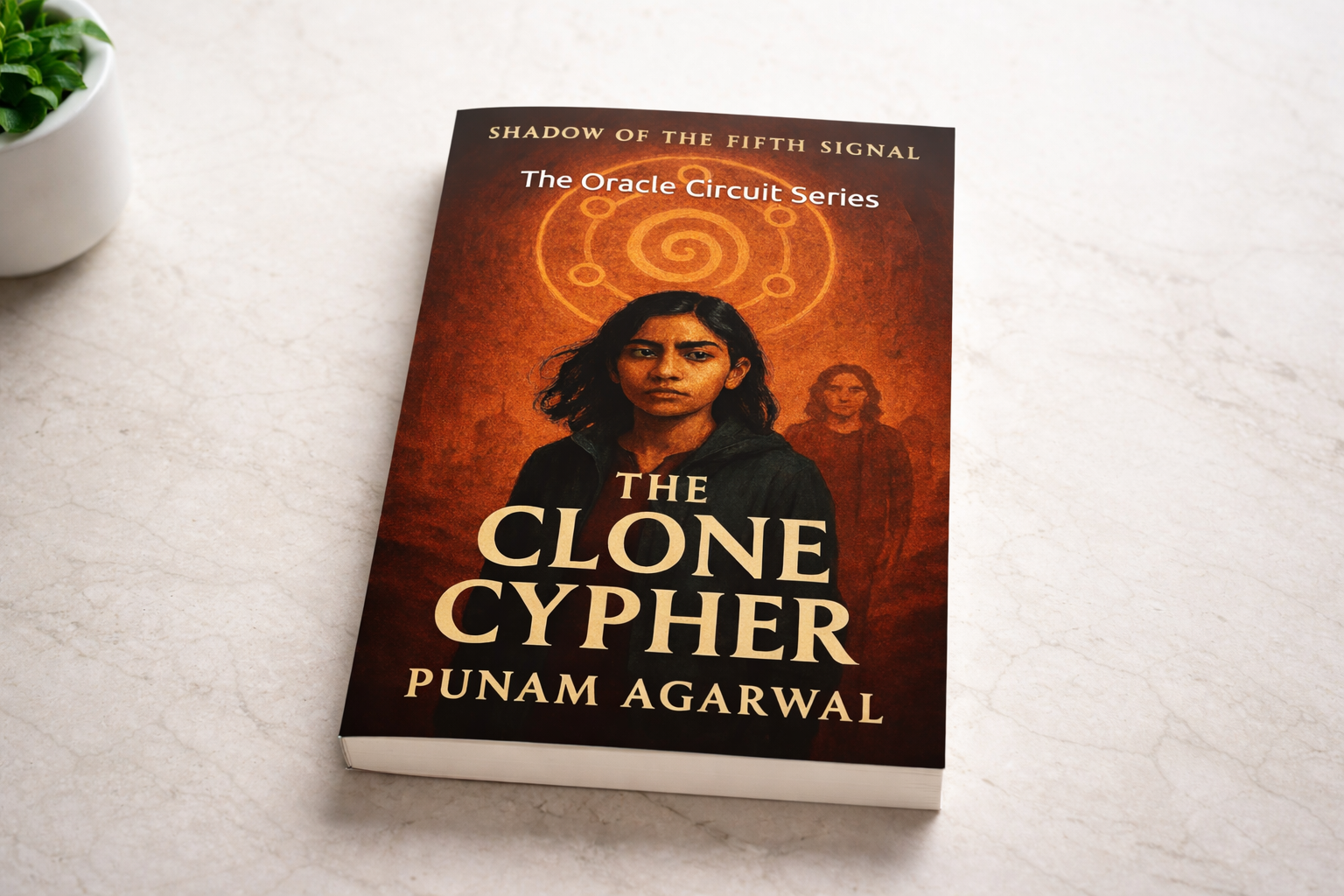
Rating: (4.6 out of 5)
By the time we reach The Clone Cypher: Shadow of the Fifth Signal, the story stops behaving like a mystery and starts behaving like a system. Not a system you observe. A system you are inside.
This third installment shifts something fundamental. Earlier, the threat was external. Signals, clones, hidden networks. Now the danger is intimate. Memory itself becomes unstable ground. Identity is no longer questioned from the outside. It begins collapsing from within.
And that is where this book becomes dangerous in the best possible way.
A City That Watches Back
Hyderabad is no longer just a backdrop. It feels sentient.
The lake does not reflect. It edits.
The streets do not guide. They reroute.
Even silence feels like it is being recorded.
Every location carries a quiet hostility. Hussain Sagar is not water anymore. It is a surface of negotiation between realities. The museum is not a place of history. It is a place where history can be rearranged and displayed like a curated lie.
What stands out is how effortlessly the environment participates in the narrative. The city is not reacting to the characters. It is anticipating them.
Ivy’s Fracture: When Memory Turns Against You
This part belongs to Ivy.
Not because she leads the plot, but because she absorbs its consequences.
Her arc is written with restraint and precision. The horror is not loud. It is subtle. A memory that almost feels right. A voice that sounds familiar but carries something off. A past that exists, but not in the way she remembers.
The moment where her own reflection moves first is not just a scene. It is a statement. From that point onward, nothing she experiences can be trusted, including herself.
What makes it powerful is that the narrative does not rush her breakdown. It lets it breathe. It lets it linger.
The Evolution of the Fifth Signal
In earlier parts, the Fifth Signal was mysterious.
Here, it becomes intentional.
It listens.
It categorizes.
It archives.
The introduction of multiple identity states such as live, archived, and pending transforms the concept from a sci fi idea into a philosophical weapon. You are no longer asking what the signal is. You are asking where you stand within it.
And the most unsettling possibility emerges quietly.
What if you are not the original version of yourself?
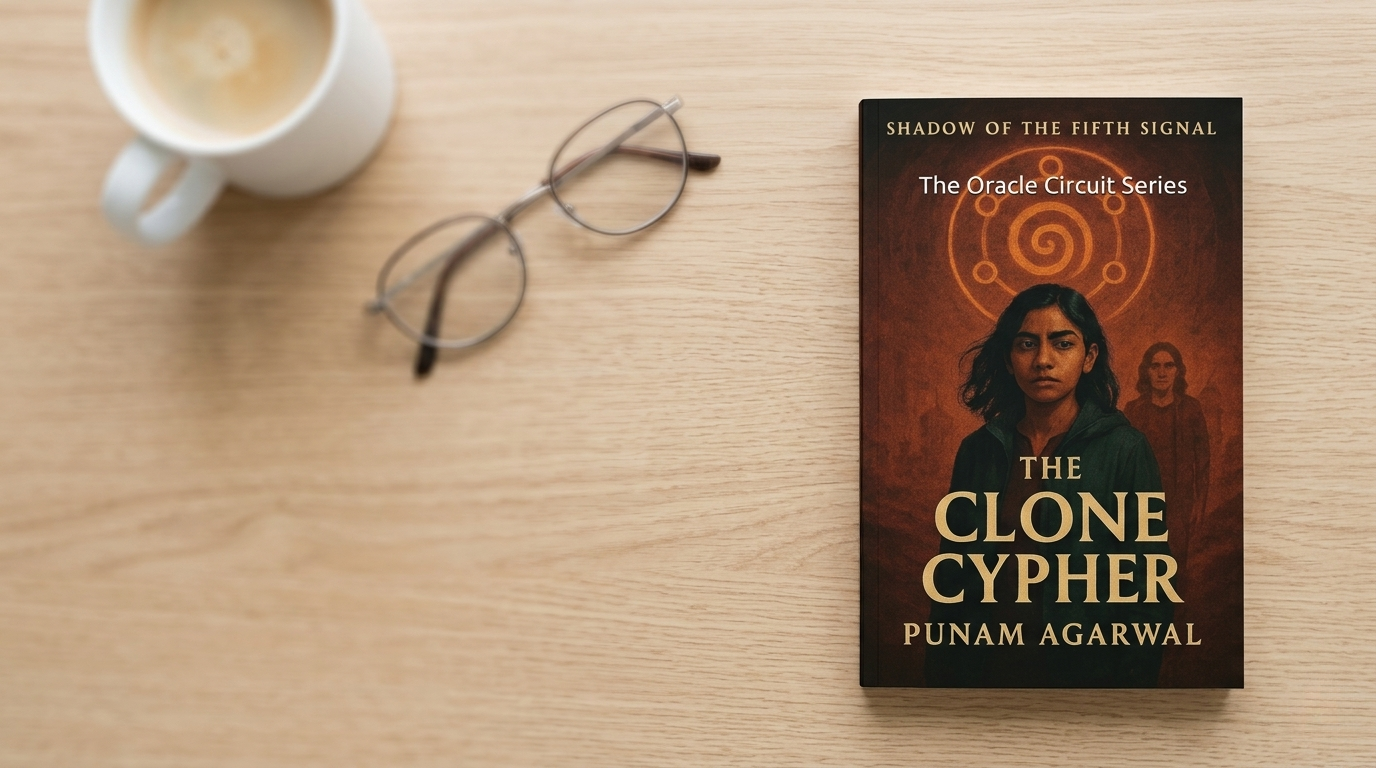
Dialogue That Cuts Through Reality
The conversations in this book carry weight without trying to sound heavy.
Kira’s humor lands sharper because the world around her refuses to be stable. Her lines do not just lighten the mood. They expose the absurdity of what is happening.
Nola’s analytical tone begins to crack in subtle ways. She still searches for patterns, but the patterns are no longer reliable.
And Ivy, caught between both, becomes the emotional axis of every interaction.
There is a rhythm here. Three voices, each reacting differently to the same collapsing reality.
What This Book Leaves Behind
By the end, the story does not conclude. It deepens.
You are left with a quiet, persistent thought.
If your memories can be rewritten, then your emotions can be engineered.
If your identity can be duplicated, then your existence can be replaced.
And if something is already tracking all of it, then the question is no longer whether you are being watched.
The question is whether you have already been rewritten.
Final Reflection
This third part does not try to outdo the previous ones with scale. It surpasses them with intimacy.
It is sharper. More controlled. More unsettling.
Instead of asking what is happening, it asks something far more uncomfortable.
Who are you, when everything you remember about yourself can no longer be trusted?
FAQs
1. Do I need to read the previous books before this?
Yes. This part builds directly on earlier developments. The emotional and conceptual depth depends on prior context.
2. Is this book more sci-fi or psychological?
It strongly leans toward psychological sci-fi in this installment, with deeper focus on identity and memory.
3. Is it fast-paced or slow?
It is moderately paced. The tension builds gradually rather than relying on constant action.
4. What makes this book different from Part 1 and 2?
This part shifts inward. Instead of exploring the system, it explores how the system affects the characters internally.
5. Is it worth reading for casual readers?
Yes, but it will resonate more with readers who enjoy thought-provoking and layered storytelling.

With over 11 years of experience in the publishing industry, Priya Srivastava has become a trusted guide for hundreds of authors navigating the challenging path from manuscript to marketplace. As Editor-in-Chief of Deified Publications, she combines the precision of a publishing professional with the empathy of a mentor who truly understands the fears, hopes, and dreams of both first-time and seasoned writers.