
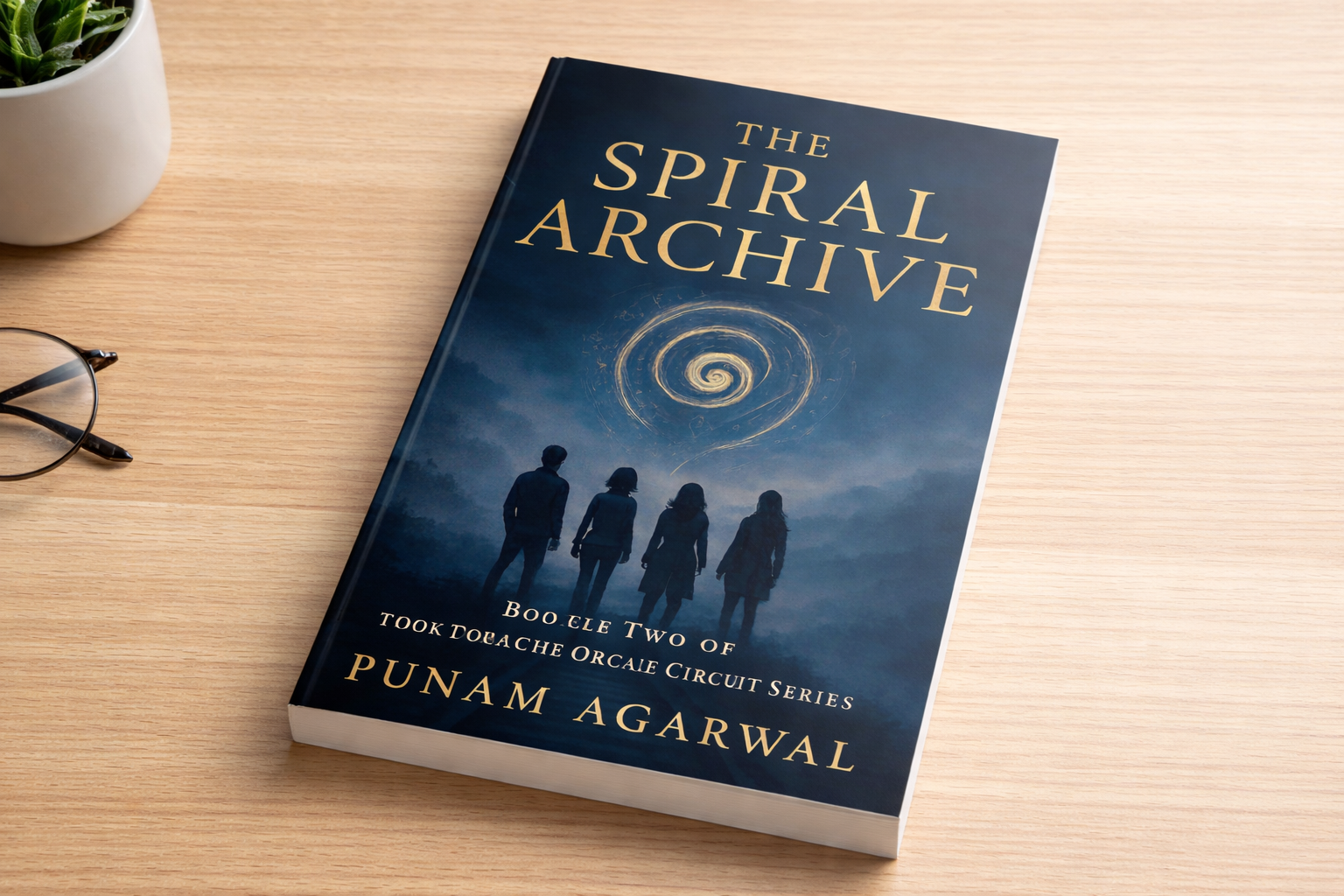
Rating:
⭐⭐⭐⭐ (4.4 out of 5)
I didn’t start The Spiral Archive thinking it would unsettle me the way it did. I thought it would continue the mystery from Book 1, maybe go deeper into symbols, expand the world a bit. And it does all of that, yes. But somewhere along the way, this book stops feeling like a mystery you’re solving and starts feeling like something that’s watching you solve it.
And that shift… it’s hard to explain, but I felt it.
What This Story Really Feels Like
If The Temple of the Vanished Eye was about discovering that something ancient is watching, The Spiral Archive is about realizing that it has already been inside your memories all along.
We’re back with Ivy, Nola, and Kira, but they don’t feel exactly the same anymore. Not in a dramatic transformation way. It’s subtler. Like something has been nudged inside them.
The story opens with movement. Travel. Ooty. Mist that doesn’t behave like mist should. That small detail stayed with me. Mist that coils instead of drifting. It tells you immediately that reality here is… flexible.
And then comes the ledger.
That whole “Mist Ledger” sequence, I kept re-reading parts of it. A book that writes back. A page that changes after you look away. Ink that remembers. I mean, we’ve seen magical objects in fiction before, but this one felt different. It didn’t feel like an object. It felt like an observer.
And when the line appears
“You are not the author.”
I paused. Because that’s not just for the characters, is it?
The Archive That Doesn’t Stay Still
As the story moves into the archive itself, the tone shifts again. The library scene… I think that was my favorite part of the entire book.
There’s something deeply unsettling about a place where books breathe, where pages swell and relax like lungs, where names fade from paper as if existence itself is being edited in real time.
And then there’s the Librarian.
I’m still not sure how to describe her. She doesn’t feel like a character in the usual sense. More like a presence. Someone who exists outside the normal rules of identity. When she says, “Do I need one?” in response to having a last name, it’s such a small line, but it carries so much weight.
That entire interaction about existence, memory, and being felt rather than remembered… I’ve seen authors attempt philosophical depth before, but here it didn’t feel forced. It came naturally from the situation.
Also, the idea that some people are “unrecorded”… that stayed with me longer than I expected. It made me wonder things I didn’t expect a mystery novel to make me wonder.
The Girls, But Not Quite the Same
One thing I really appreciated in this The Spiral Archive Book Review is how Punam Agarwal evolves the trio without making it obvious.
Nola still has that restless curiosity, but now there’s a slight edge to it. Almost like she’s aware that curiosity has consequences.
Ivy feels heavier in this book. More internal. There are moments where she senses things before they happen, and it’s not portrayed as a power, more like a burden she hasn’t chosen.
Kira… I think she fascinated me the most here. Her connection to symbols, tarot, patterns. In Book 1, it felt interesting. In this book, it feels necessary.
There’s a line about her having once drawn her own name backwards in tarot. That detail might seem small, but it adds a layer to her character that makes you trust her instincts, even when they sound strange.
And their friendship still holds. That’s important. Because as the world becomes more unstable, their dynamic is the only thing that feels consistent.
What Stayed With Me the Most
Honestly, it wasn’t the plot twists.
It was the ideas.
The idea that memory can be rewritten.
That identity is tied to what is remembered about you.
That somewhere, something might be editing your story without you knowing.
There’s a moment where names on slips of paper fade before touching the ground. That image stayed with me. It’s simple, but it carries this quiet dread.
And then the line
“Find the fourth before the fourth finds you.”
I kept thinking about that. Not just as a clue, but as a concept. The idea of something coming for you unless you reach it first.
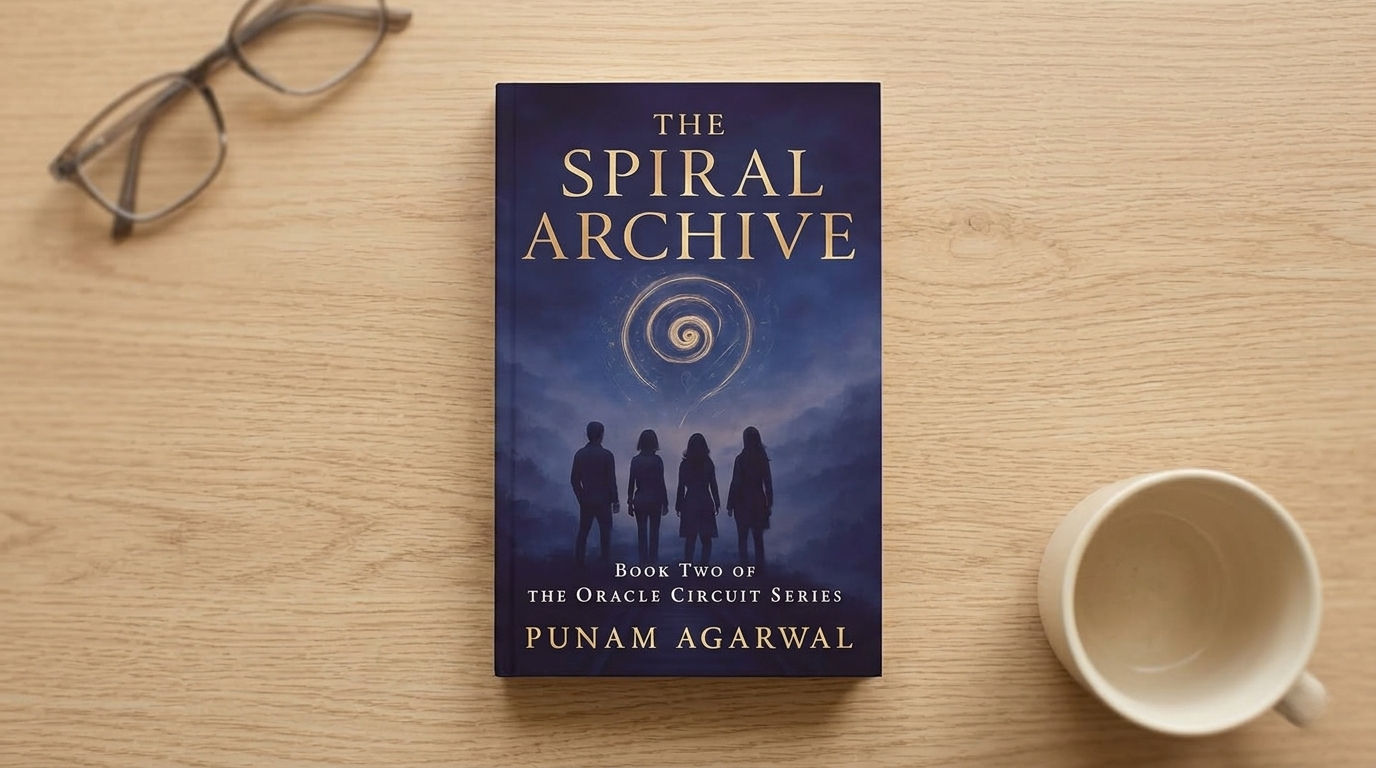
Also, the illustrations deserve a mention here. They are not just visual breaks. They deepen the mood. That sketch of the ledger with spirals, the living library artwork, they add texture to the experience. I found myself pausing on them, not just glancing.
Where It Might Not Work for Everyone
I’ll be honest here, because that matters.
This book leans even more into abstraction than the first one. The symbolism is heavier. The narrative doesn’t always hold your hand.
There were moments where I had to slow down, reread, and just sit with what was happening. Not because it was confusing in a bad way, but because it was layered.
If someone is looking for a fast-paced, straightforward mystery, this might feel a bit demanding.
But if you’re okay with stories that ask you to participate, to think, to feel slightly off-balance, then this works beautifully.
Who Should Read The Spiral Archive
If you enjoyed Book 1, this is an easy yes. But even beyond that…
If you like stories where reality bends a little
If you enjoy symbolic storytelling
If you don’t mind not having every answer neatly explained
Then this book will probably stay with you.
Also, if you’ve ever been fascinated by the idea of memory, how unreliable it is, how much it defines us, this book touches that nerve in a very interesting way.
Final Thoughts
Writing this The Spiral Archive Book Review feels different from writing about most books.
Because I don’t feel like I’ve “finished” it.
There’s a lingering sense that I might have missed something. That if I go back, I’ll notice a pattern I didn’t see before. A clue that meant more than I realized.
Punam Agarwal doesn’t just continue the story here. She deepens it. Makes it more personal. More unsettling.
And that last section, where everything begins to converge, where the idea of the Spiral becomes less metaphor and more reality… I won’t spoil it, but it left me with that same feeling I had after Book 1.
Curiosity mixed with a little unease.
And I think that’s exactly what this series is trying to do.
I’ll be reading and sharing my thoughts on the next part of this story in my upcoming review. And honestly, after where this one leaves things… I don’t think the Spiral is done with them yet.
FAQ
Is The Spiral Archive worth reading?
Yes, especially if you liked Book 1. It goes deeper into the mystery and adds more psychological layers.
Do you need to read Book 1 first?
I would strongly recommend it. This book builds directly on earlier events and relationships.
What is The Spiral Archive about?
It follows three girls as they uncover an archive that can rewrite memory and identity, blending mystery with myth and psychological elements.
Is it easy to read?
It’s engaging but layered. You may need to slow down in parts to fully appreciate it.

With over 11 years of experience in the publishing industry, Priya Srivastava has become a trusted guide for hundreds of authors navigating the challenging path from manuscript to marketplace. As Editor-in-Chief of Deified Publications, she combines the precision of a publishing professional with the empathy of a mentor who truly understands the fears, hopes, and dreams of both first-time and seasoned writers.